Things left to do in Ph 213 Understand

- Slides: 19
Things left to do in Ph 213: - Understand light and E, B and S. - Understand the concept of light polarization angles - Find the resonance frequency of LRC circuits. Next week: Monday: Chapter 34 Tuesday: Concept Test Wednesday: Review Part 1 Wed/Thurs Lab: Complete Finals Friday: Review Part 2 Saturday: Study Jam
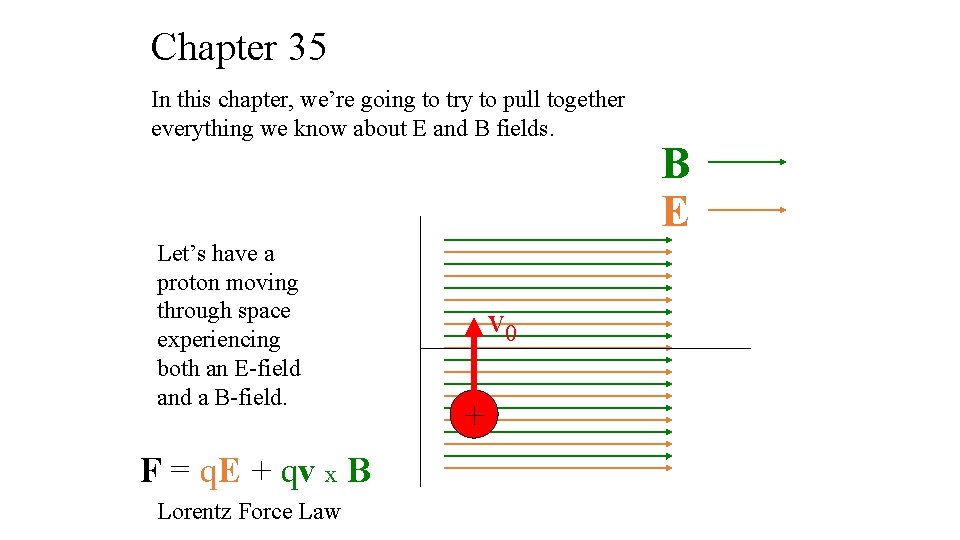
Chapter 35 In this chapter, we’re going to try to pull together everything we know about E and B fields. Let’s have a proton moving through space experiencing both an E-field and a B-field. F = q. E + qv x B Lorentz Force Law v 0 + B E
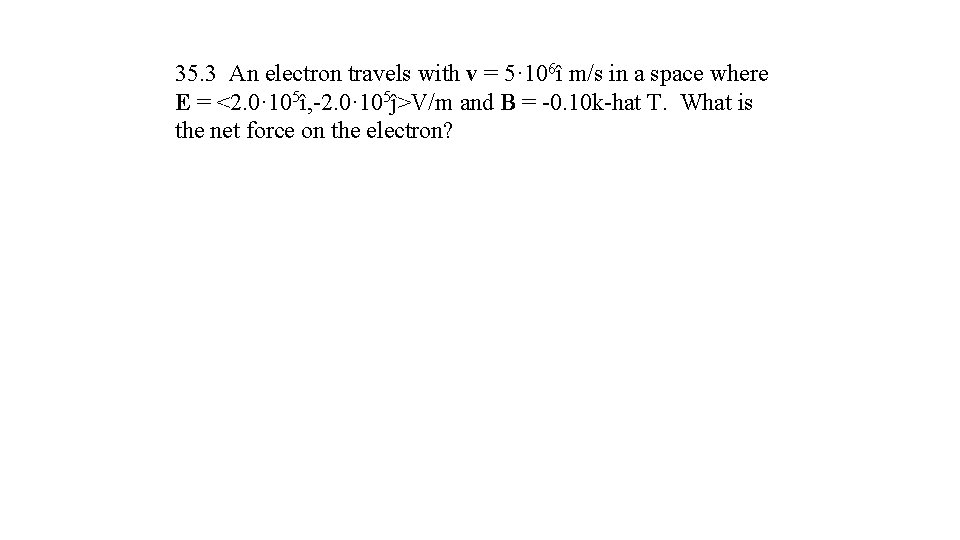
35. 3 An electron travels with v = 5· 106î m/s in a space where E = <2. 0· 105î, -2. 0· 105ĵ>V/m and B = -0. 10 k-hat T. What is the net force on the electron?
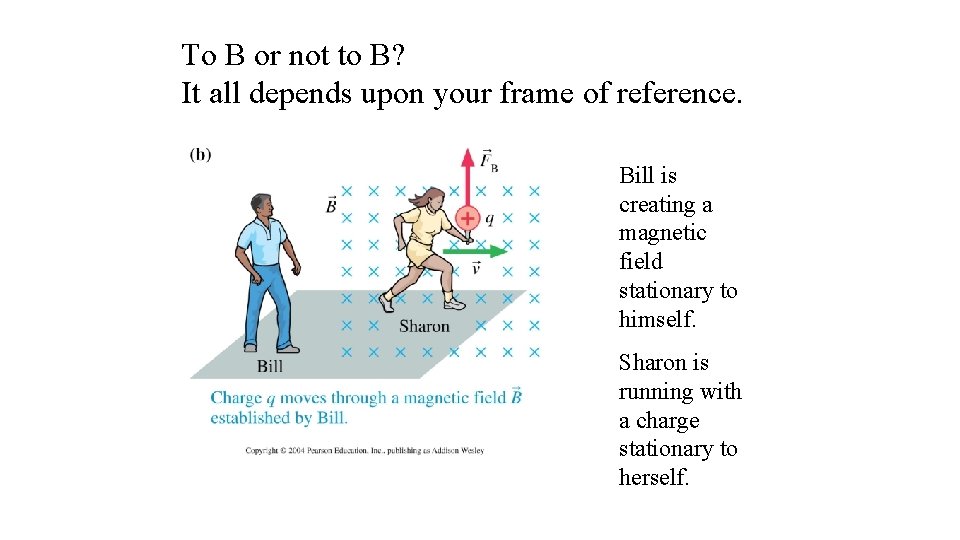
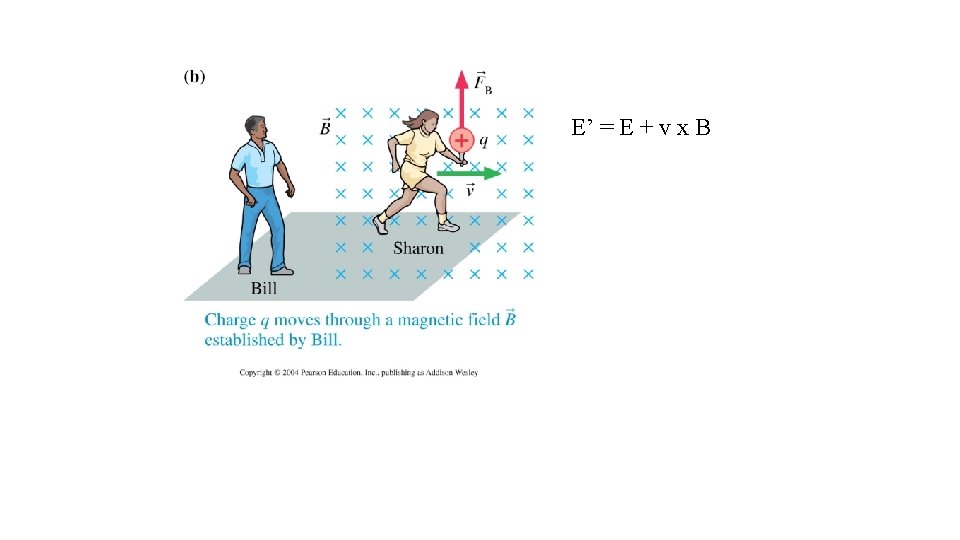
To B or not to B? It all depends upon your frame of reference. Bill is creating a magnetic field stationary to himself. Sharon is running with a charge stationary to herself.
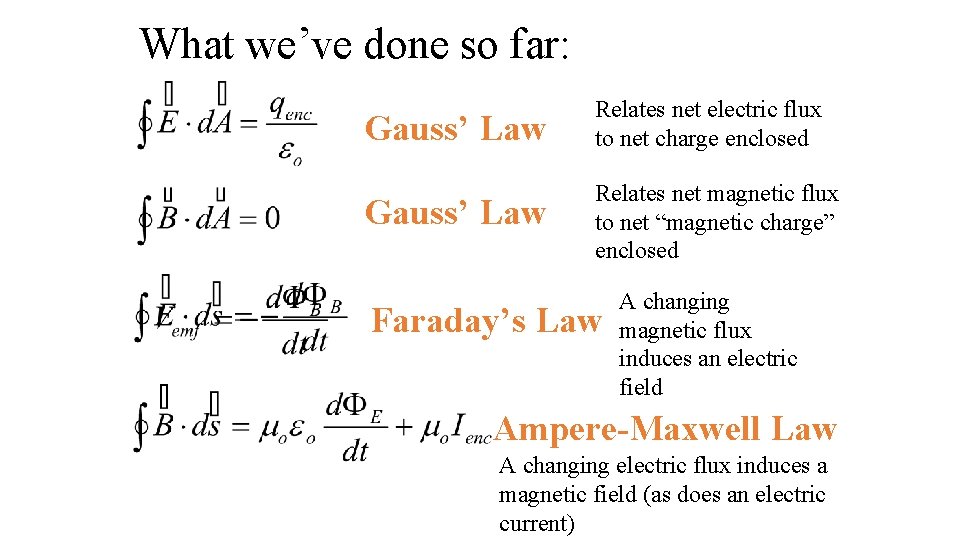
What we’ve done so far: Gauss’ Law Relates net electric flux to net charge enclosed Gauss’ Law Relates net magnetic flux to net “magnetic charge” enclosed Faraday’s Law A changing magnetic flux induces an electric field Ampere-Maxwell Law A changing electric flux induces a magnetic field (as does an electric current)
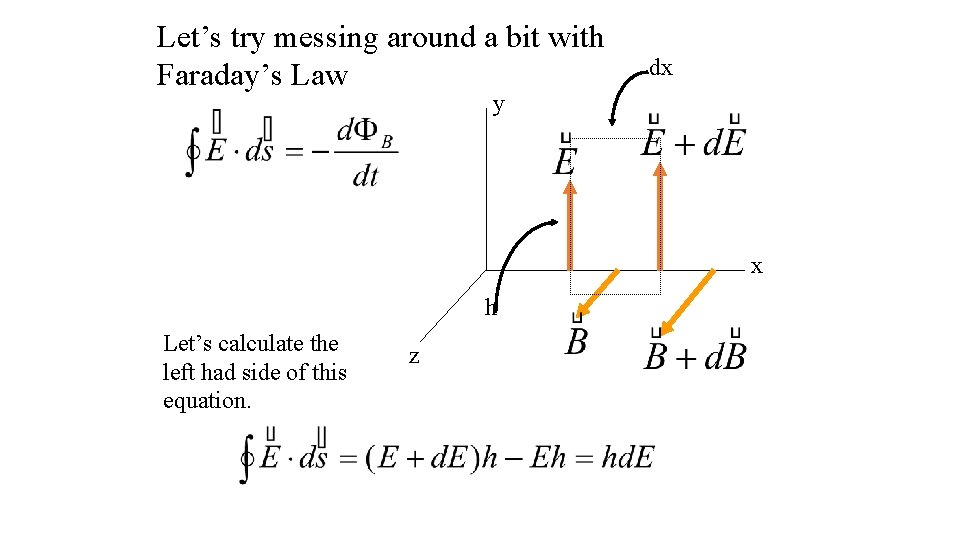
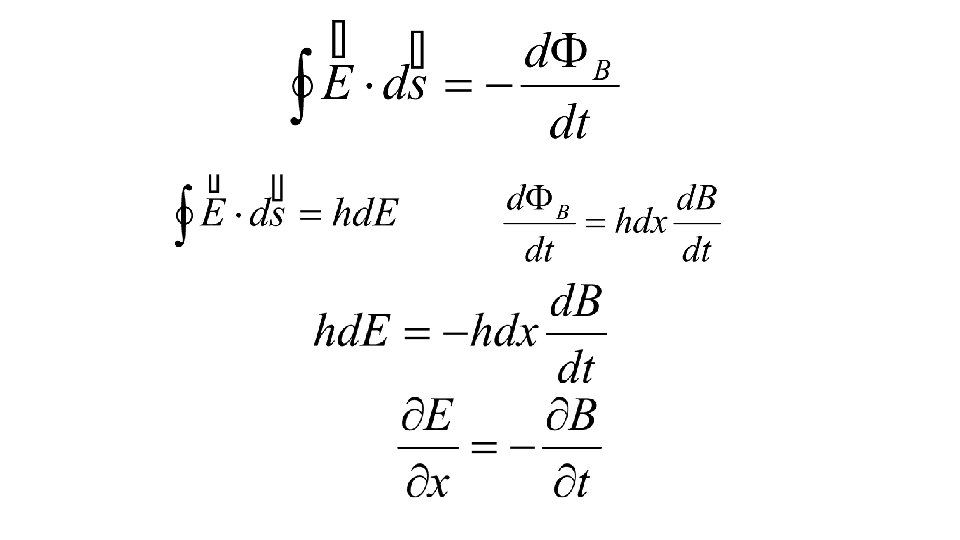
Let’s try messing around a bit with Faraday’s Law dx y x h Let’s calculate the left had side of this equation. z
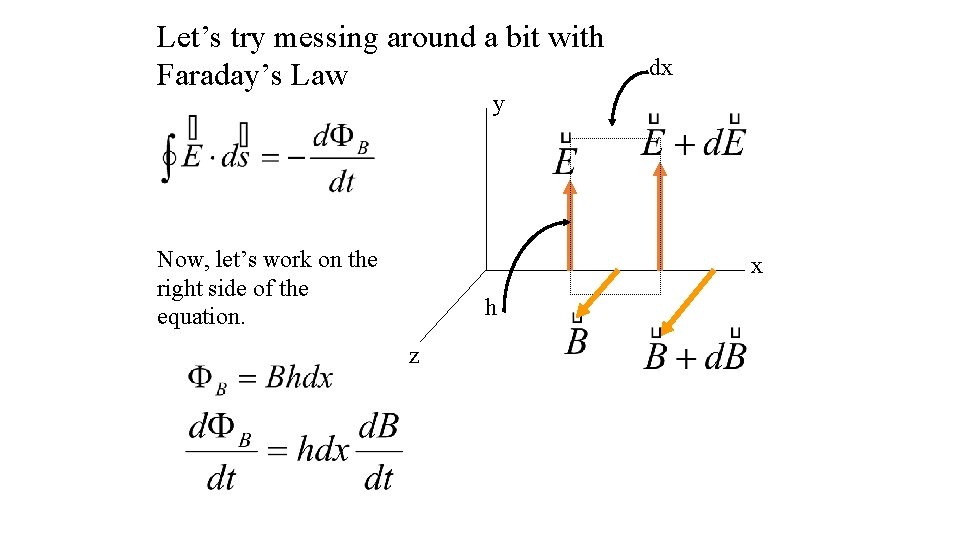
Let’s try messing around a bit with Faraday’s Law dx y Now, let’s work on the right side of the equation. x h z
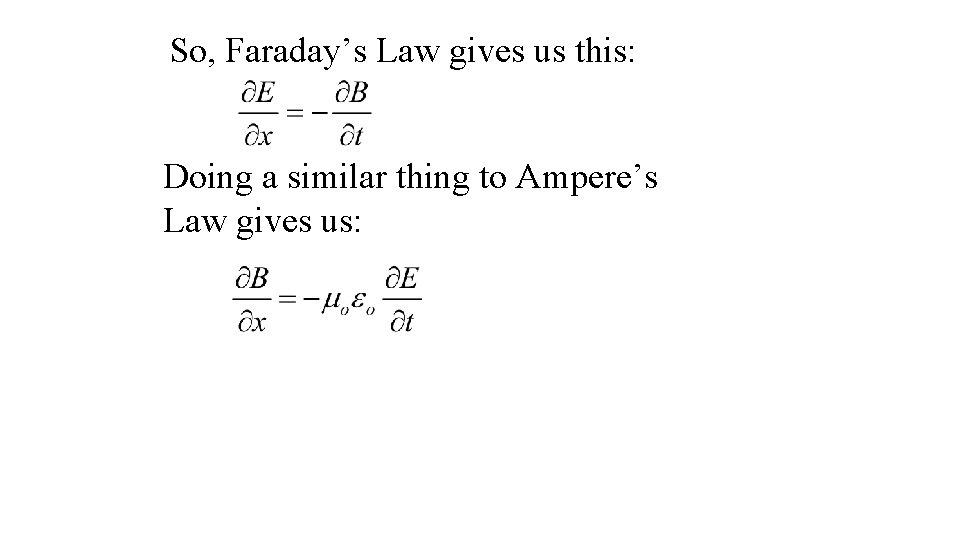
So, Faraday’s Law gives us this: Doing a similar thing to Ampere’s Law gives us:
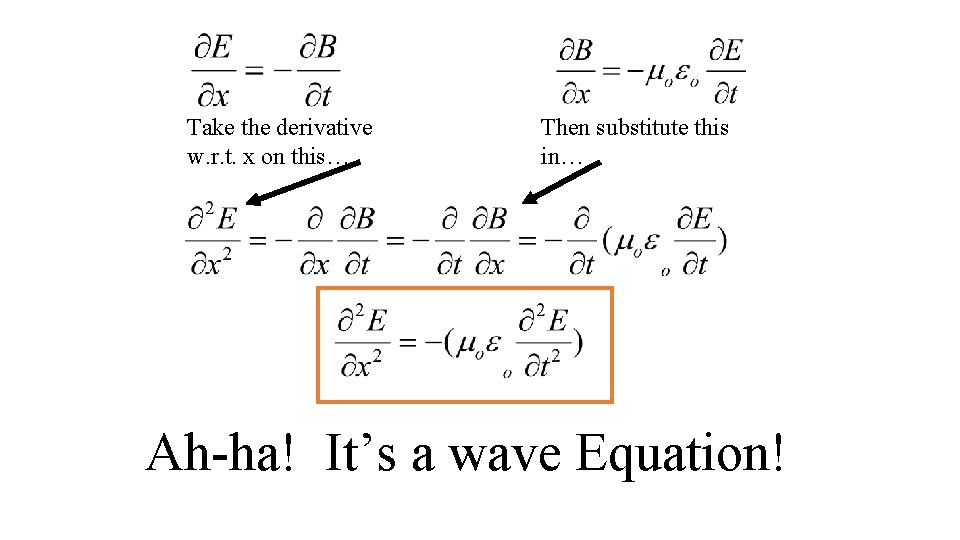
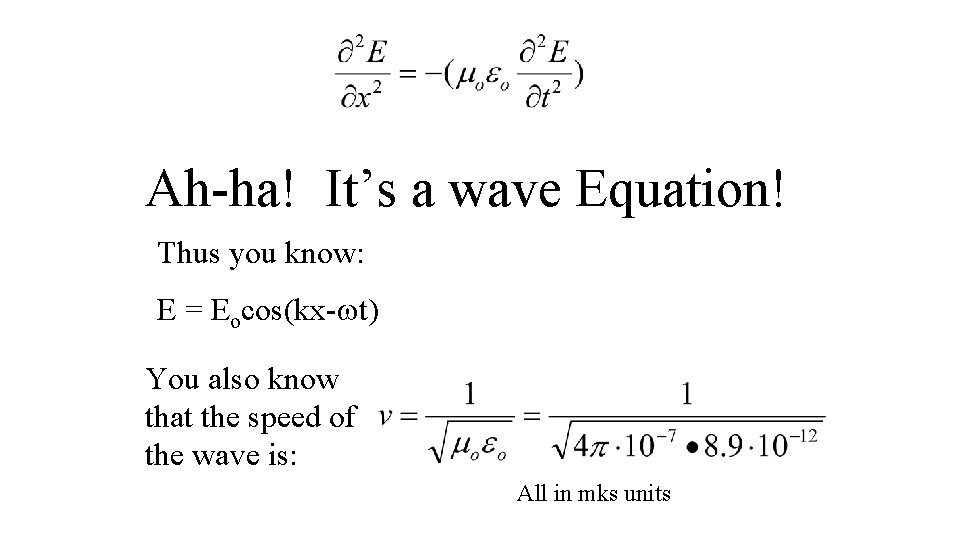
Take the derivative w. r. t. x on this… Then substitute this in… Ah-ha! It’s a wave Equation!
Ah-ha! It’s a wave Equation! Thus you know: E = Eocos(kx- t) You also know that the speed of the wave is: All in mks units
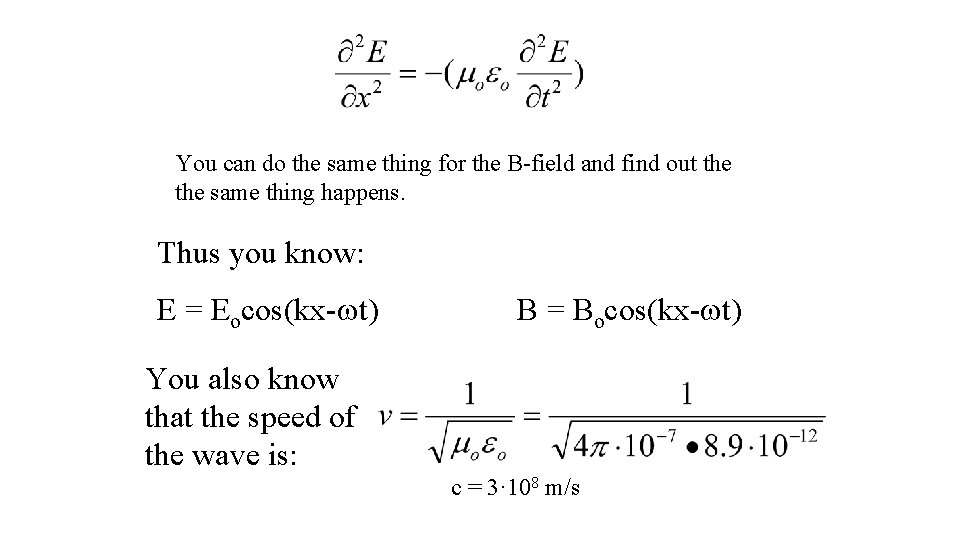
You can do the same thing for the B-field and find out the same thing happens. Thus you know: E = Eocos(kx- t) B = Bocos(kx- t) You also know that the speed of the wave is: c = 3· 108 m/s
Let’s try to visualize this: http: //phet. colorado. edu
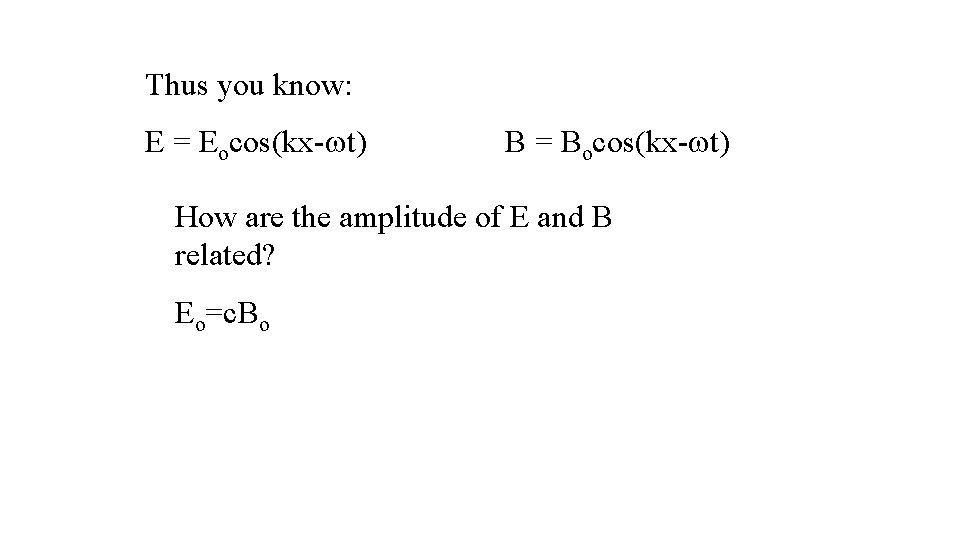
Thus you know: E = Eocos(kx- t) B = Bocos(kx- t) How are the amplitude of E and B related? Eo=c. Bo
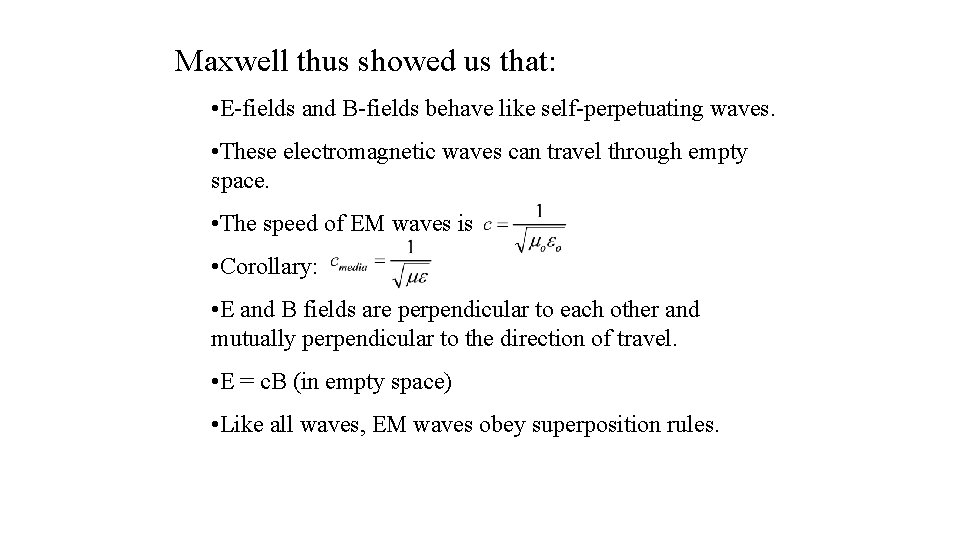
Maxwell thus showed us that: • E-fields and B-fields behave like self-perpetuating waves. • These electromagnetic waves can travel through empty space. • The speed of EM waves is • Corollary: • E and B fields are perpendicular to each other and mutually perpendicular to the direction of travel. • E = c. B (in empty space) • Like all waves, EM waves obey superposition rules.
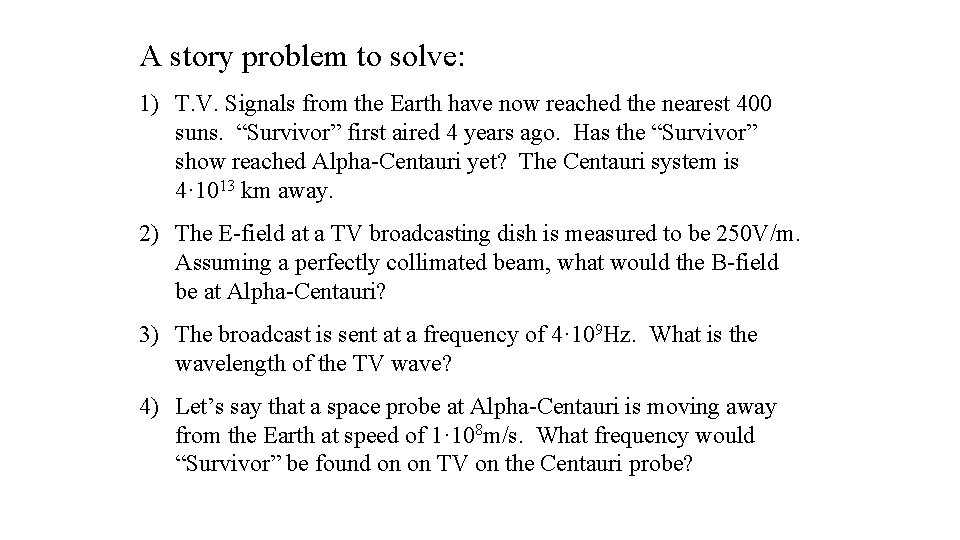
A story problem to solve: 1) T. V. Signals from the Earth have now reached the nearest 400 suns. “Survivor” first aired 4 years ago. Has the “Survivor” show reached Alpha-Centauri yet? The Centauri system is 4· 1013 km away. 2) The E-field at a TV broadcasting dish is measured to be 250 V/m. Assuming a perfectly collimated beam, what would the B-field be at Alpha-Centauri? 3) The broadcast is sent at a frequency of 4· 109 Hz. What is the wavelength of the TV wave? 4) Let’s say that a space probe at Alpha-Centauri is moving away from the Earth at speed of 1· 108 m/s. What frequency would “Survivor” be found on on TV on the Centauri probe?
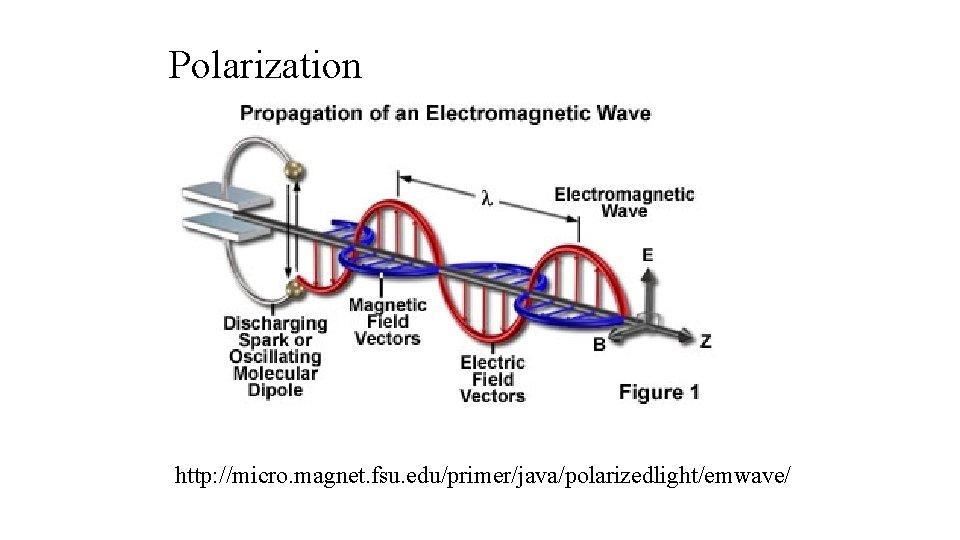
Polarization http: //micro. magnet. fsu. edu/primer/java/polarizedlight/emwave/
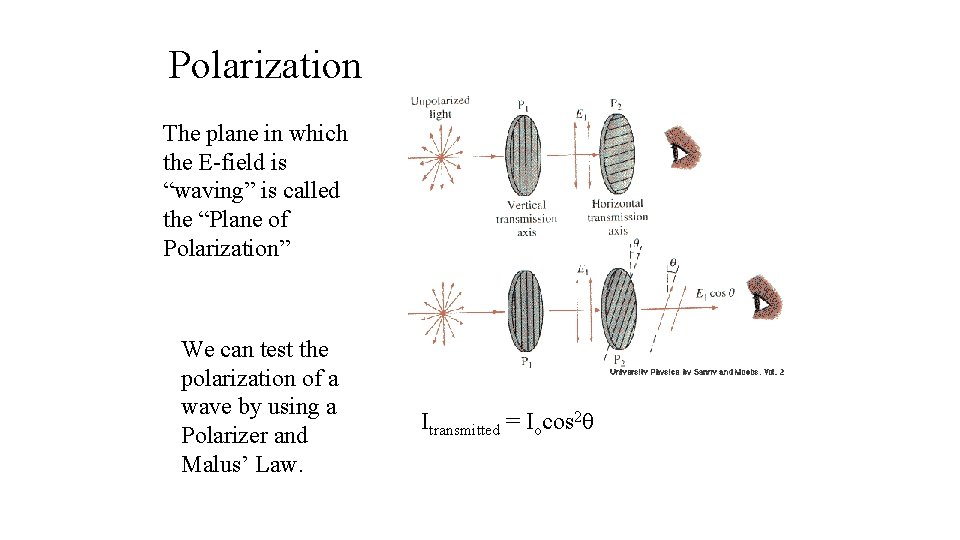
Polarization The plane in which the E-field is “waving” is called the “Plane of Polarization” We can test the polarization of a wave by using a Polarizer and Malus’ Law. Itransmitted = Iocos 2