The Union in Crisis 1846 1861 Slavery and



- Slides: 11
The Union in Crisis 1846 -1861 Slavery and States’ Rights Lincoln, Secession, and War
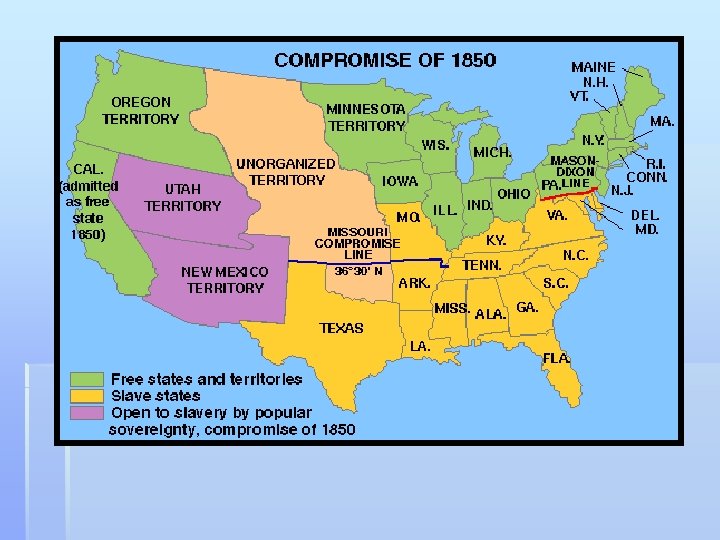
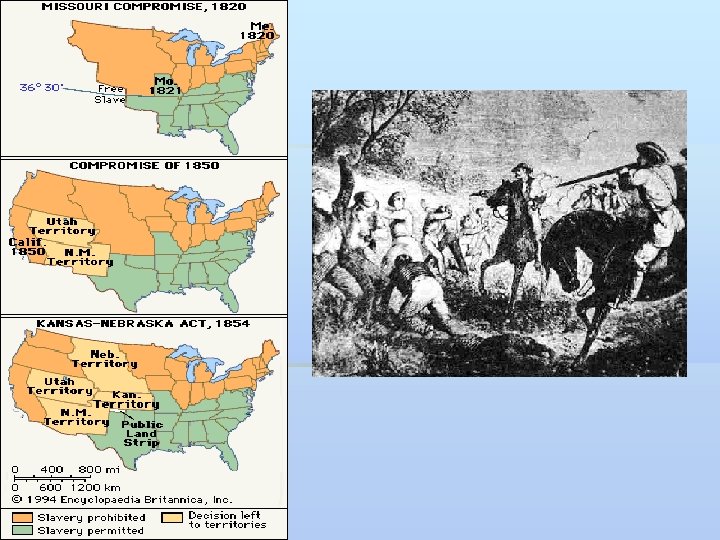
Slavery and States’ Rights § North- manufacturing South- remain agrarian cotton (King Cotton) slavery § Slave issue arises again, even after Missouri Compromise (TX, CA, NM) § Wilmot Proviso- no slavery in Mexican Cession territory- S. mad § 1848 Election- Free Soil Party- Martin Van Buren loses to Whig Zachary Taylor The Compromise of 1850 § Henry Clay (KY) proposes 5 part plan to solve slave issue: § California admitted as free state § NM territory would have no slave restrictions § NM/Texas border dispute would be settled in favor of NM § Slave trade (not slavery) banned in Washington DC § Stronger fugitive slave laws
Slavery and States’ Rights The Fugitive Slave Act § Req. all citizens to help catch slaves- N. refused § Underground Railroad- Harriet Tubman § “Uncle Tom’s Cabin”- Harriet Beecher Stowe (white abolitionist) Kansas-Nebraska Act § Sen. Stephen Douglas (Ill. ) suggests creating 2 new states: Kansas & Nebraska § Re-opened slave debate and repealed Missouri Compromise allowed citizens to decide whether to be free or slave Popular Sovereignty § Kansas- pro slavery; but anti slave groups emerge too (2 factions; pro vs. anti) § Violence erupts Bleeding Kansas New Political Party § Normally PP extend across sectional lines slavery divides ppl &PP § Whig party falls apart; leftovers + Free Soil Party campaign against slavery § Know- Nothing Party nativist organization against immigration § Republican party is born and oppose slavery § Election of 1856 - Dem. James Buchanan wins- Rep. party still too weak
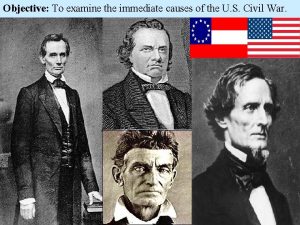
Lincoln, Secession, and War Dred Scott Decision § Scott was a slave living in Missouri Master moved to Illinois, a free state, them moved back to Missouri § Scott sued, claiming he should be free since he lived on free soil § Roger B. Taney (SC Justice) ruled Scott is still a slave b/c he is property, not a citizen, therefore, he had no rights § Decision means the constitution protected slavery- splits country Lincoln-Douglas Debates § Senate election in 1858 in Ill. - Abraham Lincoln vs. Stephen Douglas § Series of debates over slavery § Lincoln-oppose Douglas- feels slavery is necessary, but he dislikes it § Douglas gives the Freeport Doctrine Speech- Ppl can get around slavery issue by electing politicians who would not enforce slave laws Raid on Harpers Ferry § Southerners feel threatened by growing Republican power § Abolitionist John Brown led a raid in Harper’s Ferry, VA § Raided an arsenal gov’t storage for weapons and ammo § Distribute them to slaves in region fails, Brown sentenced to death
Dred Scott
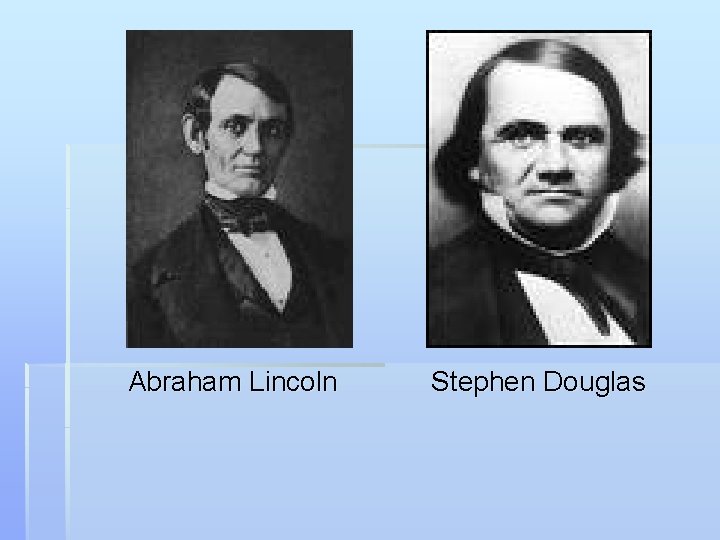
Abraham Lincoln Stephen Douglas
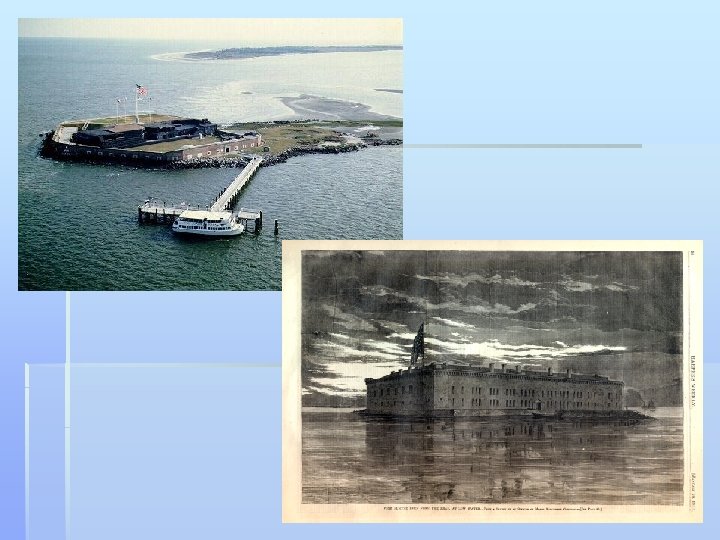
Lincoln, Secession, and War Secession and War § Election of 1860 - Democrats are split- half are pro; half are anti § Republican A. Lincoln wins easily since Dems are split § Rep. promise not to extend slavery, they would not take it away either § Southerners threaten to secede (leave) union if Lincoln wins The South Secedes § South Carolina leaves first-1860 Confederate States of America § Jefferson Davis elected president- says the nat’l government had violated southern state rights § Most S. did not own slaves and were very concerned § Lincoln felt it was his duty to preserve the Union at all times- would fight a war to keep country together Fort Sumter § 1861 - Confederate troops threaten to seize Union forts located in South § Fort Sumter (SC) is most important Union fort supplies running low § Lincoln says he will send supplies via unarmed troops § President Davis ordered his troops to attack Sumter anyway § April 12, 1861 - Civil War begins