The Mode Decision INST 154 Apollo at 50
- Slides: 13
The Mode Decision INST 154 Apollo at 50 Lunar Orbit Rendezvous
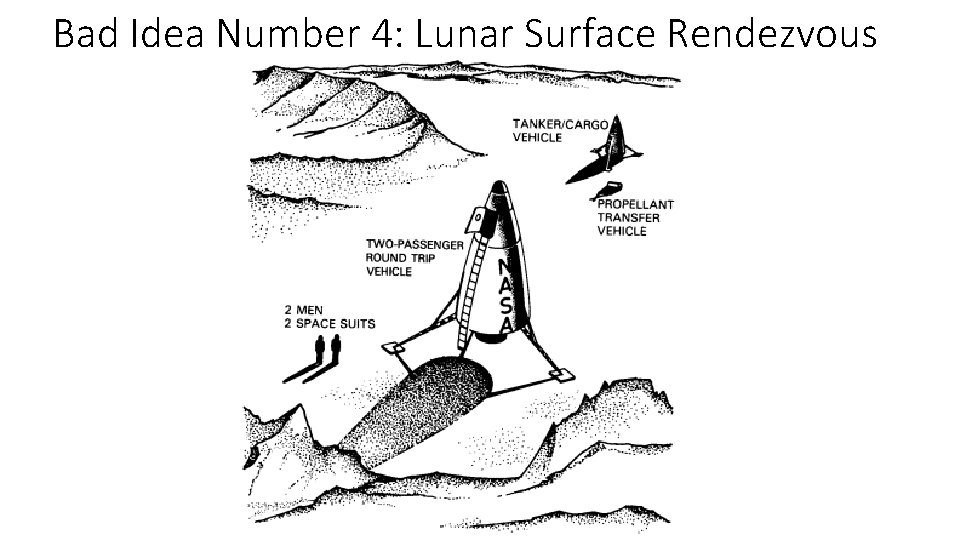
Four Bad Ideas • Direct Ascent • Required an enormous rocket and made the landing much more difficult • Earth Orbit Rendezvous, then Direct Ascent • Required salvo launches and made the landing much more difficult • Lunar Orbit Rendezvous • Rendezvous failure at the moon would be fatal • Lunar Surface Rendezvous • Navigation errors on landing would be fatal
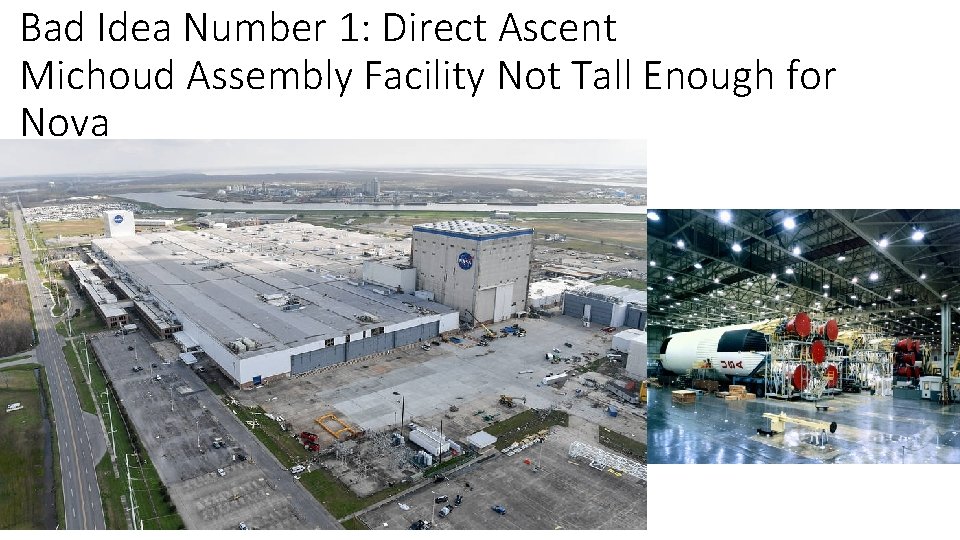
Bad Idea Number 1: Direct Ascent Michoud Assembly Facility Not Tall Enough for Nova
Bad Idea Number 4: Lunar Surface Rendezvous
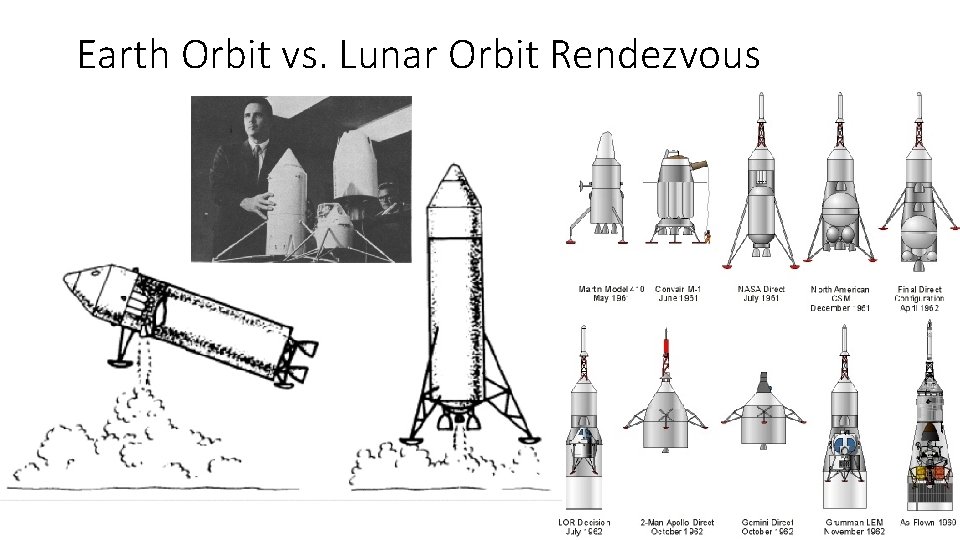
Earth Orbit vs. Lunar Orbit Rendezvous
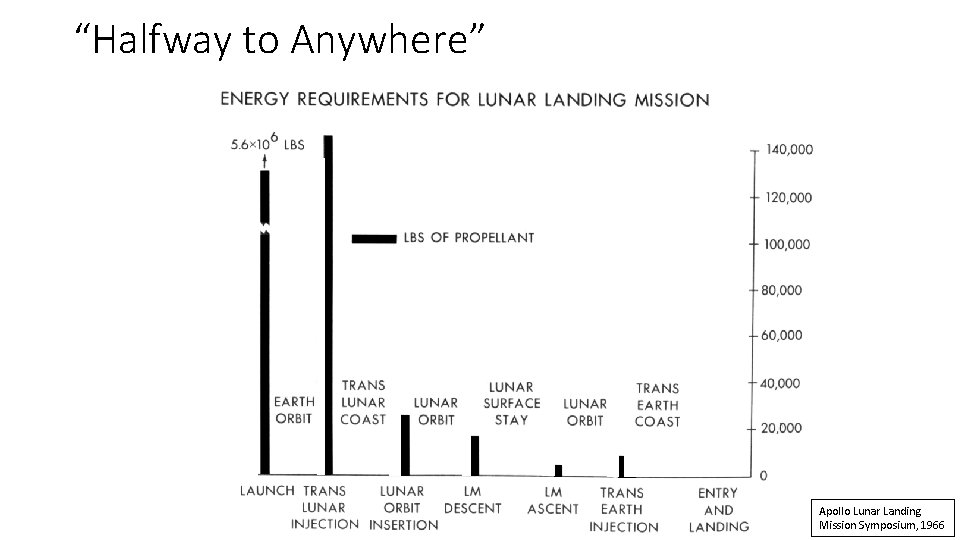
“Halfway to Anywhere” Apollo Lunar Landing Mission Symposium, 1966
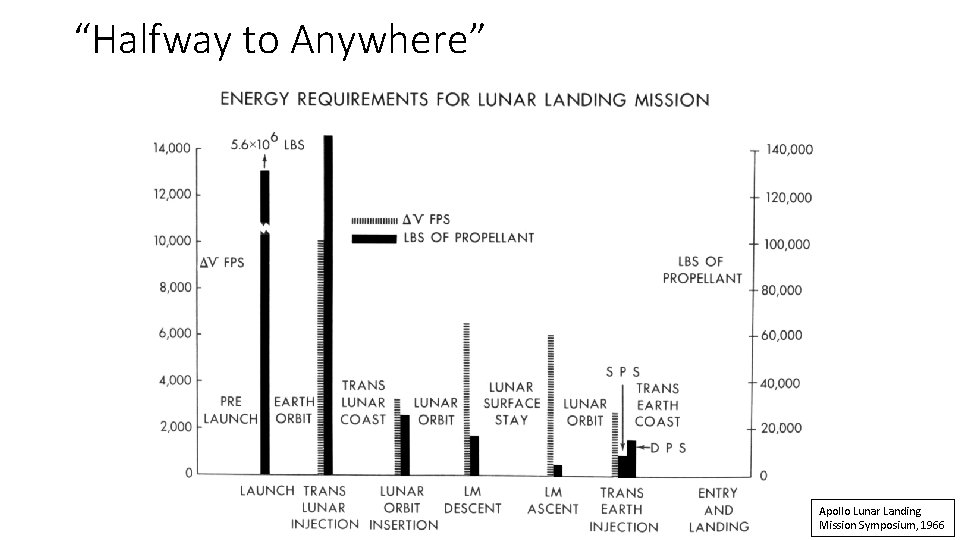
“Halfway to Anywhere” Apollo Lunar Landing Mission Symposium, 1966
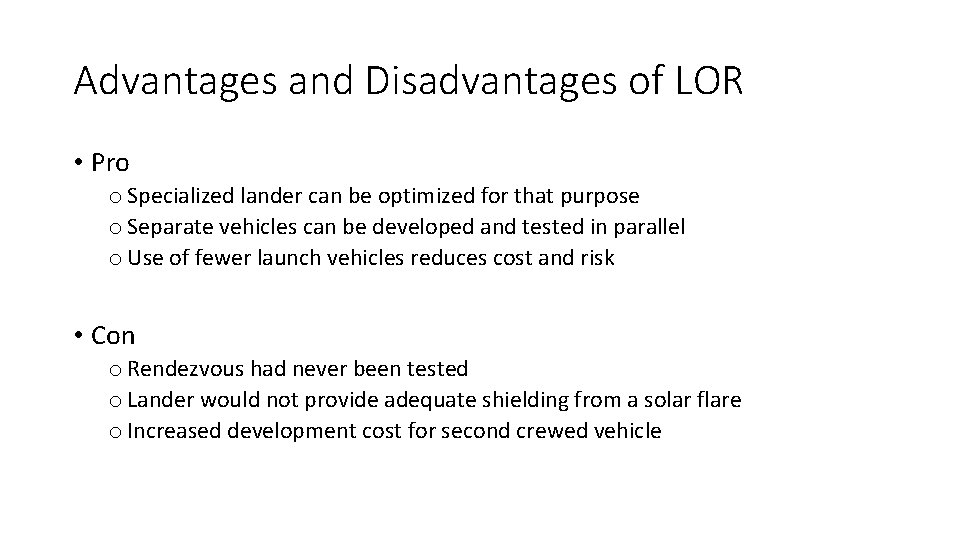
Advantages and Disadvantages of LOR • Pro o Specialized lander can be optimized for that purpose o Separate vehicles can be developed and tested in parallel o Use of fewer launch vehicles reduces cost and risk • Con o Rendezvous had never been tested o Lander would not provide adequate shielding from a solar flare o Increased development cost for second crewed vehicle
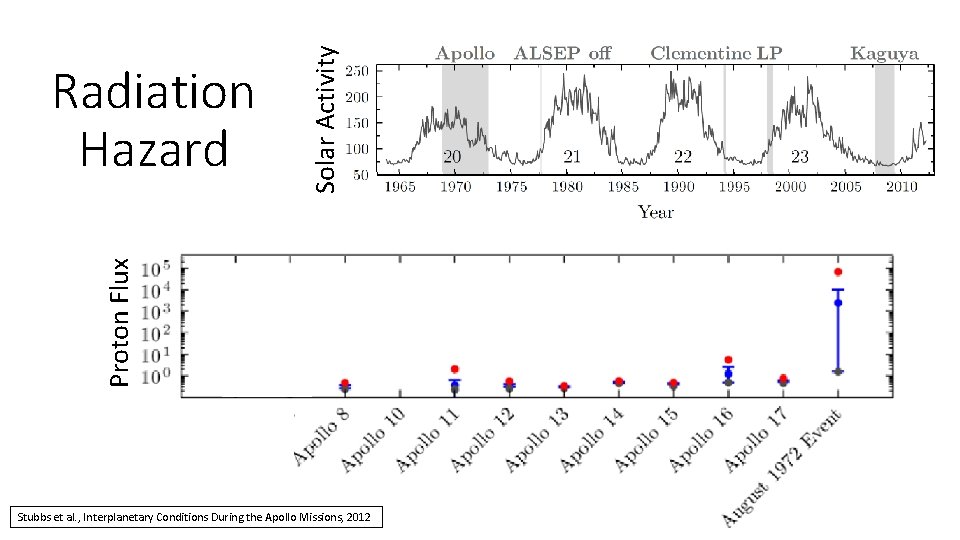
Solar Activity Proton Flux Radiation Hazard Stubbs et al. , Interplanetary Conditions During the Apollo Missions, 2012
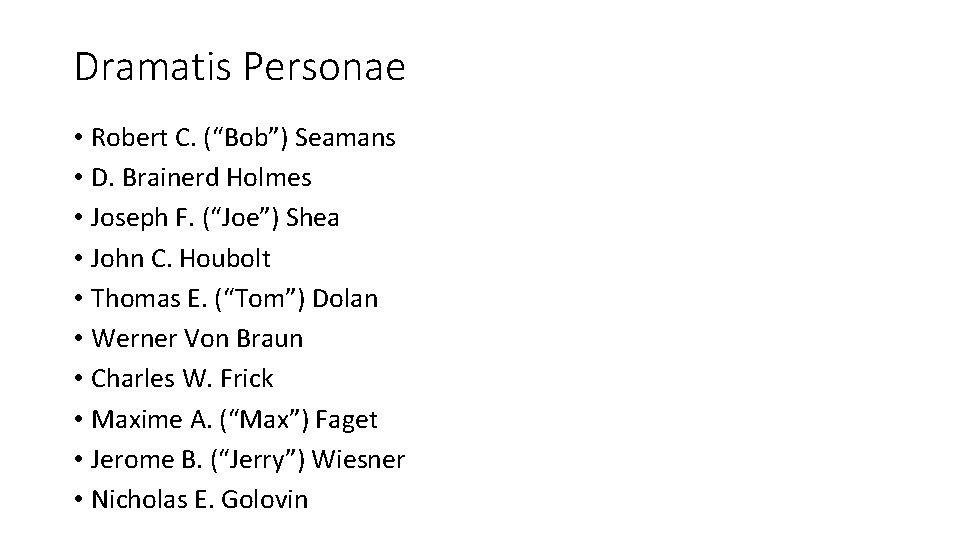
Dramatis Personae • Robert C. (“Bob”) Seamans • D. Brainerd Holmes • Joseph F. (“Joe”) Shea • John C. Houbolt • Thomas E. (“Tom”) Dolan • Werner Von Braun • Charles W. Frick • Maxime A. (“Max”) Faget • Jerome B. (“Jerry”) Wiesner • Nicholas E. Golovin
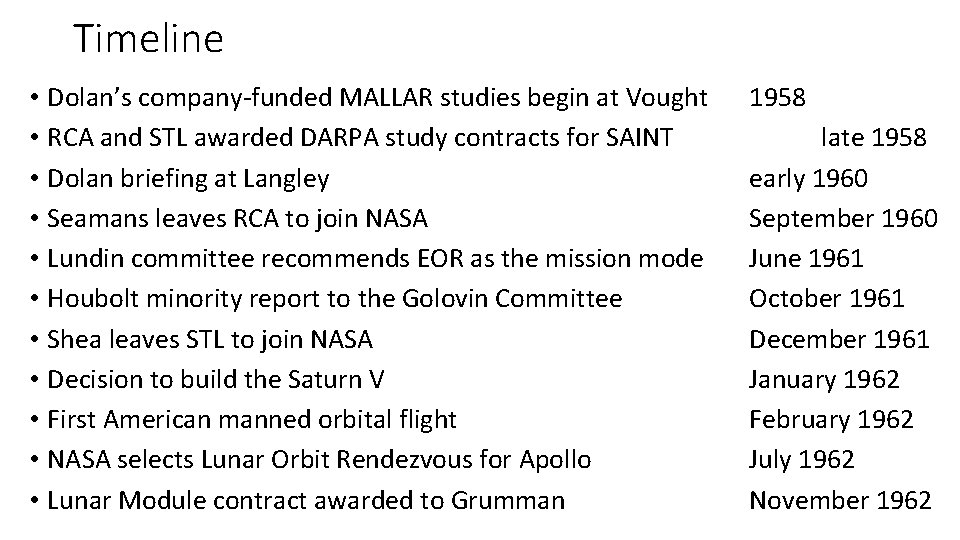
Timeline • Dolan’s company-funded MALLAR studies begin at Vought • RCA and STL awarded DARPA study contracts for SAINT • Dolan briefing at Langley • Seamans leaves RCA to join NASA • Lundin committee recommends EOR as the mission mode • Houbolt minority report to the Golovin Committee • Shea leaves STL to join NASA • Decision to build the Saturn V • First American manned orbital flight • NASA selects Lunar Orbit Rendezvous for Apollo • Lunar Module contract awarded to Grumman 1958 late 1958 early 1960 September 1960 June 1961 October 1961 December 1961 January 1962 February 1962 July 1962 November 1962
Optimizing for the Short Term • Saturn V is to Mars as Saturn 1 B is to the Moon • By not pursuing Nova, NASA failed to invest in human solar system exploration • Growth potential of the “Apollo system” was severely limited • Lunar Module science payload was initially a few hundred pounds • Incentives for Marshall Space Flight Center to agree to LOR • Workload balancing for payloads (later assigned Lunar Rover and Skylab) • Promise to consider autonomous lunar resupply (never funded) • Offer to continue work on Nova launch vehicle after Apollo funding peak (not done)
Discussion Groups • Annis Podcast (Apollo: The Mode Decision”) • A detailed recounting of many aspects of the mode decision • Alesi Article (“Do We Want to Go To the Moon or Not? ”) • The mode decision from the perspective of Lunar Orbit Rendezvous advocates • Cox Chapter 9 (“What Sonofabitch Thinks It Isn’t the Right Thing to Do? ”) • A vivid description of the end game for the mode decision debate