The Latest ECOST Economic Model Pierre Failler Haoran





- Slides: 16
The Latest ECOST Economic Model Pierre Failler, Haoran Pan and Francis Laloe CEMARE and UMR C 3 ED November 12 -16, FIFTH PROJECT MEETING, PUNTA CANA, DOMINICAN REPUBLIC
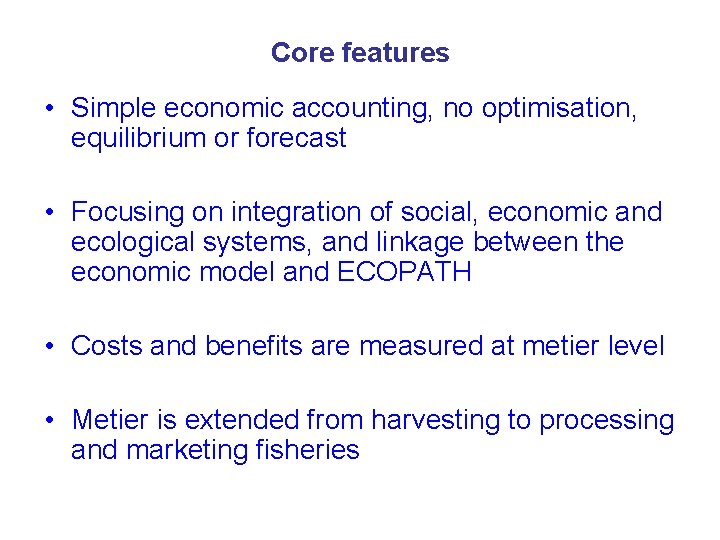
Core features • Simple economic accounting, no optimisation, equilibrium or forecast • Focusing on integration of social, economic and ecological systems, and linkage between the economic model and ECOPATH • Costs and benefits are measured at metier level • Metier is extended from harvesting to processing and marketing fisheries
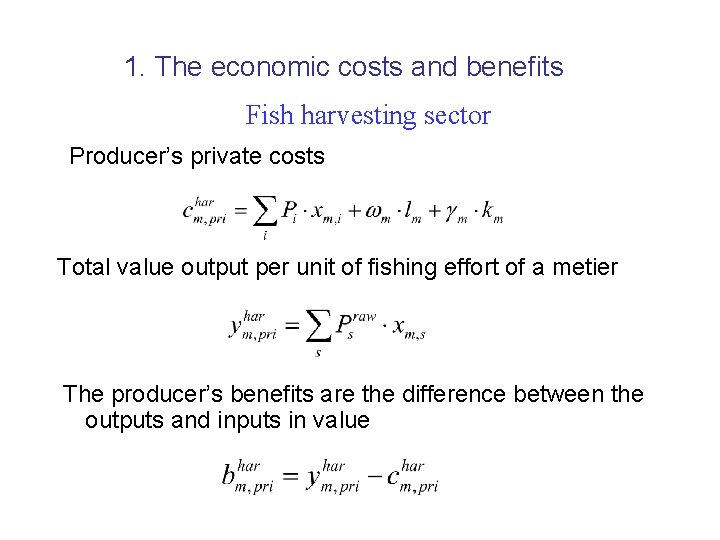
1. The economic costs and benefits Fish harvesting sector Producer’s private costs Total value output per unit of fishing effort of a metier The producer’s benefits are the difference between the outputs and inputs in value
Producer’s public costs The direct public benefit The producer’s final cost and benefit
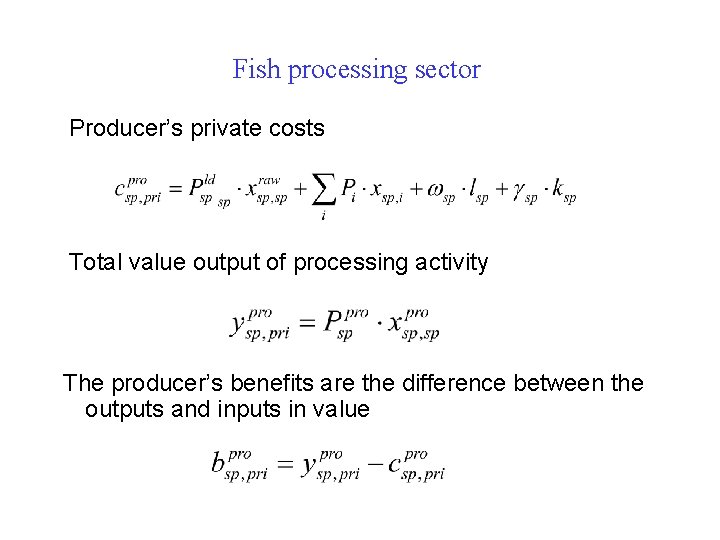
Fish processing sector Producer’s private costs Total value output of processing activity The producer’s benefits are the difference between the outputs and inputs in value
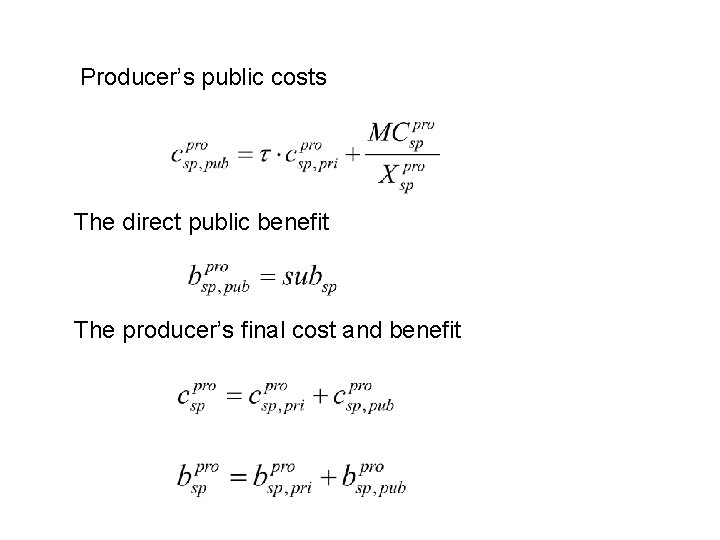
Producer’s public costs The direct public benefit The producer’s final cost and benefit
Fish marketing sector Producer’s private costs Total value output of marketing activity The producer’s benefits are the difference between the outputs and inputs in value
Producer’s public costs The direct public benefit The producer’s final cost and benefit
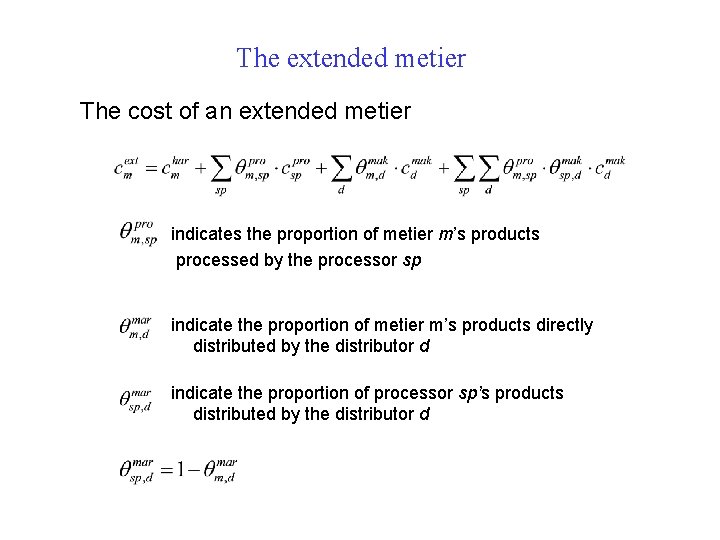
The extended metier The cost of an extended metier indicates the proportion of metier m’s products processed by the processor sp indicate the proportion of metier m’s products directly distributed by the distributor d indicate the proportion of processor sp’s products distributed by the distributor d
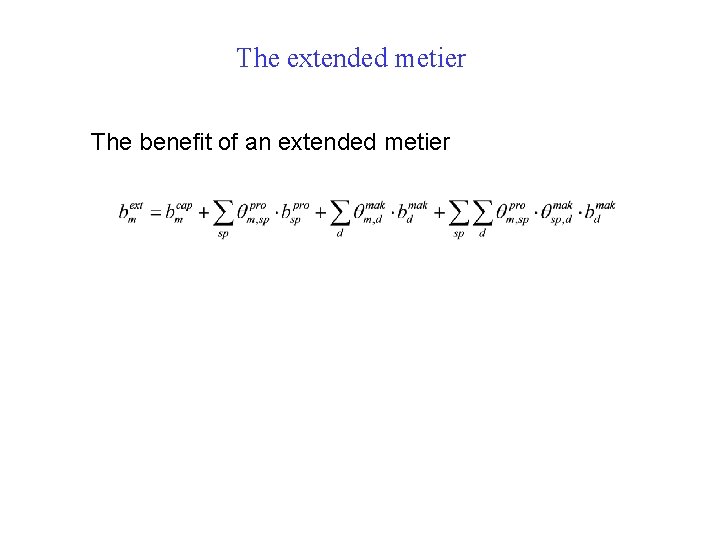
The extended metier The benefit of an extended metier
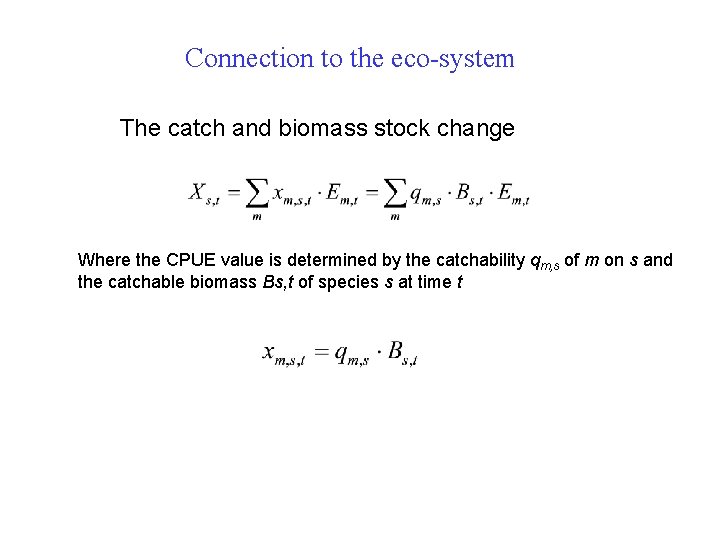
Connection to the eco-system The catch and biomass stock change Where the CPUE value is determined by the catchability qm, s of m on s and the catchable biomass Bs, t of species s at time t
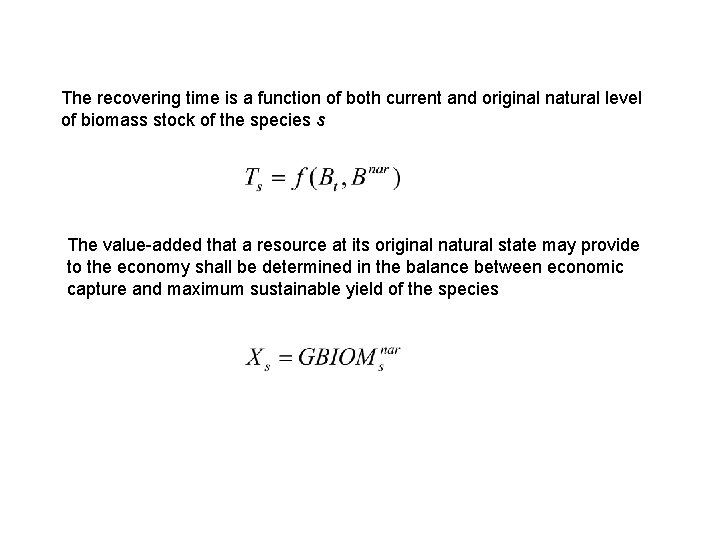
2. The ecological costs and benefits The ecological cost of a species is the ecological cost of species s Ts the time for the species to recover from its current to original natural state the value-added that the species may allow the economic system to generate when the resource is at original natural state
The recovering time is a function of both current and original natural level of biomass stock of the species s The value-added that a resource at its original natural state may provide to the economy shall be determined in the balance between economic capture and maximum sustainable yield of the species
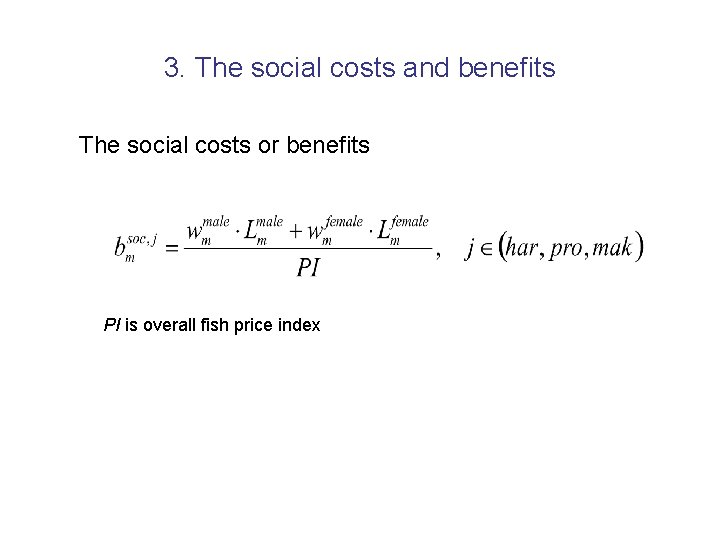
3. The social costs and benefits The social costs or benefits PI is overall fish price index
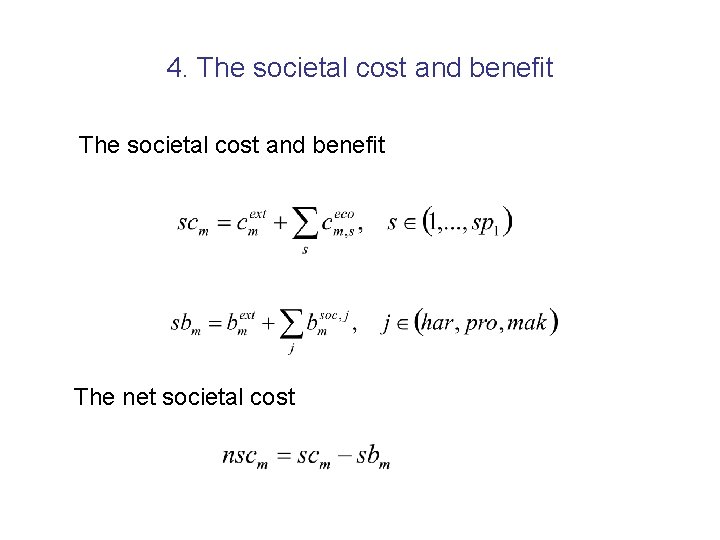
4. The societal cost and benefit The net societal cost
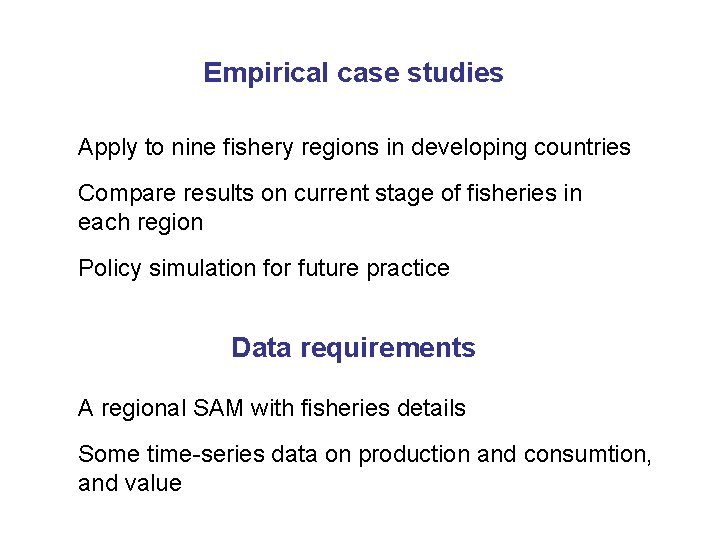
Empirical case studies Apply to nine fishery regions in developing countries Compare results on current stage of fisheries in each region Policy simulation for future practice Data requirements A regional SAM with fisheries details Some time-series data on production and consumtion, and value