The Industrial Revolution A gradual fundamental change in

- Slides: 14
The Industrial Revolution A gradual, fundamental change in the way goods were produced and distributed: development of factories brought about by the introduction of machinery Completely altered the economic, social and political structure of the world between 1750 -1850 Fact: The Industrial Revolution began in Great Britain in the mid 1700 s. WHY ENGLAND?
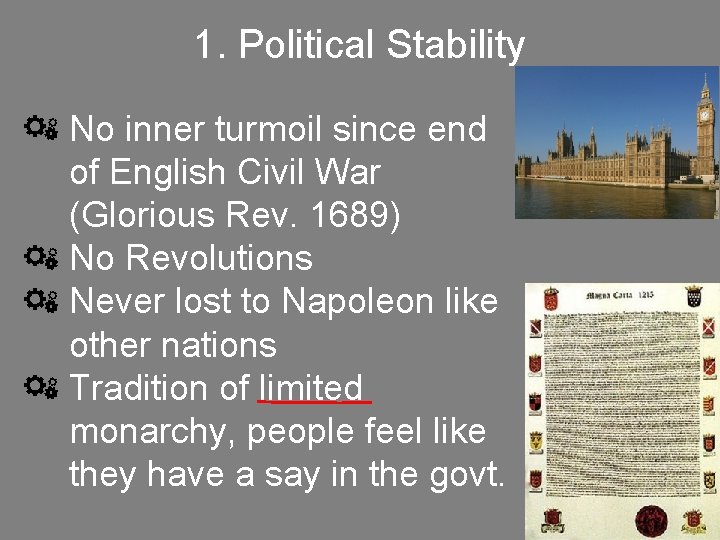
1. Political Stability No inner turmoil since end of English Civil War (Glorious Rev. 1689) No Revolutions Never lost to Napoleon like other nations Tradition of limited monarchy, people feel like they have a say in the govt.
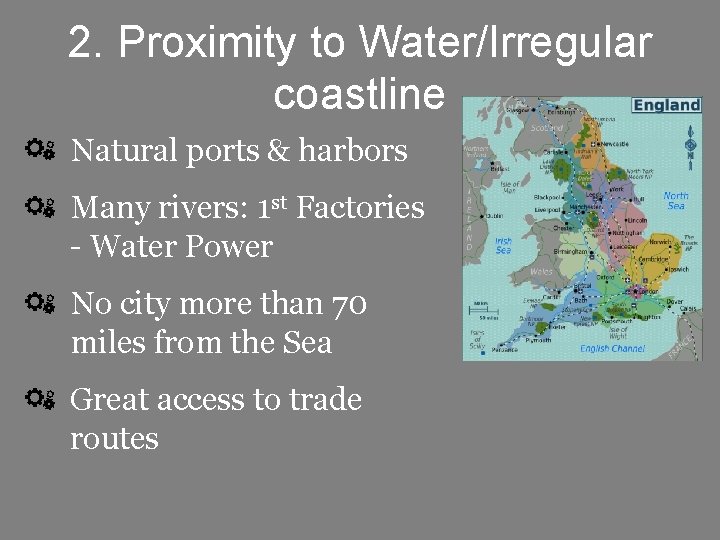
2. Proximity to Water/Irregular coastline Natural ports & harbors Many rivers: 1 st Factories - Water Power No city more than 70 miles from the Sea Great access to trade routes
3. An abundance of natural resources (coal & iron) Necessary for industrialization Power Source for first factories Used to construct machines buildings infrastructure
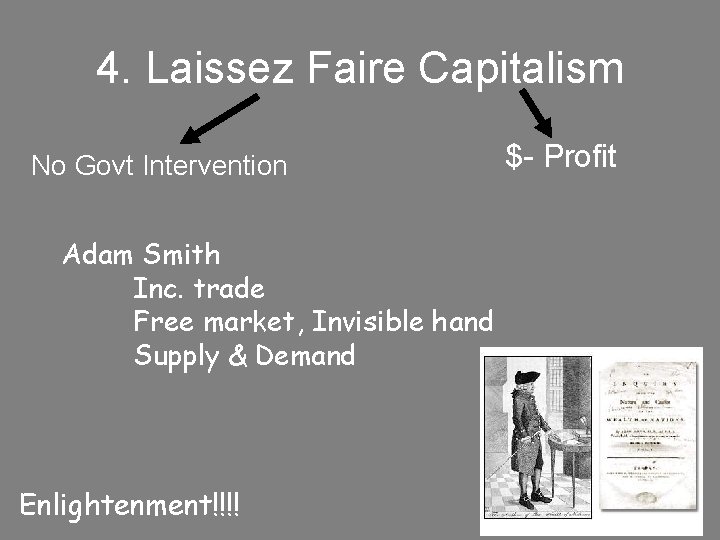
4. Laissez Faire Capitalism No Govt Intervention Adam Smith Inc. trade Free market, Invisible hand Supply & Demand Enlightenment!!!! $- Profit
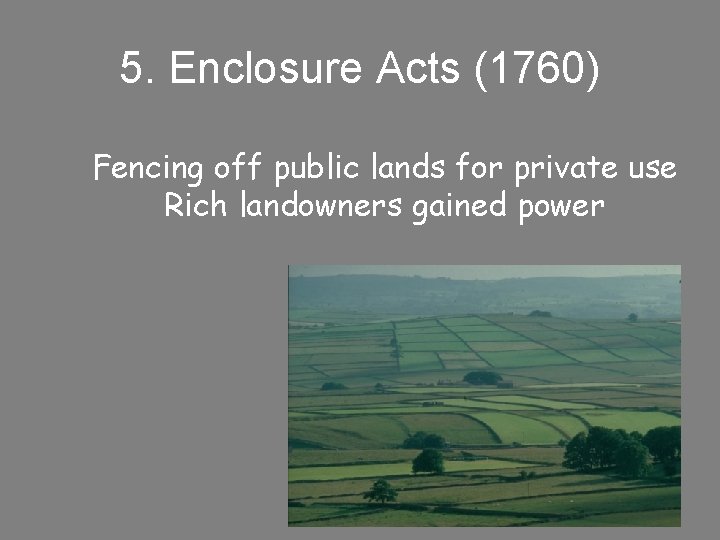
5. Enclosure Acts (1760) Fencing off public lands for private use Rich landowners gained power
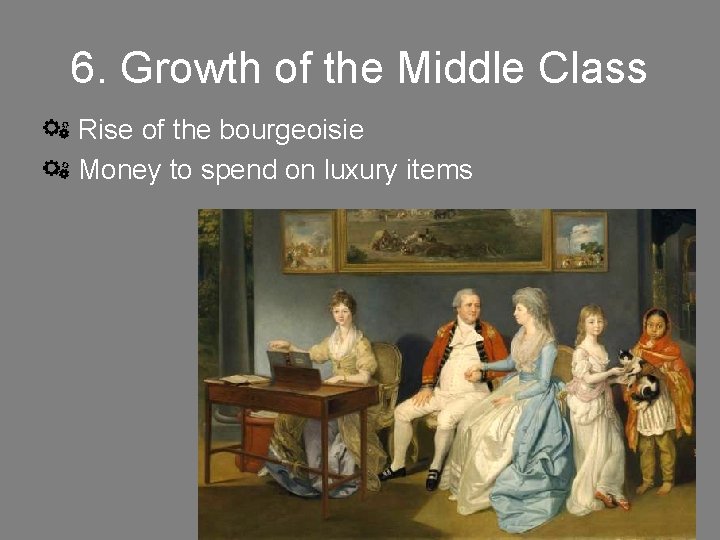
6. Growth of the Middle Class Rise of the bourgeoisie Money to spend on luxury items
The Agrarian Revolution Change in the methods of farming using more efficient and effective tools • • Prerequisite for Industrial Revolution New inventions in farming technology Allowed for more food to be grown Led to population growth • Crop rotation, cast-iron heavy plow, mechanical reaper and artificial fertilizers • The seed drill- Jethro Tull
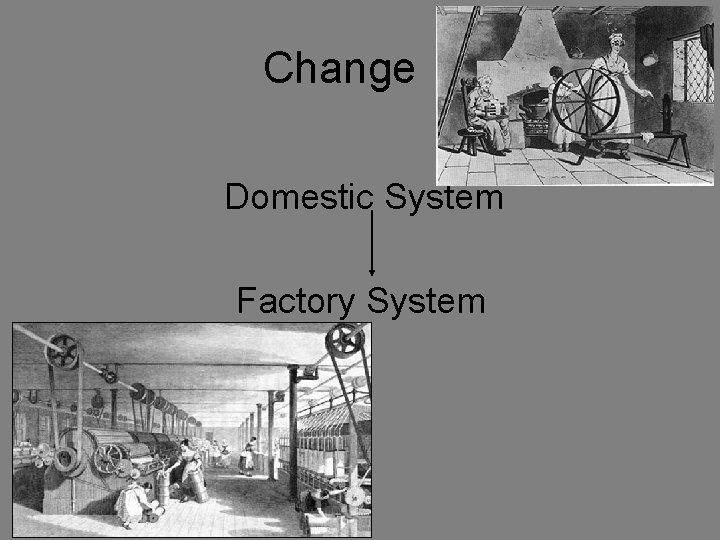
The Domestic System • • System of producing goods in homes by families Sold by traveling merchants Good quality, low quantity, high price
Change Domestic System Factory System
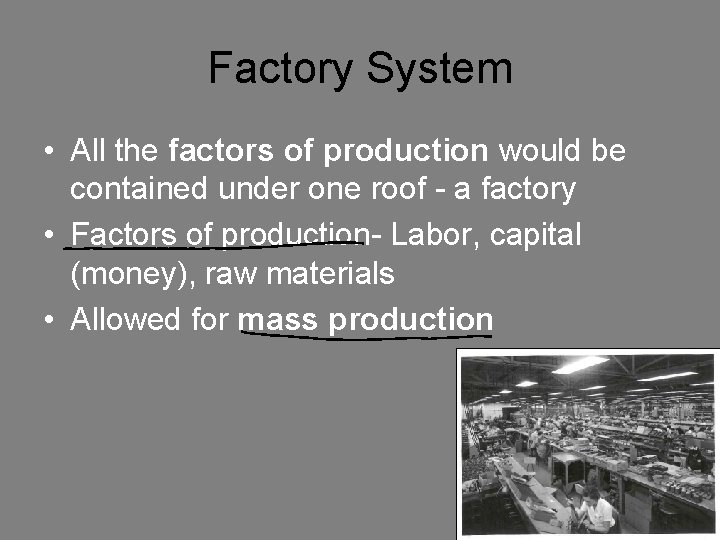
Factory System • All the factors of production would be contained under one roof - a factory • Factors of production- Labor, capital (money), raw materials • Allowed for mass production
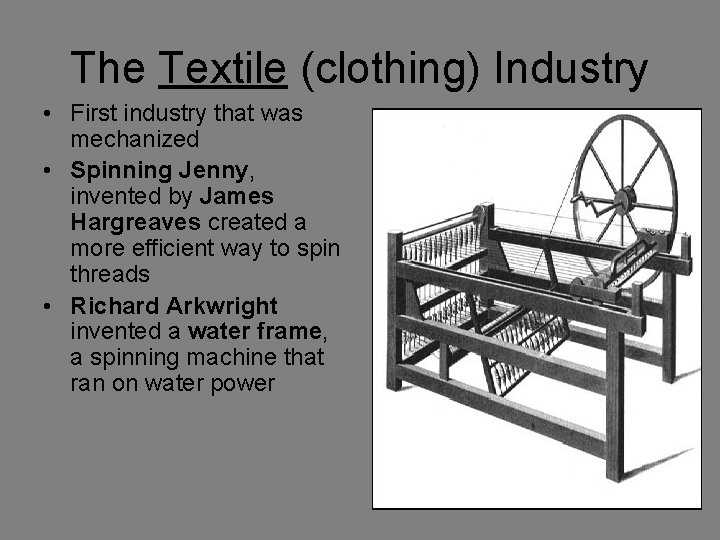
The Textile (clothing) Industry • First industry that was mechanized • Spinning Jenny, invented by James Hargreaves created a more efficient way to spin threads • Richard Arkwright invented a water frame, a spinning machine that ran on water power
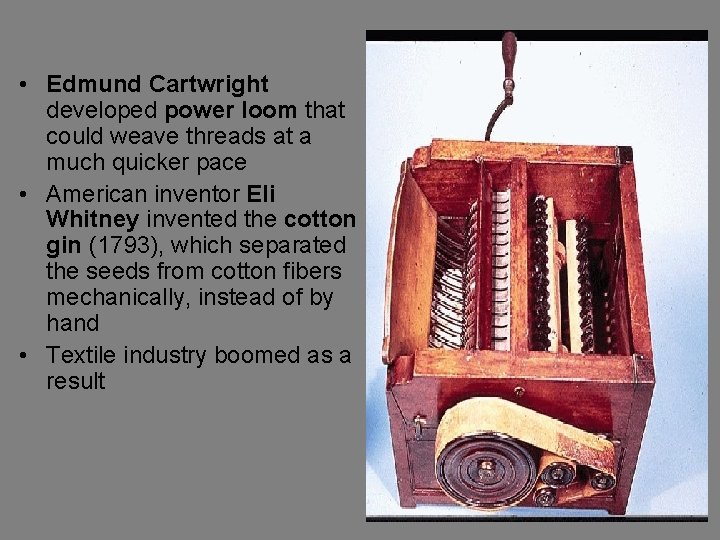
• Edmund Cartwright developed power loom that could weave threads at a much quicker pace • American inventor Eli Whitney invented the cotton gin (1793), which separated the seeds from cotton fibers mechanically, instead of by hand • Textile industry boomed as a result
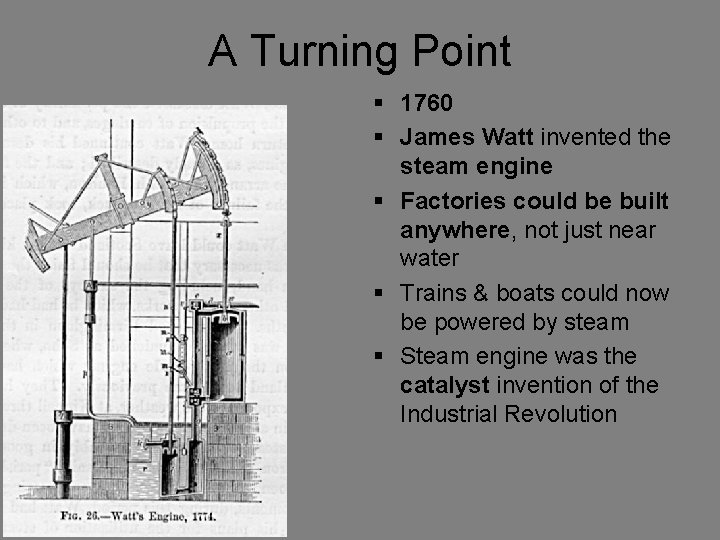
A Turning Point § 1760 § James Watt invented the steam engine § Factories could be built anywhere, not just near water § Trains & boats could now be powered by steam § Steam engine was the catalyst invention of the Industrial Revolution