THE FIRST HARVEST An Introduction to the Early
- Slides: 24
“THE FIRST HARVEST” An Introduction to the Early Romantics
Origins References to “romances” in Britain in the later half of the 18 th century, which were compositions somewhere between a long narrative poem or ballad and a folk tale. These “romances, ” typically French in origin, frequently featured chivalrous deeds from ages past. In 1755, Dr. Johnson declared the “Romantick” as “wild, …improbable; false, …fanciful. ” However, when the term had made its way into the dialect, it was seen in a more positive light. In The Progress of Romance (1785), was noted as “an heroic fable, which treats of fabulous persons and things. ”
“FIRSTS” Cooper, Irving, Bryant, and Poe are credited with several “firsts” � They were among the first professional writers. � They are among the first American authors who are still widely read today. � Irving, Cooper and Poe developed or helped introduce into America such important fictional forms as the tale, the short story, the novel and the romance � Poe is credited with inventing the detective story. � Bryant and Poe were the first to bring American poetry to the attention of readers in England Europe � They gave new emphasis to the lyrical and musical qualities of writers to show the new attitudes of
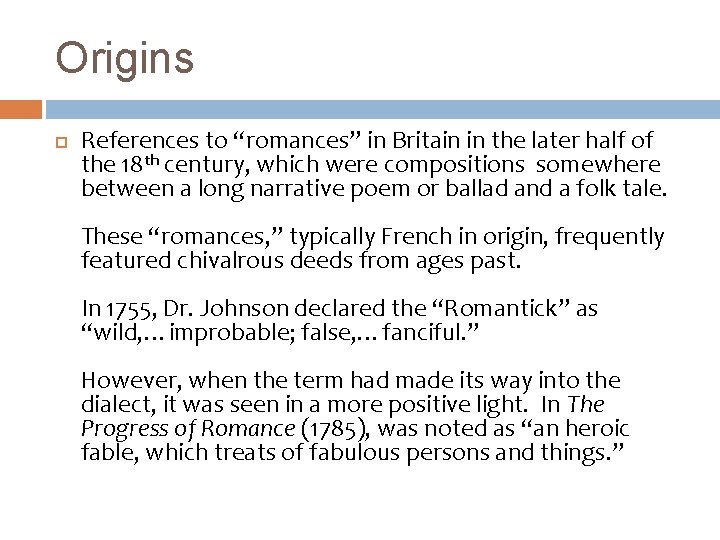
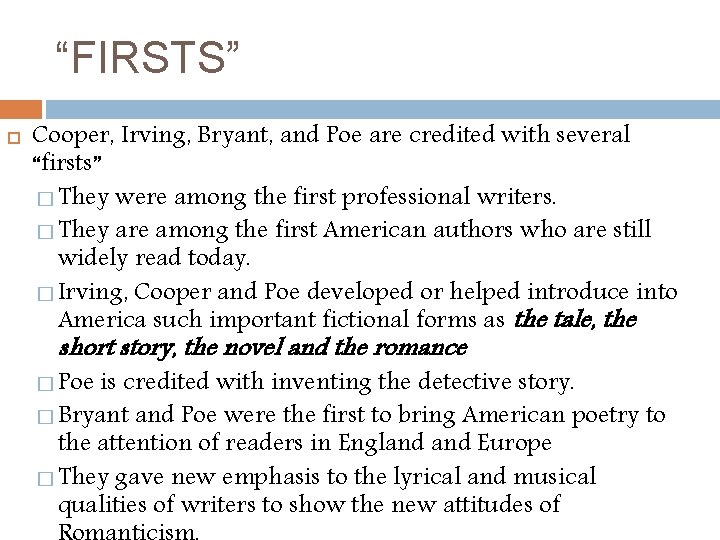
The Early Romantics = Transitional Figures Irving Cooper
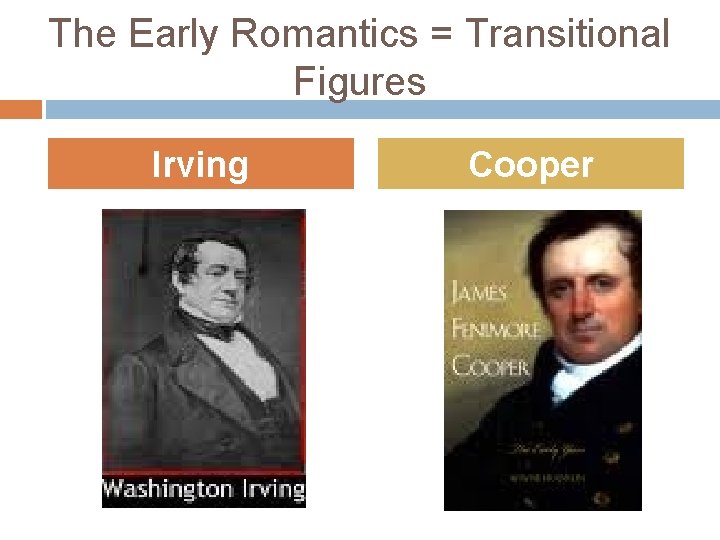
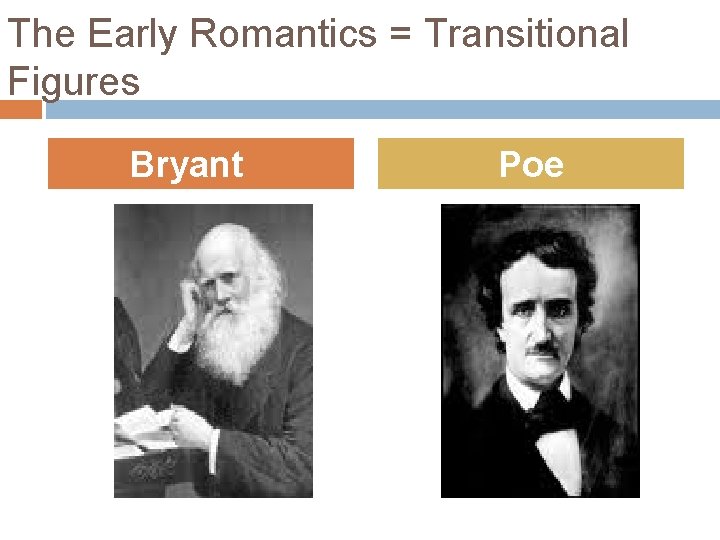
The Early Romantics = Transitional Figures Bryant Poe
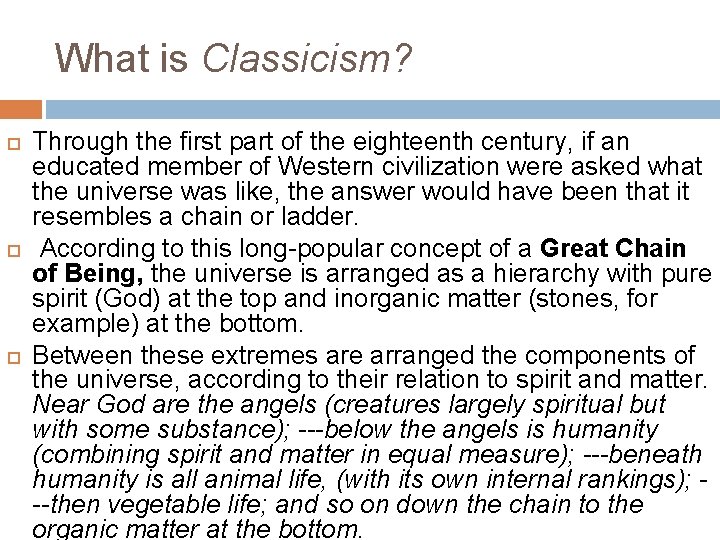
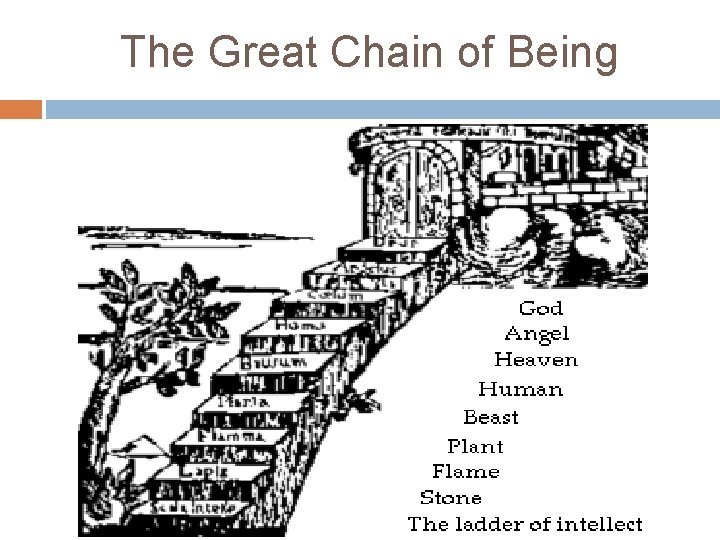
What is Classicism? Through the first part of the eighteenth century, if an educated member of Western civilization were asked what the universe was like, the answer would have been that it resembles a chain or ladder. According to this long-popular concept of a Great Chain of Being, the universe is arranged as a hierarchy with pure spirit (God) at the top and inorganic matter (stones, for example) at the bottom. Between these extremes are arranged the components of the universe, according to their relation to spirit and matter. Near God are the angels (creatures largely spiritual but with some substance); ---below the angels is humanity (combining spirit and matter in equal measure); ---beneath humanity is all animal life, (with its own internal rankings); --then vegetable life; and so on down the chain to the organic matter at the bottom.
The Great Chain of Being
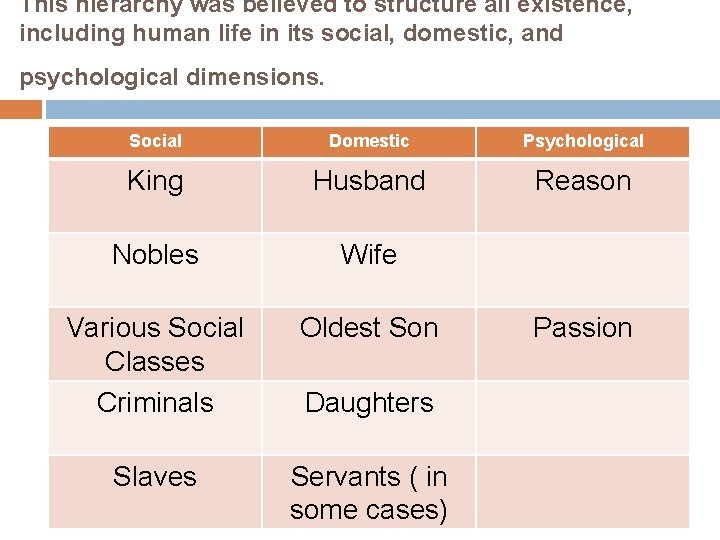
This hierarchy was believed to structure all existence, including human life in its social, domestic, and psychological dimensions. Social Domestic Psychological King Husband Reason Nobles Wife Various Social Classes Criminals Oldest Son Slaves Servants ( in some cases) Daughters Passion
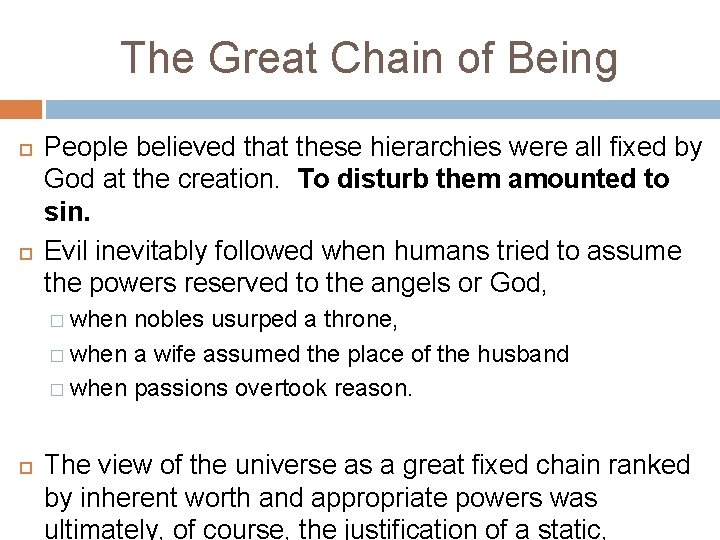
The Great Chain of Being People believed that these hierarchies were all fixed by God at the creation. To disturb them amounted to sin. Evil inevitably followed when humans tried to assume the powers reserved to the angels or God, � when nobles usurped a throne, � when a wife assumed the place of the husband � when passions overtook reason. The view of the universe as a great fixed chain ranked by inherent worth and appropriate powers was ultimately, of course, the justification of a static,
So, why the change? In the latter part of the 18 th century, this traditional view of the universe along with its extensions in social and personal life was rapidly breaking down. Enlightenment science had by then succeeded in vastly expanding the size of the known universe and, at the same time, in disclosing a before unsuspected realm of microscopic life everywhere in nature. Not only scientists but all knowledgeable people were newly impressed by the intricacy of organic nature and the dynamic quality of the universe.
The Transition from Classicism to Romanticism Meanwhile, new social theories encouraged by the Age of Reason increasingly questioned arbitrary political authority. Jefferson invoked the laws of nature as the highest authority in the opening sentence of the Declaration and in the second sentence assumed that the natural rights of the individual were superior to the powers of any government. The Great Chain of Being was too static, too authoritarian, and too narrowly ordered to accommodate such new views of natural and social reality.
Examples of this change in literature: In a long prose poem called “Eureka, ” Poe depicts the creation of the cosmos, describes the origins of matter in the first combinations of atoms, and then from that particle, the almost unimaginable explosion of the universe outward through the vastness of space to infinity. �It was a vision of a dynamic universe in which change is the only constant.
Examples of this change in literature: Jefferson spoke of a new aristocracy of merit —the most able, the best educated, the wisest— would rise through the democratic process. Ben Franklin, born and bred within the restrictions of the Puritan culture, proved the point by rising from poverty and obscurity to be among the greatest men of the age and to become the new nation’s most famous examples of the change
Examples of this change in literature: Emerson was overwhelmed by the “inexhaustible riches of nature” and was enthralled not by a hierarchy that divided and ranked the forms of life but that there was evidence of life in ALL forms. Whitman (like Emerson) later expressed the same idea when he wrote “I believe a leaf of grass is no less that the journey work of the stars…” **Also , now social mobility was considered a positive thing, and overturned the Puritan’s belief that one’s station in life was a divinely appointed calling.
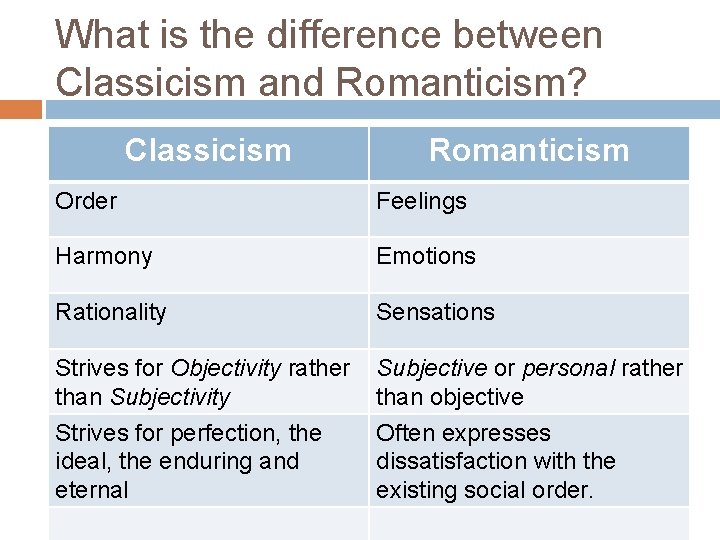
What is the difference between Classicism and Romanticism? Classicism Romanticism Order Feelings Harmony Emotions Rationality Sensations Strives for Objectivity rather Subjective or personal rather than Subjectivity than objective Strives for perfection, the ideal, the enduring and eternal Often expresses dissatisfaction with the existing social order.
Development of Self-awareness Self and nature are one; therefore, self-awareness was not selfish but a way to open up the universe. If the self was one with humanity, the individual had a duty to reform inequalities and assuage suffering. The idea of “self” was totally overhauled from the negative implications of selfishness in the past to new, more positive connotations.
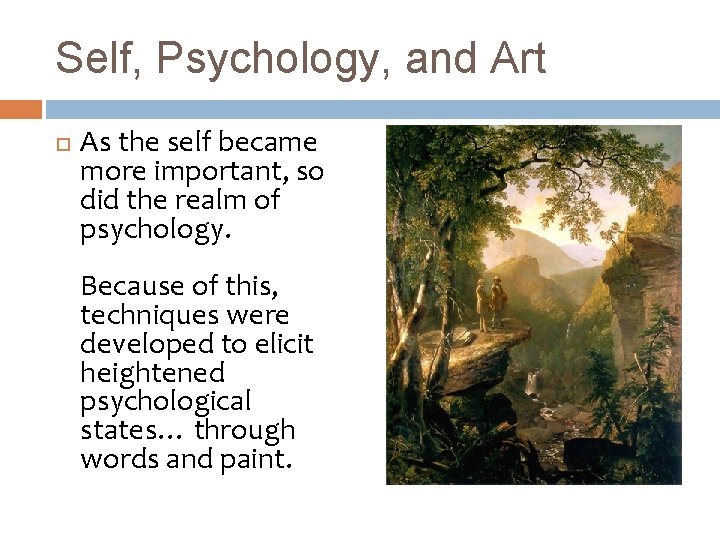
Self, Psychology, and Art As the self became more important, so did the realm of psychology. Because of this, techniques were developed to elicit heightened psychological states… through words and paint.
The Purpose of Art as inspiration Art – not science – could best reveal universal truths. Expressive art was important to the individual and society. Emerson (“The Poet” 1844): For all men live by truth, and stand in need of expression. In love, in art, in avarice, in politics, in labor, in games, we study to utter our painful secret. The man is only half himself, the other half is his expression
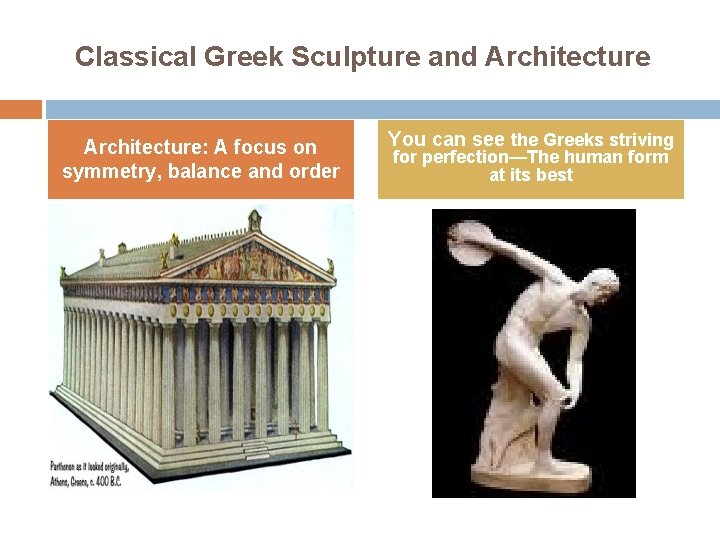
Classical Greek Sculpture and Architecture: A focus on symmetry, balance and order You can see the Greeks striving for perfection—The human form at its best
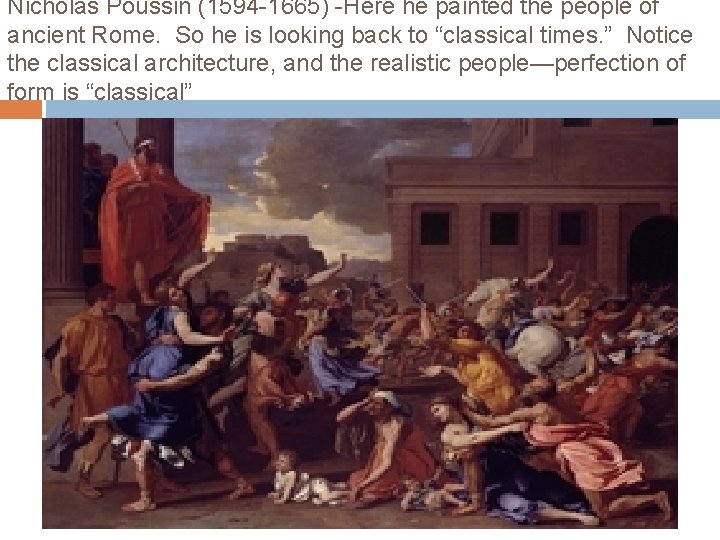
Nicholas Poussin (1594 -1665) -Here he painted the people of ancient Rome. So he is looking back to “classical times. ” Notice the classical architecture, and the realistic people—perfection of form is “classical”
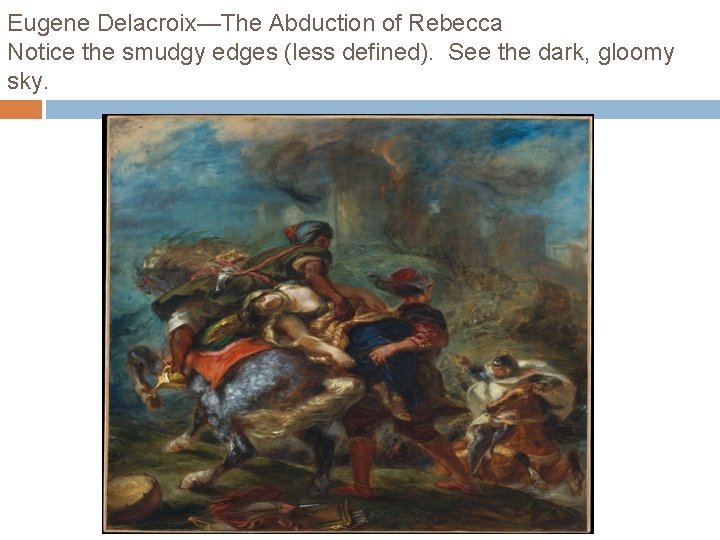
Eugene Delacroix—The Abduction of Rebecca Notice the smudgy edges (less defined). See the dark, gloomy sky.
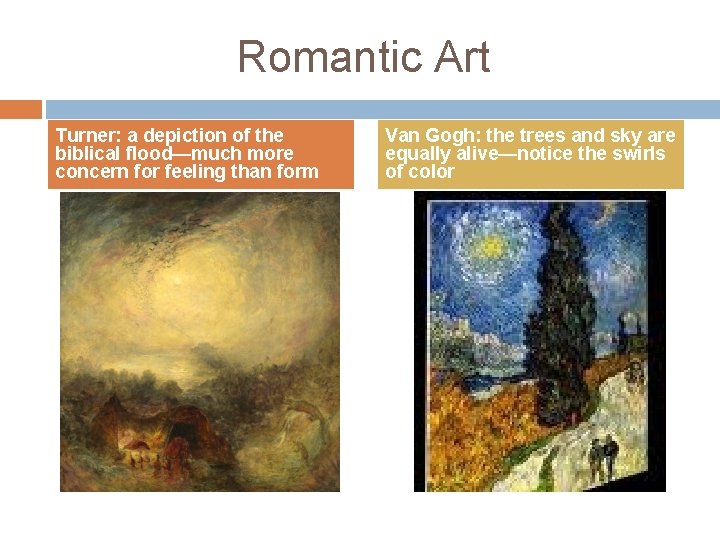
Romantic Art Turner: a depiction of the biblical flood—much more concern for feeling than form Van Gogh: the trees and sky are equally alive—notice the swirls of color
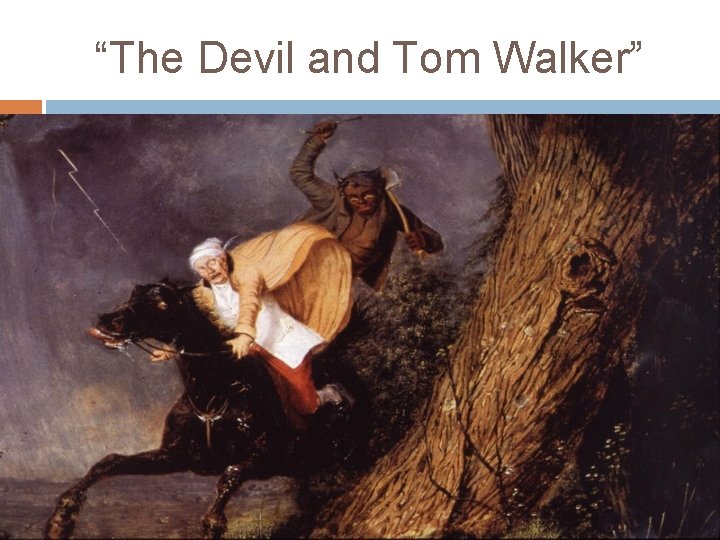
“The Devil and Tom Walker”