THE ANACONDA PLAN CIVIL WAR UNIT LESSON 7
- Slides: 6
THE ANACONDA PLAN CIVIL WAR UNIT LESSON 7
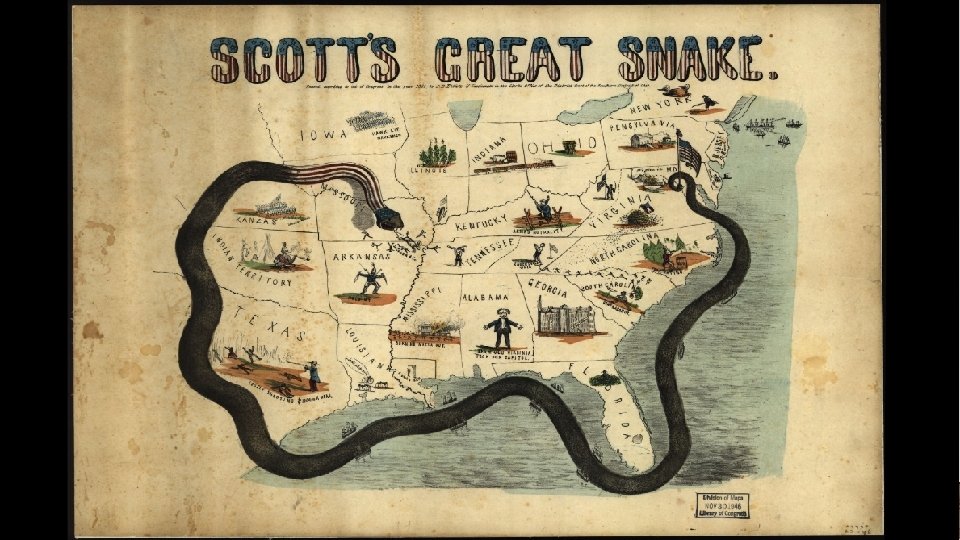
Why the Anaconda Plan? • Developed by Winfield Scott. • What was the Goal? • Defeat the rebellion by blockading southern ports and controlling the Mississippi river. • Outcomes if Goal Achieved: • Cut off and isolate the South from the outside world. • Prevent the south from sending and receiving food and supplies
• Called “Anaconda Plan” because the approach seemed like a constriction similar to that of an Anaconda snake. • George Mc. Clellan was a commanding officer of Union forces • Did not support or condemn the plan • Mc. Clellan wanted to ravage Richmond, a key southern city • Not everyone in agreement • Still used several tactics from the plan in the war • Ultimately never used
• Arguments: • For: fewer deaths would have occurred because they would have stopped it at the source • Against: blockading would not win the war but would just place a Band-Aid over the problem. • Objectives: • Set up a naval blockade of the Atlantic and Gulf of Mexico ports • GOAL-block trade • Transport roughly 60, 000 Union troops in 40 steam transports escorted by upwards of 20 steam gunboats down the Mississippi river. • GOAL- capture and take control of forts and towns along the way.
CRITICAL THINKING QUESTION: WHY WOULD SCOTT NOT HAVE AGREED WITH MCCLELLAN’S SUGGESTION? Helping Questions: What did Mc. Clellan suggest? What did Scott suggest? Which would have caused more fighting? • Mc. Clellan argues that the way to win the South is not in blockading ports but in ravaging Richmond, a key city of the war. • Arguments for and against the Anaconda Plan: • For: fewer deaths would have occurred because they would have stopped it at the source • Against: blockading would not win the war but would just place a Band-Aid over the problem