Tetanus Clostridium tetanus DR NADIA NOUR Morphology Physiology

- Slides: 18
Tetanus Clostridium tetanus DR. NADIA NOUR
Morphology & Physiology p p p p p Relatively large, Gram-positive, rod-shaped bacteria Spore-forming, anaerobic. Produces AB exotoxin. Found in soil usually on rusty metal and in the intestinal tracts and feces of various animals. Enters from puncture wound or cut. Organism does not spread form entry point. Produces irreversible muscle contraction. Spastic paralysis. Symptoms result entirely from toxin. Because the toxin has a specific affinity for nervous tissue, it is referred to as a neurotoxin. The toxin has no known useful function to C. tetani.
q. Tetanus occurs when a wound becomes contaminated with bacterial spores. Infection follows when spores become activated and develop into grampositive bacteria that multiply and produces very powerful toxin (poison) that affects the muscles. q. Tetanus spores are found throughout the environment, usually in soil, dust, and animal waste. The usual locations for the bacteria to enter your body are puncture wounds, such as those caused by rusty nails , splinters, or insect bites. q. It is not transmitted from person to person.
Methods of transmission p C. tetani can live for years as spores in animal feces and soil. As soon as it enters the human body through a major or minor wound and the conditions are anaerobic, the spores germinate and release the toxins. p Tetanus may follow burns, deep puncture wounds, ear or dental infections, abortion. p Only the growing bacteria can produce the toxin. p It is the only vaccine-preventable disease that is infectious but not contagious from person to person.
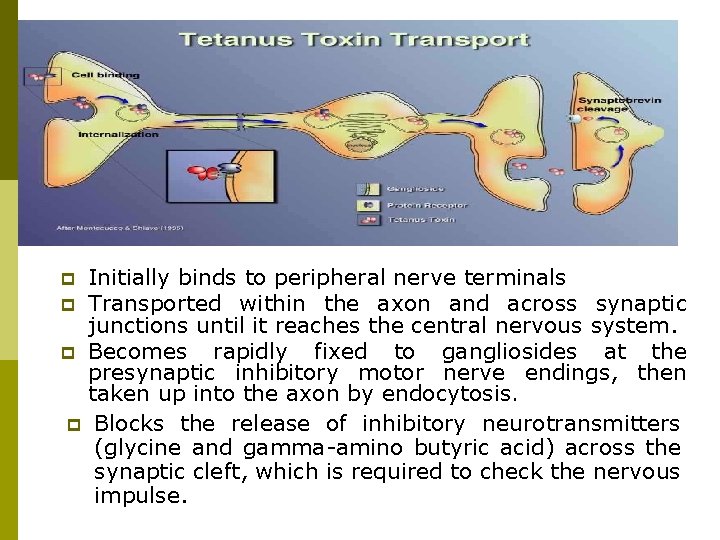
Mechanism of action When the oxygen levels in the surrounding tissue is sufficiently low , the implanted tetani spore then germinates into a new , active vegetative cell that grows and multiplies and most importantly produces tetanus toxin. Tetanus toxin blocks release of inhibitory neurotransmitters.
Initially binds to peripheral nerve terminals p Transported within the axon and across synaptic junctions until it reaches the central nervous system. p Becomes rapidly fixed to gangliosides at the presynaptic inhibitory motor nerve endings, then taken up into the axon by endocytosis. p Blocks the release of inhibitory neurotransmitters (glycine and gamma-amino butyric acid) across the synaptic cleft, which is required to check the nervous impulse. p
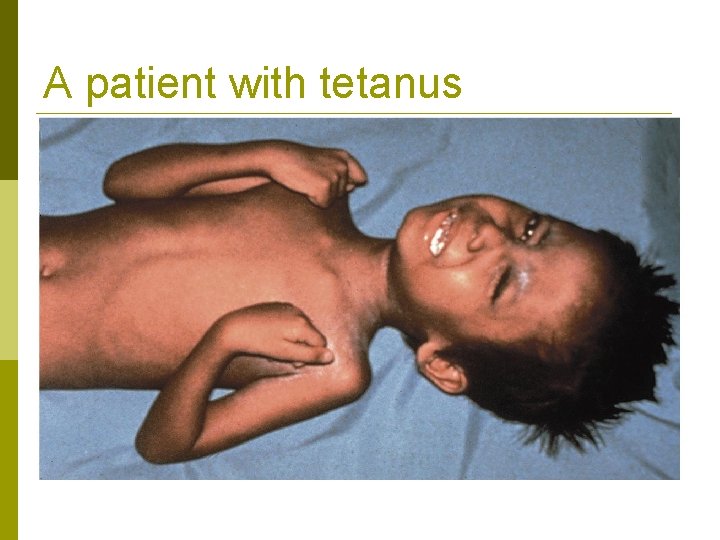
A patient with tetanus
Symptoms painful, powerful bursts of muscle contraction. p if the muscle spasms affect the larynx or chest wall, they may cause asphyxiation p stiffness ﺗﺼﻠﺐ of jaw (also called lockjaw) p stiffness of abdominal and back muscles p contraction of facial muscles p fast pulse p fever p sweating p
Bacillus anthracis
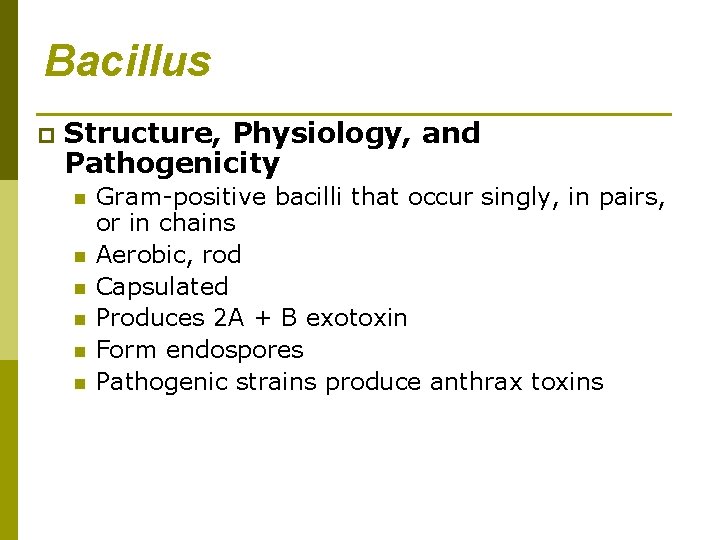
Bacillus p Structure, Physiology, and Pathogenicity n n n Gram-positive bacilli that occur singly, in pairs, or in chains Aerobic, rod Capsulated Produces 2 A + B exotoxin Form endospores Pathogenic strains produce anthrax toxins
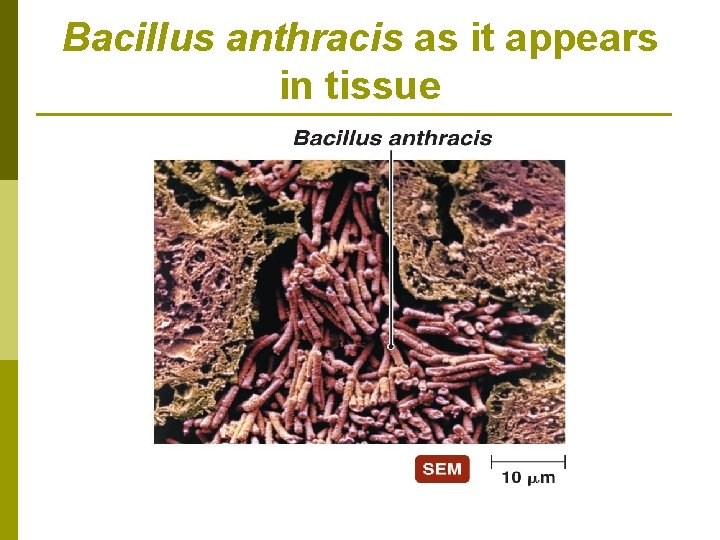
Bacillus anthracis as it appears in tissue
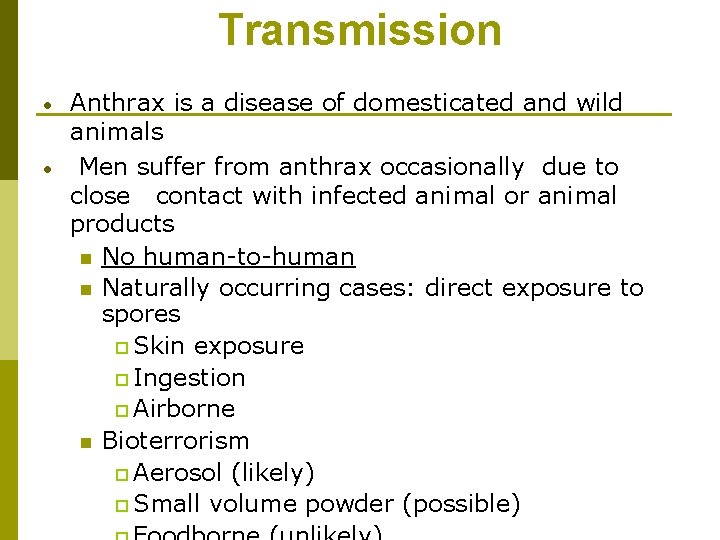
Transmission • • Anthrax is a disease of domesticated and wild animals Men suffer from anthrax occasionally due to close contact with infected animal or animal products n No human-to-human n Naturally occurring cases: direct exposure to spores p Skin exposure p Ingestion p Airborne n Bioterrorism p Aerosol (likely) p Small volume powder (possible)
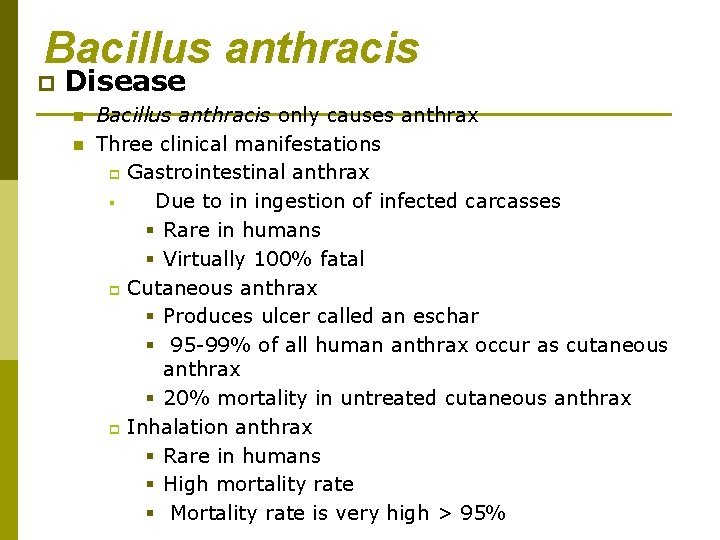
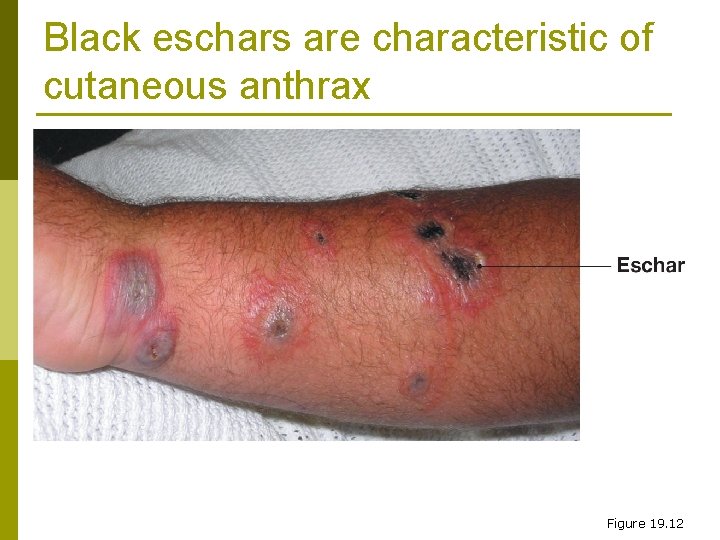
Bacillus anthracis p Disease n n Bacillus anthracis only causes anthrax Three clinical manifestations p Gastrointestinal anthrax § Due to in ingestion of infected carcasses § Rare in humans § Virtually 100% fatal p Cutaneous anthrax § Produces ulcer called an eschar § 95 -99% of all human anthrax occur as cutaneous anthrax § 20% mortality in untreated cutaneous anthrax p Inhalation anthrax § Rare in humans § High mortality rate § Mortality rate is very high > 95%
Black eschars are characteristic of cutaneous anthrax Figure 19. 12
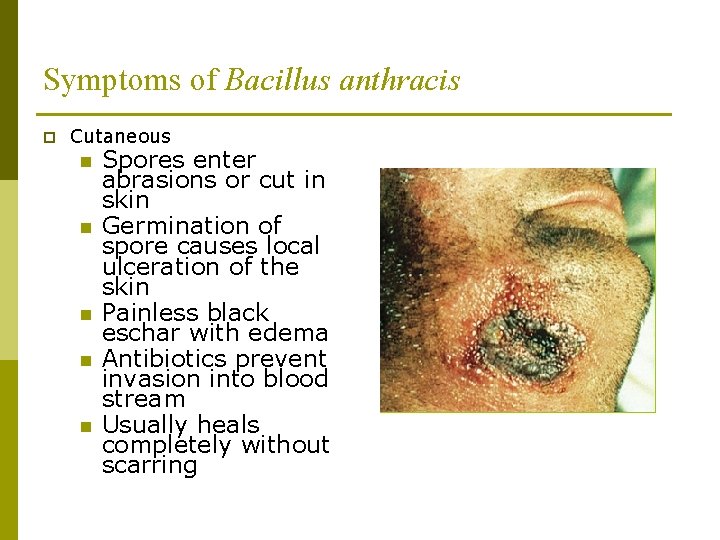
Symptoms of Bacillus anthracis p Cutaneous n Spores enter n n abrasions or cut in skin Germination of spore causes local ulceration of the skin Painless black eschar with edema Antibiotics prevent invasion into blood stream Usually heals completely without scarring
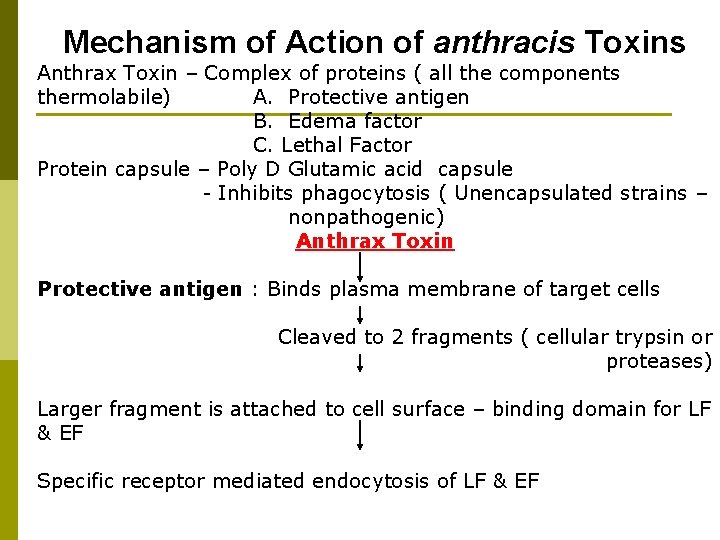
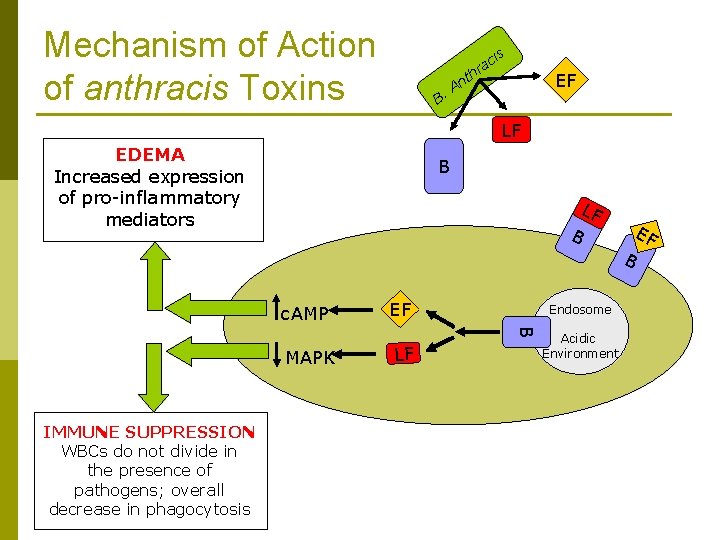
Mechanism of Action of anthracis Toxins Anthrax Toxin – Complex of proteins ( all the components thermolabile) A. Protective antigen B. Edema factor C. Lethal Factor Protein capsule – Poly D Glutamic acid capsule - Inhibits phagocytosis ( Unencapsulated strains – nonpathogenic) Anthrax Toxin Protective antigen : Binds plasma membrane of target cells Cleaved to 2 fragments ( cellular trypsin or proteases) Larger fragment is attached to cell surface – binding domain for LF & EF Specific receptor mediated endocytosis of LF & EF
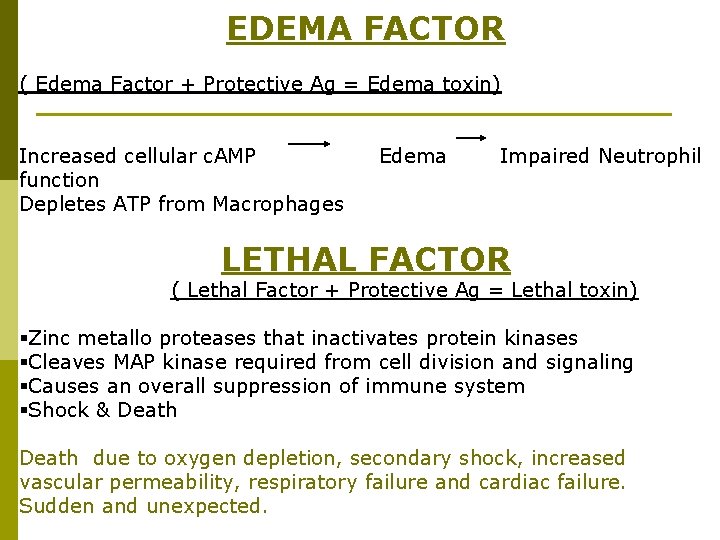
EDEMA FACTOR ( Edema Factor + Protective Ag = Edema toxin) Increased cellular c. AMP function Depletes ATP from Macrophages Edema Impaired Neutrophil LETHAL FACTOR ( Lethal Factor + Protective Ag = Lethal toxin) §Zinc metallo proteases that inactivates protein kinases §Cleaves MAP kinase required from cell division and signaling §Causes an overall suppression of immune system §Shock & Death due to oxygen depletion, secondary shock, increased vascular permeability, respiratory failure and cardiac failure. Sudden and unexpected.
Mechanism of Action of anthracis Toxins is ac hr B. t An EF LF EDEMA Increased expression of pro-inflammatory mediators B LF B B c. AMP EF Endosome B MAPK IMMUNE SUPPRESSION WBCs do not divide in the presence of pathogens; overall decrease in phagocytosis LF Acidic Environment EF