Syntax and Second Language Acquisition Lynn W Zimmerman
- Slides: 20
Syntax and Second Language Acquisition Lynn W Zimmerman, Ph. D
What Is Syntax? �How words are combined to create phrases and clauses in the sentences of a language • Grammar �Studying syntax is looking at clauses, which contain a subject and predicate since the clause is a complete syntactic unit.
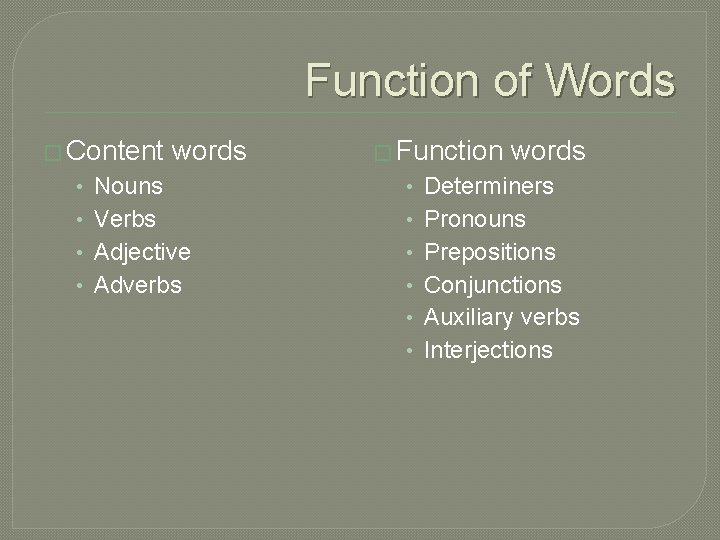
Function of Words � Content words • • Nouns Verbs Adjective Adverbs � Function words • • • Determiners Pronouns Prepositions Conjunctions Auxiliary verbs Interjections
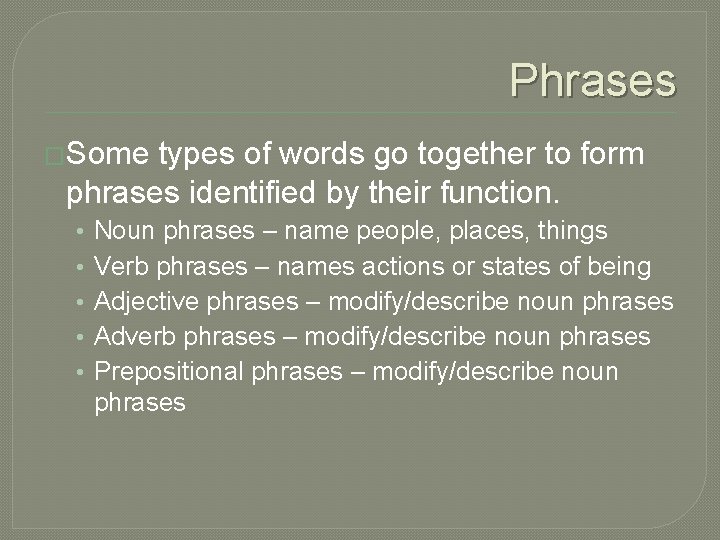
Phrases �Some types of words go together to form phrases identified by their function. • • • Noun phrases – name people, places, things Verb phrases – names actions or states of being Adjective phrases – modify/describe noun phrases Adverb phrases – modify/describe noun phrases Prepositional phrases – modify/describe noun phrases
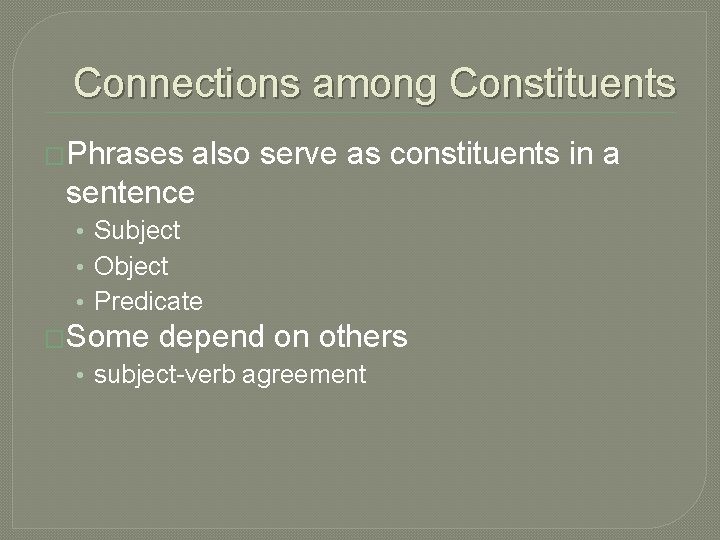
Connections among Constituents �Phrases also serve as constituents in a sentence • Subject • Object • Predicate �Some depend on others • subject-verb agreement
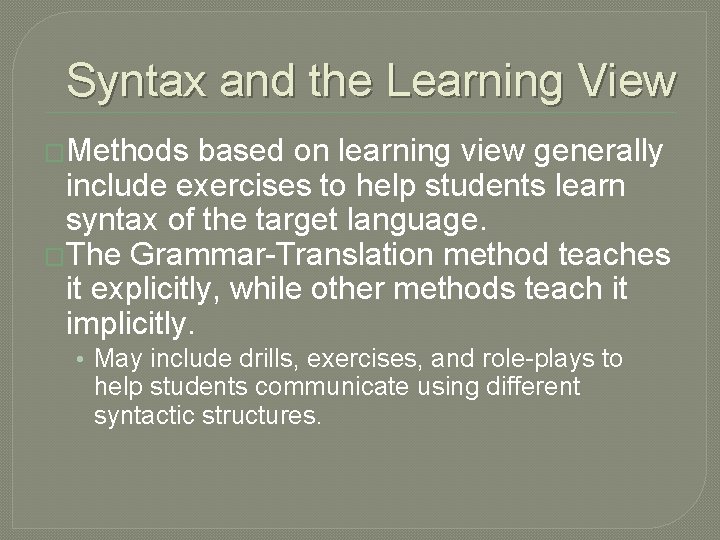
Syntax and the Learning View �Methods based on learning view generally include exercises to help students learn syntax of the target language. �The Grammar-Translation method teaches it explicitly, while other methods teach it implicitly. • May include drills, exercises, and role-plays to help students communicate using different syntactic structures.
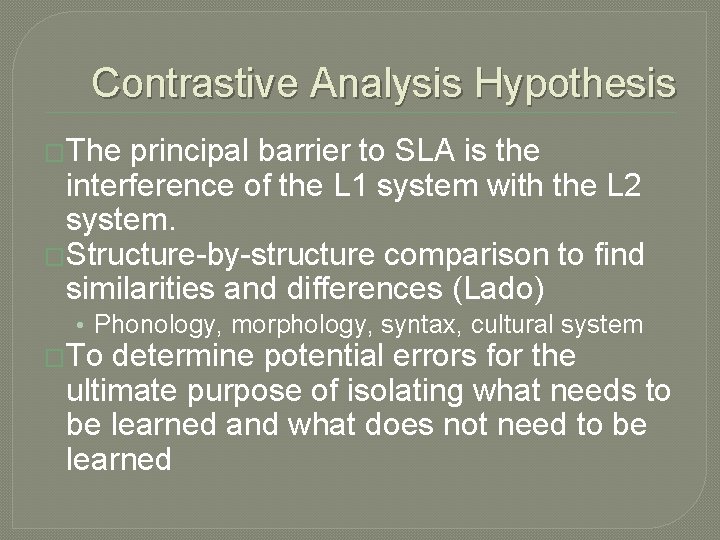
Contrastive Analysis Hypothesis �The principal barrier to SLA is the interference of the L 1 system with the L 2 system. �Structure-by-structure comparison to find similarities and differences (Lado) • Phonology, morphology, syntax, cultural system �To determine potential errors for the ultimate purpose of isolating what needs to be learned and what does not need to be learned
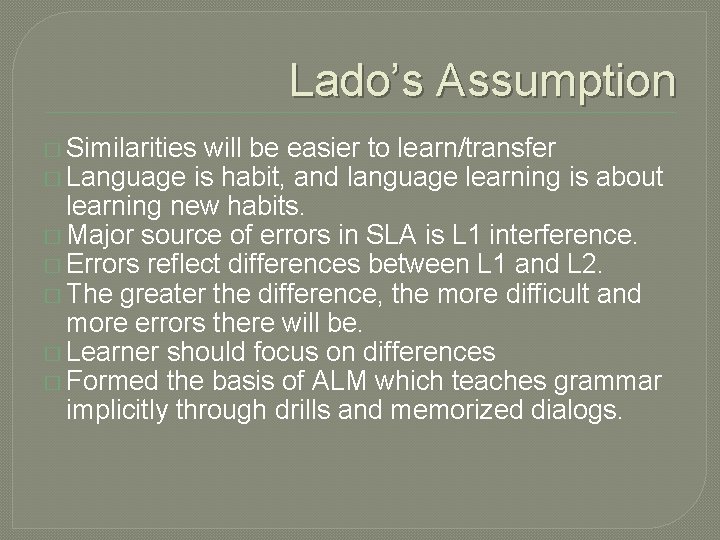
Lado’s Assumption � Similarities will be easier to learn/transfer � Language is habit, and language learning is about learning new habits. � Major source of errors in SLA is L 1 interference. � Errors reflect differences between L 1 and L 2. � The greater the difference, the more difficult and more errors there will be. � Learner should focus on differences � Formed the basis of ALM which teaches grammar implicitly through drills and memorized dialogs.
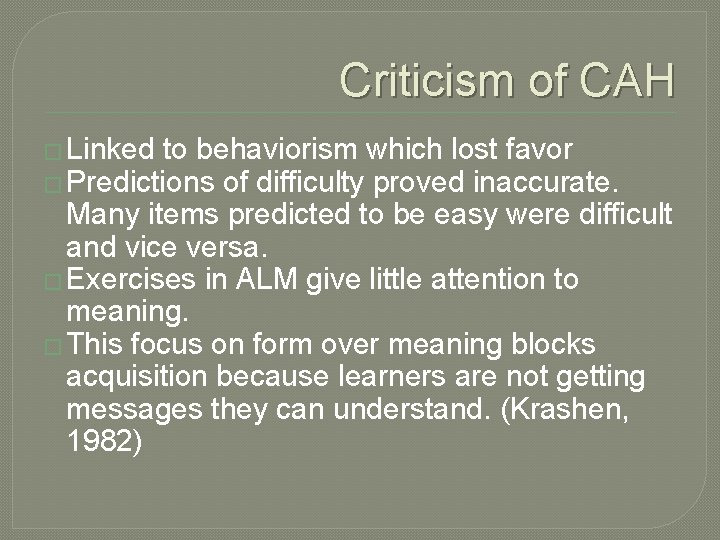
Criticism of CAH � Linked to behaviorism which lost favor � Predictions of difficulty proved inaccurate. Many items predicted to be easy were difficult and vice versa. � Exercises in ALM give little attention to meaning. � This focus on form over meaning blocks acquisition because learners are not getting messages they can understand. (Krashen, 1982)
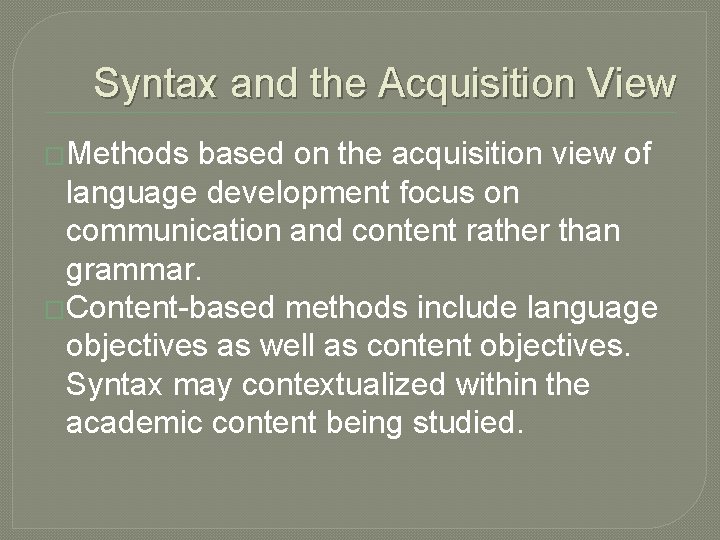
Syntax and the Acquisition View �Methods based on the acquisition view of language development focus on communication and content rather than grammar. �Content-based methods include language objectives as well as content objectives. Syntax may contextualized within the academic content being studied.
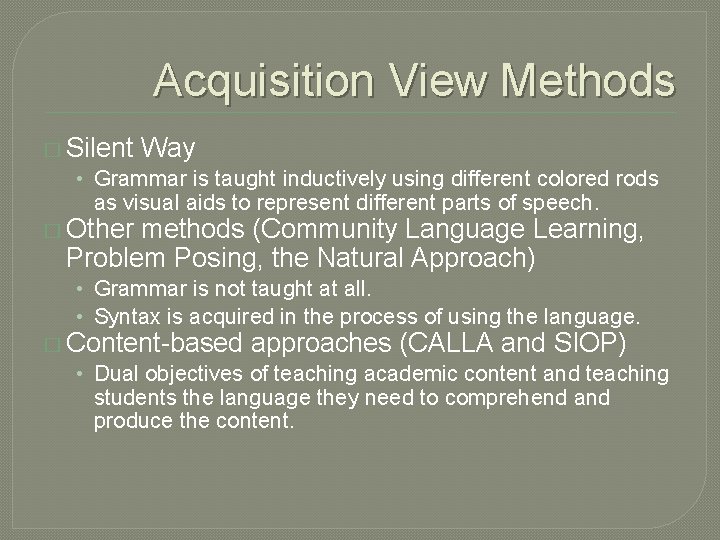
Acquisition View Methods � Silent Way • Grammar is taught inductively using different colored rods as visual aids to represent different parts of speech. � Other methods (Community Language Learning, Problem Posing, the Natural Approach) • Grammar is not taught at all. • Syntax is acquired in the process of using the language. � Content-based approaches (CALLA and SIOP) • Dual objectives of teaching academic content and teaching students the language they need to comprehend and produce the content.
Syntax and Reading – Learning View �Syntax plays a limited role in reading. �Since the focus is on the word level, little attention is paid to sentences.
Syntax and Reading – Acquisition View �Syntax is an important component. �Syntax is one of the cuing systems. • Readers use acquired knowledge of syntactic patterns to predict upcoming words. �Part of knowing a word is knowing how it functions in a sentence, which includes knowing what other kinds of words will follow.
Strategies for Using Syntactic Cues �Students can use syntactic cues to construct meaning from texts. �Predictable books �Sentence frames �Cloze activities
Predictable Books �Many books for beginning and early readers follow predictable syntactic patterns. �Students can make their own books based on these patterns adding a writing followup to their reading.
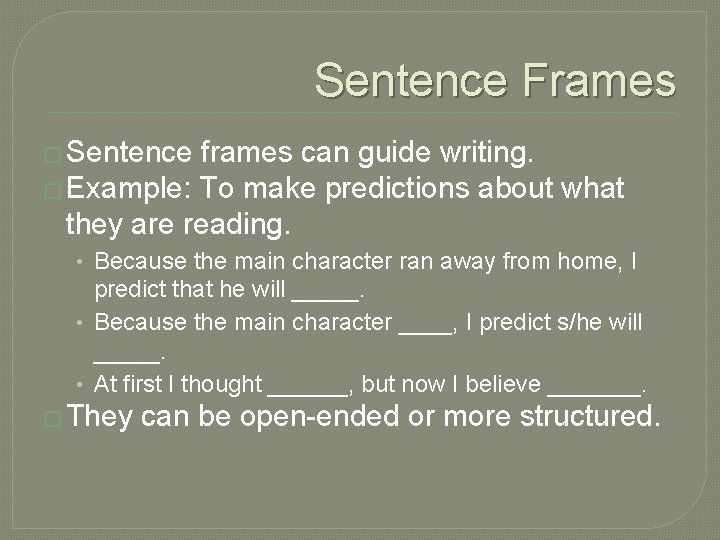
Sentence Frames � Sentence frames can guide writing. � Example: To make predictions about what they are reading. • Because the main character ran away from home, I predict that he will _____. • Because the main character ____, I predict s/he will _____. • At first I thought ______, but now I believe _______. � They can be open-ended or more structured.
Cloze �Students have passage with some words deleted and supply the missing words. �Passages with different types of deletions to help students focus on different aspects of syntax. �Students can work together to fill in the blanks discussing their choices.
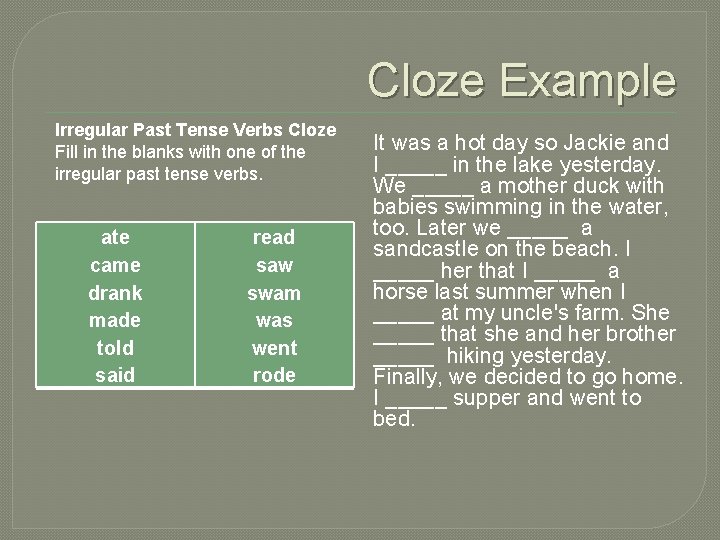
Cloze Example Irregular Past Tense Verbs Cloze Fill in the blanks with one of the irregular past tense verbs. ate came drank made told said read saw swam was went rode It was a hot day so Jackie and I _____ in the lake yesterday. We _____ a mother duck with babies swimming in the water, too. Later we _____ a sandcastle on the beach. I _____ her that I _____ a horse last summer when I _____ at my uncle's farm. She _____ that she and her brother _____ hiking yesterday. Finally, we decided to go home. I _____ supper and went to bed.
Syntactic Cues �Make students more aware of syntactic structures �Teachers can embed syntactic cues in meaningful contexts as students read and write different kinds of texts.
References �Freeman, D. & Freeman, Y. (2014). Essential linguistics. Portsmouth, NH: Heinemann.