Stem Cell A cell with a unique capacity

- Slides: 37
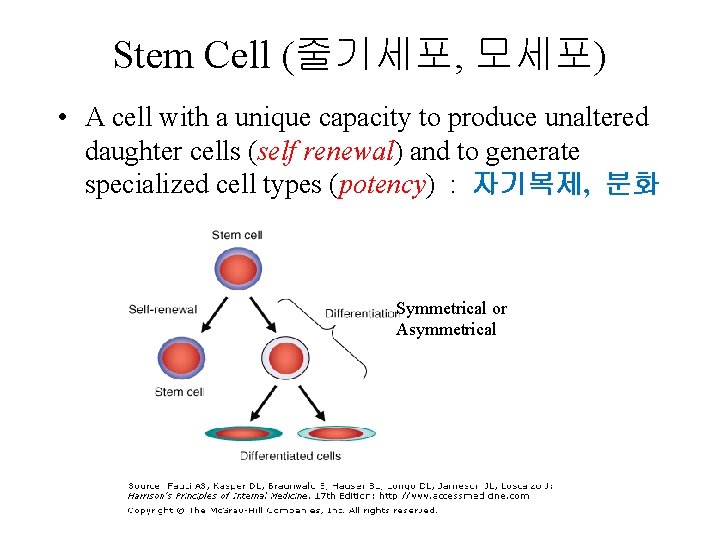
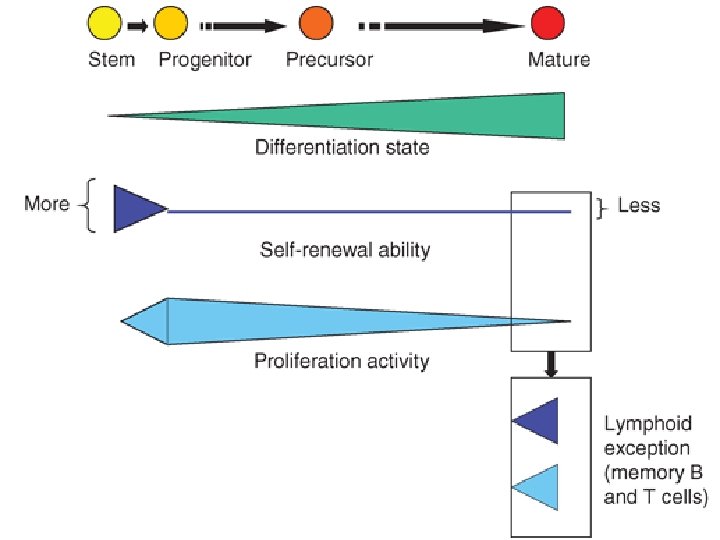
Stem Cell (줄기세포, 모세포) • A cell with a unique capacity to produce unaltered daughter cells (self renewal) and to generate specialized cell types (potency) : 자기복제, 분화 Symmetrical or Asymmetrical
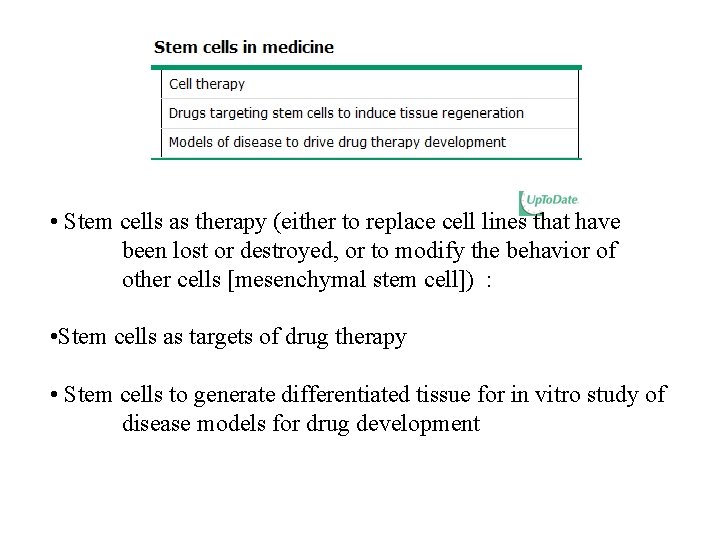
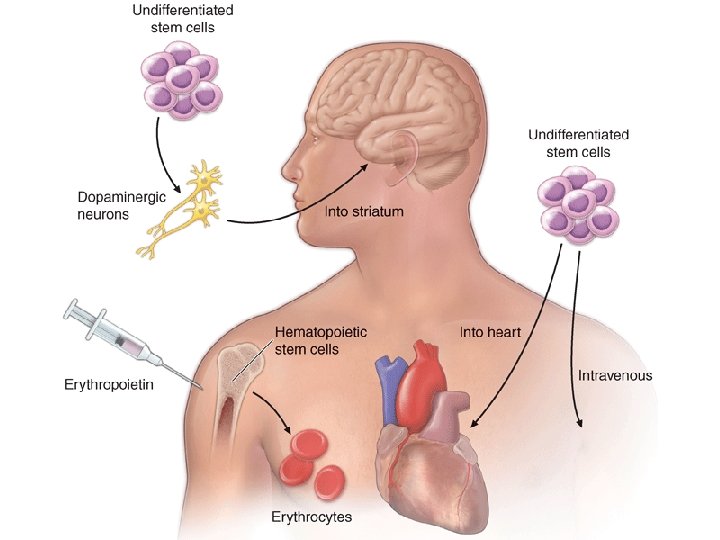
• Stem cells as therapy (either to replace cell lines that have been lost or destroyed, or to modify the behavior of other cells [mesenchymal stem cell]) : • Stem cells as targets of drug therapy • Stem cells to generate differentiated tissue for in vitro study of disease models for drug development
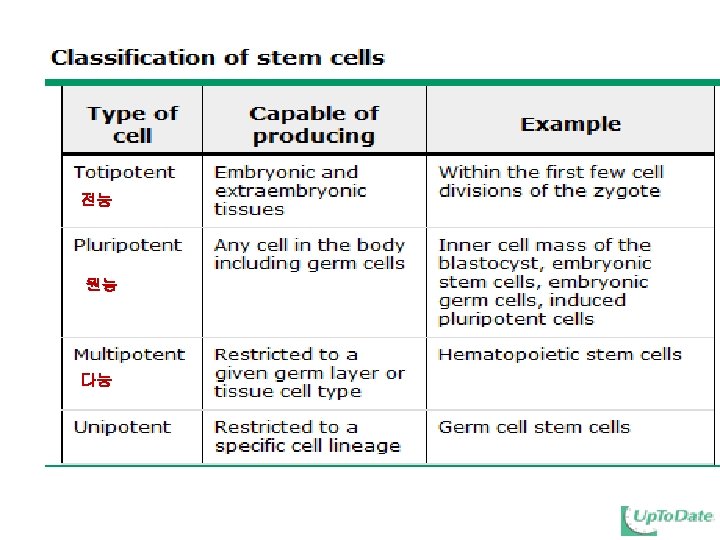
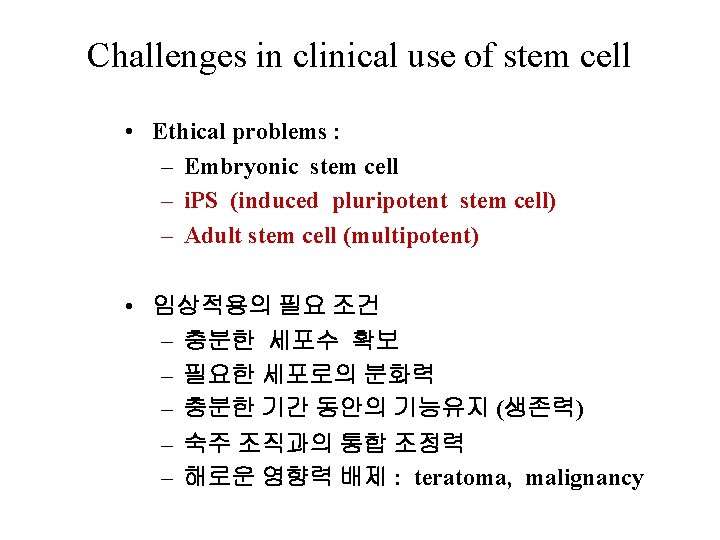
Challenges in clinical use of stem cell • Ethical problems : – Embryonic stem cell – i. PS (induced pluripotent stem cell) – Adult stem cell (multipotent) • 임상적용의 필요 조건 – 충분한 세포수 확보 – 필요한 세포로의 분화력 – 충분한 기간 동안의 기능유지 (생존력) – 숙주 조직과의 통합 조정력 – 해로운 영향력 배제 : teratoma, malignancy
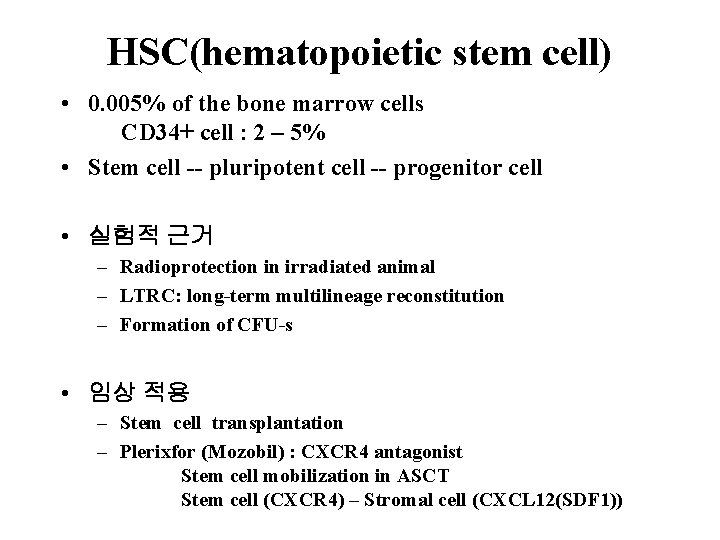
HSC(hematopoietic stem cell) • 0. 005% of the bone marrow cells CD 34+ cell : 2 – 5% • Stem cell -- pluripotent cell -- progenitor cell • 실험적 근거 – Radioprotection in irradiated animal – LTRC: long-term multilineage reconstitution – Formation of CFU-s • 임상 적용 – Stem cell transplantation – Plerixfor (Mozobil) : CXCR 4 antagonist Stem cell mobilization in ASCT Stem cell (CXCR 4) – Stromal cell (CXCL 12(SDF 1))
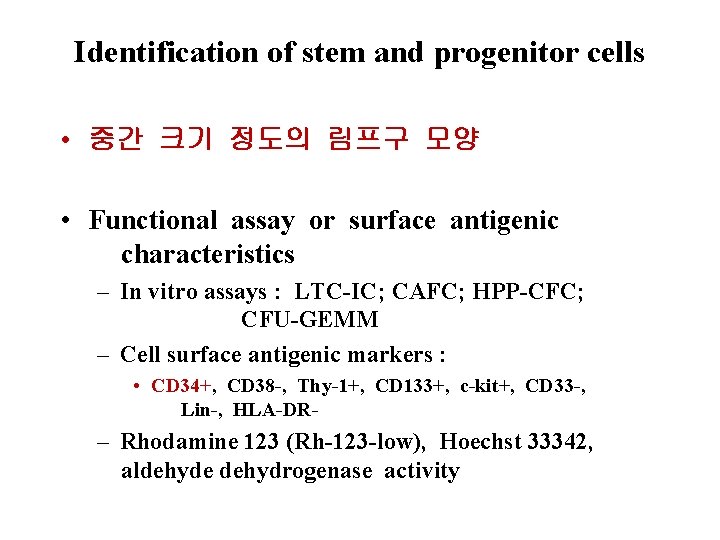
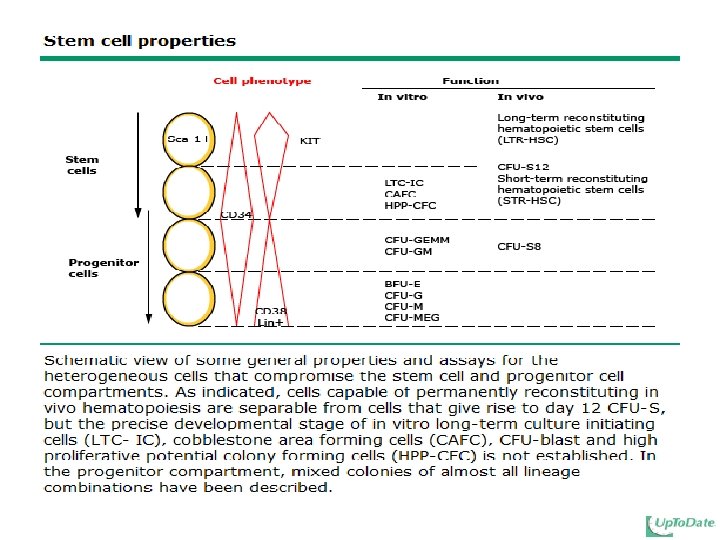
Identification of stem and progenitor cells • 중간 크기 정도의 림프구 모양 • Functional assay or surface antigenic characteristics – In vitro assays : LTC-IC; CAFC; HPP-CFC; CFU-GEMM – Cell surface antigenic markers : • CD 34+, CD 38 -, Thy-1+, CD 133+, c-kit+, CD 33 -, Lin-, HLA-DR- – Rhodamine 123 (Rh-123 -low), Hoechst 33342, aldehyde dehydrogenase activity
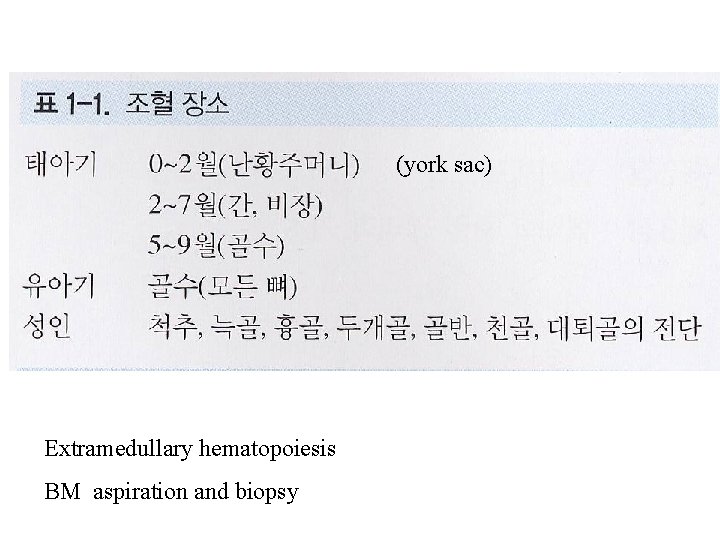
(york sac) Extramedullary hematopoiesis BM aspiration and biopsy
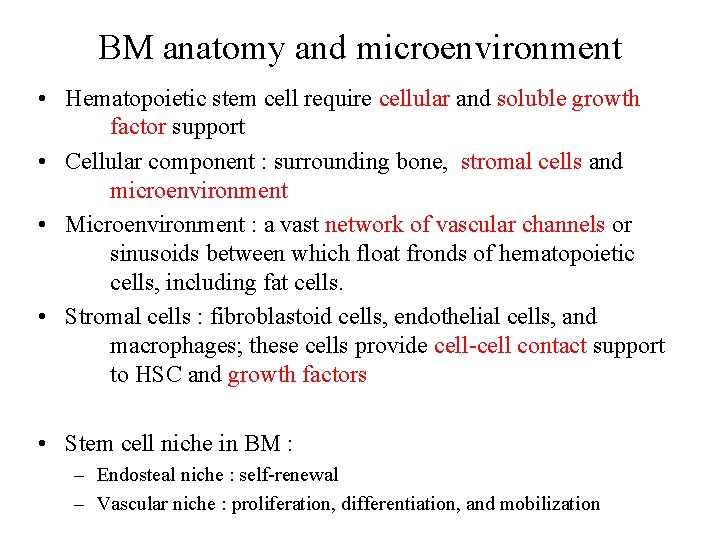
BM anatomy and microenvironment • Hematopoietic stem cell require cellular and soluble growth factor support • Cellular component : surrounding bone, stromal cells and microenvironment • Microenvironment : a vast network of vascular channels or sinusoids between which float fronds of hematopoietic cells, including fat cells. • Stromal cells : fibroblastoid cells, endothelial cells, and macrophages; these cells provide cell-cell contact support to HSC and growth factors • Stem cell niche in BM : – Endosteal niche : self-renewal – Vascular niche : proliferation, differentiation, and mobilization
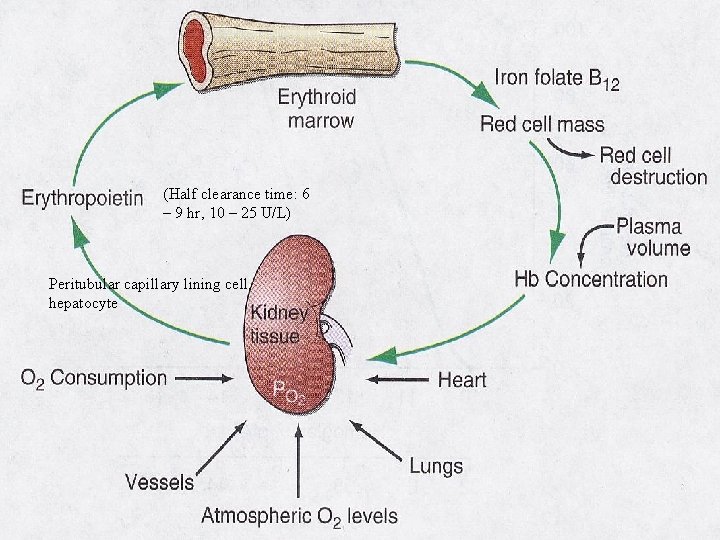
(Half clearance time: 6 – 9 hr, 10 – 25 U/L) Peritubular capillary lining cell, hepatocyte
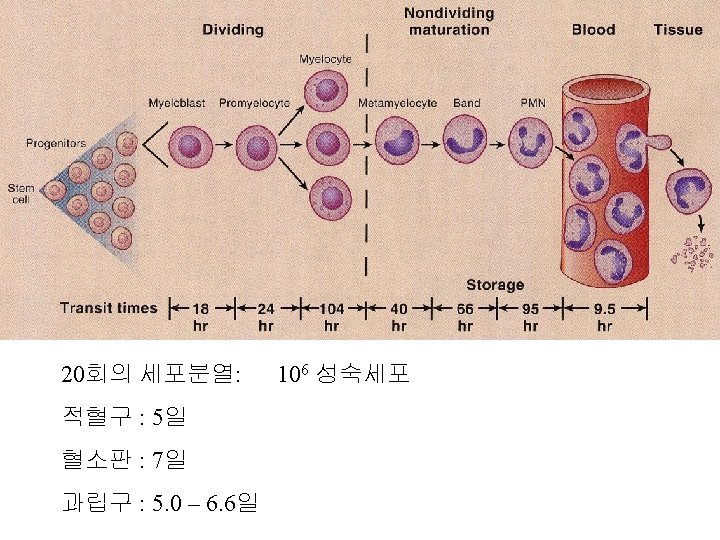
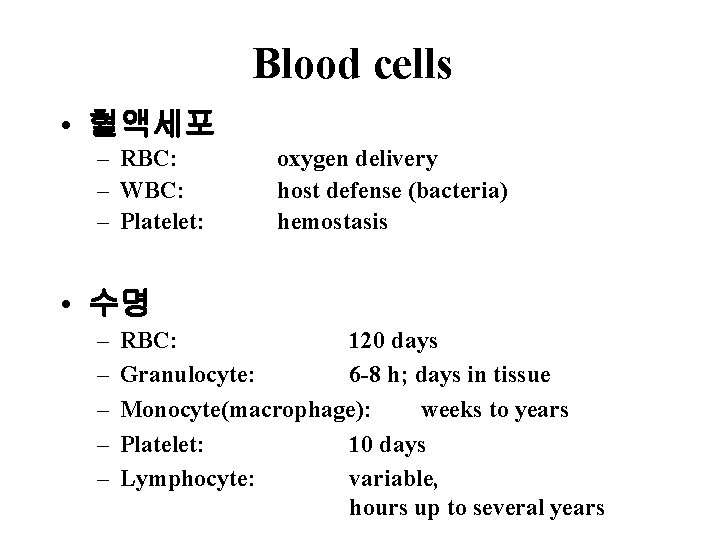
Blood cells • 혈액세포 – RBC: – WBC: – Platelet: oxygen delivery host defense (bacteria) hemostasis • 수명 – – – RBC: 120 days Granulocyte: 6 -8 h; days in tissue Monocyte(macrophage): weeks to years Platelet: 10 days Lymphocyte: variable, hours up to several years
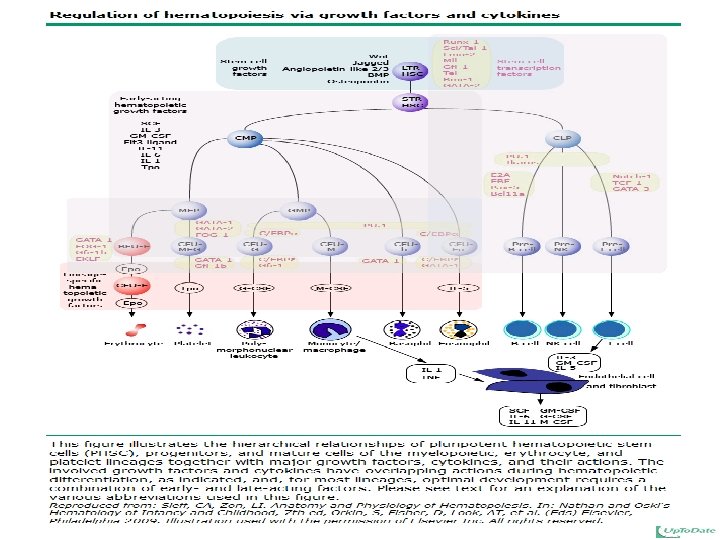
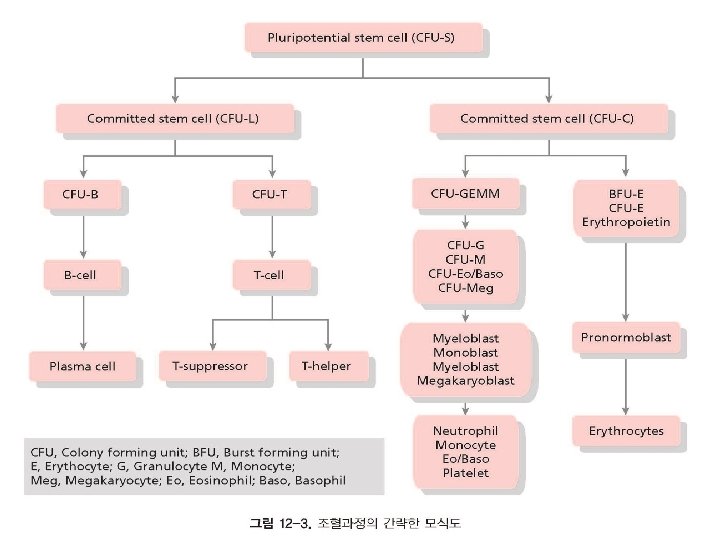
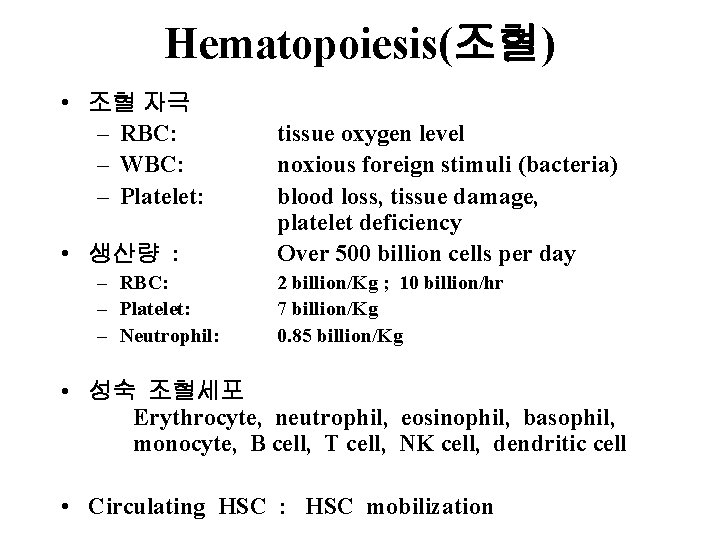
Hematopoiesis(조혈) • 조혈 자극 – RBC: – WBC: – Platelet: • 생산량 : – RBC: – Platelet: – Neutrophil: tissue oxygen level noxious foreign stimuli (bacteria) blood loss, tissue damage, platelet deficiency Over 500 billion cells per day 2 billion/Kg ; 10 billion/hr 7 billion/Kg 0. 85 billion/Kg • 성숙 조혈세포 Erythrocyte, neutrophil, eosinophil, basophil, monocyte, B cell, T cell, NK cell, dendritic cell • Circulating HSC : HSC mobilization
Clinical implications of stem cell biology • • Diagnosis of hematologic diseases Stem cell transplantation Gene therapy Therapeutic use of hematopoietic growth factors
Diagnosis (molecular biology) • Detection of specific mutations in populations and famillies at risk: – carrier detection of sickle cell anemia – estimation of specific-thalassemia mutations in population • Prenatal diagnosis of disease: – beta thalassemia, sickle cell anemia • Detection of MRD: – t(14; 18), t(9; 22), t(15; 17), ARG rearrangements • Detection of clonality and lineage : – ARG rearrangements, cell surface marker • Distinguishing genotypes of hematopoietic cells: – assessment of host/donor cell after SCT
Detection of MRD (CR : complete remission) • Hematologic : morphologic • Cytogenetic : – chromosome analysis – FISH • Cell surface marker : – Flow cytometry (multi-color) • Molecular biology : – PCR
Stem cell transplantation • Autologous SCT: – high dose chemotheray – tumor cell contamination • Allogeneic SCT: Immunotherapy – GVHD – GVT • PBSCT • Cord blood
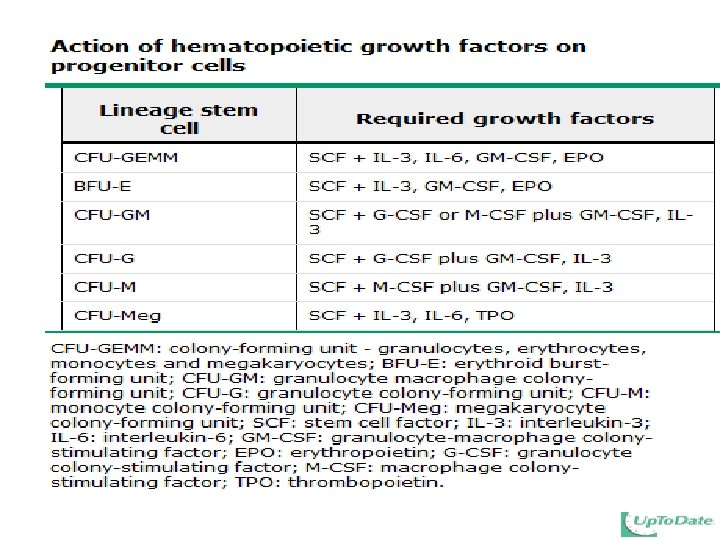
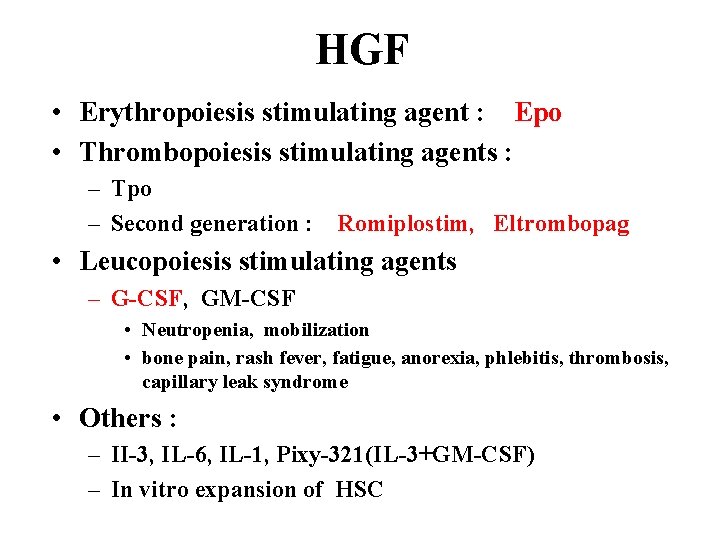
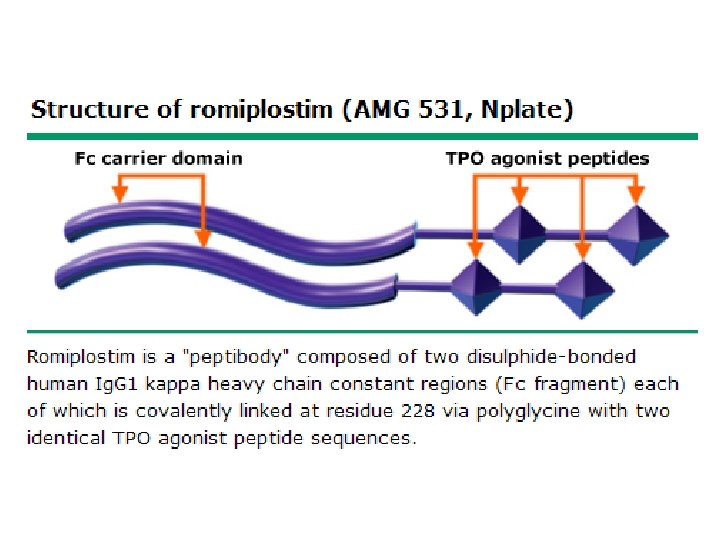
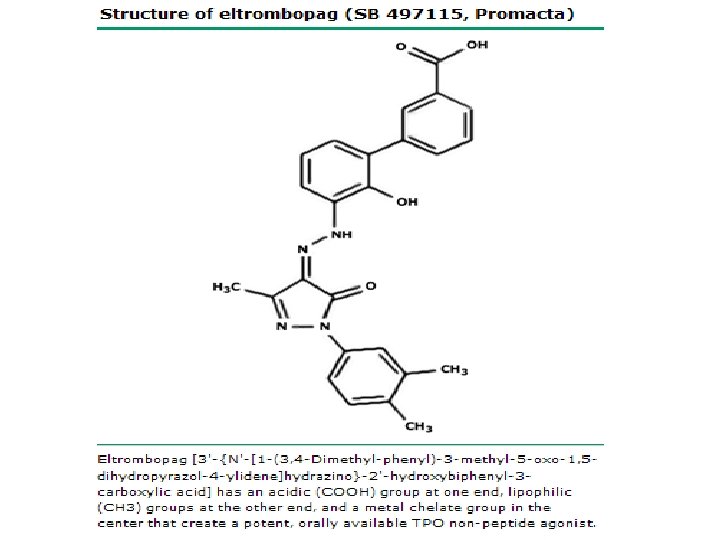
HGF • Erythropoiesis stimulating agent : Epo • Thrombopoiesis stimulating agents : – Tpo – Second generation : Romiplostim, Eltrombopag • Leucopoiesis stimulating agents – G-CSF, GM-CSF • Neutropenia, mobilization • bone pain, rash fever, fatigue, anorexia, phlebitis, thrombosis, capillary leak syndrome • Others : – II-3, IL-6, IL-1, Pixy-321(IL-3+GM-CSF) – In vitro expansion of HSC
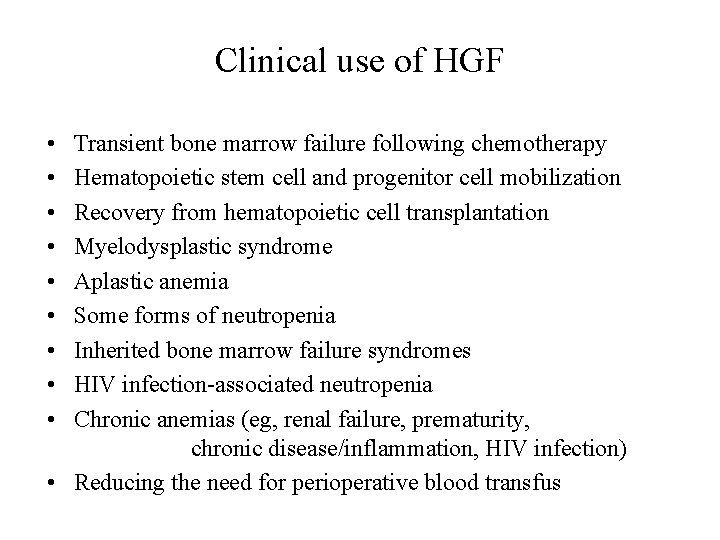
Clinical use of HGF • • • Transient bone marrow failure following chemotherapy Hematopoietic stem cell and progenitor cell mobilization Recovery from hematopoietic cell transplantation Myelodysplastic syndrome Aplastic anemia Some forms of neutropenia Inherited bone marrow failure syndromes HIV infection-associated neutropenia Chronic anemias (eg, renal failure, prematurity, chronic disease/inflammation, HIV infection) • Reducing the need for perioperative blood transfus
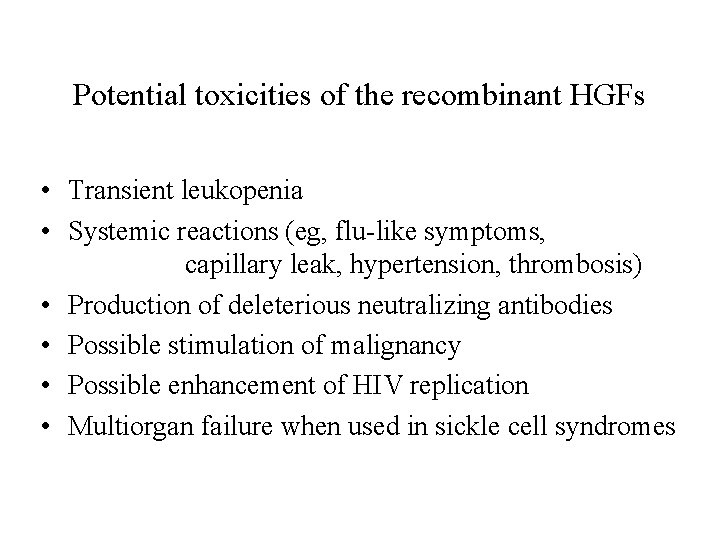
Potential toxicities of the recombinant HGFs • Transient leukopenia • Systemic reactions (eg, flu-like symptoms, capillary leak, hypertension, thrombosis) • Production of deleterious neutralizing antibodies • Possible stimulation of malignancy • Possible enhancement of HIV replication • Multiorgan failure when used in sickle cell syndromes
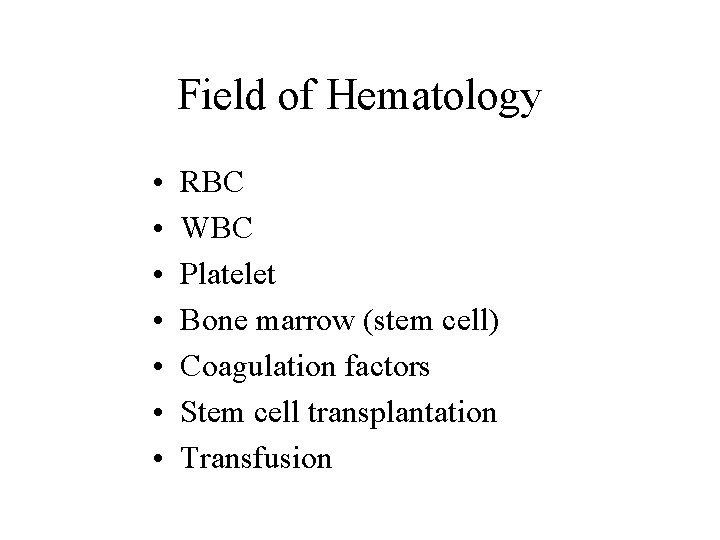
Field of Hematology • • RBC WBC Platelet Bone marrow (stem cell) Coagulation factors Stem cell transplantation Transfusion
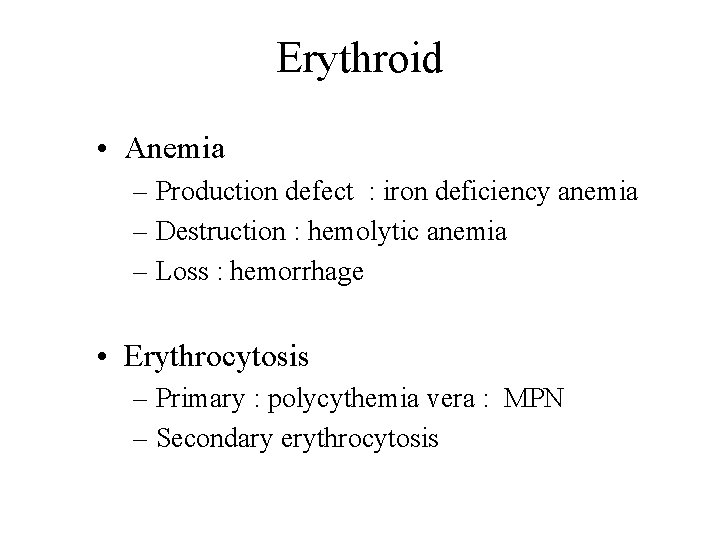
Erythroid • Anemia – Production defect : iron deficiency anemia – Destruction : hemolytic anemia – Loss : hemorrhage • Erythrocytosis – Primary : polycythemia vera : MPN – Secondary erythrocytosis
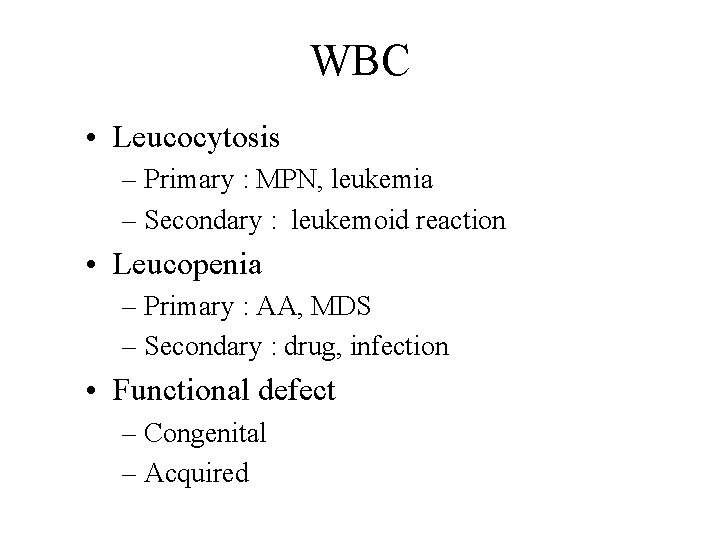
WBC • Leucocytosis – Primary : MPN, leukemia – Secondary : leukemoid reaction • Leucopenia – Primary : AA, MDS – Secondary : drug, infection • Functional defect – Congenital – Acquired
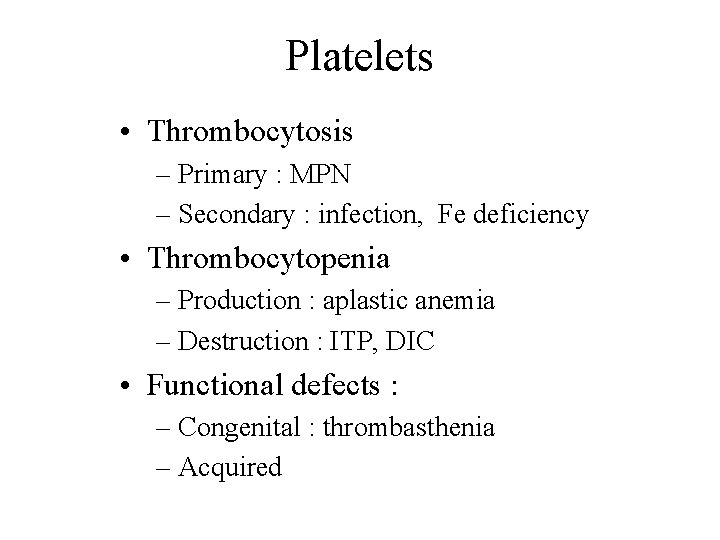
Platelets • Thrombocytosis – Primary : MPN – Secondary : infection, Fe deficiency • Thrombocytopenia – Production : aplastic anemia – Destruction : ITP, DIC • Functional defects : – Congenital : thrombasthenia – Acquired
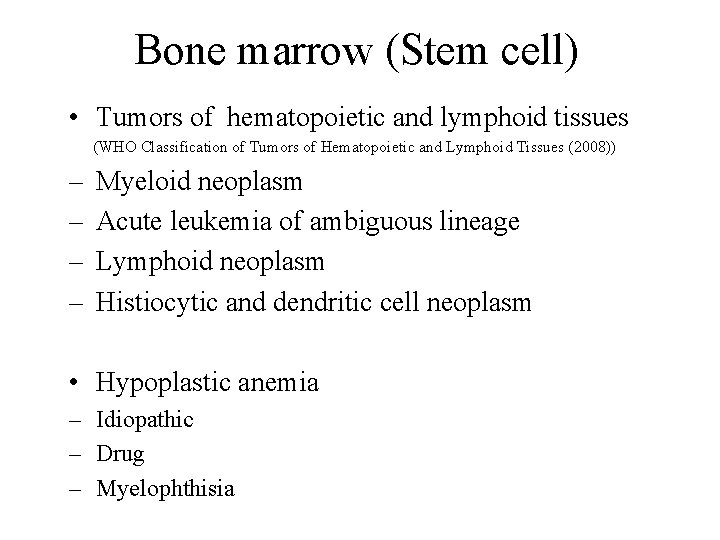
Bone marrow (Stem cell) • Tumors of hematopoietic and lymphoid tissues (WHO Classification of Tumors of Hematopoietic and Lymphoid Tissues (2008)) – – Myeloid neoplasm Acute leukemia of ambiguous lineage Lymphoid neoplasm Histiocytic and dendritic cell neoplasm • Hypoplastic anemia – Idiopathic – Drug – Myelophthisia
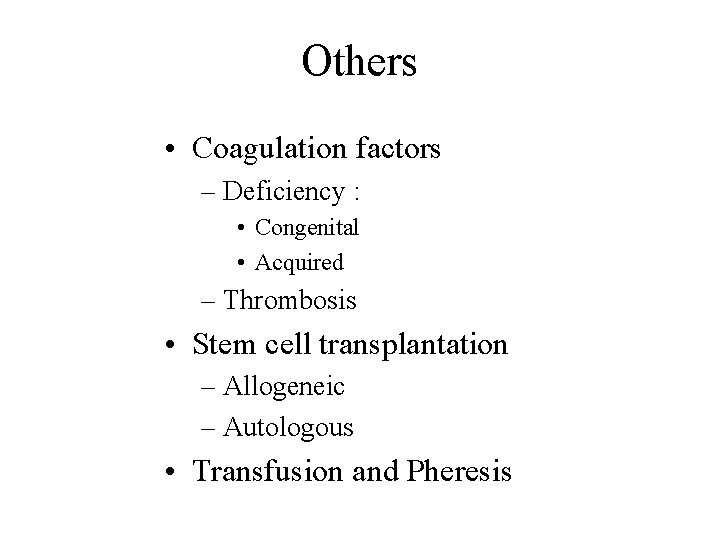
Others • Coagulation factors – Deficiency : • Congenital • Acquired – Thrombosis • Stem cell transplantation – Allogeneic – Autologous • Transfusion and Pheresis