Starformation histories Sorour Shamshiri with Peter Thomas and
- Slides: 15
Star-formation histories Sorour Shamshiri with Peter Thomas and thanks to Bruno Henriques Rita Tojiero
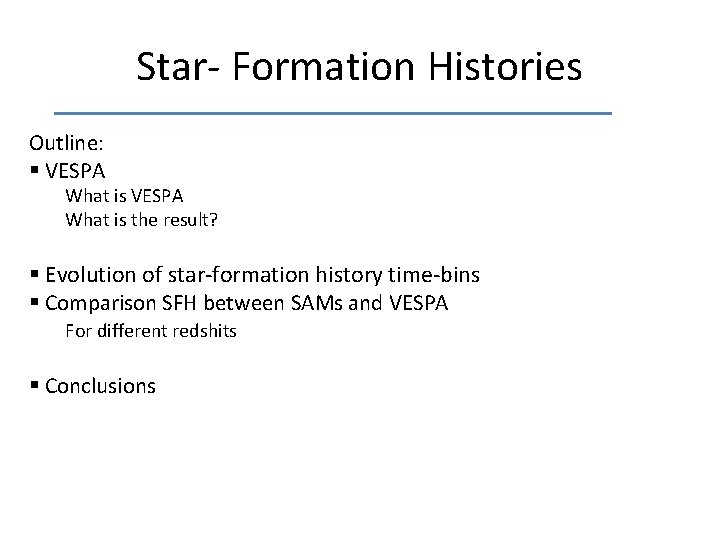
Star- Formation Histories Outline: § VESPA What is the result? § Evolution of star-formation history time-bins § Comparison SFH between SAMs and VESPA For different redshits § Conclusions
What is VESPA • An analysis to the Sloan Digital Sky Survey final spectroscopic data release of MGS and LRG sample. • The result is a catalogue of star formation and metallicity histories, dust content and stellar masses of nearly 800, 000 galaxies. • VESPA is intrinsically model dependent, including the SSP modeling, IMF or dust modeling.
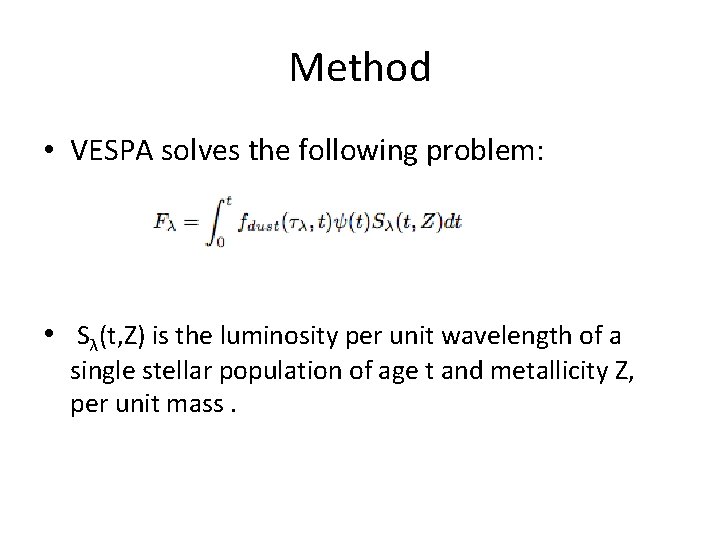
Method • VESPA solves the following problem: • Sλ(t, Z) is the luminosity per unit wavelength of a single stellar population of age t and metallicity Z, per unit mass.
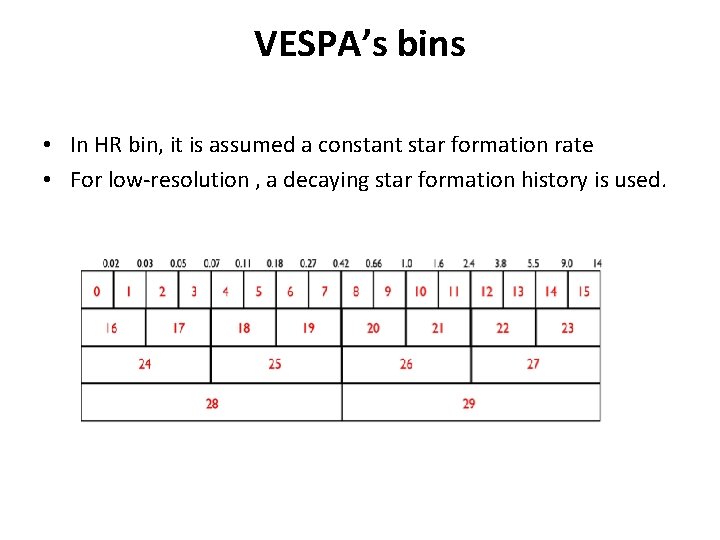
VESPA’s bins • In HR bin, it is assumed a constant star formation rate • For low-resolution , a decaying star formation history is used.
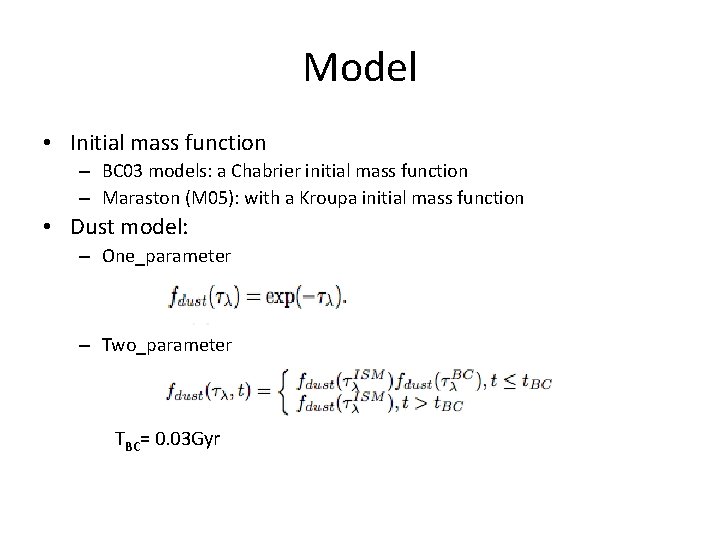
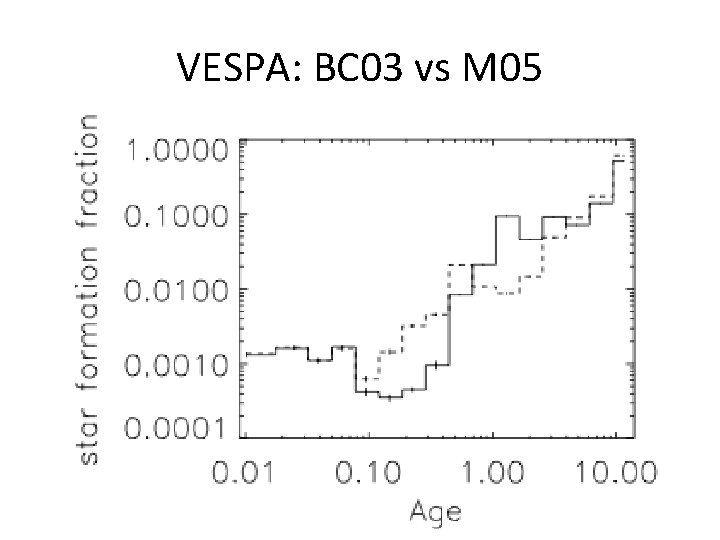
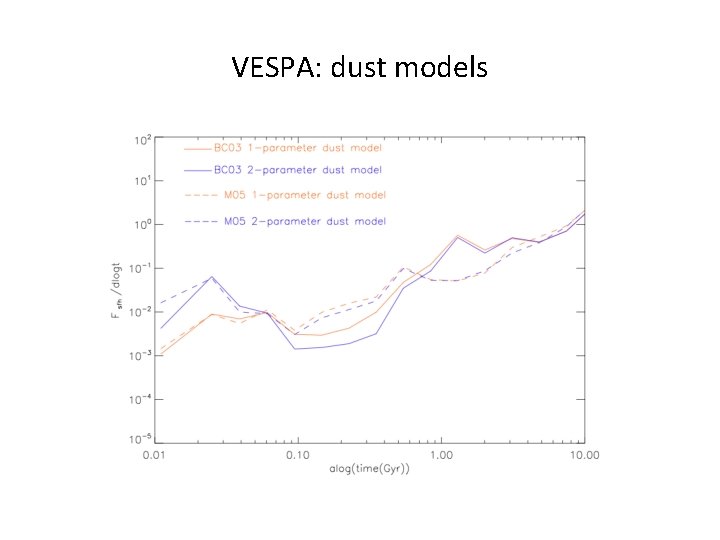
Model • Initial mass function – BC 03 models: a Chabrier initial mass function – Maraston (M 05): with a Kroupa initial mass function • Dust model: – One_parameter – Two_parameter TBC= 0. 03 Gyr
VESPA: BC 03 vs M 05
VESPA: dust models
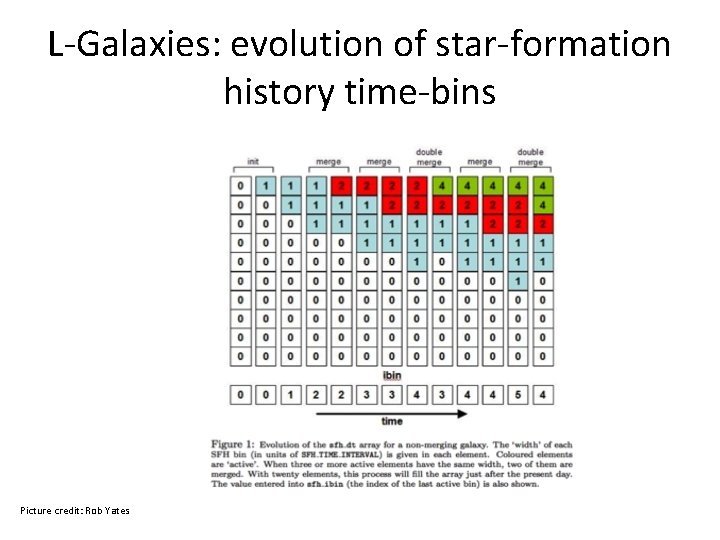
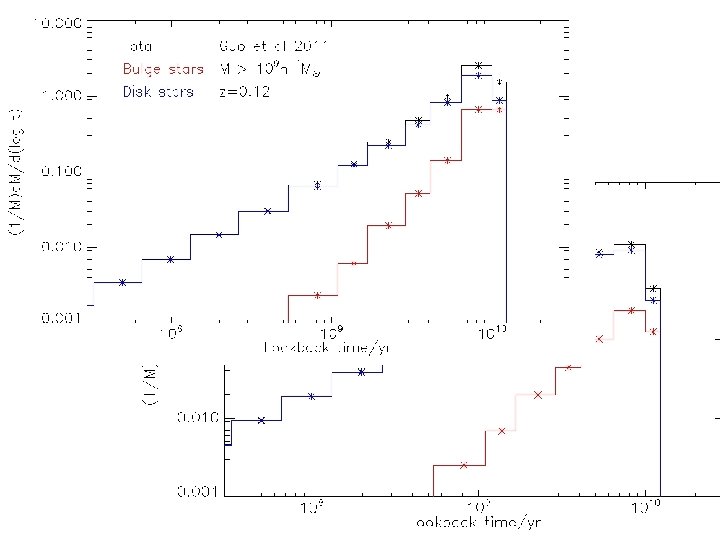
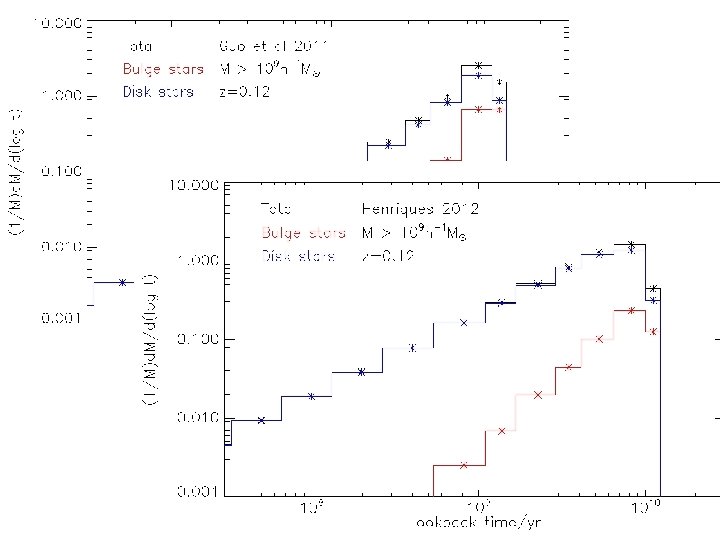
L-Galaxies: evolution of star-formation history time-bins Picture credit: Rob Yates
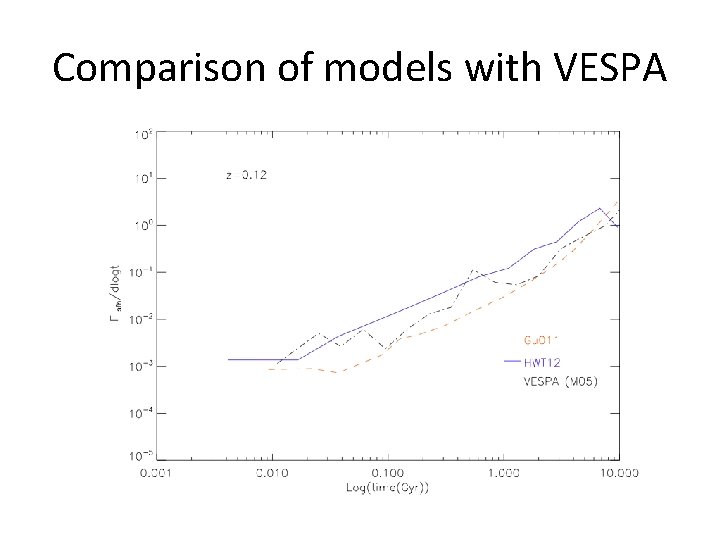
Comparison of models with VESPA
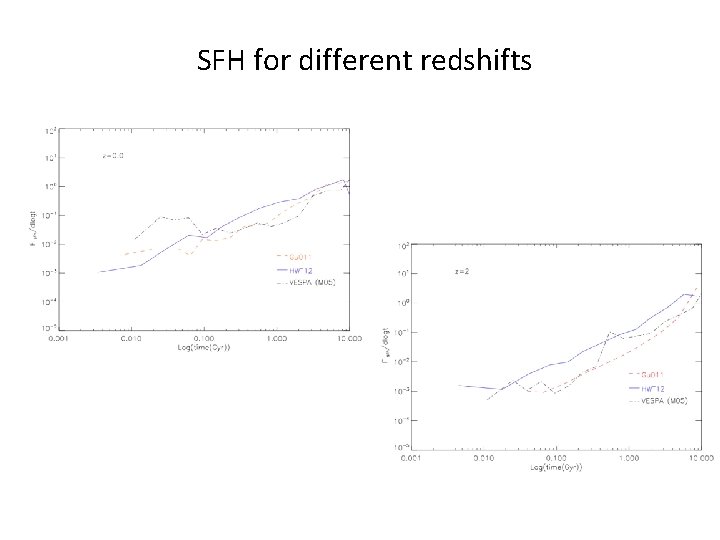
SFH for different redshifts
Conclusions • We presented Star-Formation Histories for two different versions of the L-Galaxies SA model and compared them with observations from VESPA. • The Guo 11 and HWT 12 models bracket the VESPA results: HWT 12 forms fewer stars at early times (ie high redshift) but a higher starformation rate at all subsequent times.