Species and Speciation Chapter 22 SPECIES PLOT 22
- Slides: 21
Species and Speciation Chapter 22
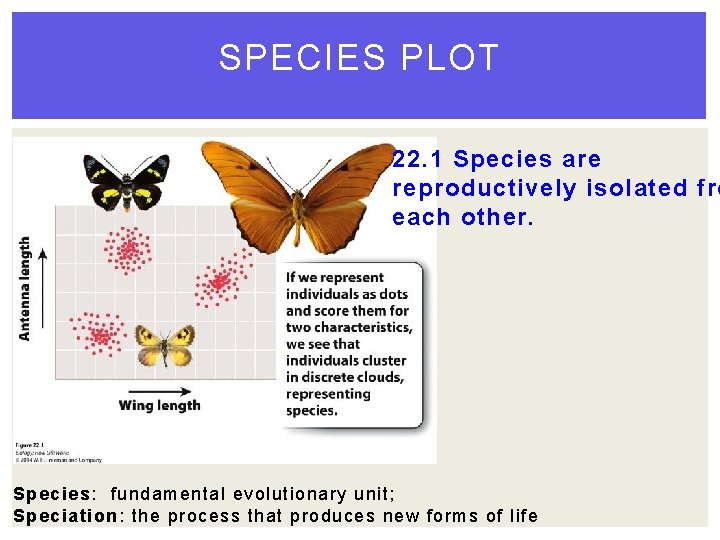
SPECIES PLOT 22. 1 Species are reproductively isolated fro each other. Species: fundamental evolutionary unit; Speciation: the process that produces new forms of life
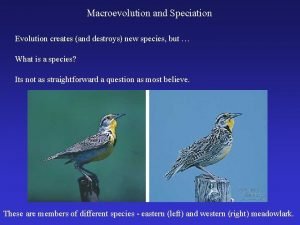
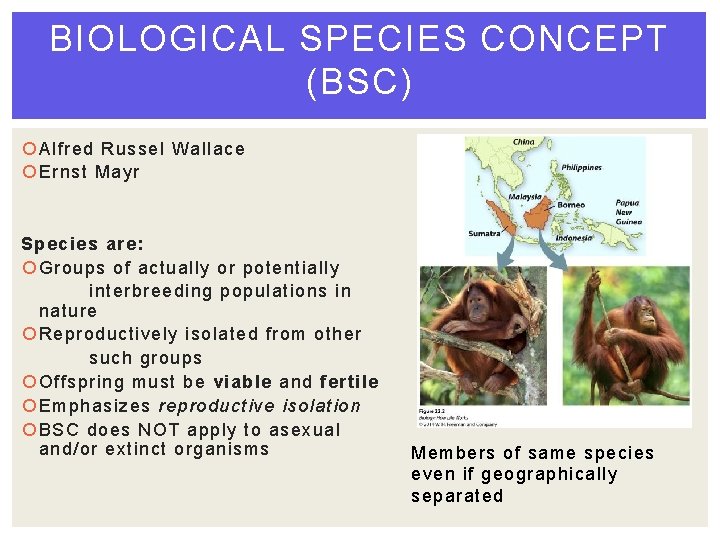
BIOLOGICAL SPECIES CONCEPT (BSC) Alfred Russel Wallace Ernst Mayr Species are: Groups of actually or potentially interbreeding populations in nature Reproductively isolated from other such groups Offspring must be viable and fertile Emphasizes reproductive isolation BSC does NOT apply to asexual and/or extinct organisms Members of same species even if geographically separated
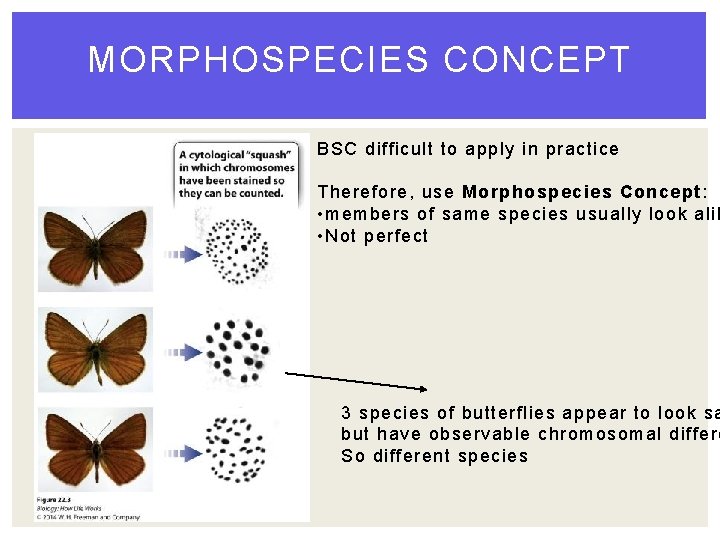
MORPHOSPECIES CONCEPT BSC difficult to apply in practice Therefore, use Morphospecies Concept: • members of same species usually look alik • Not perfect 3 species of butterflies appear to look sa but have observable chromosomal differe So different species
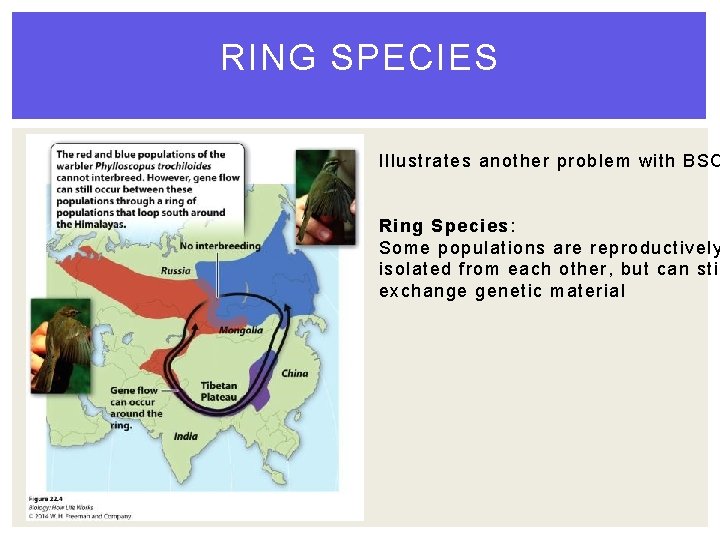
RING SPECIES Illustrates another problem with BSC Ring Species: Some populations are reproductively isolated from each other, but can stil exchange genetic material
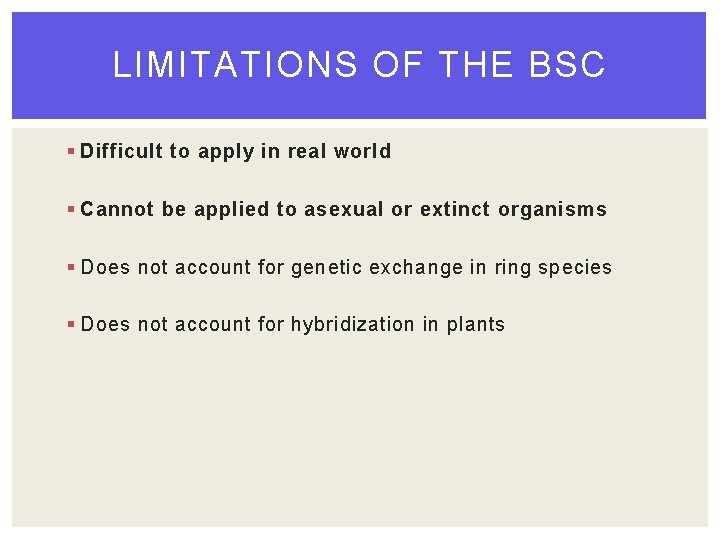
LIMITATIONS OF THE BSC § Difficult to apply in real world § Cannot be applied to asexual or extinct organisms § Does not account for genetic exchange in ring species § Does not account for hybridization in plants
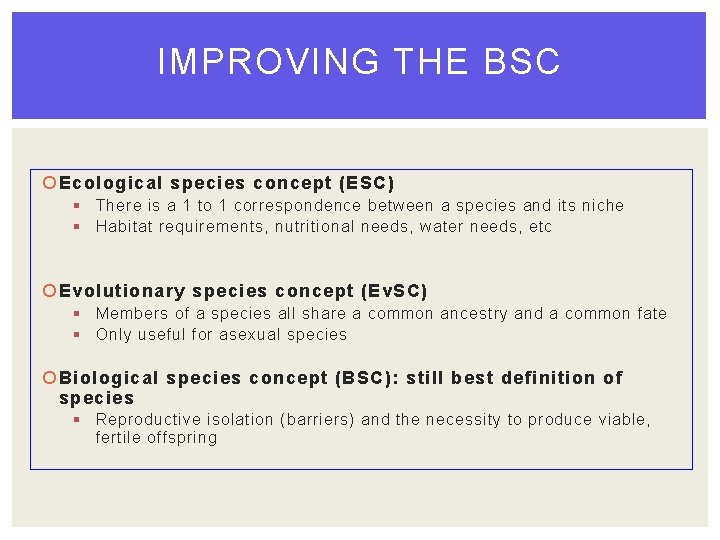
IMPROVING THE BSC Ecological species concept (ESC) § There is a 1 to 1 correspondence between a species and its niche § Habitat requirements, nutritional needs, water needs, etc Evolutionary species concept (Ev. SC) § Members of a species all share a common ancestry and a common fate § Only useful for asexual species Biological species concept (BSC): still best definition of species § Reproductive isolation (barriers) and the necessity to produce viable, fertile offspring
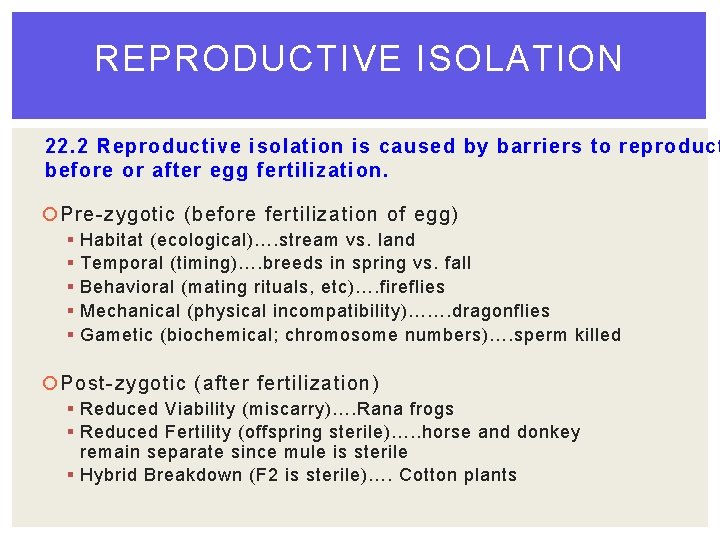
REPRODUCTIVE ISOLATION 22. 2 Reproductive isolation is caused by barriers to reproduct before or after egg fertilization. Pre-zygotic (before fertilization of egg) § § § Habitat (ecological)…. stream vs. land Temporal (timing)…. breeds in spring vs. fall Behavioral (mating rituals, etc)…. fireflies Mechanical (physical incompatibility)……. dragonflies Gametic (biochemical; chromosome numbers)…. sperm killed Post-zygotic (after fertilization) § Reduced Viability (miscarry)…. Rana frogs § Reduced Fertility (offspring sterile)…. . horse and donkey remain separate since mule is sterile § Hybrid Breakdown (F 2 is sterile)…. Cotton plants
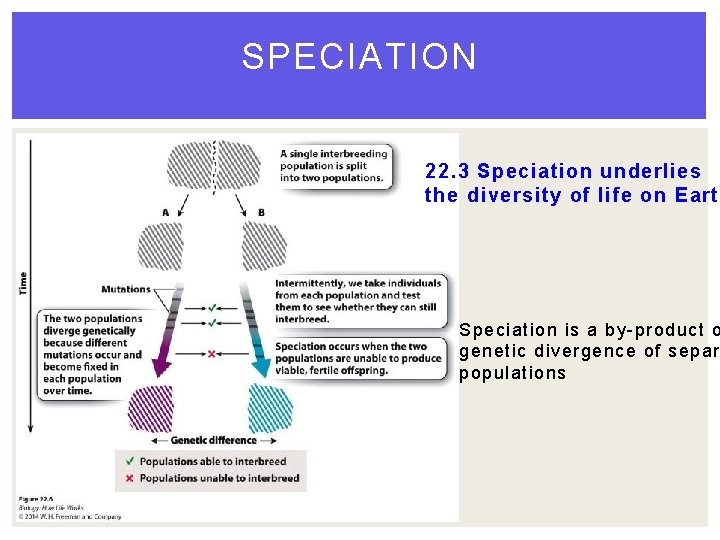
SPECIATION 22. 3 Speciation underlies the diversity of life on Earth Speciation is a by-product o genetic divergence of separ populations
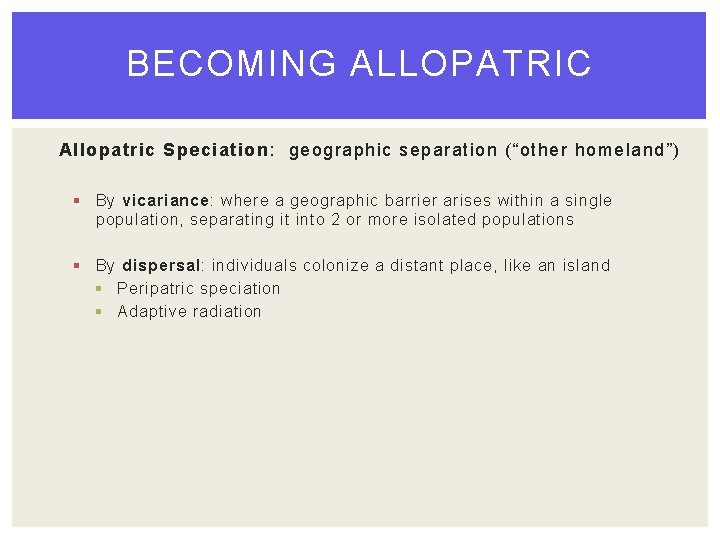
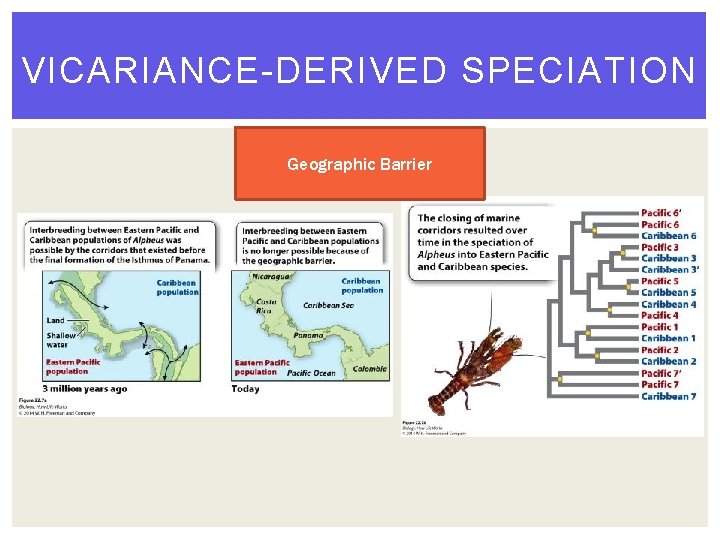
BECOMING ALLOPATRIC Allopatric Speciation: geographic separation (“other homeland”) § By vicariance: where a geographic barrier arises within a single population, separating it into 2 or more isolated populations § By dispersal: individuals colonize a distant place, like an island § Peripatric speciation § Adaptive radiation
VICARIANCE-DERIVED SPECIATION Geographic Barrier
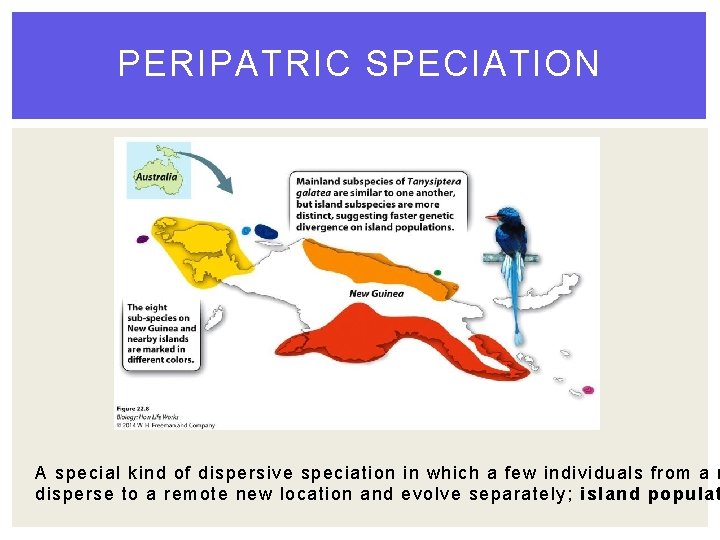
PERIPATRIC SPECIATION A special kind of dispersive speciation in which a few individuals from a m disperse to a remote new location and evolve separately; island populat
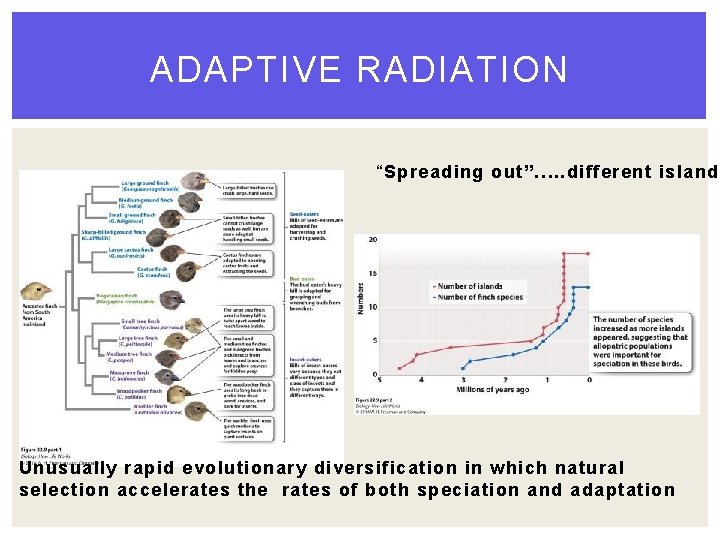
ADAPTIVE RADIATION “Spreading out”…. . different islands Unusually rapid evolutionary diversification in which natural selection accelerates the rates of both speciation and adaptation
QUICK CHECK Why do we see so many examples of adaptive radiation on mid-ocean volcanic archipelagos like the Galapagos?
ANSWER Volcanic islands chains offer many examples of adaptive radiation because they are dependent on the accidental process of colonization. Only some plants and animals are able to get there. Also, because of the absence pf competitors on these islands, there are often many available ecological opportunities for the colonizers.
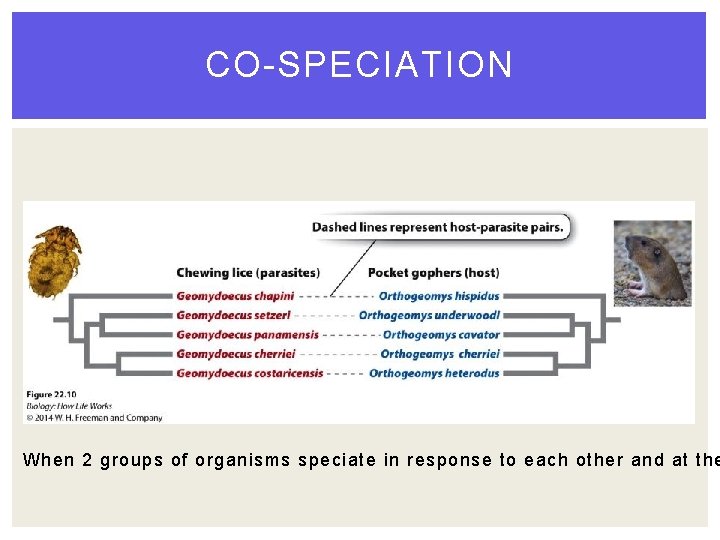
CO-SPECIATION When 2 groups of organisms speciate in response to each other and at the
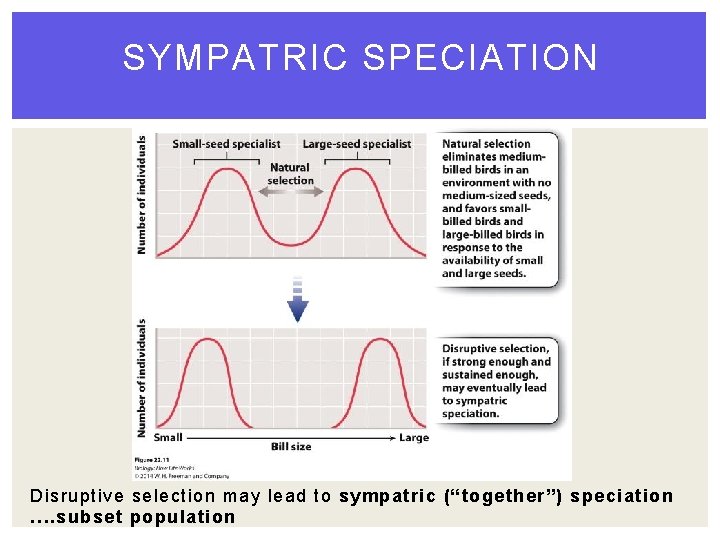
SYMPATRIC SPECIATION Disruptive selection may lead to sympatric (“together”) speciation …. subset population
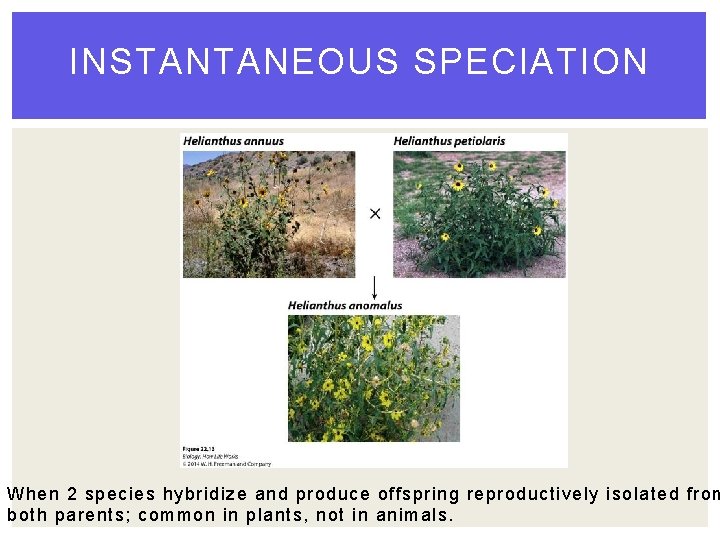
INSTANTANEOUS SPECIATION When 2 species hybridize and produce offspring reproductively isolated from both parents; common in plants, not in animals.
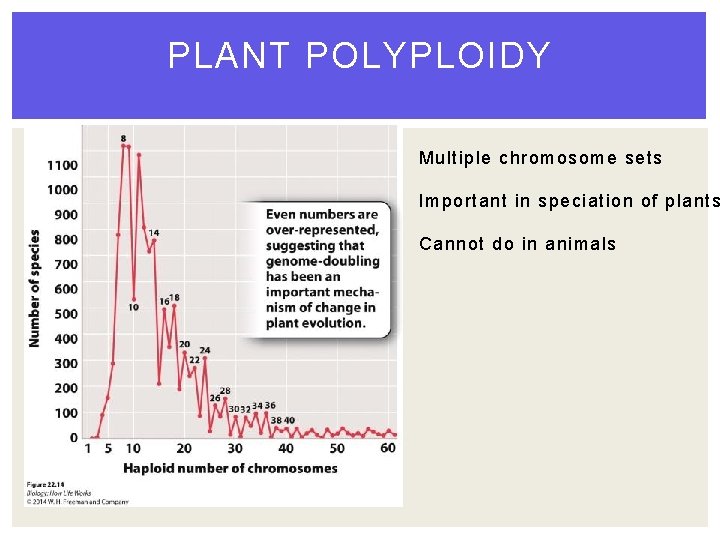
PLANT POLYPLOIDY Multiple chromosome sets Important in speciation of plants Cannot do in animals
SPECIATION AND SELECTION 22. 4 Speciation can occur with or without natural selection (differential reproductive success) § With natural selection : enhances reproductive isolation § sympatric speciation (disruptive natural selection) § allopatric speciation and adaptive radiation § Without natural selection: § genetic drift
REINFORCEMENT OF REPRODUCTIVE ISOLATION Natural selection does not always lead to speciation § May act on mutations that allow individuals to identify and mate with others that are more like themselves Called Reinforcement of Reproductive Isolation § Diverging populations undergo natural selection in favor of enhanced pre-zygotic isolation to prevent production of less fit hybrid offspring § i. e. mating discrimination