Solutions What is a Solution Homogeneous mixture of
- Slides: 10
Solutions
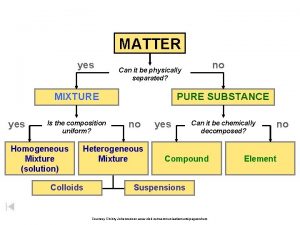
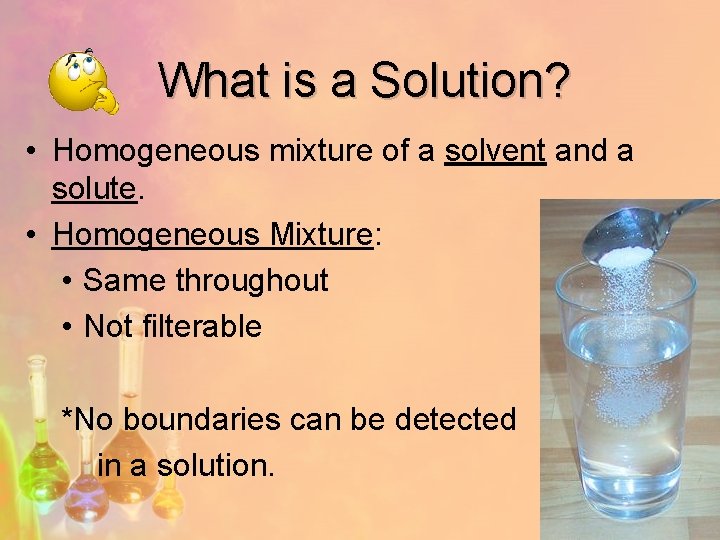
What is a Solution? • Homogeneous mixture of a solvent and a solute. • Homogeneous Mixture: • Same throughout • Not filterable *No boundaries can be detected in a solution.
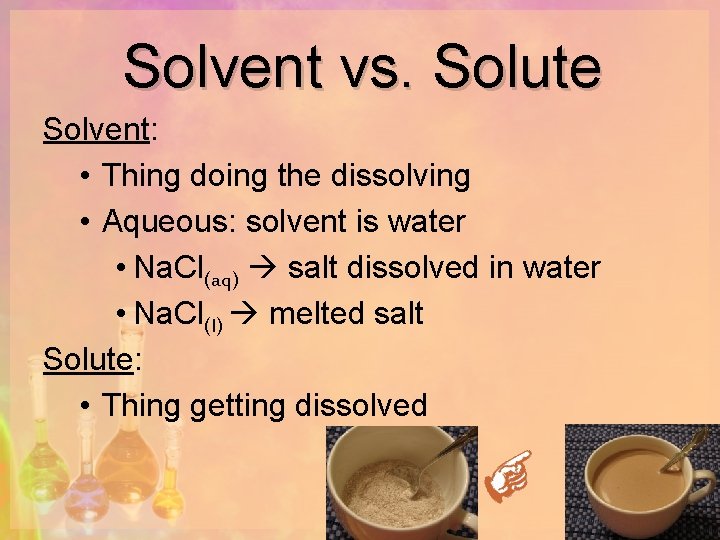
Solvent vs. Solute Solvent: • Thing doing the dissolving • Aqueous: solvent is water • Na. Cl(aq) salt dissolved in water • Na. Cl(l) melted salt Solute: • Thing getting dissolved
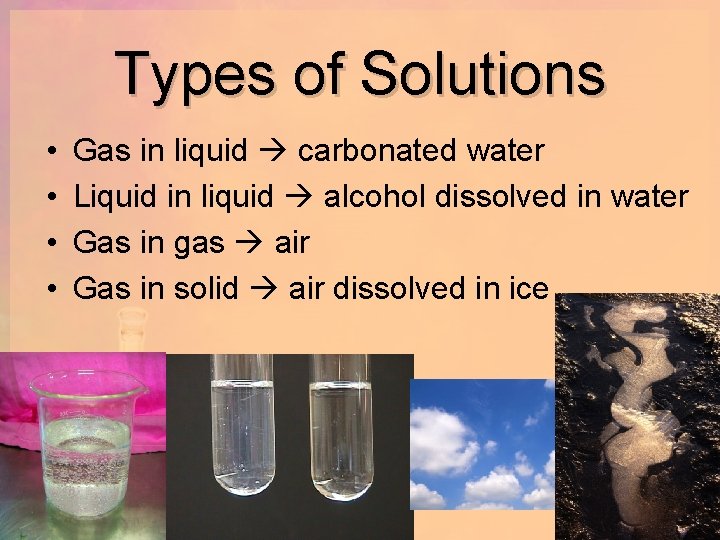
Types of Solutions • • Gas in liquid carbonated water Liquid in liquid alcohol dissolved in water Gas in gas air Gas in solid air dissolved in ice
“Like Dissolves Like” • Substances are likely to dissolve in other substances with similar chemical properties. • Polar dissolves polar • Nonpolar dissolves nonpolar • Oil will not dissolve in water because oil is nonpolar and water is polar. • A polar solvent will generally dissolve polar solutes and sometimes ionic solutes, and a nonpolar solvent will generally dissolve nonpolar solutes.
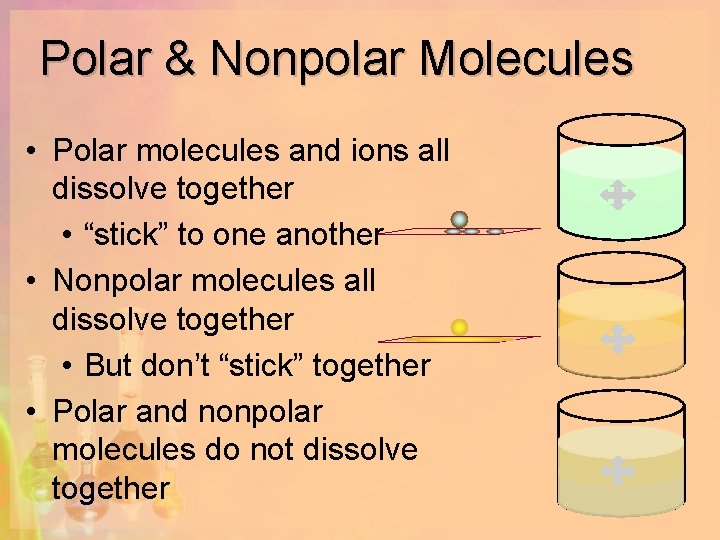
Polar & Nonpolar Molecules • Polar molecules and ions all dissolve together • “stick” to one another • Nonpolar molecules all dissolve together • But don’t “stick” together • Polar and nonpolar molecules do not dissolve together
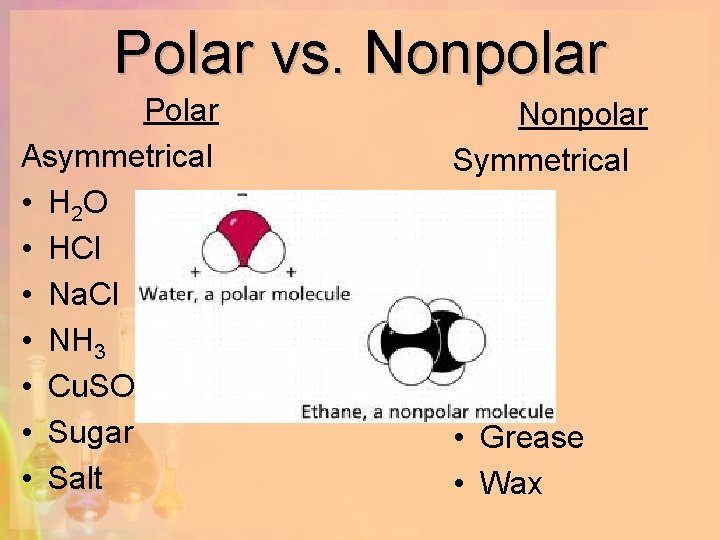
Polar vs. Nonpolar Polar Asymmetrical • H 2 O • HCl • Na. Cl • NH 3 • Cu. SO 4 • Sugar • Salt Nonpolar Symmetrical • CH 4 • CF 4 • CO 2 • Br 2 • Oil • Grease • Wax
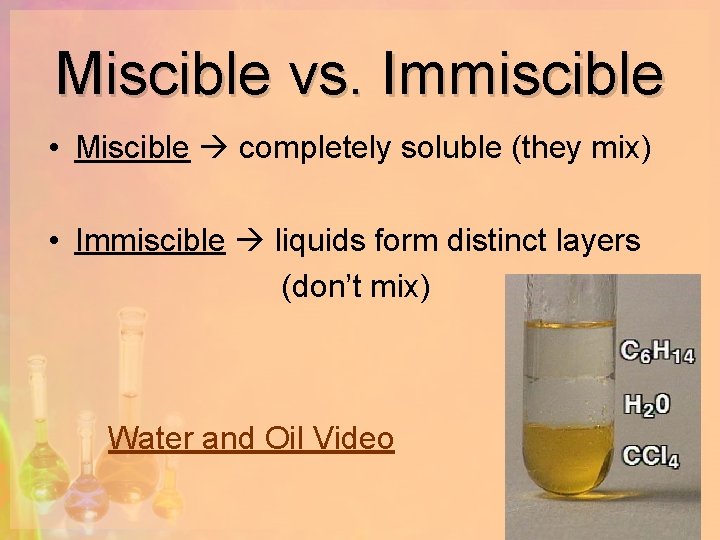
Miscible vs. Immiscible • Miscible completely soluble (they mix) • Immiscible liquids form distinct layers (don’t mix) Water and Oil Video
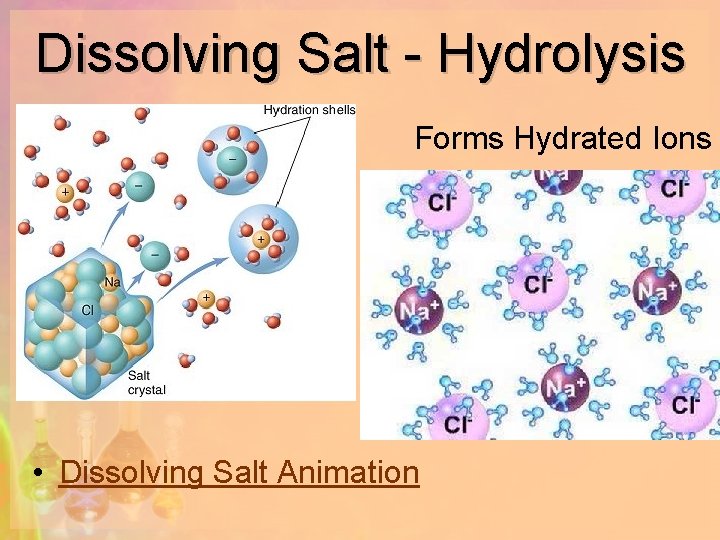
Dissolving Salt - Hydrolysis Forms Hydrated Ions • Dissolving Salt Animation
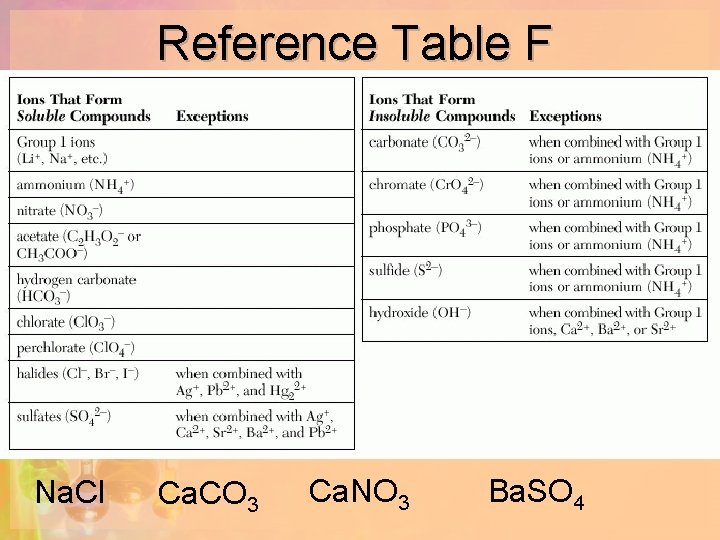
Reference Table F Na. Cl Ca. CO 3 Ca. NO 3 Ba. SO 4