SOCIAL STUDIES CHAPTER 3 LESSON 1 GROWTH OF





- Slides: 15
SOCIAL STUDIES CHAPTER 3 LESSON 1
GROWTH OF SLAVERY • Eli Whitney invented the cotton gin • After the invention of the cotton gin, southern farmers needed more slaves to work in the cotton fields • Cotton became the South’s most important crop
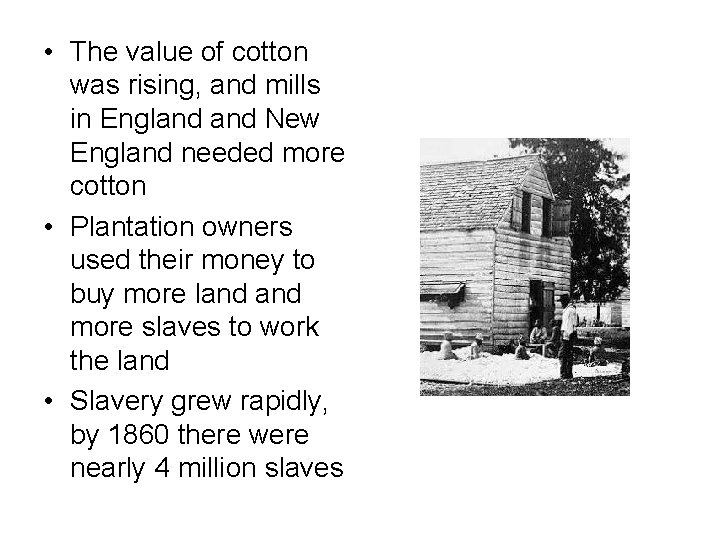
• The value of cotton was rising, and mills in England New England needed more cotton • Plantation owners used their money to buy more land more slaves to work the land • Slavery grew rapidly, by 1860 there were nearly 4 million slaves
RESISTANCE TO SLAVERY • In Virginia in 1831, a slave named Nat Turner led a rebellion against slave owners • Nat Turner and his followers killed 59 people
• By the 1850’s, slaves and • After Nat Turner’s free blacks had fewer rebellion, the southern rights than ever. states passed laws to • Southerners said that control slaves and slavery was important to free blacks their economy – Northerners said that • An example, black slavery kept the country’s ministers could no economy from growing longer preach unless faster. a white person was • Many people believed present. slavery was unfair and wrong.
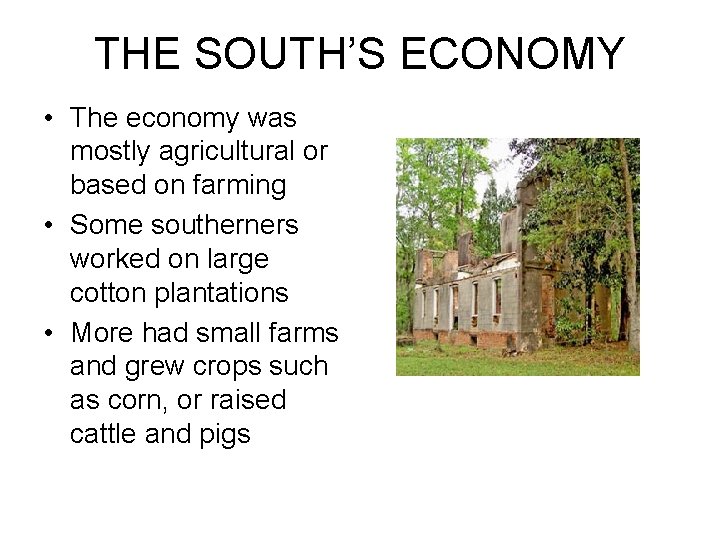
THE SOUTH’S ECONOMY • The economy was mostly agricultural or based on farming • Some southerners worked on large cotton plantations • More had small farms and grew crops such as corn, or raised cattle and pigs
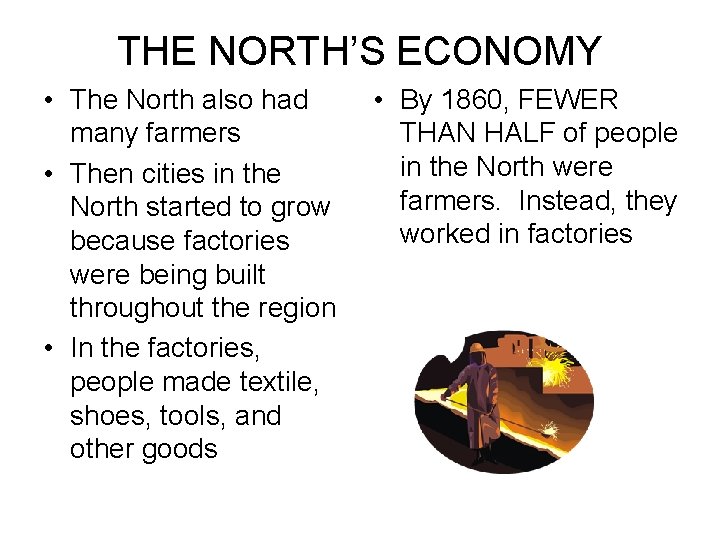
THE NORTH’S ECONOMY • The North also had many farmers • Then cities in the North started to grow because factories were being built throughout the region • In the factories, people made textile, shoes, tools, and other goods • By 1860, FEWER THAN HALF of people in the North were farmers. Instead, they worked in factories
THE TARIFF • The different economies led to disagreements between the regions about tariffs – a tax on goods • Congress passed high tariffs on goods made outside our country. British goods became expensive. The only cloth people could afford came from the North • These tariffs were good for Northern industry, but did not help the South
• Southerners had to pay higher prices for manufactured goods they wanted, such as steel and cloth • When prices of these goods went up, southerners blamed it on tariffs and the North • THINK ABOUT IT – If you were a southerner, how would you feel about the tariffs? How would you feel if you were from the North?
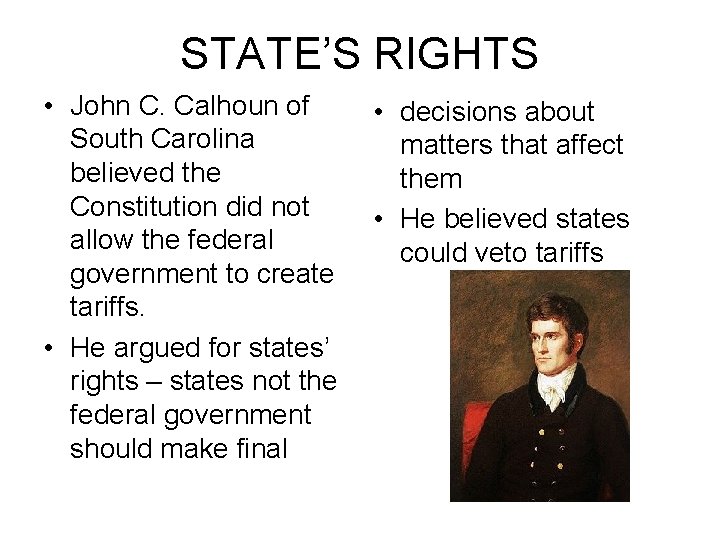
STATE’S RIGHTS • John C. Calhoun of South Carolina believed the Constitution did not allow the federal government to create tariffs. • He argued for states’ rights – states not the federal government should make final • decisions about matters that affect them • He believed states could veto tariffs
SECTIONALISM • Disagreements over slavery, tariffs, and other economic issues increased sectionalism in the North and South. • Sectionalism – loyalty to one part of the country • As these disagreements grew, it seemed that many people cared more about their own region than about the country as a whole
WHAT IS THE TITLE OF THE GRAPH ON P. 80? • MANUFACTURING 1820 - 1840
WHAT DOES THE BLUE REPRESENT ON THE GRAPH? • The South
WHAT DOES THE VERTICAL LINE ON THE GRAPH REPRESENT? • Value of manufactured goods in millions of dollars
WHAT WAS THE DIFFERENCE IN THE DOLLAR VALUE OF GOODS MADE IN THE NORTH AND SOUTH IN 1840? • About $200 million