Sheryl Zayas D O Medical Director Family Physician
- Slides: 38
Sheryl Zayas D. O. Medical Director, Family Physician and HIV specialist
§ “ Through Education, Prevention, Research, Care and Treatment, and Support Services, Care Resource Improves Upon the Health and Overall Quality of Life of Our Diverse South Florida Communities in Need” § Model of Care: 4 Pillars of ending the HIV epidemic § 1. Outreach/ In-reach § 2. HIV care and treatment and retention in care § 3. Interventions and strategies § 4. Target minority populations
§ Epidemiology of transwomen with HIV § Barriers to care unique to the transgender community § Strategies to engagement
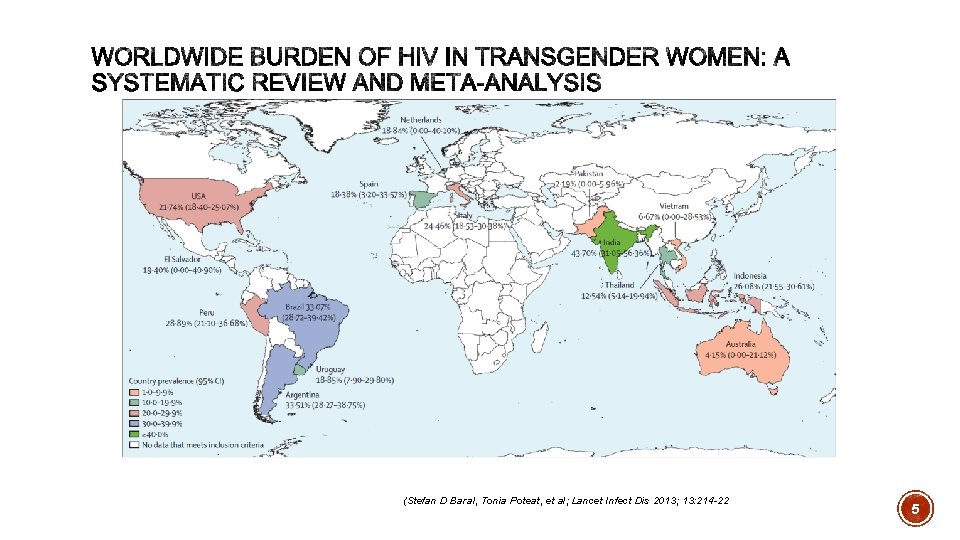
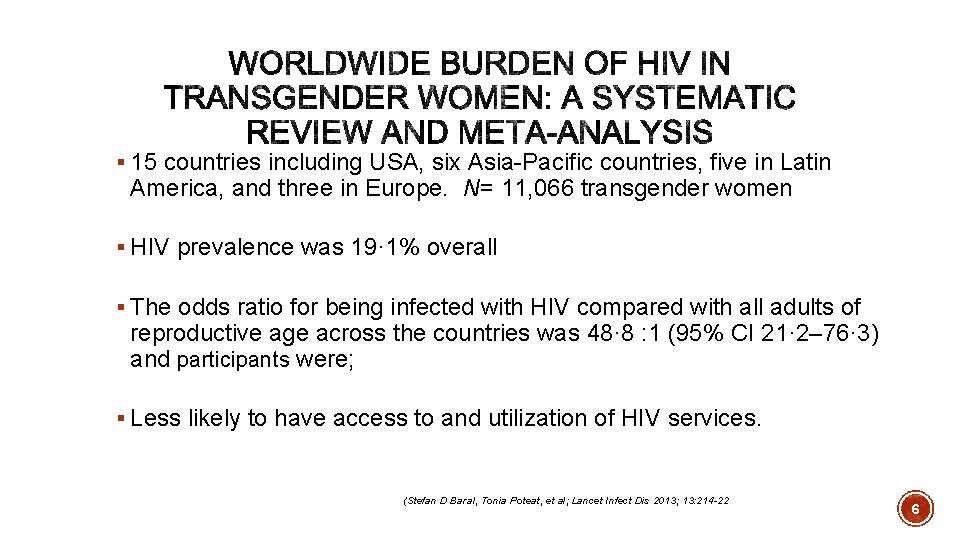
(Stefan D Baral, Tonia Poteat, et al; Lancet Infect Dis 2013; 13: 214 -22 5
§ 15 countries including USA, six Asia-Pacific countries, five in Latin America, and three in Europe. N= 11, 066 transgender women § HIV prevalence was 19· 1% overall § The odds ratio for being infected with HIV compared with all adults of reproductive age across the countries was 48· 8 : 1 (95% CI 21· 2– 76· 3) and participants were; § Less likely to have access to and utilization of HIV services. (Stefan D Baral, Tonia Poteat, et al; Lancet Infect Dis 2013; 13: 214 -22 6
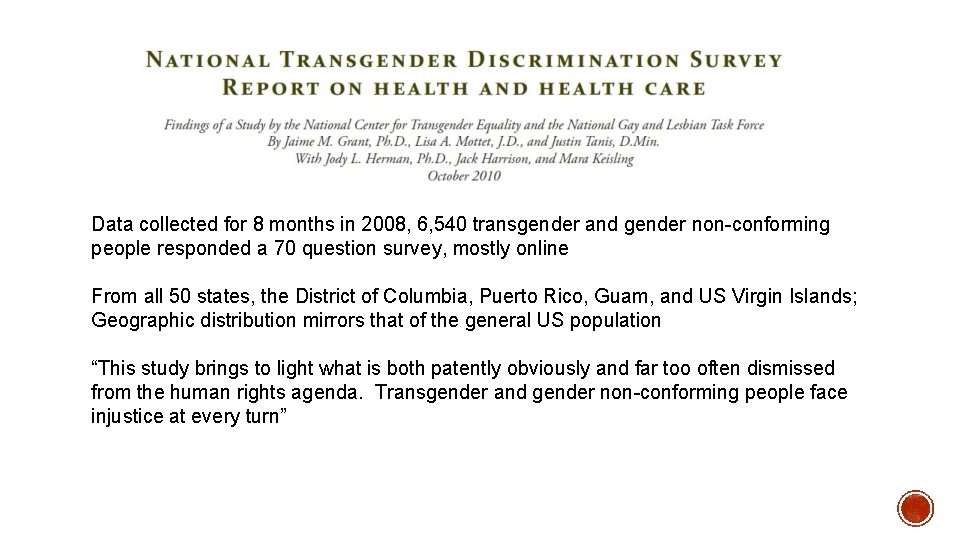
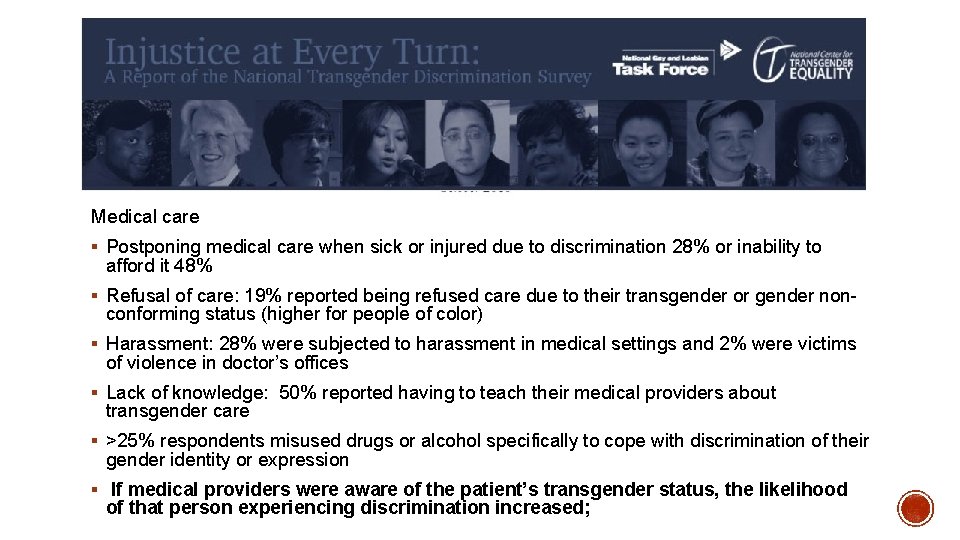
Data collected for 8 months in 2008, 6, 540 transgender and gender non-conforming people responded a 70 question survey, mostly online From all 50 states, the District of Columbia, Puerto Rico, Guam, and US Virgin Islands; Geographic distribution mirrors that of the general US population “This study brings to light what is both patently obviously and far too often dismissed from the human rights agenda. Transgender and gender non-conforming people face injustice at every turn”
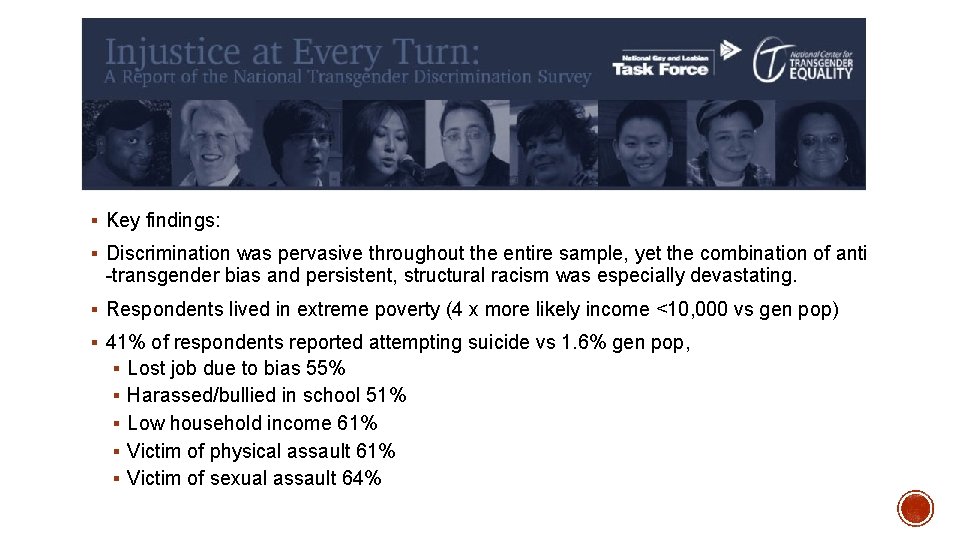
§ Key findings: § Discrimination was pervasive throughout the entire sample, yet the combination of anti -transgender bias and persistent, structural racism was especially devastating. § Respondents lived in extreme poverty (4 x more likely income <10, 000 vs gen pop) § 41% of respondents reported attempting suicide vs 1. 6% gen pop, § Lost job due to bias 55% § Harassed/bullied in school 51% § Low household income 61% § Victim of physical assault 61% § Victim of sexual assault 64%
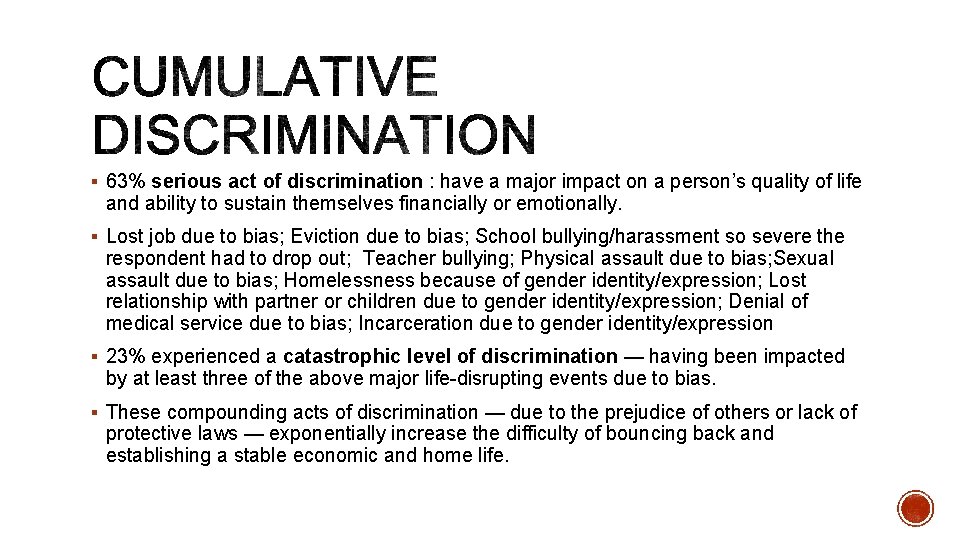
§ 63% serious act of discrimination : have a major impact on a person’s quality of life and ability to sustain themselves financially or emotionally. § Lost job due to bias; Eviction due to bias; School bullying/harassment so severe the respondent had to drop out; Teacher bullying; Physical assault due to bias; Sexual assault due to bias; Homelessness because of gender identity/expression; Lost relationship with partner or children due to gender identity/expression; Denial of medical service due to bias; Incarceration due to gender identity/expression § 23% experienced a catastrophic level of discrimination — having been impacted by at least three of the above major life-disrupting events due to bias. § These compounding acts of discrimination — due to the prejudice of others or lack of protective laws — exponentially increase the difficulty of bouncing back and establishing a stable economic and home life.
Medical care § Postponing medical care when sick or injured due to discrimination 28% or inability to afford it 48% § Refusal of care: 19% reported being refused care due to their transgender or gender non- conforming status (higher for people of color) § Harassment: 28% were subjected to harassment in medical settings and 2% were victims of violence in doctor’s offices § Lack of knowledge: 50% reported having to teach their medical providers about transgender care § >25% respondents misused drugs or alcohol specifically to cope with discrimination of their gender identity or expression § If medical providers were aware of the patient’s transgender status, the likelihood of that person experiencing discrimination increased;
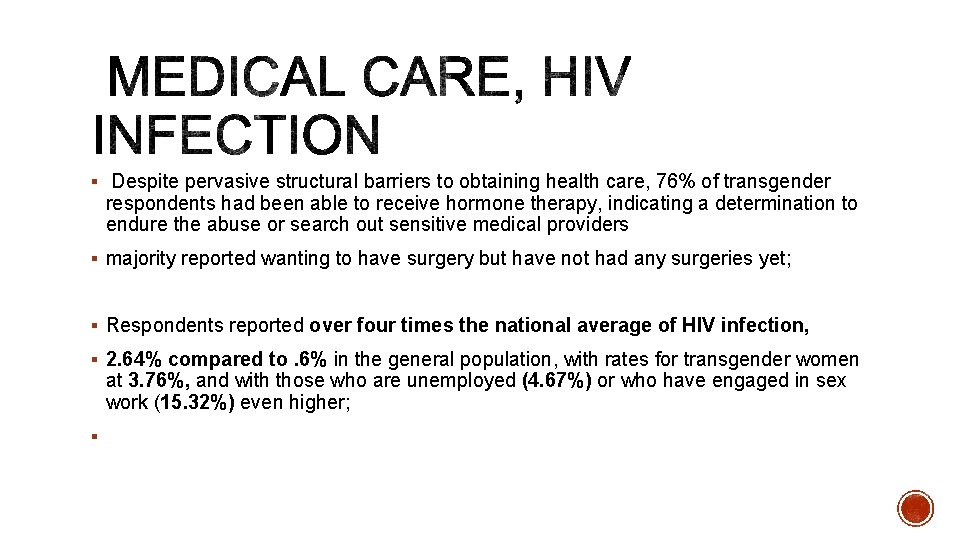
§ Despite pervasive structural barriers to obtaining health care, 76% of transgender respondents had been able to receive hormone therapy, indicating a determination to endure the abuse or search out sensitive medical providers § majority reported wanting to have surgery but have not had any surgeries yet; § Respondents reported over four times the national average of HIV infection, § 2. 64% compared to. 6% in the general population, with rates for transgender women at 3. 76%, and with those who are unemployed (4. 67%) or who have engaged in sex work (15. 32%) even higher; §
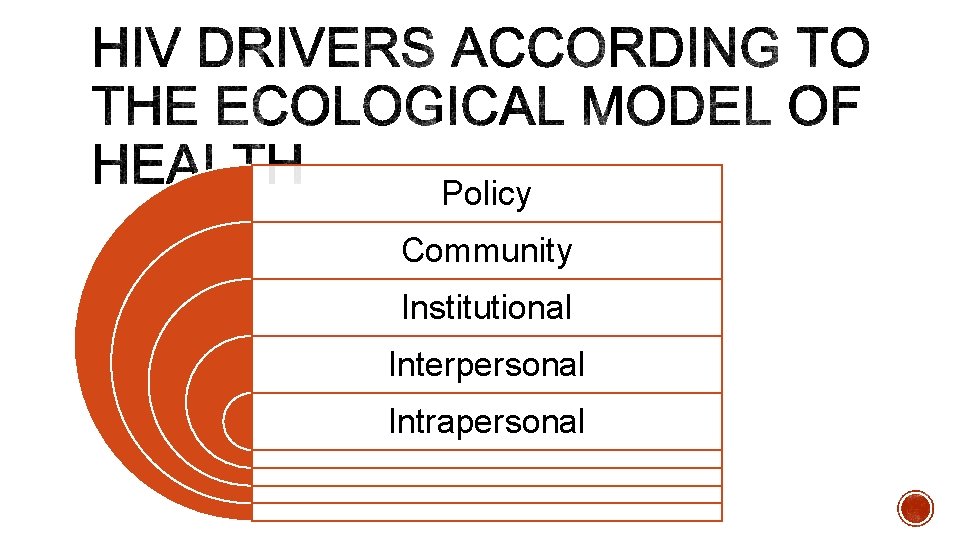
Policy Community Institutional Interpersonal Intrapersonal
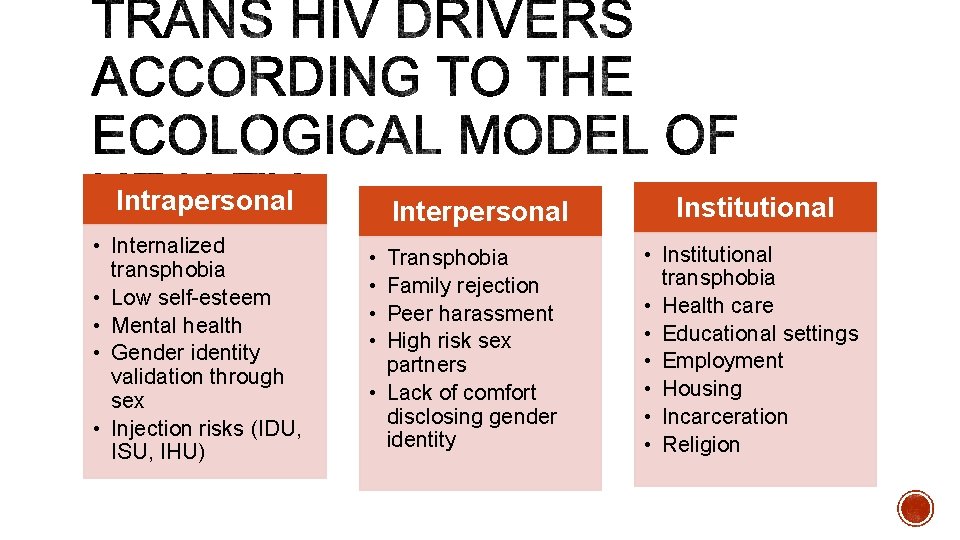
Intrapersonal • Internalized transphobia • Low self-esteem • Mental health • Gender identity validation through sex • Injection risks (IDU, ISU, IHU) Interpersonal • • Transphobia Family rejection Peer harassment High risk sex partners • Lack of comfort disclosing gender identity Institutional • Institutional transphobia • Health care • Educational settings • Employment • Housing • Incarceration • Religion
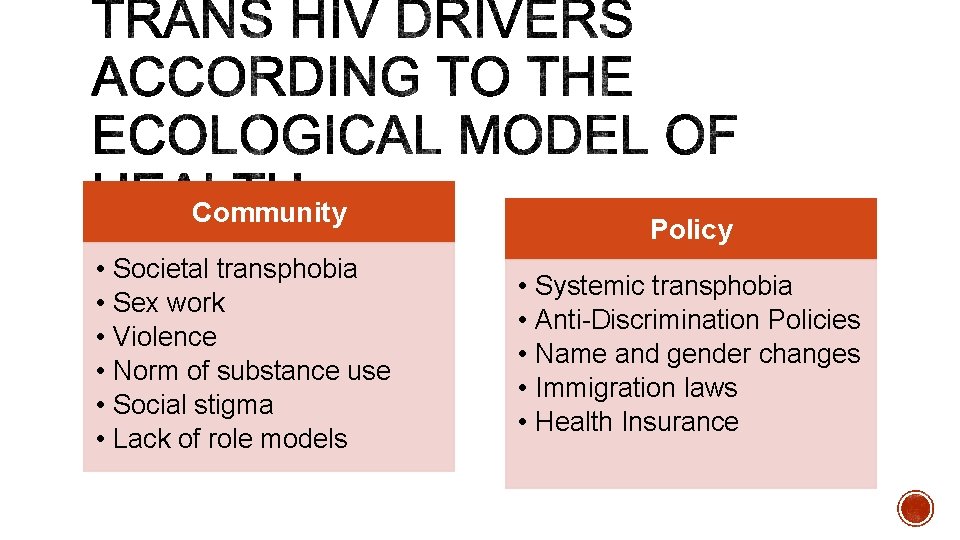
Community • • • Societal transphobia Sex work Violence Norm of substance use Social stigma Lack of role models Policy • • • Systemic transphobia Anti-Discrimination Policies Name and gender changes Immigration laws Health Insurance
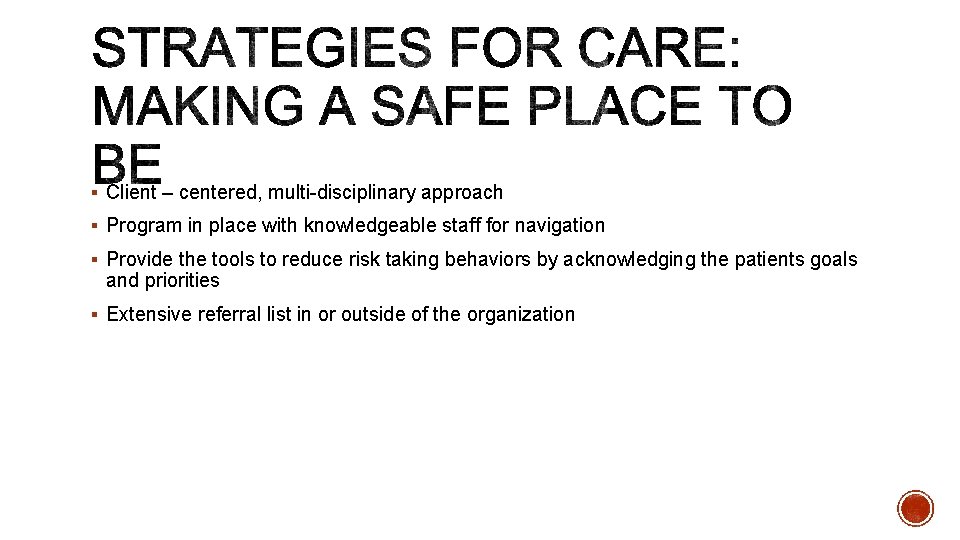
§ Client – centered, multi-disciplinary approach § Program in place with knowledgeable staff for navigation § Provide the tools to reduce risk taking behaviors by acknowledging the patients goals and priorities § Extensive referral list in or outside of the organization
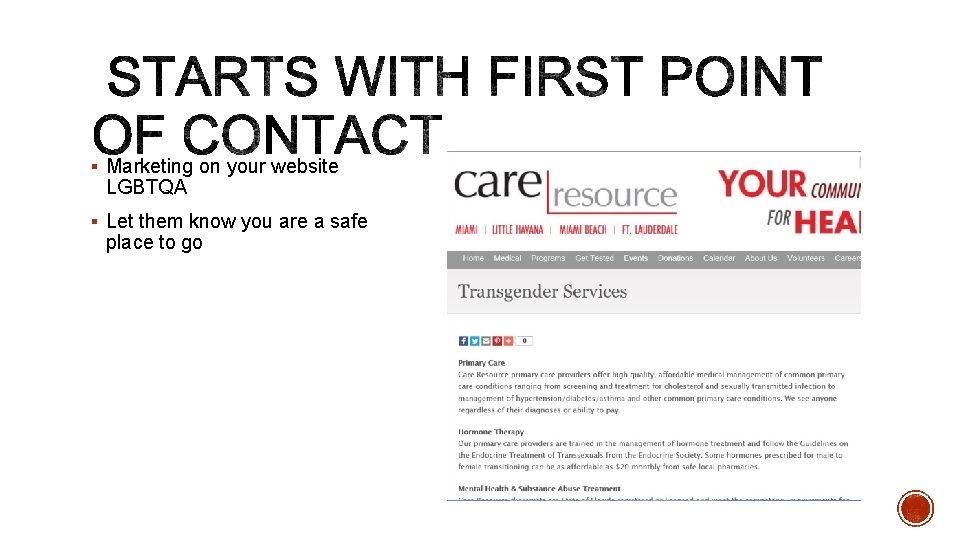
§ Marketing on your website LGBTQA § Let them know you are a safe place to go
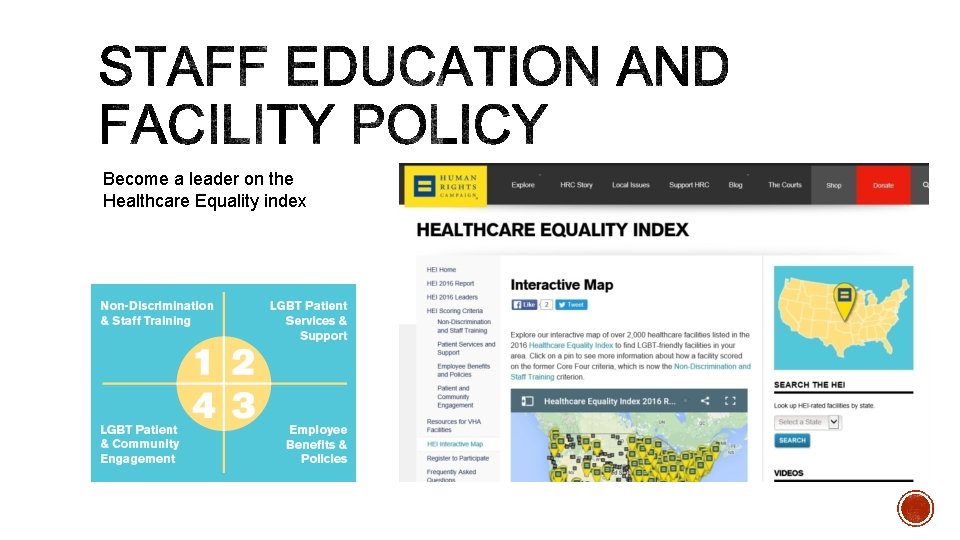
Become a leader on the Healthcare Equality index
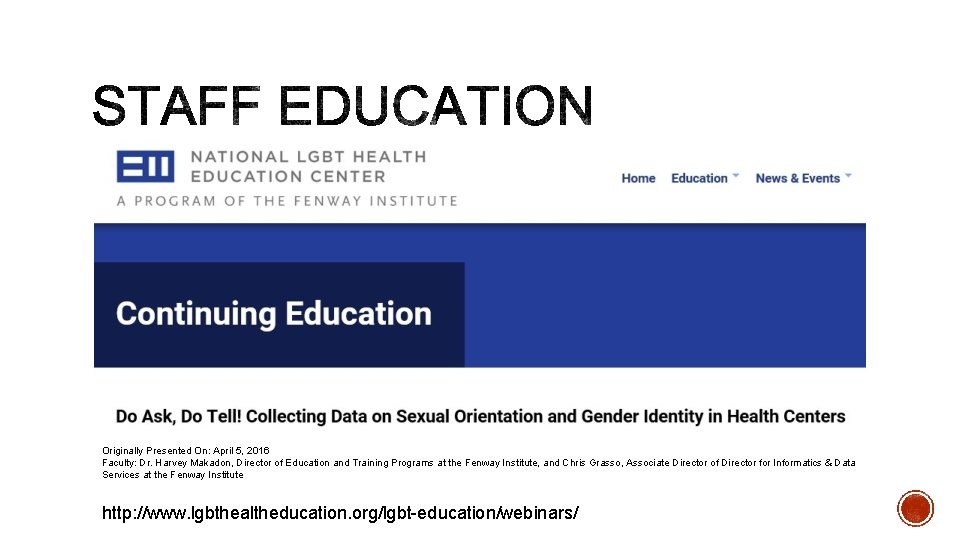
Originally Presented On: April 5, 2016 Faculty: Dr. Harvey Makadon, Director of Education and Training Programs at the Fenway Institute, and Chris Grasso, Associate Director of Director for Informatics & Data Services at the Fenway Institute http: //www. lgbthealtheducation. org/lgbt-education/webinars/
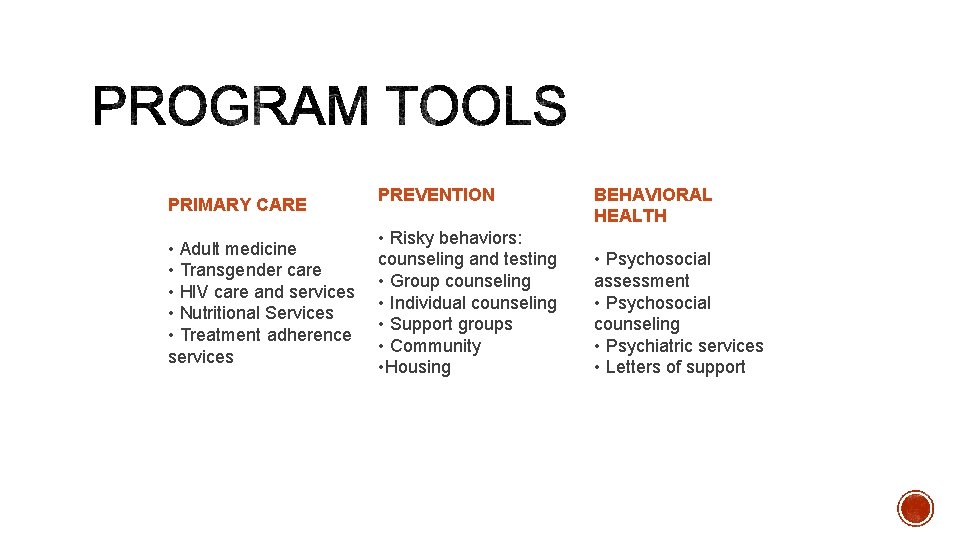
PRIMARY CARE • Adult medicine • Transgender care • HIV care and services • Nutritional Services • Treatment adherence services PREVENTION • Risky behaviors: counseling and testing • Group counseling • Individual counseling • Support groups • Community • Housing BEHAVIORAL HEALTH • Psychosocial assessment • Psychosocial counseling • Psychiatric services • Letters of support
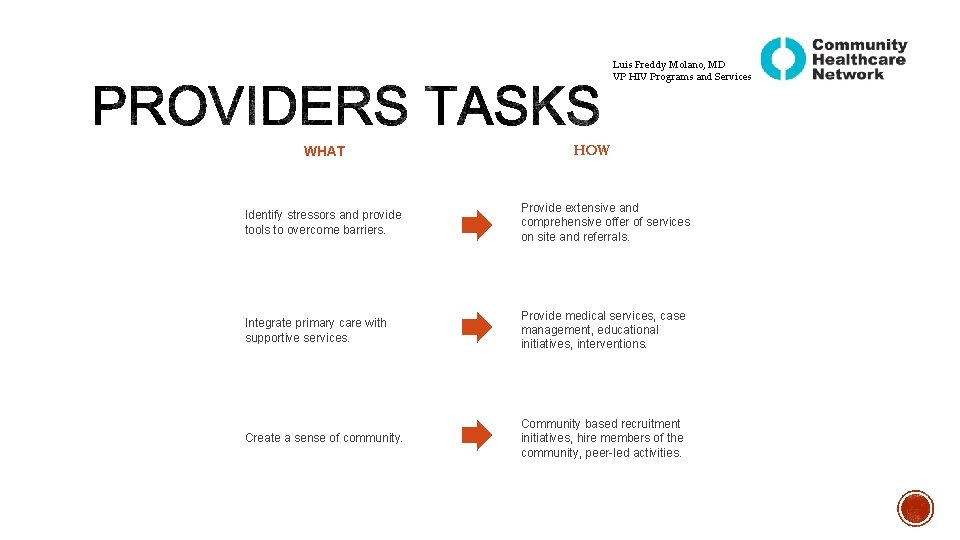
Luis Freddy Molano, MD VP HIV Programs and Services WHAT HOW Identify stressors and provide tools to overcome barriers. Provide extensive and comprehensive offer of services on site and referrals. Integrate primary care with supportive services. Provide medical services, case management, educational initiatives, interventions. Create a sense of community. Community based recruitment initiatives, hire members of the community, peer-led activities.
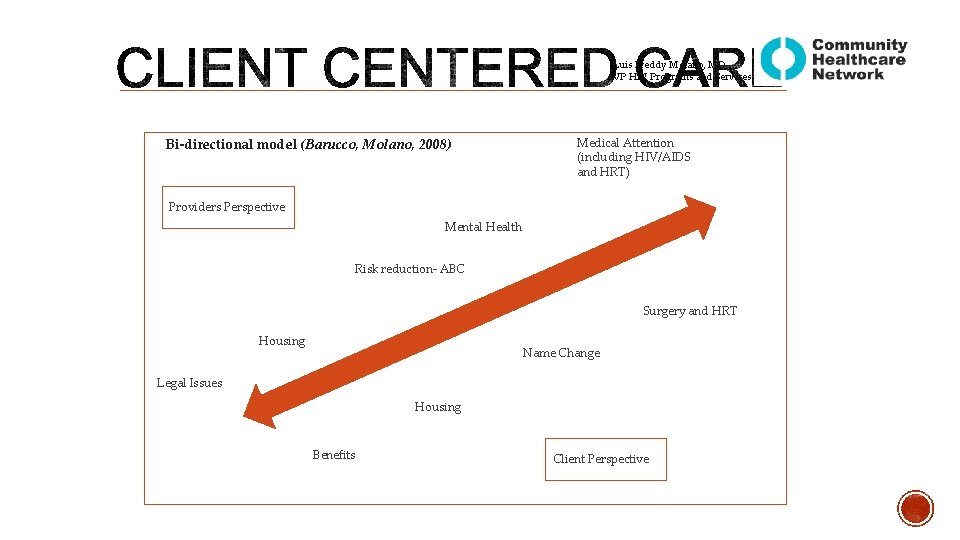
Luis Freddy Molano, MD VP HIV Programs and Services Bi-directional model (Barucco, Molano, 2008) Medical Attention (including HIV/AIDS and HRT) Providers Perspective Mental Health Risk reduction- ABC Surgery and HRT Housing Name Change Legal Issues Housing Benefits Client Perspective
§ The Health Resources and Services Administration HIV/AIDS Bureau together with the National Quality Center (NQC) In Care Campaign incarecampaign. org § December 10 th 2013; Transgender Retention in Care Webinar State of New York Department of Health, In Care Campaign § Jo. Anne Keatley, MSW Director and Co- Principal Investigator § Luis Freddy Molano, MD, VP HIV Programs and Services
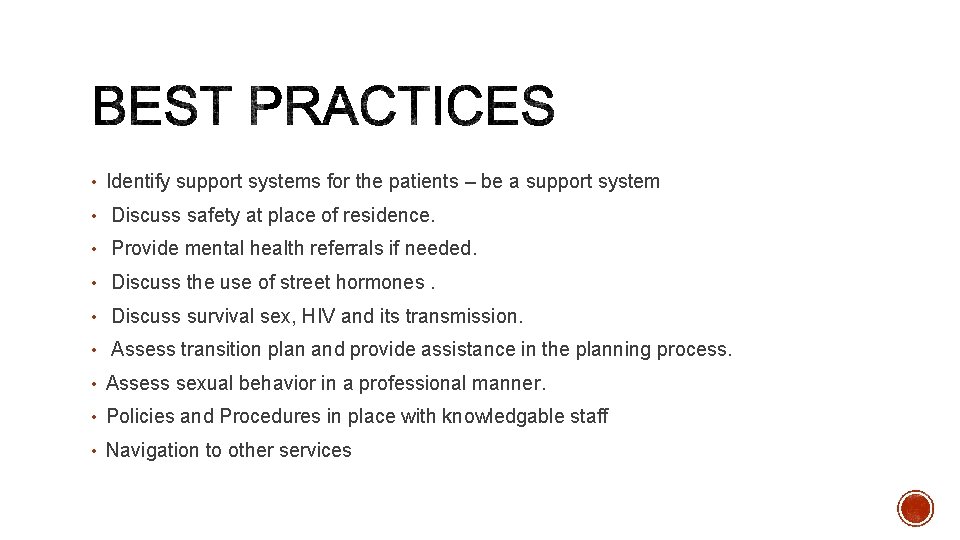
• Identify support systems for the patients – be a support system • Discuss safety at place of residence. • Provide mental health referrals if needed. • Discuss the use of street hormones. • Discuss survival sex, HIV and its transmission. • Assess transition plan and provide assistance in the planning process. • Assess sexual behavior in a professional manner. • Policies and Procedures in place with knowledgable staff • Navigation to other services
• Questions? • szayas@careresource. org
This Presentation and resources are made possible by AETC grant award U 1 OHA 29295 from the HIV/AIDS Bureau of the Health Resources Services Administration (HRSA), U. S. Department of Health and Human Services (HHS). The information presented is the consensus of HIV/AIDS specialists within the SEAETC and does not necessarily represent the official views of HRSA/HAB The AIDS Education and Training Center (AETC) Program is the training arm of the Ryan White HIV/AIDS Program. The AETC Program is a national network of leading HIV experts who provide locally based, tailored education, clinical consultation and technical assistance to healthcare professionals and healthcare organizations to integrate high quality, comprehensive care for those living with or affected by HIV.
The South FL SE AIDS Education and Training Center within the University of Miami, Department of Medicine, Division of Clinical Immunology, has over thirty faculty members and staff dedicated to caring for patients with HIV/AIDS and includes some of the world’s most renowned researchers in infectious diseases. We have specialty clinics in adult medicine, and obstetrics/gynecology that provide state of the art clinical care for those individuals infected with HIV and other STIs. HIV clinical care is provided by the UM physicians for inpatient care at Jackson Memorial Hospital (JMH) and University of Miami Hospital, and outpatient care at numerous sites on the UM/JMH medical campus. UM HIV faculty also provide off site care at Federally Qualified Health Centers.
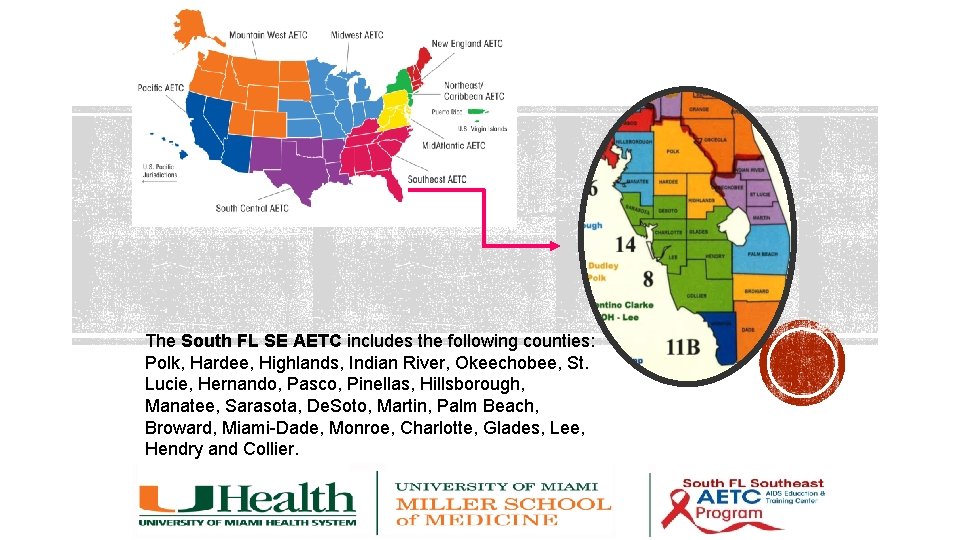
The South FL SE AETC includes the following counties: Polk, Hardee, Highlands, Indian River, Okeechobee, St. Lucie, Hernando, Pasco, Pinellas, Hillsborough, Manatee, Sarasota, De. Soto, Martin, Palm Beach, Broward, Miami-Dade, Monroe, Charlotte, Glades, Lee, Hendry and Collier.
The U. S. Department of Health and Human Services (DHHS) has released updated versions of its antiretroviral treatment guidelines for adults and adolescents, and for children with HIV. The new adult guidelines include revised recommendations for firstline antiretroviral therapy (ART) as well as management of treatment-experienced patients. The revised pediatric guidelines include a discussion of very early treatment for HIV-infected infants. References HHS Panel on Antiretroviral Guidelines for Adults and Adolescents. Guidelines for the Use of Antiretroviral Agents in HIV-1 -Infected Adults and Adolescents. Updated April 8, 2015. DHHS Panel on Antiretroviral Therapy and Medical Management of HIVInfected Children. Guidelines for the Use of Antiretroviral Agents in Pediatric HIV Infection. Updated March 5, 2015.
TRAINING OPPORTUNITIES Preceptorships An intensive clinical training program offered to healthcare providers in Florida who have an interest in learning more about the diagnosis and management of HIV/AIDS, opportunistic infections, and co-morbid conditions. Each preceptorship is structured to meet the unique needs of the individual participant based on his or her previous experience, geographic location, and time available. Experience 4 to 240 hours of clinical training at adult, pediatric, obstetric, and/or family practice clinics where care is provided to HIV-infected patients. All training provided is consistent with current guidelines from the Department of Health and Human Services or other nationally recognized guidelines when available. Individual and/or Group Clinical Consultations Individual and group clinical consultations are offered. Individual clinical case consultation is provided on the diagnosis, prevention, and treatment of HIV/AIDS and related conditions. These consultations take place by telephone, email or face-to-face meetings. Group clinical consultation with case-based discussions include information on pharmacology, clinical antiretroviral therapy updates, drug-drug interactions, and antiretroviral resistance.
TRAINING OPPORTUNITIES Cont’d Chart Reviews The chart review program offers clinics that provide HIV/AIDS care an opportunity to assess adherence to current Department of Health and Human Services (DHHS) and other published guidelines utilized in the care and treatment of HIV-infected individuals. Using a team of specially-trained F/C AETC faculty, a review of selected patient charts is completed to identify the strengths of the healthcare team, as well as areas of opportunity for education and training to support quality improvement efforts. Web-Based Education (Webinars) We offer numerous web-based educational opportunities to increase the knowledge and skills of HIV healthcare providers. Our web-based educational opportunities cover a wide range of HIV-related topics. Trainings are provided both as live webinars or on-demand recorded webinars. Web-based education offers participants a way to stay up-to-date on current topics. Telehealth Case Based Group Consultations This model uses a live audio-video-based platform (Adobe Connect) to provide educational experiences through the creation of a learning network comprised of clinicians serving HIV/AIDS patients, novice to expert throughout our region.
FOR MORE INFORMATION, PLEASE VISIT: http: //hivaidsinstitute. med. miami. edu/partners/se-aetc
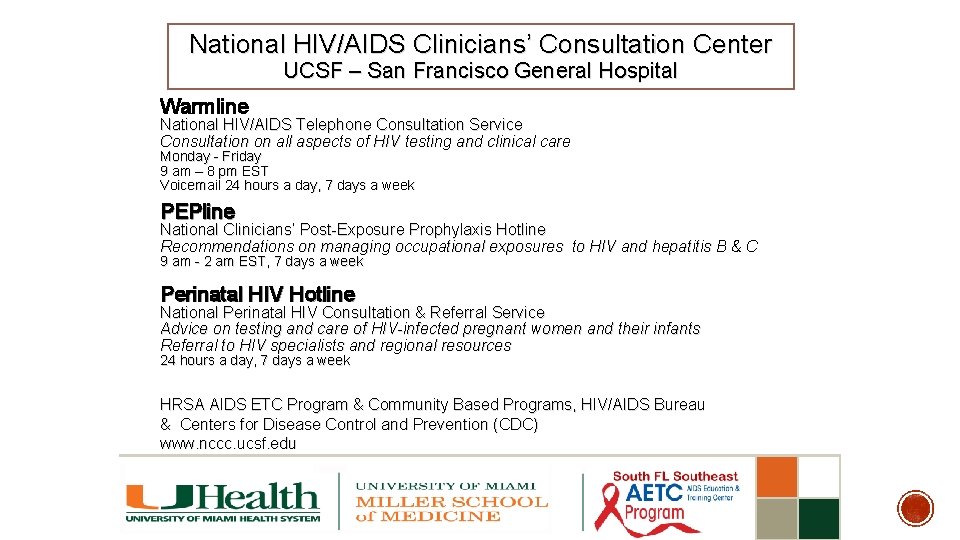
National HIV/AIDS Clinicians’ Consultation Center UCSF – San Francisco General Hospital Warmline 800. 933. 3413 National HIV/AIDS Telephone Consultation Service Consultation on all aspects of HIV testing and clinical care Monday - Friday 9 am – 8 pm EST Voicemail 24 hours a day, 7 days a week PEPline 888. 448. 4911 National Clinicians’ Post-Exposure Prophylaxis Hotline Recommendations on managing occupational exposures to HIV and hepatitis B & C 9 am - 2 am EST, 7 days a week Perinatal HIV Hotline 888. 448. 8765 National Perinatal HIV Consultation & Referral Service Advice on testing and care of HIV-infected pregnant women and their infants Referral to HIV specialists and regional resources 24 hours a day, 7 days a week HRSA AIDS ETC Program & Community Based Programs, HIV/AIDS Bureau & Centers for Disease Control and Prevention (CDC) www. nccc. ucsf. edu
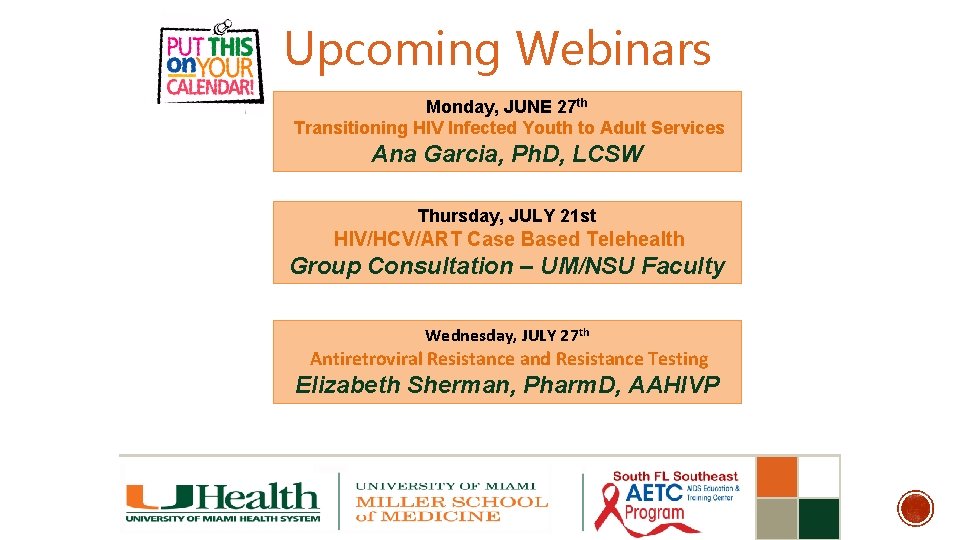
Upcoming Webinars Monday, JUNE 27 th Transitioning HIV Infected Youth to Adult Services Ana Garcia, Ph. D, LCSW Thursday, JULY 21 st HIV/HCV/ART Case Based Telehealth Group Consultation – UM/NSU Faculty Wednesday, JULY 27 th Antiretroviral Resistance and Resistance Testing Elizabeth Sherman, Pharm. D, AAHIVP
Need Additional Information? Contact the South FL SE AIDS Education and Training Center Franklin Monjarrez, Program Manager: fbm 20@med. miami. edu Tivisay Gonzalez, Program Coordinator: tgonzalez 1@med. miami. edu
Target audience: Physicians, physician assistants, nurses, pharmacists, social workers, mental health workers, nutritionist/dietitians. The Suwannee River Area Health Education Center, Inc. is a Florida Board of Nursing, Dentistry, Pharmacy, Psychology, Respiratory Care, Occupational Therapy, Nursing Home Administration, Clinical Social Work, Marriage and Family Therapy and Mental Health Counseling and Florida Council of Dietetics and Nutrition approved provider of continuing education. CE Broker Provider ID #50 -1922. This program meets the requirements for up to 1. 0 contact hours. The Florida AHEC Network designates this live activity for a maximum of 1. 0 AMA PRA Category 1 Credits™.
Thank you! We thank you for participating in today’s webinar and encourage you to stay on Web. Ex and fill out the Performance Evaluation after the call ends. This is a HRSA requirement that helps us ensure continued funding.