Scaling functions for finitesize corrections in EVS Zoltn


- Slides: 20
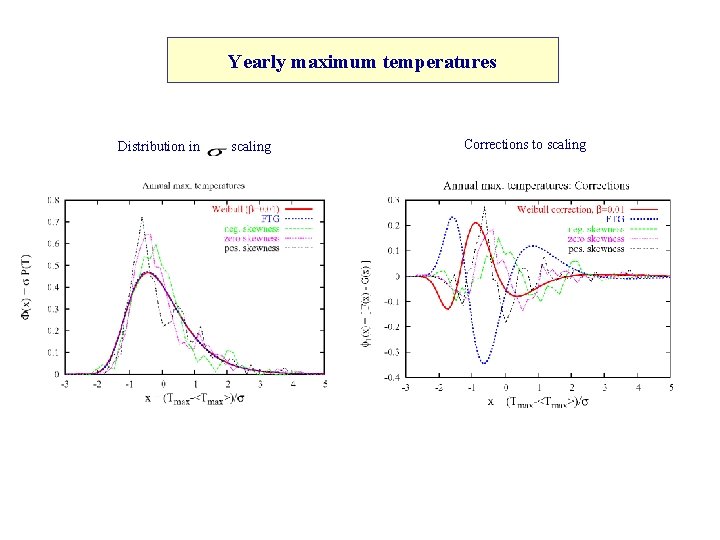
Scaling functions for finite-size corrections in EVS Zoltán Rácz Institute for Theoretical Physics Eötvös University E-mail: racz@general. elte. hu Homepage: cgl. elte. hu/~racz Motivation: Do witches exist if there were 2 very large hurricanes in a century? Introduction: Extreme value statistics (EVS) for physicists in 10 minutes. Collaborators: G. Gyorgyi N. Moloney K. Ozogany I. Janosi I. Bartos Problems: Slow convergence to limiting distributions. Not much is known about the EVS of correlated variables. Idea: EVS looks like a finite-size scaling problem of critical phenomena – try to use the methods learned there. Results: Finite size corrections to limiting distributions (i. i. d. variables). Numerics for the EVS of signals ( ). Improved convergence by using the right scaling variables. Distribution of yearly maximum temperatures.
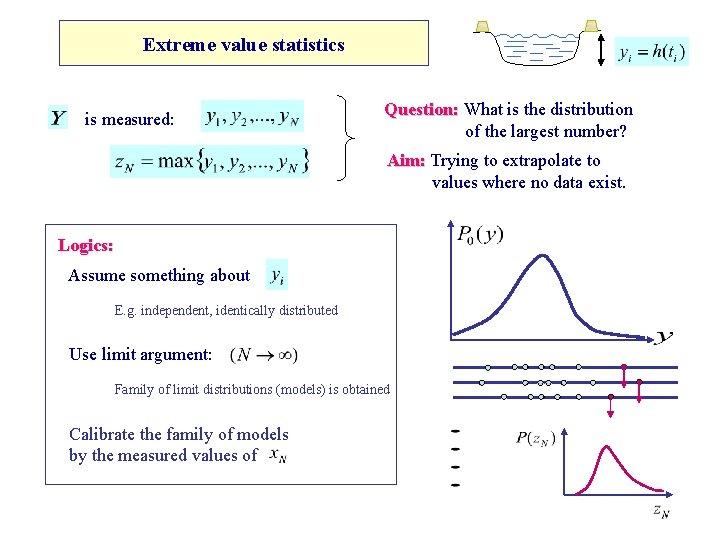
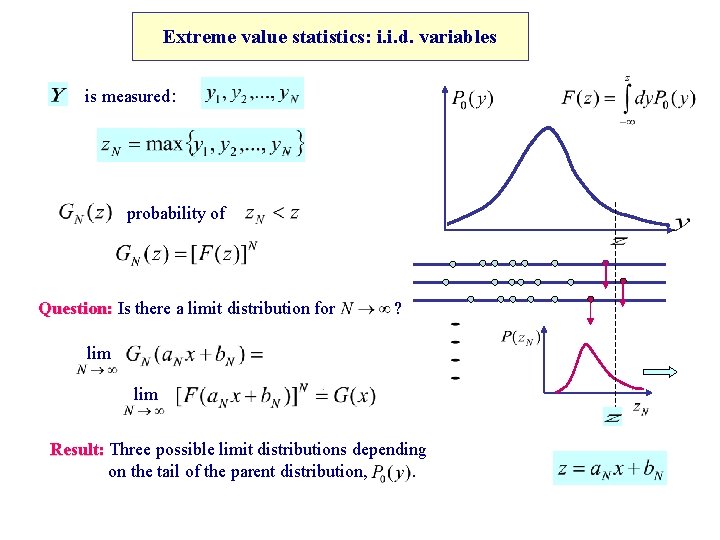
Extreme value statistics is measured: Question: What is the distribution of the largest number? Aim: Trying to extrapolate to values where no data exist. Logics: Assume something about E. g. independent, identically distributed Use limit argument: Family of limit distributions (models) is obtained Calibrate the family of models by the measured values of
Extreme value statistics: i. i. d. variables is measured: probability of Question: Is there a limit distribution for ? lim Result: Three possible limit distributions depending on the tail of the parent distribution, .
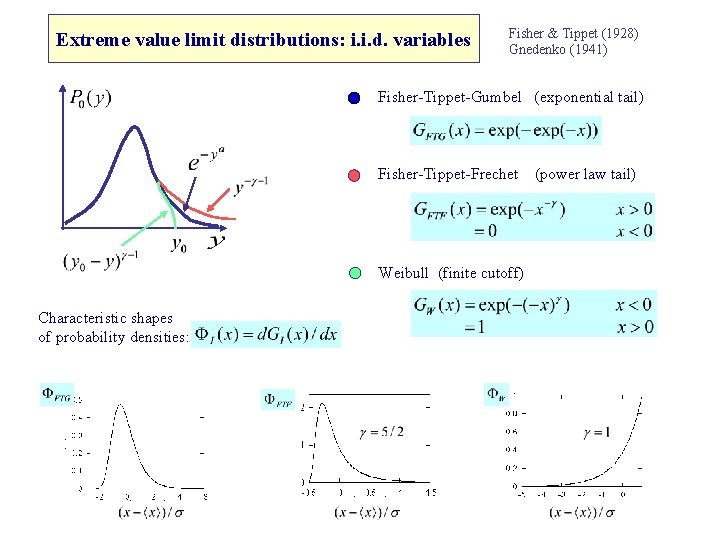
Extreme value limit distributions: i. i. d. variables Fisher & Tippet (1928) Gnedenko (1941) Fisher-Tippet-Gumbel (exponential tail) Fisher-Tippet-Frechet Weibull (finite cutoff) Characteristic shapes of probability densities: (power law tail)
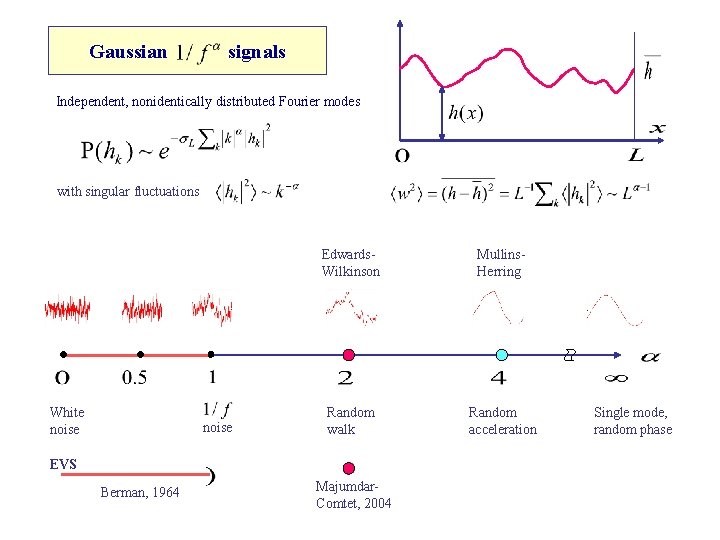
Gaussian signals Independent, nonidentically distributed Fourier modes with singular fluctuations White noise Edwards. Wilkinson Mullins. Herring Random walk Random acceleration EVS Berman, 1964 Majumdar. Comtet, 2004 Single mode, random phase
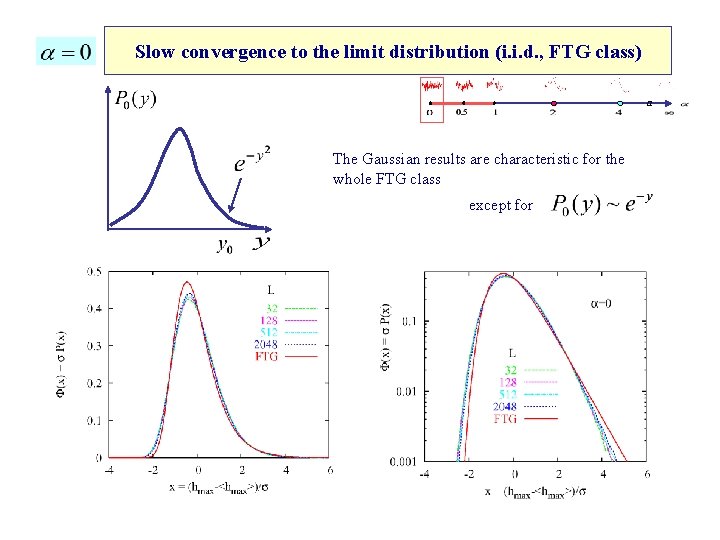
Slow convergence to the limit distribution (i. i. d. , FTG class) The Gaussian results are characteristic for the whole FTG class except for
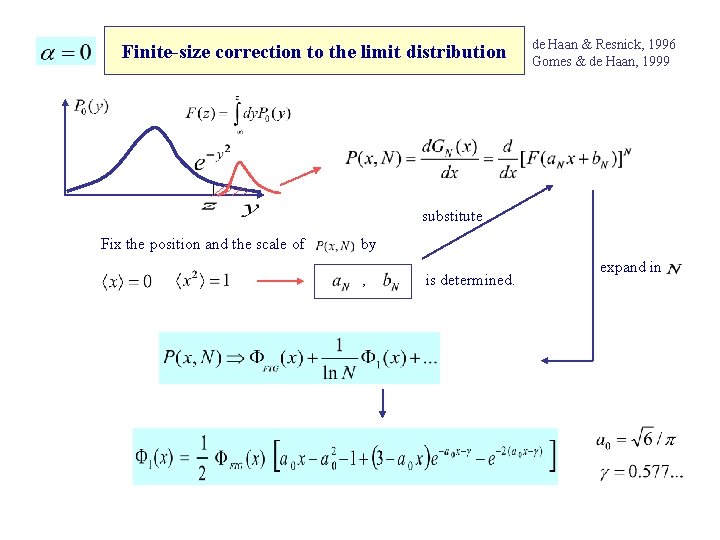
Finite-size correction to the limit distribution de Haan & Resnick, 1996 Gomes & de Haan, 1999 substitute Fix the position and the scale of by , is determined. expand in
Finite-size correction to the limit distribution For Gaussian Comparison with simulations: How universal is ? Signature of corrections?
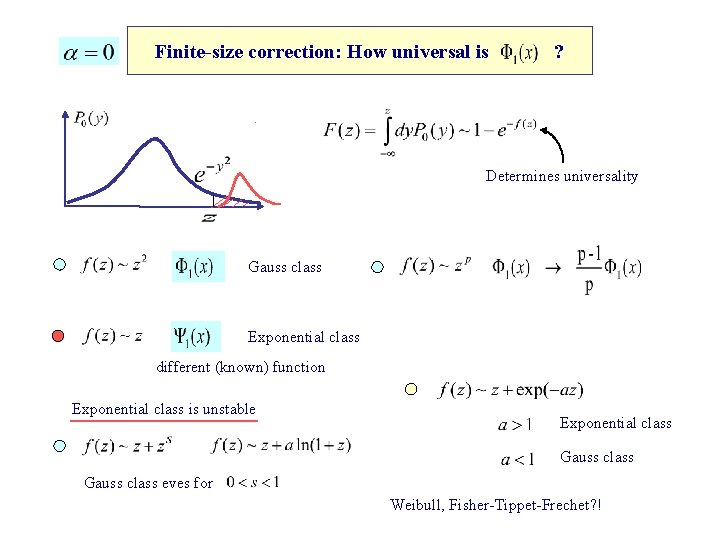
Finite-size correction: How universal is ? Determines universality Gauss class Exponential class different (known) function Exponential class is unstable Exponential class Gauss class eves for Weibull, Fisher-Tippet-Frechet? !
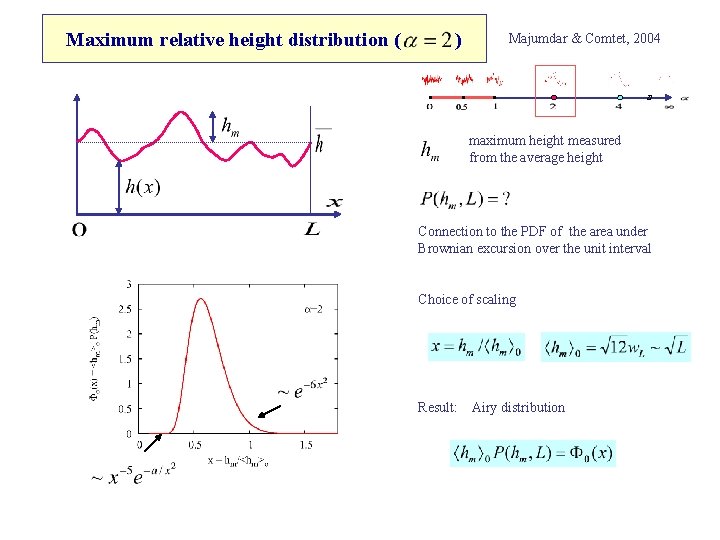
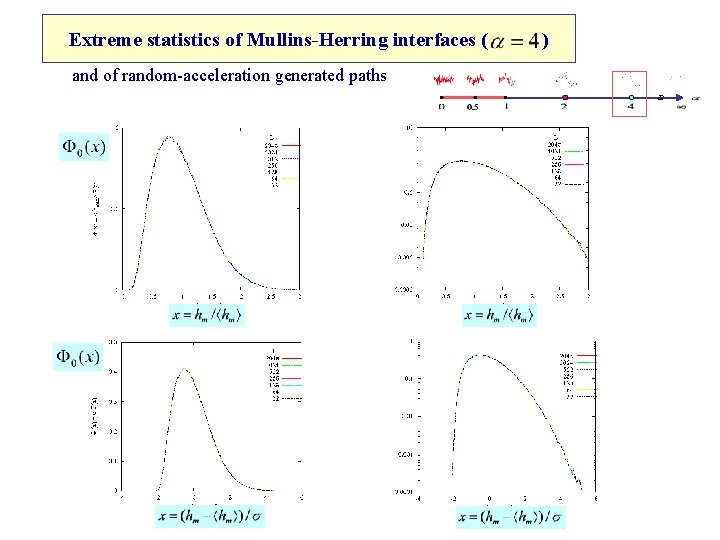
Maximum relative height distribution ( ) Majumdar & Comtet, 2004 maximum height measured from the average height Connection to the PDF of the area under Brownian excursion over the unit interval Choice of scaling Result: Airy distribution
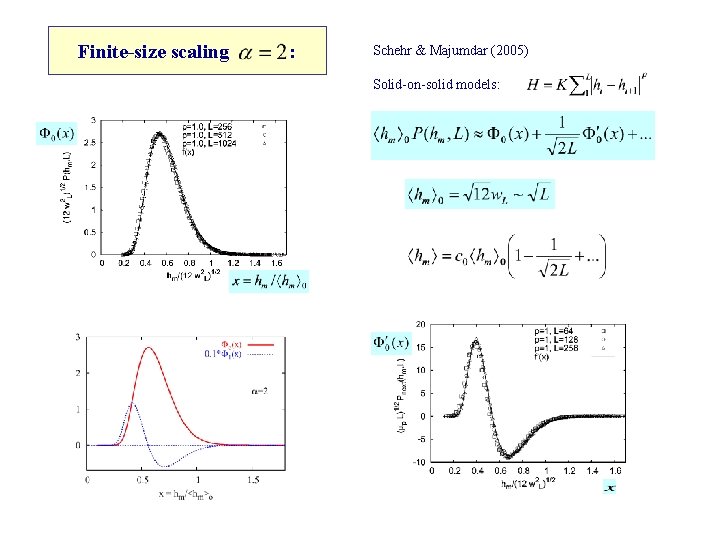
Finite-size scaling : Schehr & Majumdar (2005) Solid-on-solid models:
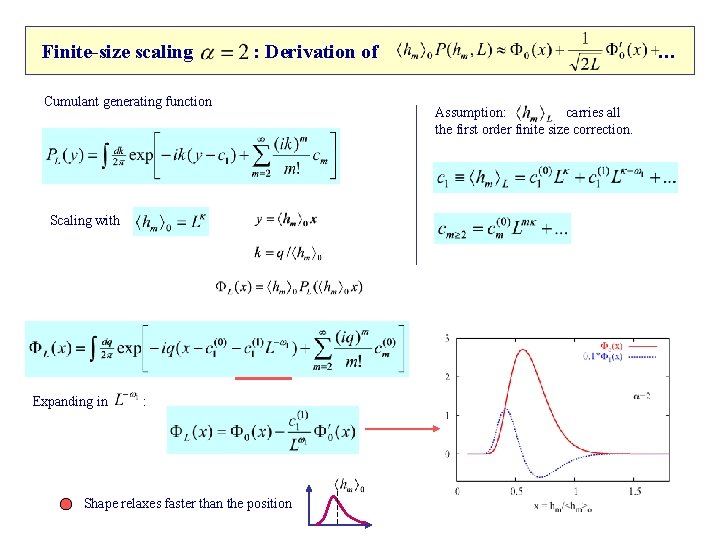
Finite-size scaling : Derivation of Cumulant generating function Scaling with Expanding in : Shape relaxes faster than the position … Assumption: carries all the first order finite size correction.
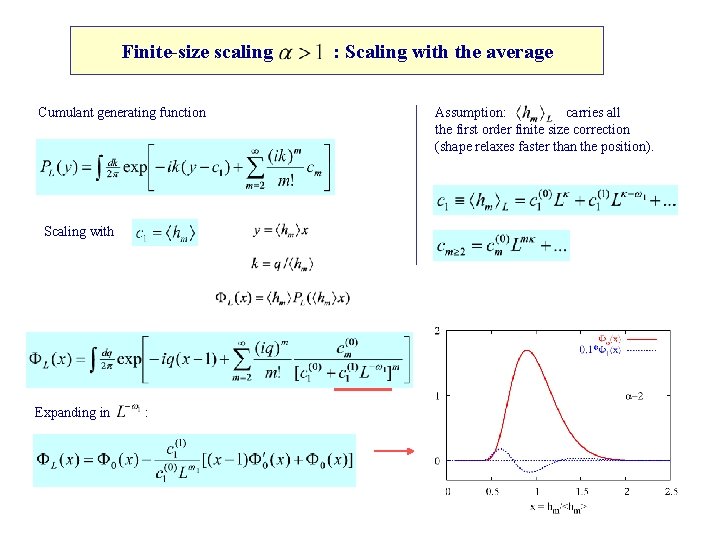
Finite-size scaling Cumulant generating function Scaling with Expanding in : : Scaling with the average Assumption: carries all the first order finite size correction (shape relaxes faster than the position).
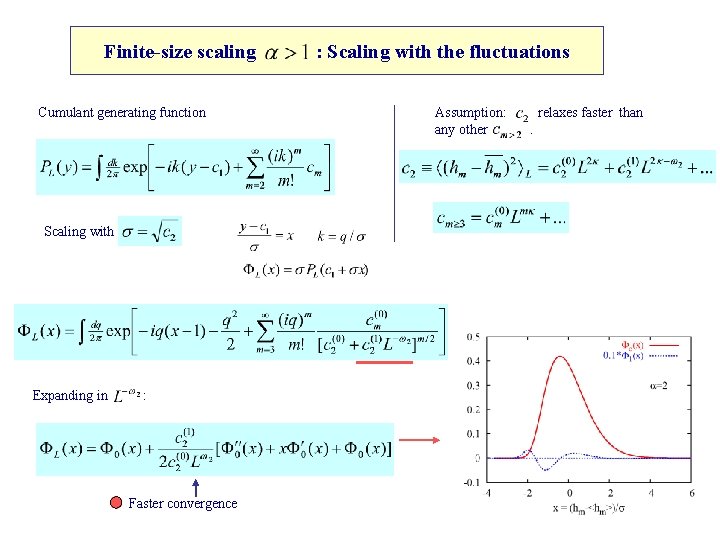
Finite-size scaling Cumulant generating function Scaling with Expanding in : Faster convergence : Scaling with the fluctuations Assumption: any other relaxes faster than.
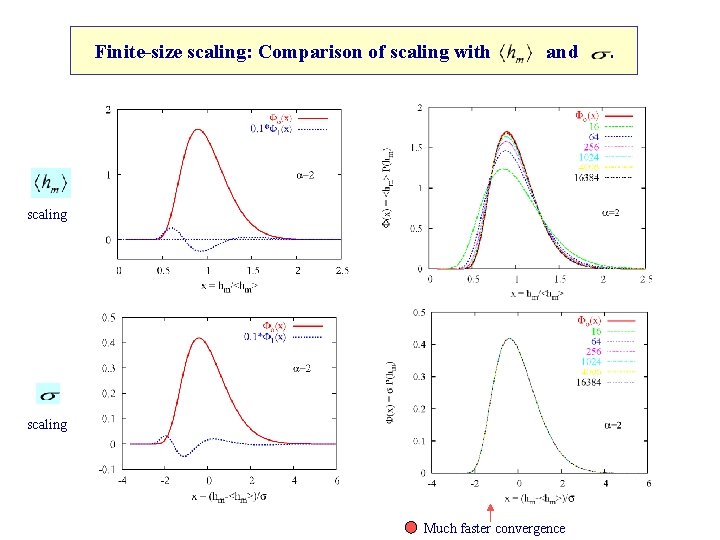
Finite-size scaling: Comparison of scaling with and scaling Much faster convergence .
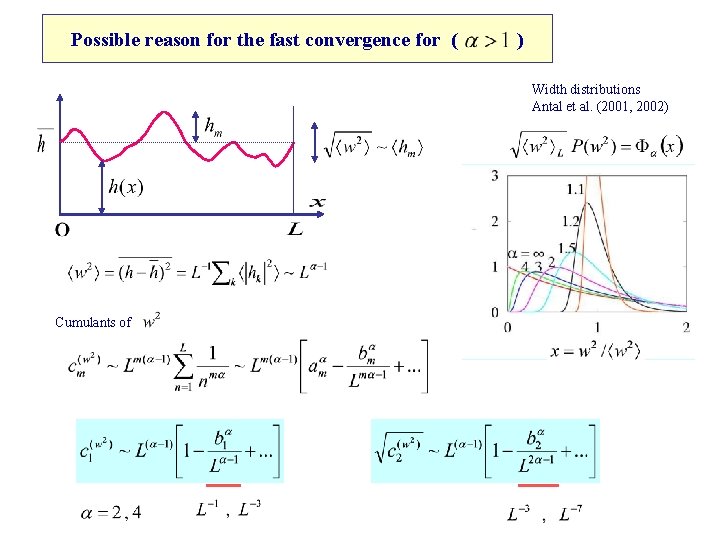
Possible reason for the fast convergence for ( ) Width distributions Antal et al. (2001, 2002) Cumulants of
Extreme statistics of Mullins-Herring interfaces ( and of random-acceleration generated paths )
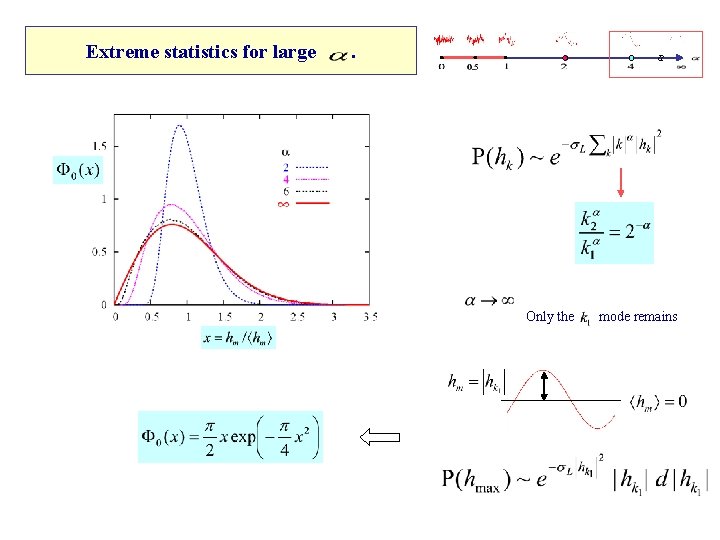
Extreme statistics for large . Only the mode remains
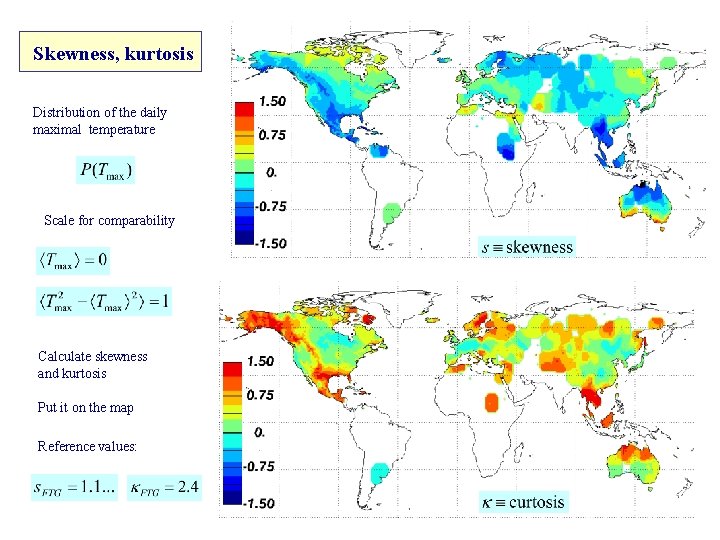
Skewness, kurtosis Distribution of the daily maximal temperature Scale for comparability Calculate skewness and kurtosis Put it on the map Reference values:
Yearly maximum temperatures Distribution in scaling Corrections to scaling