Sacramento Chair Training 2018 Regional Report Card PRESENTED





- Slides: 54
Sacramento Chair Training 2018 Regional Report Card PRESENTED BY ANNA DENECKE
Agenda Part I – About the Report Card ◦ National Report Card ◦ The State Report Card program Part II – Organizing for the 2018 Sacramento Regional Report Card ◦ Committee Structure ◦ Recruiting ◦ Steering/ Review Committee Part III – Putting Together a Report Card ◦ Research, Writing & Review ◦ Release & Outreach
About the Report Card PART I
January 29, 2013
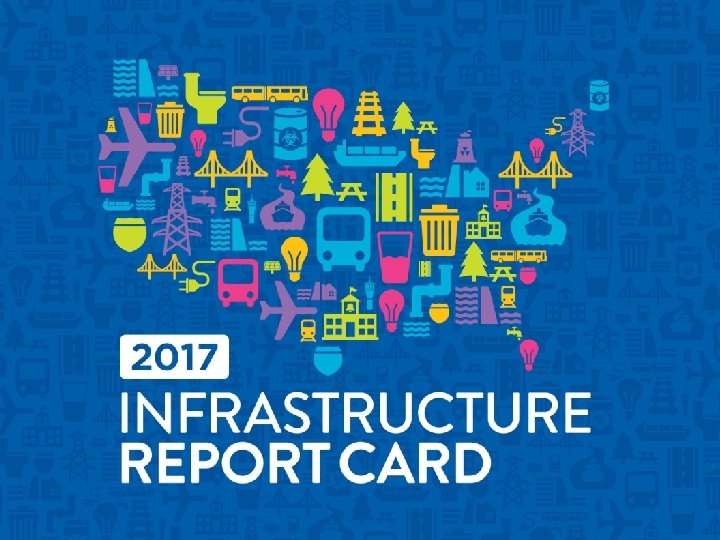
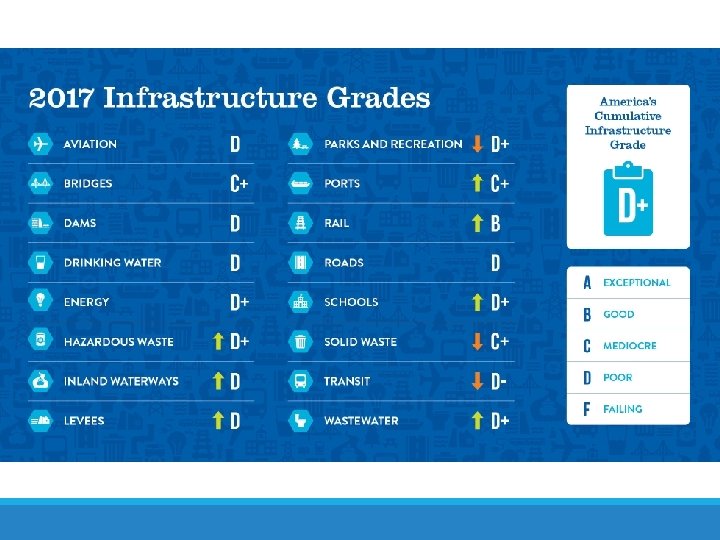
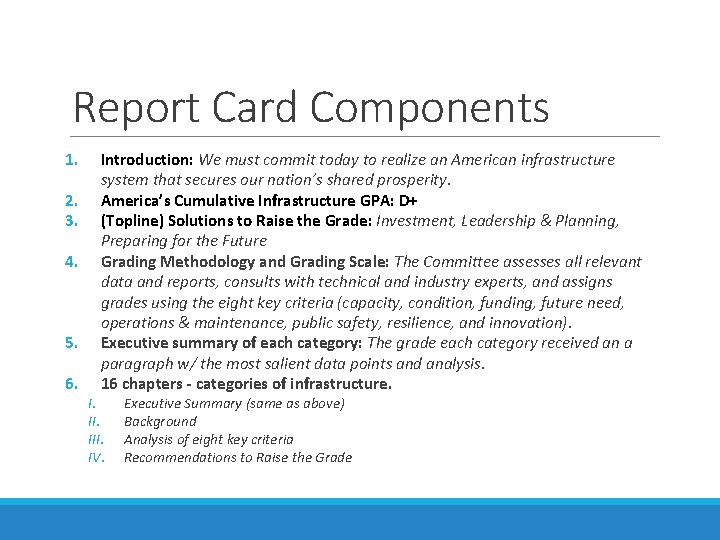
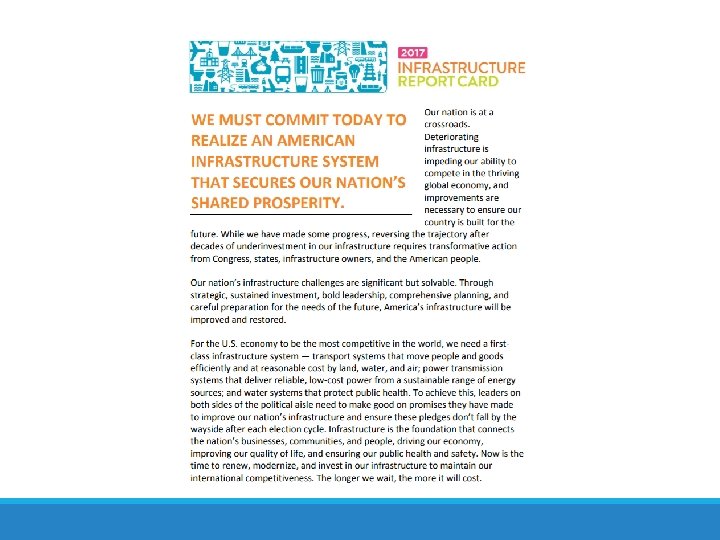
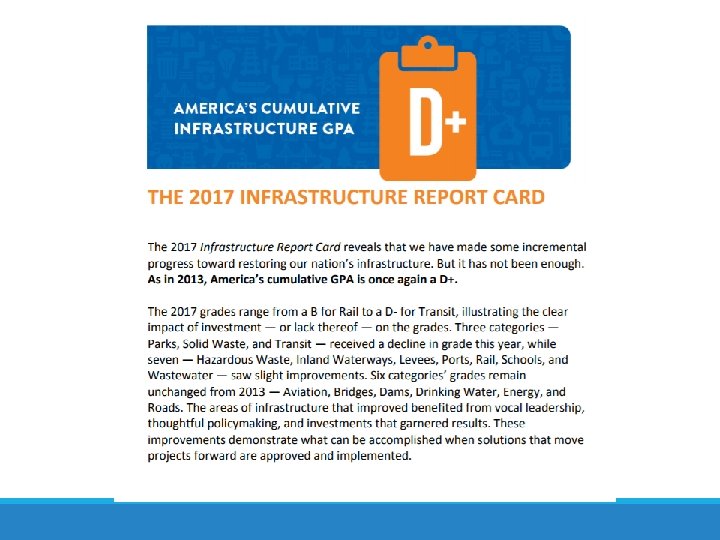
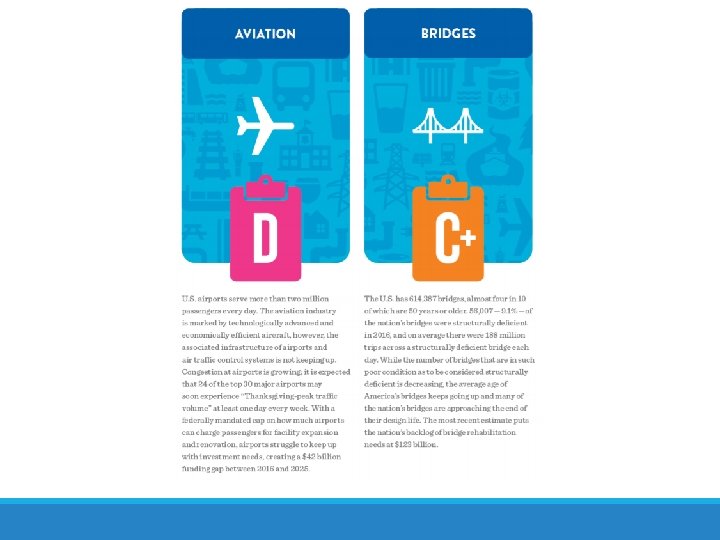
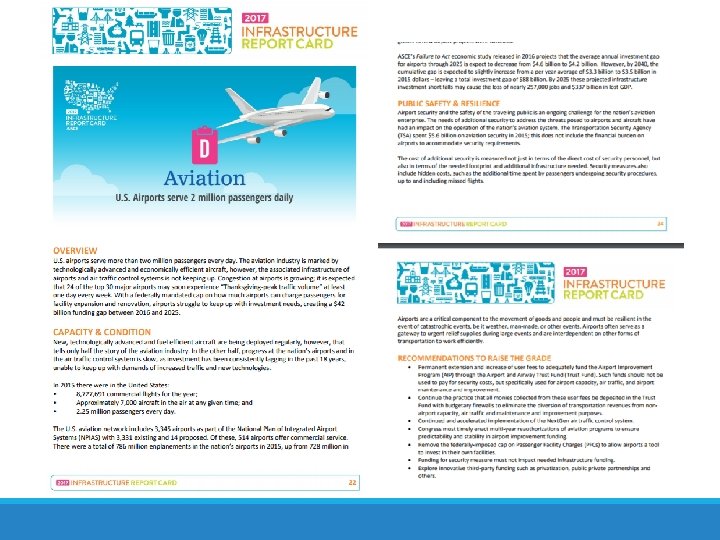
Report Card Components 1. 2. 3. 4. 5. 6. Introduction: We must commit today to realize an American infrastructure system that secures our nation’s shared prosperity. America’s Cumulative Infrastructure GPA: D+ (Topline) Solutions to Raise the Grade: Investment, Leadership & Planning, Preparing for the Future Grading Methodology and Grading Scale: The Committee assesses all relevant data and reports, consults with technical and industry experts, and assigns grades using the eight key criteria (capacity, condition, funding, future need, operations & maintenance, public safety, resilience, and innovation). Executive summary of each category: The grade each category received an a paragraph w/ the most salient data points and analysis. 16 chapters - categories of infrastructure. I. III. IV. Executive Summary (same as above) Background Analysis of eight key criteria Recommendations to Raise the Grade
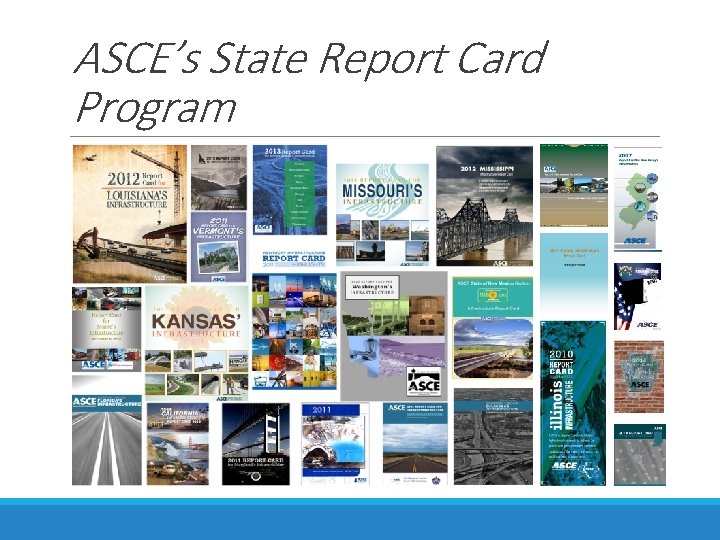
ASCE’s State Report Card Program
About the Program ◦ State report cards not only complement the national Report Card, but allow you to localize the issue and focus on infrastructure that is particularly pressing and relevant in your community. ◦ By producing a state report card, you help your community and your local leaders put the grades from the national Report Card into perspective. ◦ Due to the reputation of the national report, all state and local Report Cards are held to the same high standard in the eyes of the public.
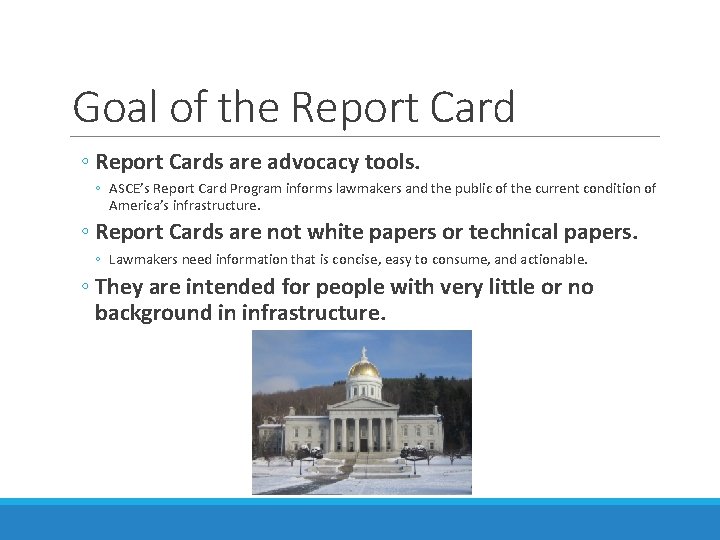
Goal of the Report Card ◦ Report Cards are advocacy tools. ◦ ASCE’s Report Card Program informs lawmakers and the public of the current condition of America’s infrastructure. ◦ Report Cards are not white papers or technical papers. ◦ Lawmakers need information that is concise, easy to consume, and actionable. ◦ They are intended for people with very little or no background in infrastructure.
Sacramento 2018 Report Card PART II
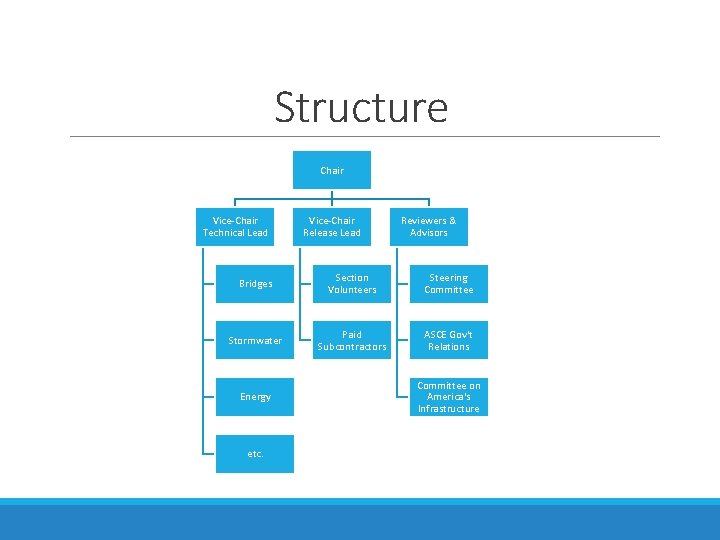
Structure Chair Vice-Chair Technical Lead Vice-Chair Release Lead Reviewers & Advisors Bridges Section Volunteers Steering Committee Stormwater Paid Subcontractors ASCE Gov't Relations Energy etc. Committee on America's Infrastructure
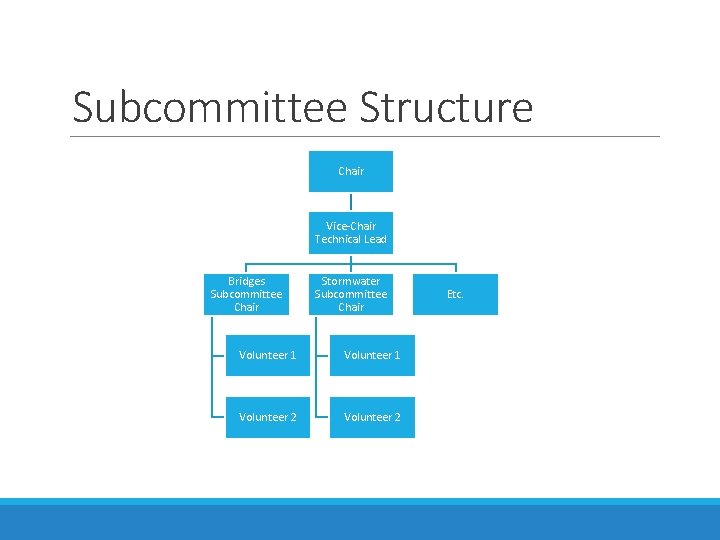
Subcommittee Structure Chair Vice-Chair Technical Lead Bridges Subcommittee Chair Stormwater Subcommittee Chair Volunteer 1 Volunteer 2 Etc.
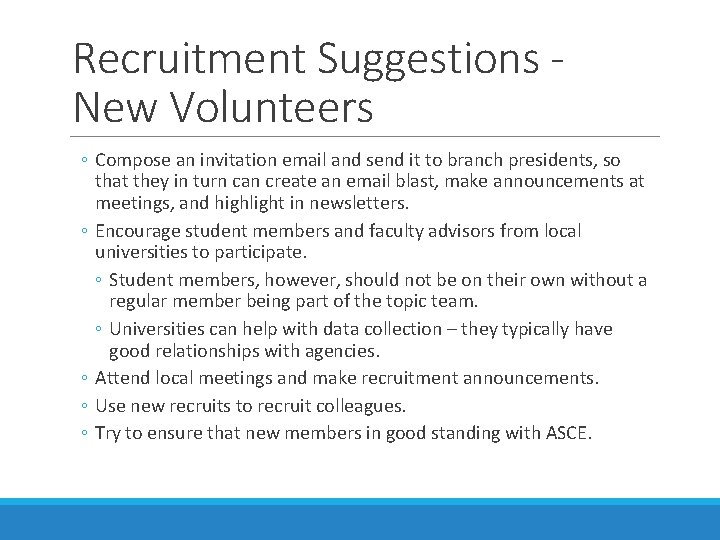
Recruitment Suggestions New Volunteers ◦ Compose an invitation email and send it to branch presidents, so that they in turn can create an email blast, make announcements at meetings, and highlight in newsletters. ◦ Encourage student members and faculty advisors from local universities to participate. ◦ Student members, however, should not be on their own without a regular member being part of the topic team. ◦ Universities can help with data collection – they typically have good relationships with agencies. ◦ Attend local meetings and make recruitment announcements. ◦ Use new recruits to recruit colleagues. ◦ Try to ensure that new members in good standing with ASCE.
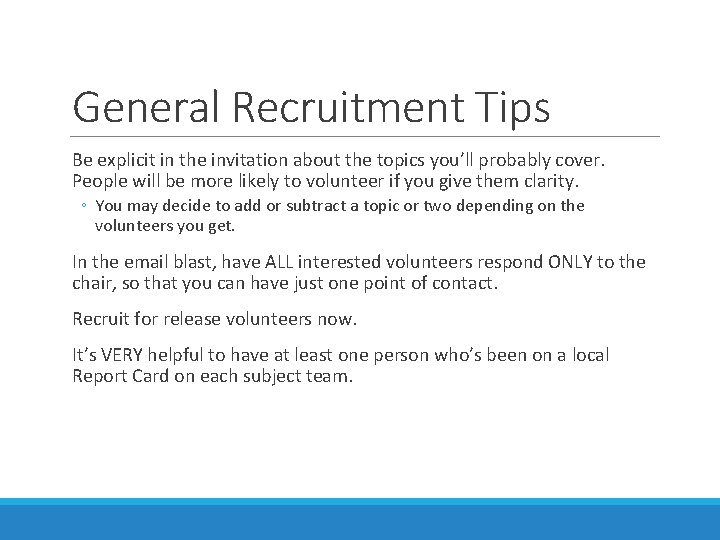
General Recruitment Tips Be explicit in the invitation about the topics you’ll probably cover. People will be more likely to volunteer if you give them clarity. ◦ You may decide to add or subtract a topic or two depending on the volunteers you get. In the email blast, have ALL interested volunteers respond ONLY to the chair, so that you can have just one point of contact. Recruit for release volunteers now. It’s VERY helpful to have at least one person who’s been on a local Report Card on each subject team.
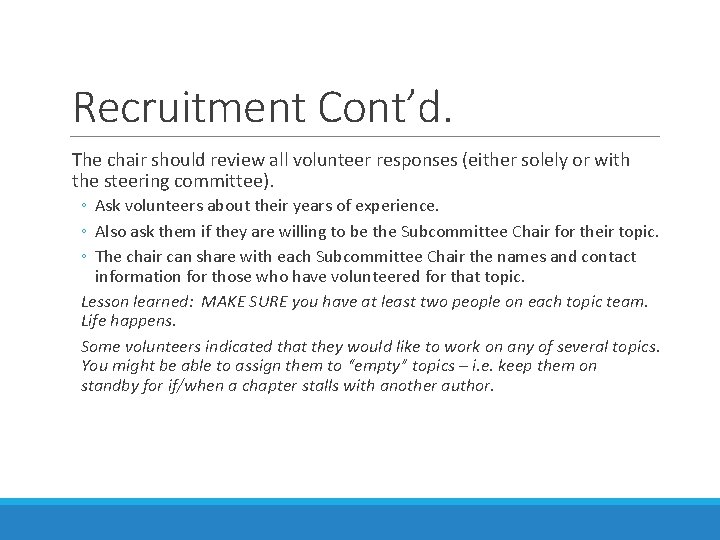
Recruitment Cont’d. The chair should review all volunteer responses (either solely or with the steering committee). ◦ Ask volunteers about their years of experience. ◦ Also ask them if they are willing to be the Subcommittee Chair for their topic. ◦ The chair can share with each Subcommittee Chair the names and contact information for those who have volunteered for that topic. Lesson learned: MAKE SURE you have at least two people on each topic team. Life happens. Some volunteers indicated that they would like to work on any of several topics. You might be able to assign them to “empty” topics – i. e. keep them on standby for if/when a chapter stalls with another author.
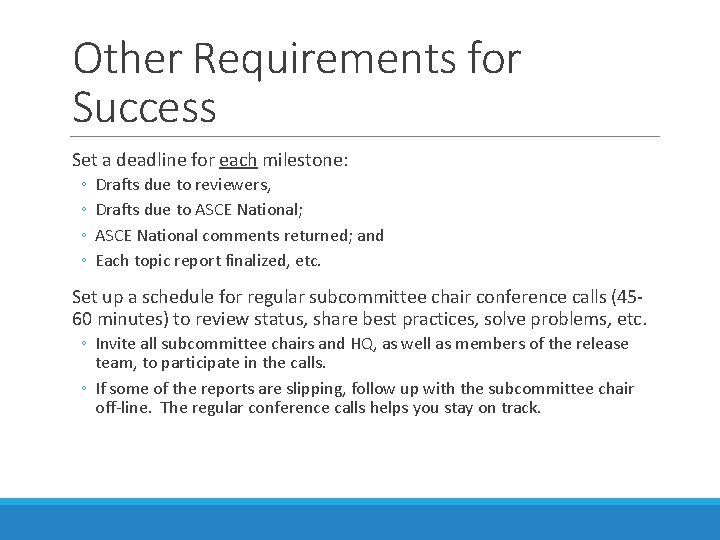
Other Requirements for Success Set a deadline for each milestone: ◦ ◦ Drafts due to reviewers, Drafts due to ASCE National; ASCE National comments returned; and Each topic report finalized, etc. Set up a schedule for regular subcommittee chair conference calls (4560 minutes) to review status, share best practices, solve problems, etc. ◦ Invite all subcommittee chairs and HQ, as well as members of the release team, to participate in the calls. ◦ If some of the reports are slipping, follow up with the subcommittee chair off-line. The regular conference calls helps you stay on track.
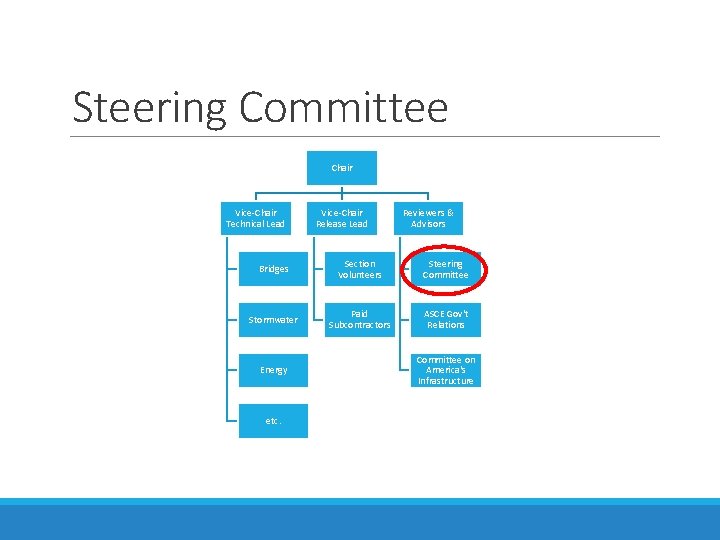
Steering Committee Chair Vice-Chair Technical Lead Vice-Chair Release Lead Reviewers & Advisors Bridges Section Volunteers Steering Committee Stormwater Paid Subcontractors ASCE Gov't Relations Energy etc. Committee on America's Infrastructure
Steering Committee Sometimes larger Report Cards find it helpful to establish a steering committee in addition to developing subcommittees on each infrastructure topic. If you proceed with this, the steering committee should consist of one or two representatives from each section in your state. The steering committee can help the RC team with any or all of the following: ◦ ◦ Review draft topic reports before they are sent to HQ; Muster and vet volunteers in their respective sections; Develop the strategy for the release events; or Contact elected officials and community organizations for post-release events, etc.
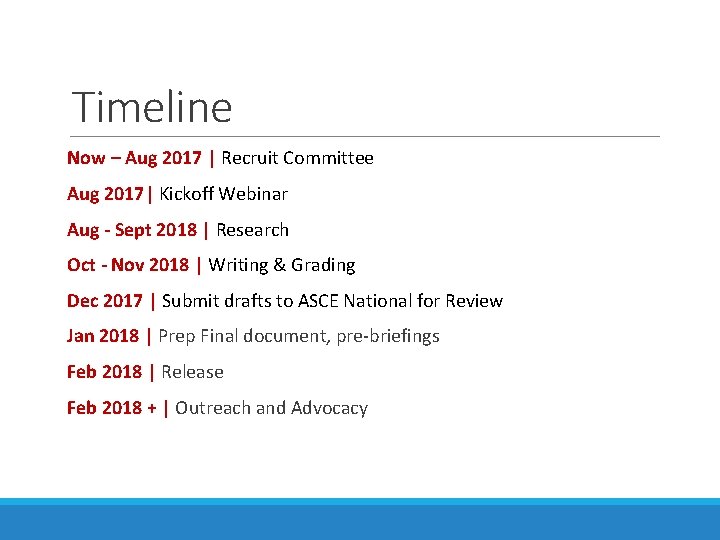
Timeline Now – Aug 2017 | Recruit Committee Aug 2017| Kickoff Webinar Aug - Sept 2018 | Research Oct - Nov 2018 | Writing & Grading Dec 2017 | Submit drafts to ASCE National for Review Jan 2018 | Prep Final document, pre-briefings Feb 2018 | Release Feb 2018 + | Outreach and Advocacy
Budget Develop a preliminary budget. You should decide which tasks will be accomplished by volunteer members and what needs to be outsourced. The preliminary budget could include costs for any of the following: ◦ ◦ graphic design services; PR Firm or private consultant fees; Catering for in-person meetings; a copy writer to review the RC reports and to ensure the RC looks and sounds as if it were written by one person; and ◦ printing a predetermined number of executive summary brochures.
Writing a Report Card
Kickoff Meeting Hold a face-to-face kick-off meeting in a central location. ◦ Require all authors, subcommittee chairs, deputy chairs, etc to attend. ◦ Section presidents and/or presidents-elect should also attend, as they will also be involved in the eventual release events. ◦ ASCE National must attend. Kickoff will cover the research, writing, and grading process, as well as the “end materials” and outreach. Discuss purpose of Report Card (advocacy document) and brainstorm ways to maximize impact (through release and advocacy after release). Confirm volunteers for each topic.
Literature Review
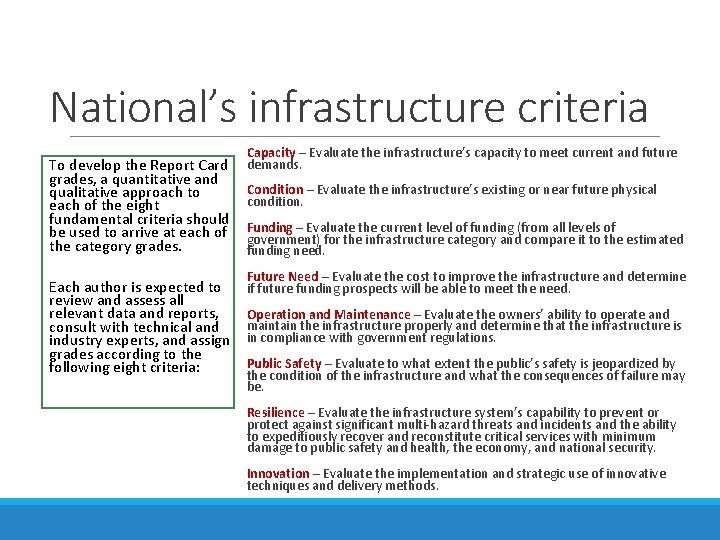
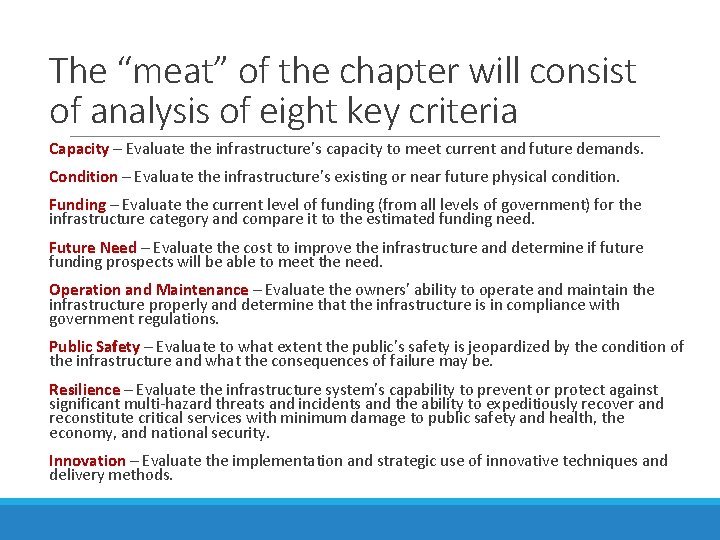
National’s infrastructure criteria To develop the Report Card grades, a quantitative and qualitative approach to each of the eight fundamental criteria should be used to arrive at each of the category grades. Each author is expected to review and assess all relevant data and reports, consult with technical and industry experts, and assign grades according to the following eight criteria: Capacity – Evaluate the infrastructure’s capacity to meet current and future demands. Condition – Evaluate the infrastructure’s existing or near future physical condition. Funding – Evaluate the current level of funding (from all levels of government) for the infrastructure category and compare it to the estimated funding need. Future Need – Evaluate the cost to improve the infrastructure and determine if future funding prospects will be able to meet the need. Operation and Maintenance – Evaluate the owners’ ability to operate and maintain the infrastructure properly and determine that the infrastructure is in compliance with government regulations. Public Safety – Evaluate to what extent the public’s safety is jeopardized by the condition of the infrastructure and what the consequences of failure may be. Resilience – Evaluate the infrastructure system’s capability to prevent or protect against significant multi-hazard threats and incidents and the ability to expeditiously recover and reconstitute critical services with minimum damage to public safety and health, the economy, and national security. Innovation – Evaluate the implementation and strategic use of innovative techniques and delivery methods.
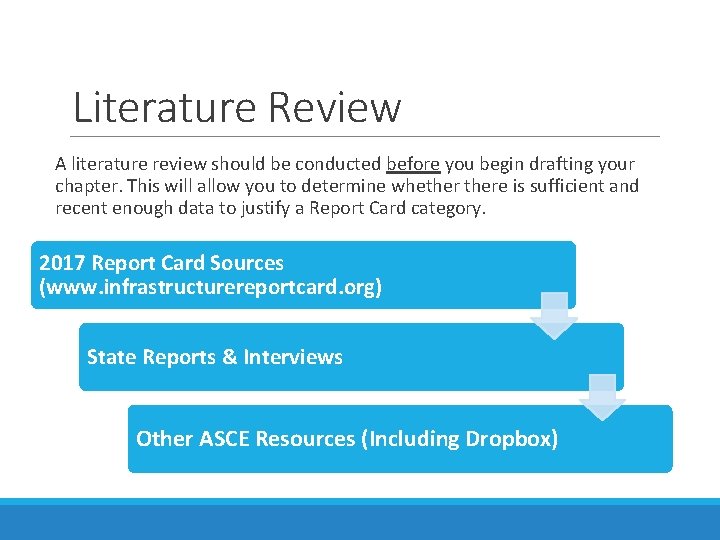
Literature Review A literature review should be conducted before you begin drafting your chapter. This will allow you to determine whethere is sufficient and recent enough data to justify a Report Card category. 2017 Report Card Sources (www. infrastructurereportcard. org) State Reports & Interviews Other ASCE Resources (Including Dropbox)
Writing
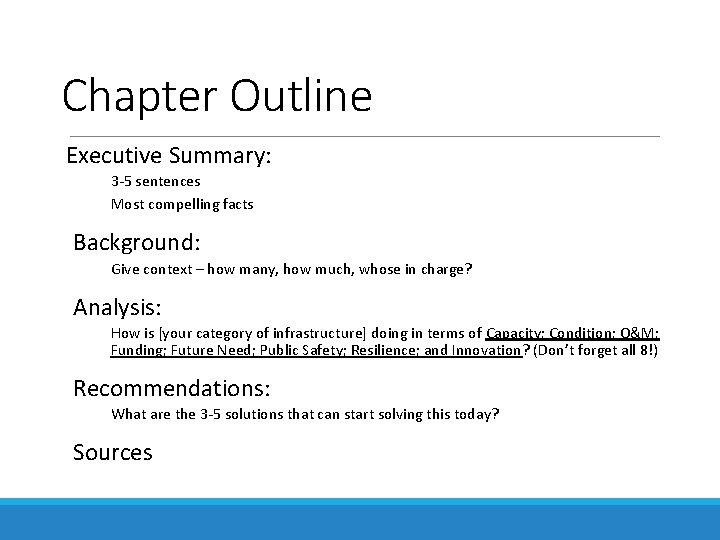
Chapter Outline Executive Summary: 3 -5 sentences Most compelling facts Background: Give context – how many, how much, whose in charge? Analysis: How is [your category of infrastructure] doing in terms of Capacity; Condition; O&M; Funding; Future Need; Public Safety; Resilience; and Innovation? (Don’t forget all 8!) Recommendations: What are the 3 -5 solutions that can start solving this today? Sources
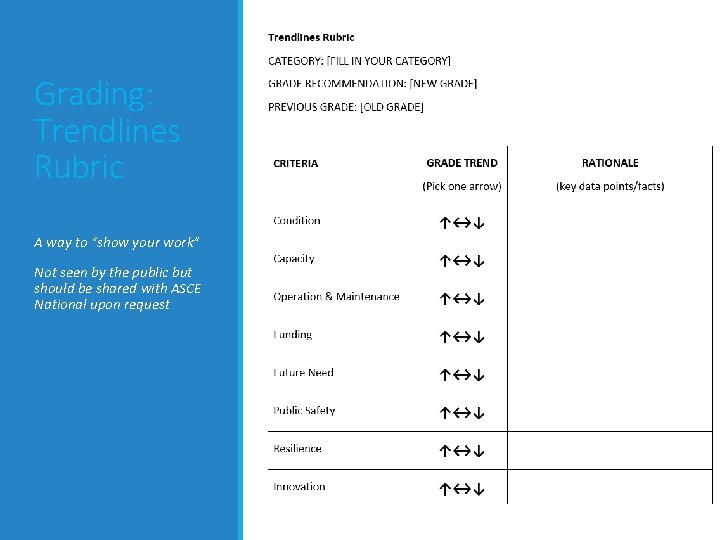
The “meat” of the chapter will consist of analysis of eight key criteria Capacity – Evaluate the infrastructure’s capacity to meet current and future demands. Condition – Evaluate the infrastructure’s existing or near future physical condition. Funding – Evaluate the current level of funding (from all levels of government) for the infrastructure category and compare it to the estimated funding need. Future Need – Evaluate the cost to improve the infrastructure and determine if future funding prospects will be able to meet the need. Operation and Maintenance – Evaluate the owners’ ability to operate and maintain the infrastructure properly and determine that the infrastructure is in compliance with government regulations. Public Safety – Evaluate to what extent the public’s safety is jeopardized by the condition of the infrastructure and what the consequences of failure may be. Resilience – Evaluate the infrastructure system’s capability to prevent or protect against significant multi-hazard threats and incidents and the ability to expeditiously recover and reconstitute critical services with minimum damage to public safety and health, the economy, and national security. Innovation – Evaluate the implementation and strategic use of innovative techniques and delivery methods.
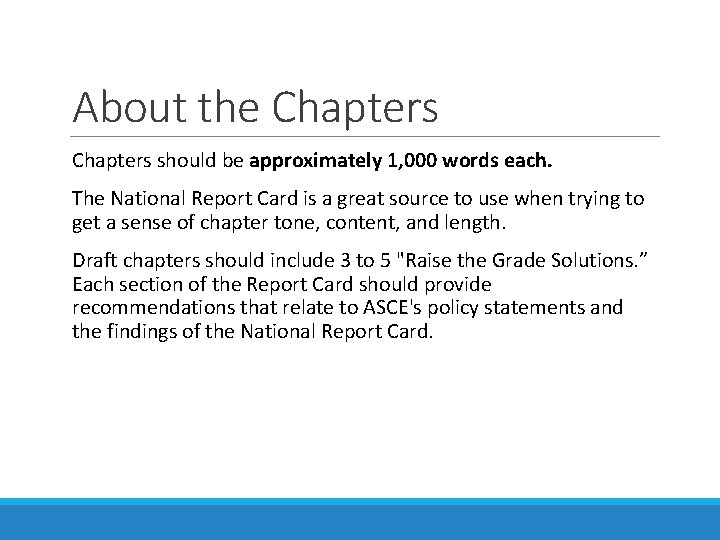
About the Chapters should be approximately 1, 000 words each. The National Report Card is a great source to use when trying to get a sense of chapter tone, content, and length. Draft chapters should include 3 to 5 "Raise the Grade Solutions. ” Each section of the Report Card should provide recommendations that relate to ASCE's policy statements and the findings of the National Report Card.
Grading
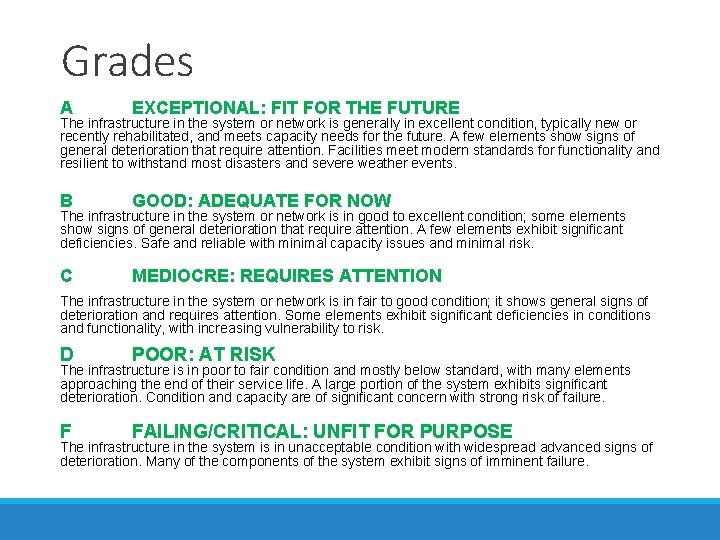
Grades A EXCEPTIONAL: FIT FOR THE FUTURE B GOOD: ADEQUATE FOR NOW C MEDIOCRE: REQUIRES ATTENTION The infrastructure in the system or network is generally in excellent condition, typically new or recently rehabilitated, and meets capacity needs for the future. A few elements show signs of general deterioration that require attention. Facilities meet modern standards for functionality and resilient to withstand most disasters and severe weather events. The infrastructure in the system or network is in good to excellent condition; some elements show signs of general deterioration that require attention. A few elements exhibit significant deficiencies. Safe and reliable with minimal capacity issues and minimal risk. The infrastructure in the system or network is in fair to good condition; it shows general signs of deterioration and requires attention. Some elements exhibit significant deficiencies in conditions and functionality, with increasing vulnerability to risk. D POOR: AT RISK F FAILING/CRITICAL: UNFIT FOR PURPOSE The infrastructure is in poor to fair condition and mostly below standard, with many elements approaching the end of their service life. A large portion of the system exhibits significant deterioration. Condition and capacity are of significant concern with strong risk of failure. The infrastructure in the system is in unacceptable condition with widespread advanced signs of deterioration. Many of the components of the system exhibit signs of imminent failure.
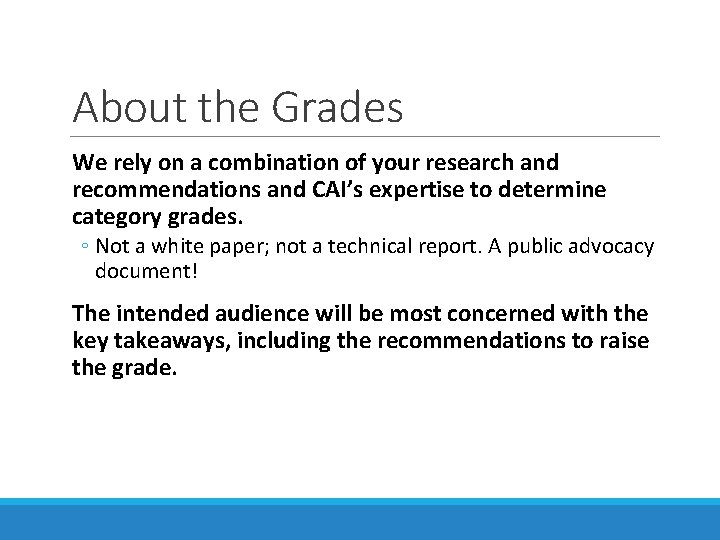
About the Grades We rely on a combination of your research and recommendations and CAI’s expertise to determine category grades. ◦ Not a white paper; not a technical report. A public advocacy document! The intended audience will be most concerned with the key takeaways, including the recommendations to raise the grade.
Grading: Trendlines Rubric A way to “show your work” Not seen by the public but should be shared with ASCE National upon request
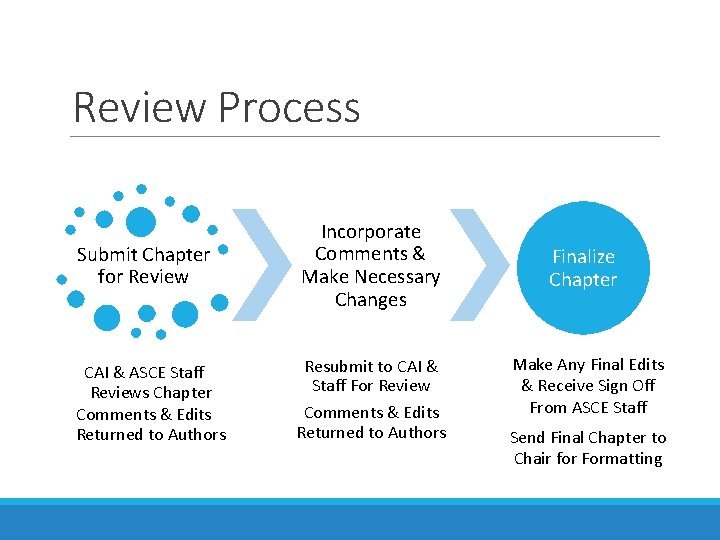
Review Process Submit Chapter for Review Incorporate Comments & Make Necessary Changes CAI & ASCE Staff Reviews Chapter Comments & Edits Returned to Authors Resubmit to CAI & Staff For Review Comments & Edits Returned to Authors Finalize Chapter Make Any Final Edits & Receive Sign Off From ASCE Staff Send Final Chapter to Chair for Formatting
“RULES” for Report Carding ØThe Report Card for America’s Infrastructure is a registered trademark of ASCE. ◦ We ask that you work with ASCE’s Committee for America’s Infrastructure (CAI) and Government Relations staff to ensure that your Report Card meets national standards and is in keeping with the Report Card brand. ◦ ASCE and its Sections, Branches and Councils benefit from the positive reputation of the Report Card, and by working together to ensure that all local Report Cards carrying this trademark consistently meet the same criteria, we further strengthen its value to the profession and the public.
Release & Advocacy PART III
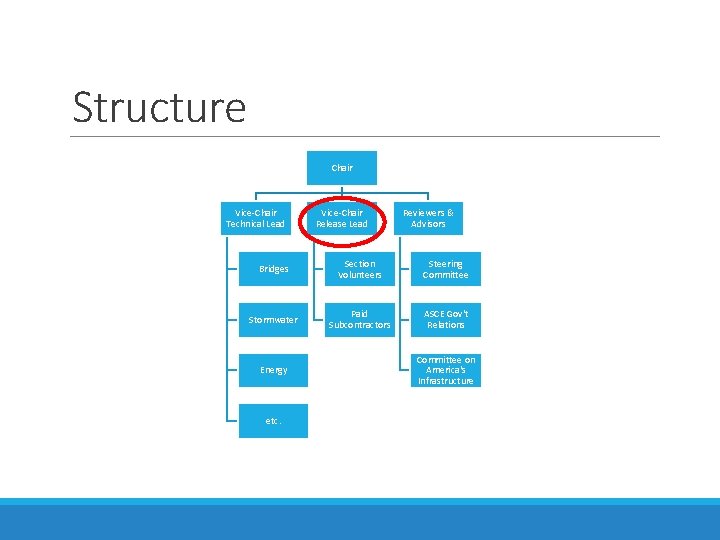
Structure Chair Vice-Chair Technical Lead Vice-Chair Release Lead Reviewers & Advisors Bridges Section Volunteers Steering Committee Stormwater Paid Subcontractors ASCE Gov't Relations Energy etc. Committee on America's Infrastructure
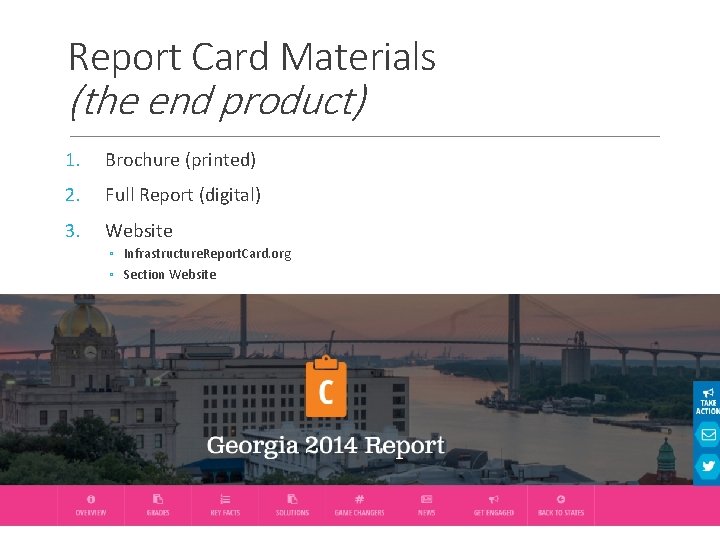
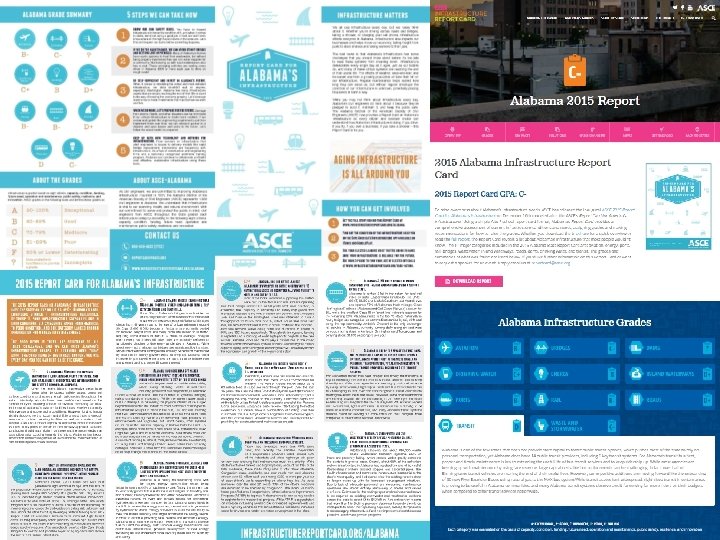
Report Card Materials (the end product) 1. Brochure (printed) 2. Full Report (digital) 3. Website ◦ Infrastructure. Report. Card. org ◦ Section Website 10: 10 – 10: 20 7 a/8
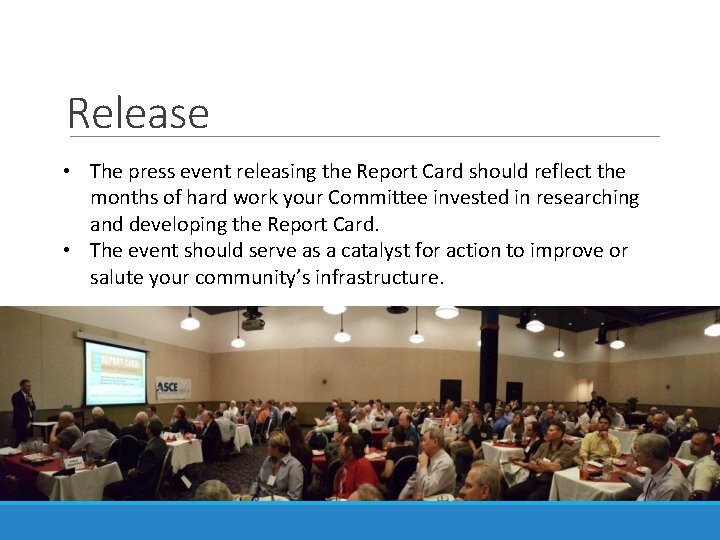
Release • The press event releasing the Report Card should reflect the months of hard work your Committee invested in researching and developing the Report Card. • The event should serve as a catalyst for action to improve or salute your community’s infrastructure.
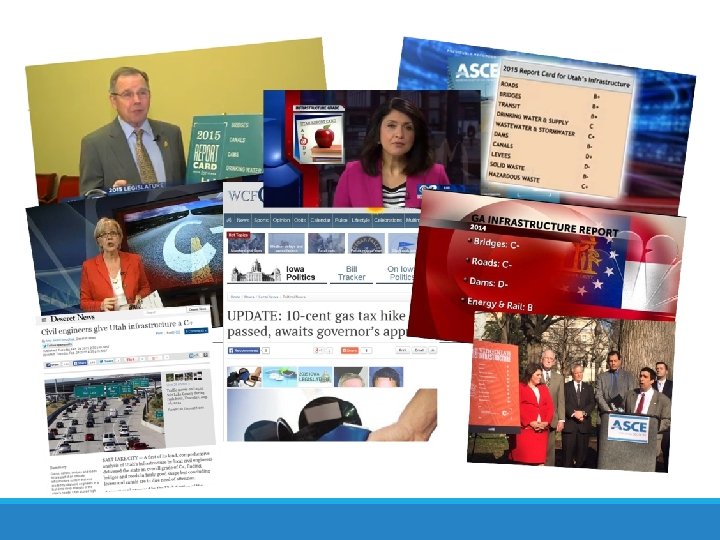
Media Prep An important part of your Report Card effort will be to engage the media in telling the story. To improve the chances that the media will cover the release of the Report Card, local groups will have support from ASCE to: ◦ Assist you with your media strategy for your release event, ◦ Help to edit and distribute your media advisory and press release, and ◦ Serve as a liaison between the media and your Committee. If the Section, Branch or Council has a Public Relations or Communications position or if the Section hires a local public relations consultant for the Report Card, ASCE National will coordinate the media strategy and provide support as necessary after the release.
Outreach After drafts are submitted to CAI for review, we ask that you develop and finalize a Report Card Outreach Plan to roadmap outreach efforts and make the most of the Report Card. ◦ The release of the Report Card is the beginning of the effort to educate policy makers about the need for infrastructure investment. ◦ An Outreach Plan should be created and supported by the Section or Branch leadership. As an advocacy document, if we fail to promote the Report Card effectively, then the grade becomes obsolete.
Questions?
Contact ASCE National Anna Denecke Senior Manager, Infrastructure Initiatives (202) 789 -7854 adenecke@asce. org