RWANDA INTERGRATED HEALTH MANAGEMENT INFORMATION SYSTEM Ministry of


- Slides: 11
RWANDA INTERGRATED HEALTH MANAGEMENT INFORMATION SYSTEM Ministry of Health
Rwanda’s Health System Administrative structure Health care delivery system Tertiary hospitals No. of public facilities / CHWs 7 4 Provinces (5) District hospitals District (30) 36 Av. Catchment area pop National (~12 m) ~ 255, 000 ▪ ▪ Specialized hospitals serving the entire country Medical training ▪ Provide government defined “Complementary package of activities (CPA) (C-section, treatment of complicated cases, . . Provide care to patients referred by the primary health centers Carry out planning activities for the health district and supervise district health personnel ▪ ▪ Sector (416) Health centers 484 ~ 23 000 ▪ ▪ ▪ Cell (2148) Village (14, 837) Health posts ▪ 380 ▪ ▪ Community Health Workers 45, 011 80% of burden of disease addressed at this level ~ 250 Type of service offered Provide government defined “minimum package of activities at the peripheral level (MPA) This includes complete and integrated services such as curative, preventive, promotional, and rehabilitation services Supervise health posts and CHWs operating in their catchment area Services provided are similar, albeit reduced from, that by Health Centers. Established in areas which are far from health centers, Services include curative out-patient care, certain diagnostic tests, child immunization, growth monitoring for children under five years, antenatal consultation, family planning, and health education Community-based : • Prevention, screening and treatment of malnutrition • Integrated Management of Child Illness (CB-IMCI) • Provision of family planning • Maternal Newborn Health (C-MNH) • DOT HIV, TB and other chronic illnesses • Behavior change and communication
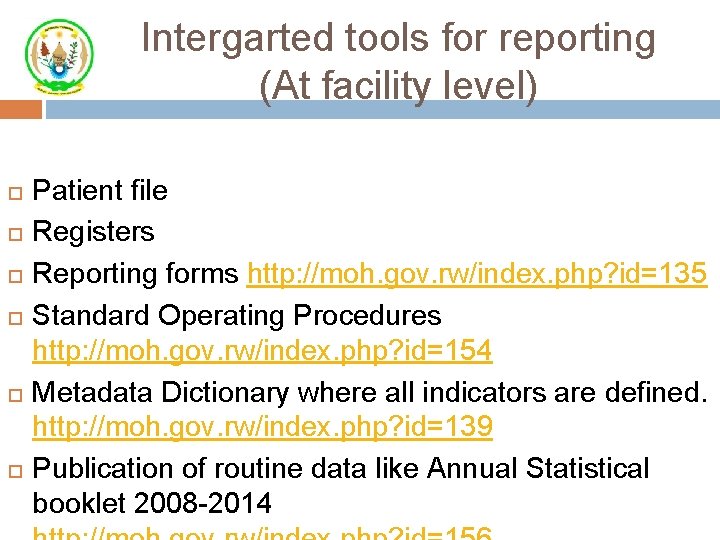
Intergarted tools for reporting (At facility level) Patient file Registers Reporting forms http: //moh. gov. rw/index. php? id=135 Standard Operating Procedures http: //moh. gov. rw/index. php? id=154 Metadata Dictionary where all indicators are defined. http: //moh. gov. rw/index. php? id=139 Publication of routine data like Annual Statistical booklet 2008 -2014
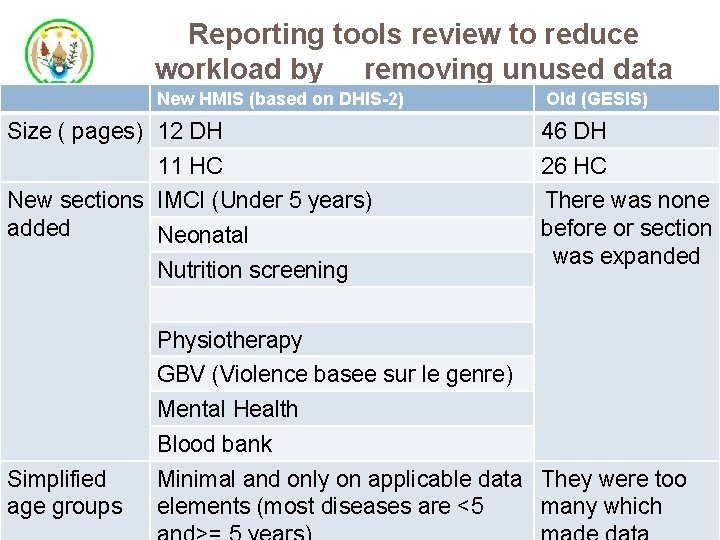
Reporting tools review to reduce workload by removing unused data New HMIS (based on DHIS-2) Old (GESIS) Size ( pages) 12 DH 46 DH 11 HC 26 HC New sections IMCI (Under 5 years) added Neonatal Nutrition screening There was none before or section was expanded Physiotherapy GBV (Violence basee sur le genre) Mental Health Blood bank Simplified age groups Minimal and only on applicable data They were too elements (most diseases are <5 many which
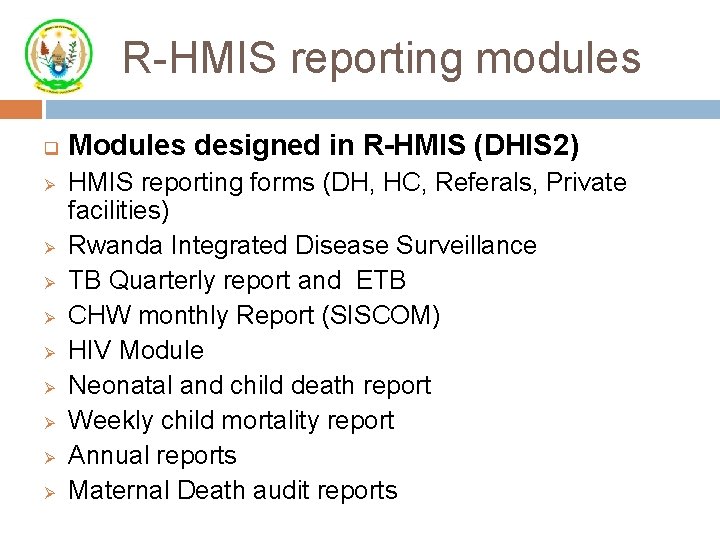
R-HMIS reporting modules q Ø Ø Ø Ø Ø Modules designed in R-HMIS (DHIS 2) HMIS reporting forms (DH, HC, Referals, Private facilities) Rwanda Integrated Disease Surveillance TB Quarterly report and ETB CHW monthly Report (SISCOM) HIV Module Neonatal and child death report Weekly child mortality report Annual reports Maternal Death audit reports
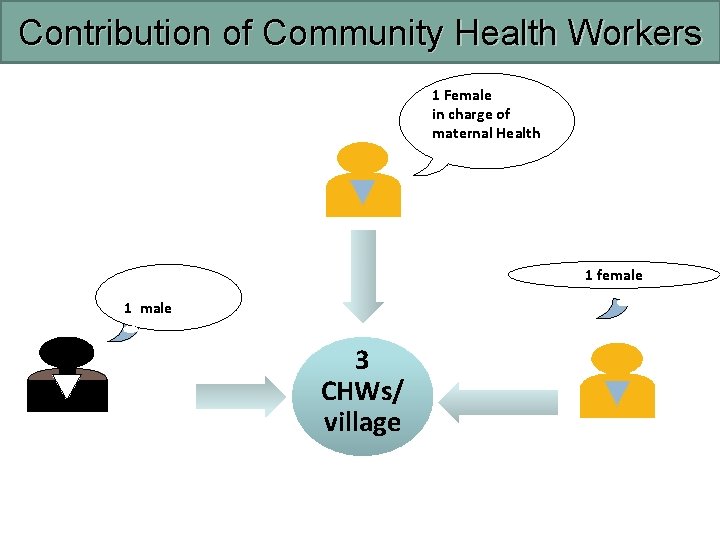
Contribution of Community Health Workers 1 Female in charge of maternal Health 1 female 1 male 3 CHWs/ village
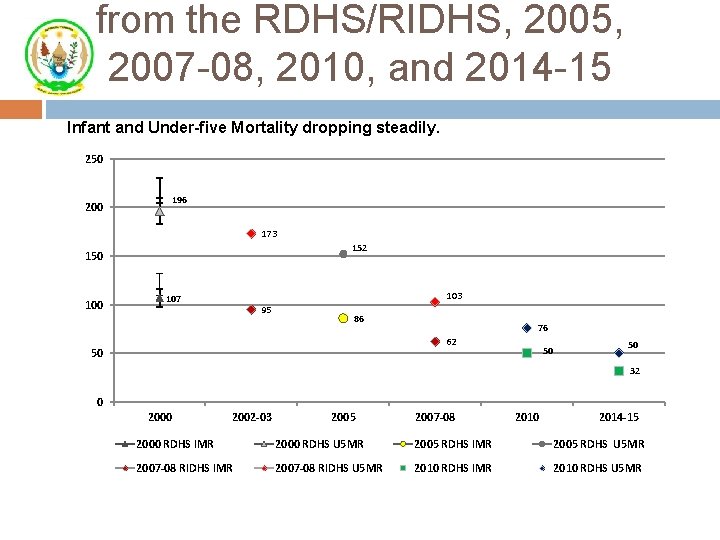
from the RDHS/RIDHS, 2005, 2007 -08, 2010, and 2014 -15 Infant and Under-five Mortality dropping steadily. 250 200 196 173 152 150 103 107 95 86 76 62 50 50 50 32 0 2002 -03 2005 2007 -08 2010 2014 -15 2000 RDHS IMR 2000 RDHS U 5 MR 2005 RDHS IMR 2005 RDHS U 5 MR 2007 -08 RIDHS IMR 2007 -08 RIDHS U 5 MR 2010 RDHS IMR 2010 RDHS U 5 MR
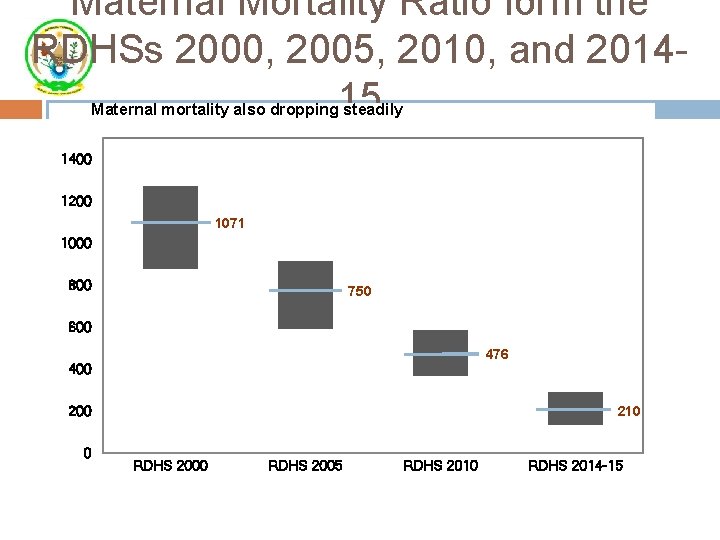
Maternal Mortality Ratio form the RDHSs 2000, 2005, 2010, and 201415 Maternal mortality also dropping steadily 1400 1200 1071 1000 800 750 600 476 400 200 0 210 RDHS 2005 RDHS 2010 RDHS 2014 -15
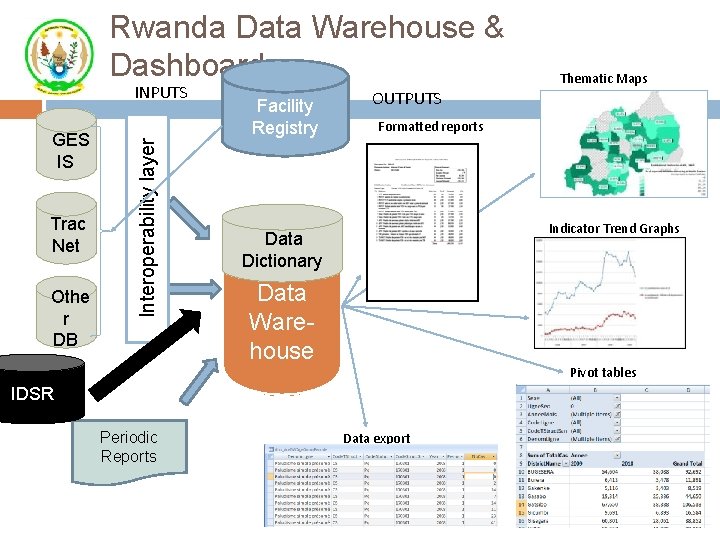
Rwanda Data Warehouse & Dashboard GES IS Trac Net Othe r DB Interoperability layer INPUTS Facility Registry OUTPUTS Formatted reports Indicator Trend Graphs Data Dictionary Data Warehouse Pivot tables IDSR Periodic Reports Thematic Maps Data export
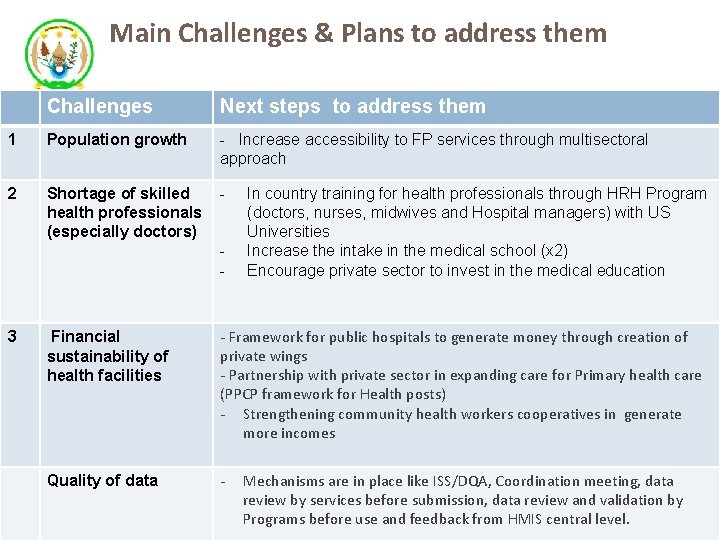
Main Challenges & Plans to address them Challenges Next steps to address them 1 Population growth - Increase accessibility to FP services through multisectoral approach 2 Shortage of skilled health professionals (especially doctors) - 3 In country training for health professionals through HRH Program (doctors, nurses, midwives and Hospital managers) with US Universities Increase the intake in the medical school (x 2) Encourage private sector to invest in the medical education Financial sustainability of health facilities - Framework for public hospitals to generate money through creation of private wings - Partnership with private sector in expanding care for Primary health care (PPCP framework for Health posts) - Strengthening community health workers cooperatives in generate more incomes Quality of data - Mechanisms are in place like ISS/DQA, Coordination meeting, data review by services before submission, data review and validation by Programs before use and feedback from HMIS central level.
Thank You More Focused Decision Making saves much resources and time