Royal Dutch Shell Worksite Hazard Management Partnering in

- Slides: 13
Royal Dutch Shell Worksite Hazard Management Partnering in our relentless pursuit of Goal Zero. UA Onshore Copyright of Shell
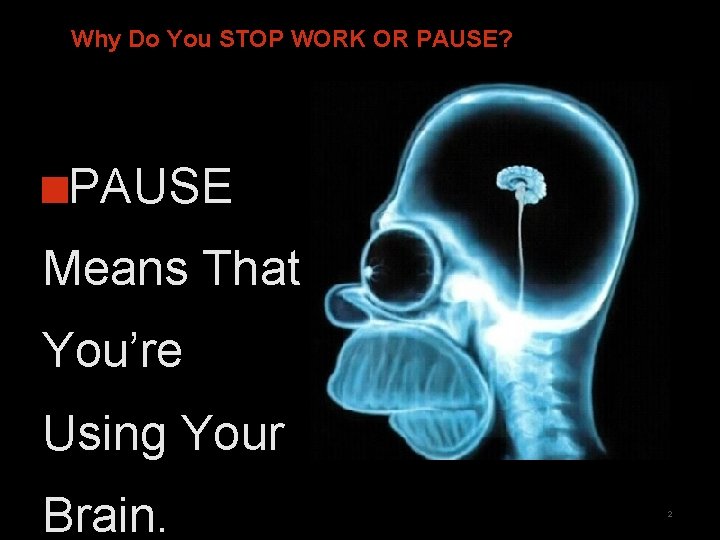
Why Do You STOP WORK OR PAUSE? PAUSE Means That You’re Using Your Brain. Copyright – Shell RESTRICTED 2 2 2
Stop work / Pause Shell’s Leaders Commitment to you n If you stop the job for a safety reason – we will back you up n If You have a safety concern – We will listen and address it promptly n We will support the supervisors and crews in Taking Time for Safety Shell Leaders Expectations from You n If it is not safe STOP THE JOB we will back you up. n If you see a hazard speak up n If you do not understand the job or are not sure speak up Copyright – Shell RESTRICTED 3
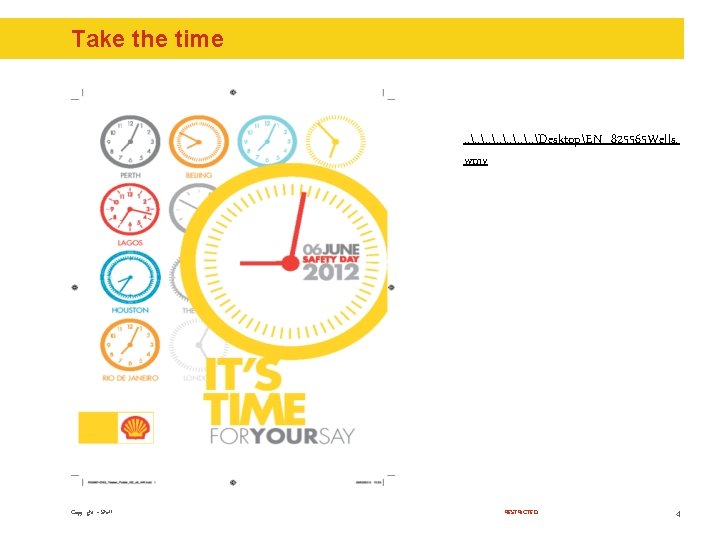
Take the time . . DesktopEN_825565 Wells. wmv Copyright – Shell RESTRICTED 4
Case For Action • People getting injured at an unacceptable frequency. Something more significant is adding up. • Incident Investigation “learnings” continue to be “lack of hazard identification” & “didn’t take the time to identify hazards or Pause for Hazard Identification”. • “Realizing Goal Zero with a Caring Collaborative, Relentless and Skilled focus on Exposure Reduction. Efforts underway to achieve Goal Zero are supported throughout the line with a culture of intervention and personal responsibility for HSE performance. ” Onshore Leadership Copyright – Shell RESTRICTED 5
WHM – Pause Benefits Pauses Already Exist – nothing new, however, Pause has become complacent, habitual, and less significant Simple – Use of the Hazard Categories No new paperwork Can Be: • Scheduled / Planned • Spontaneous Enables other Existing Controls / Expectations Copyright – Shell RESTRICTED 6
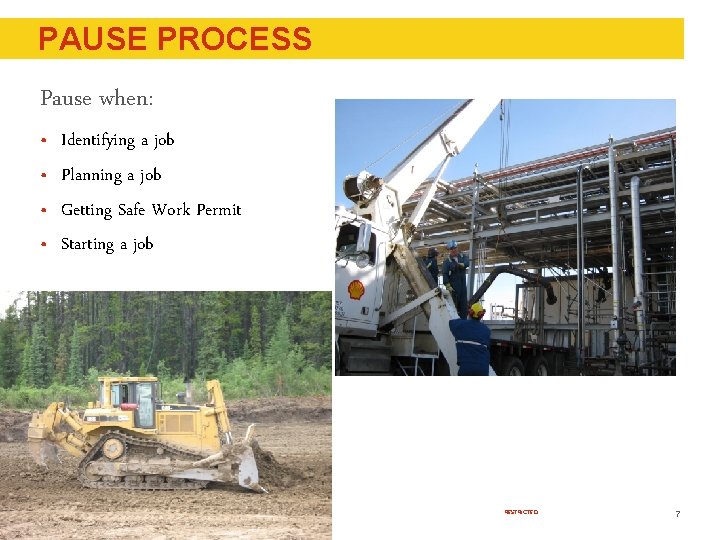
PAUSE PROCESS Pause when: • Identifying a job • Planning a job • Getting Safe Work Permit • Starting a job Copyright – Shell RESTRICTED 7
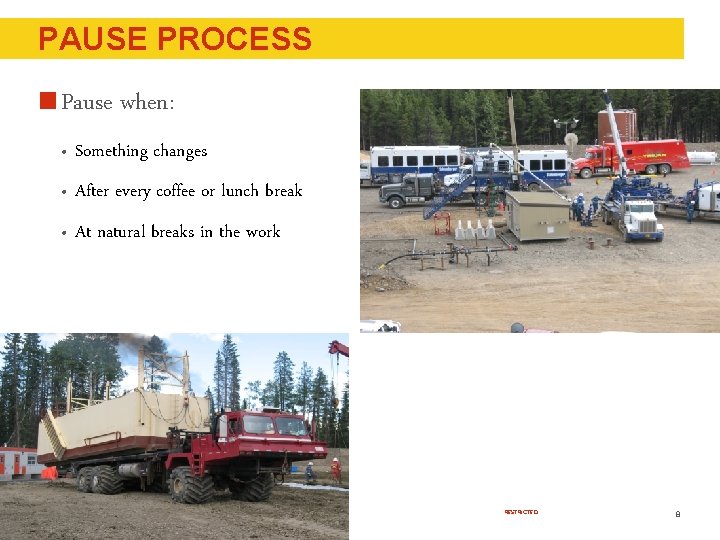
PAUSE PROCESS Pause when: • Something changes • After every coffee or lunch break • At natural breaks in the work Copyright – Shell RESTRICTED 8
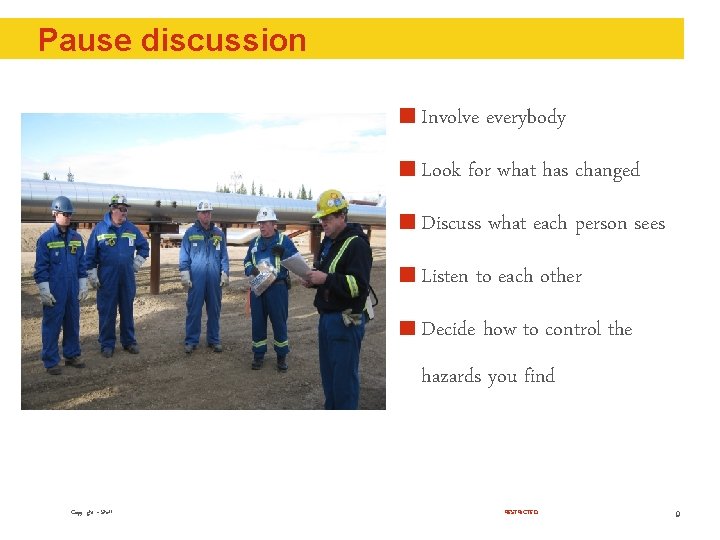
Pause discussion Involve everybody Look for what has changed Discuss what each person sees Listen to each other Decide how to control the hazards you find Copyright – Shell RESTRICTED 9
Next Steps Chronic Unease for Leaders Copyright – Shell RESTRICTED 10 10
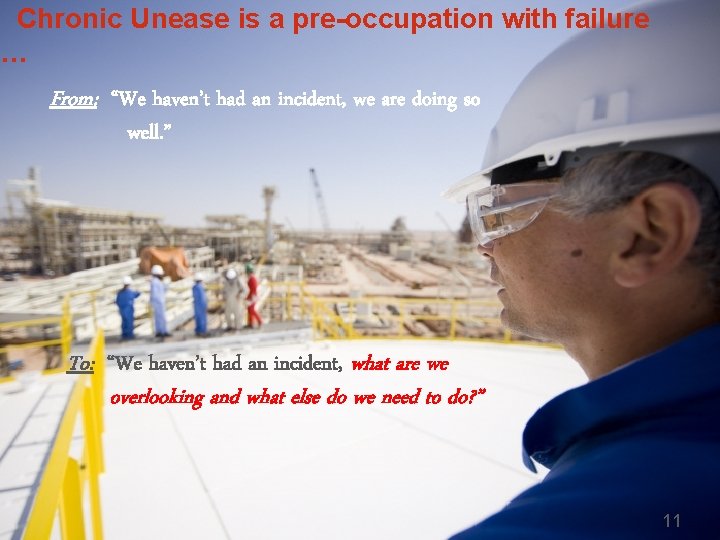
Chronic Unease is a pre-occupation with failure … From: “We haven’t had an incident, we are doing so well. ” To: “We haven’t had an incident, what are we overlooking and what else do we need to do? ” Copyright – Shell RESTRICTED 11 11
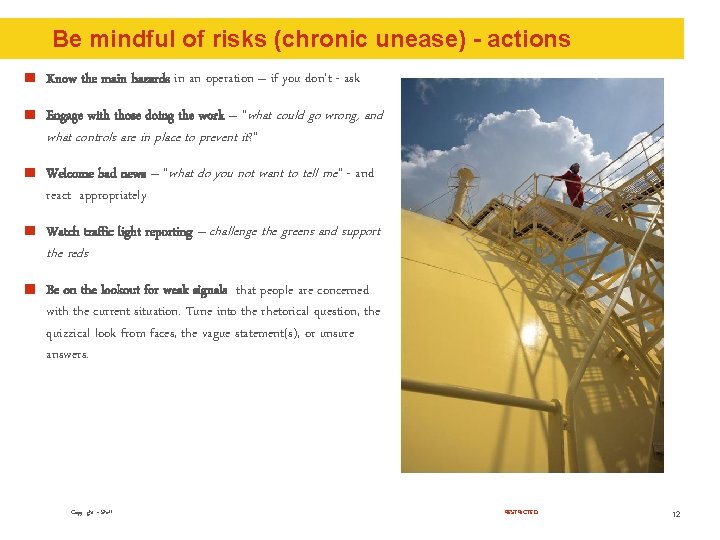
Be mindful of risks (chronic unease) - actions Know the main hazards in an operation – if you don't - ask Engage with those doing the work – “what could go wrong, and what controls are in place to prevent it? ” Welcome bad news – “what do you not want to tell me” - and react appropriately Watch traffic light reporting – challenge the greens and support the reds Be on the lookout for weak signals that people are concerned with the current situation. Tune into the rhetorical question, the quizzical look from faces, the vague statement(s), or unsure answers. Copyright – Shell RESTRICTED 12
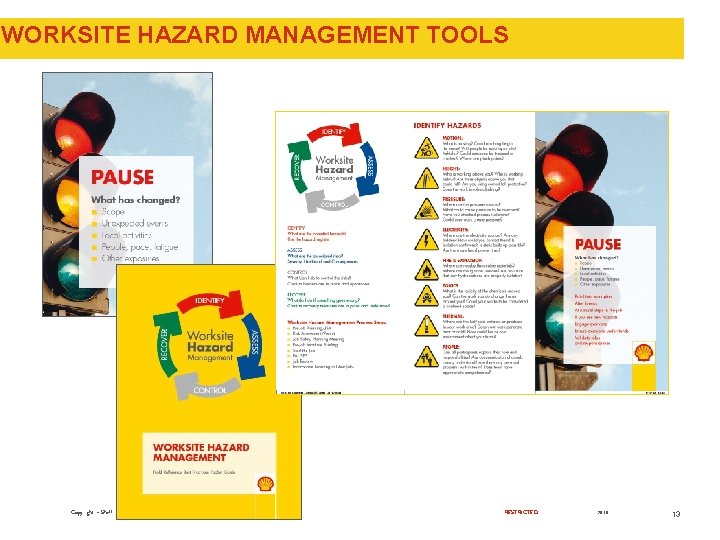
WORKSITE HAZARD MANAGEMENT TOOLS Copyright – Shell RESTRICTED 2010 13