RESPIRATORY SYSTEM Chapter 15 Lesson 4 Pages 381



- Slides: 14
RESPIRATORY SYSTEM Chapter 15 Lesson 4 Pages 381 -384
Pennsylvania State standard 10. 1. 9 Analyze the interdependence existing among the body system.
Students learn about the Respiratory system. Parts and functions How breathing works Problems of the respiratory system Care of the respiratory system
Vocabulary 1. 2. 3. 4. 5. 6. 7. 8. Respiration Gills Spiracles Carbon dioxide Mucus Cilia Esophagus Trachea 1. 2. 3. 4. 5. Epiglottis Larynx Bronchi Alveoli Diaphragm
Vocabulary Respiration - Provide the body with supply of oxygen and rid of carbon dioxide. Gills - Type of respiration found in fish. Spiracles - Type of respiration find in insects Carbon dioxide(Co 2)- Waste produced by the body Mucus - Produced by the body to catch dust and bacteria
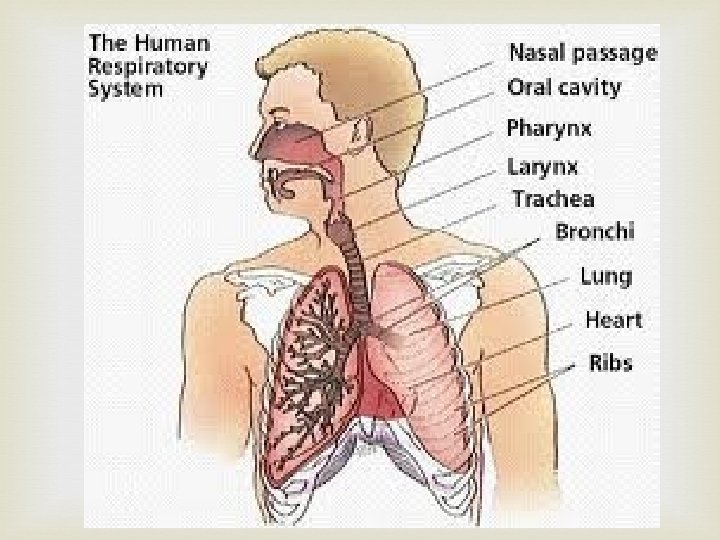
Cilia-Tiny hair like structures that protect the lungs. Esophagus -Tube that goes to the stomach Trachea - Tube that leads to the lungs Epiglottis - Flap that covers up the path to the lungs when eating or drinking. Larynx - The upper part of the respiration system, which contains the vocal cords. Bronchi - Passage through which air enters the lungs.
Part of the respiratory system Alveoli - Exchanges of gases inside the lungs actually happens in the tiny sacks Diaphragm - A dome shape muscle that separates the lungs from the abdomen.
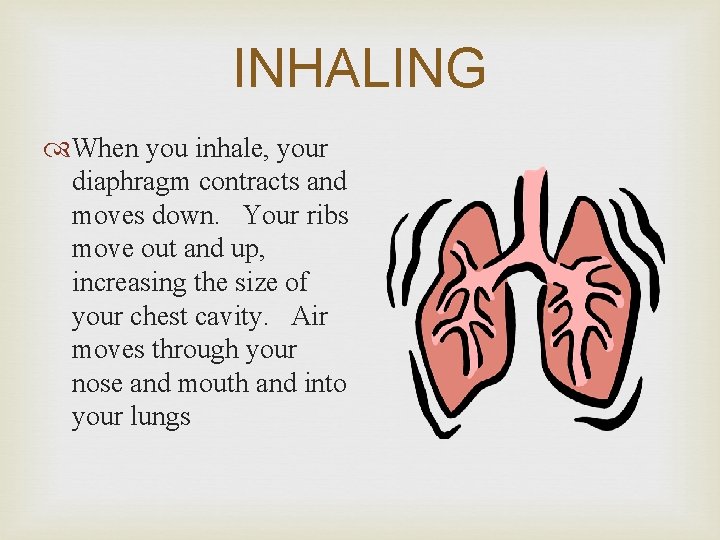
INHALING When you inhale, your diaphragm contracts and moves down. Your ribs move out and up, increasing the size of your chest cavity. Air moves through your nose and mouth and into your lungs
EXHALING When you exhale, your diaphragm relaxes and moves up into your chest cavity. Your ribs move in and down, reducing the size of the chest cavity and forcing air out of your lungs.
Problems with the respiration system. (page 307) Influenza Bronchitis Allergies Asthma Pneumonia Emphysema Tuberculosis Lung cancer Define the words using the text and writing it in your own words.
Label the diagram Your lungs page 13. Do both breath in breath out on page 15. Respiratory system answer all the question page 14. Finish the huff-puff crossword puzzle for extra credit page 16.
WILT Write a two page paper describe the function of the respiratory system. ~ Paragraph 1 - Explain in detail the parts of the respiration system? ~ Paragraph 2 - How the respiration system works to give the body oxygen and get rid of carbon dioxide Co 2? (Explain in detail how the lung exchange oxygen and Carbon Dioxide. ) ~ Paragraph 3 - What body systems need the respiration system to work?