Research Methodology Study Design 2 Davood Khalili MD


- Slides: 20
Research Methodology Study Design (2) Davood Khalili, MD, MPH, Ph. D Department of Biostatistics & Epidemiology Research Institute for Endocrine Sciences Shahid Beheshti University of Medical Sciences
Cohort Study
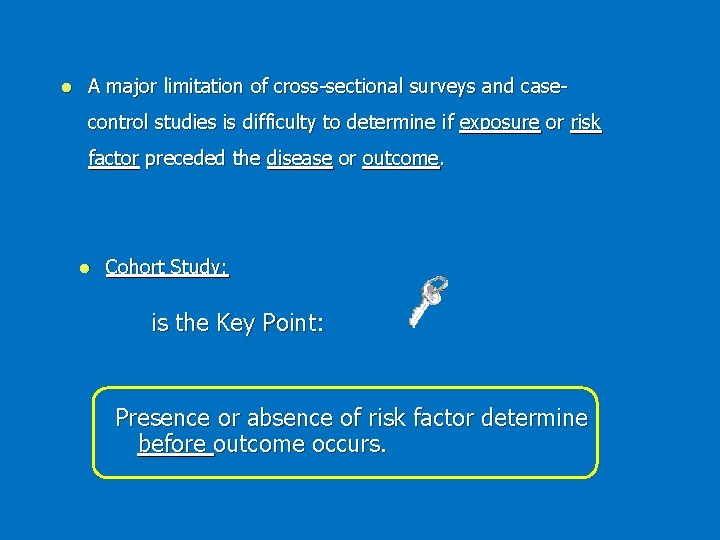
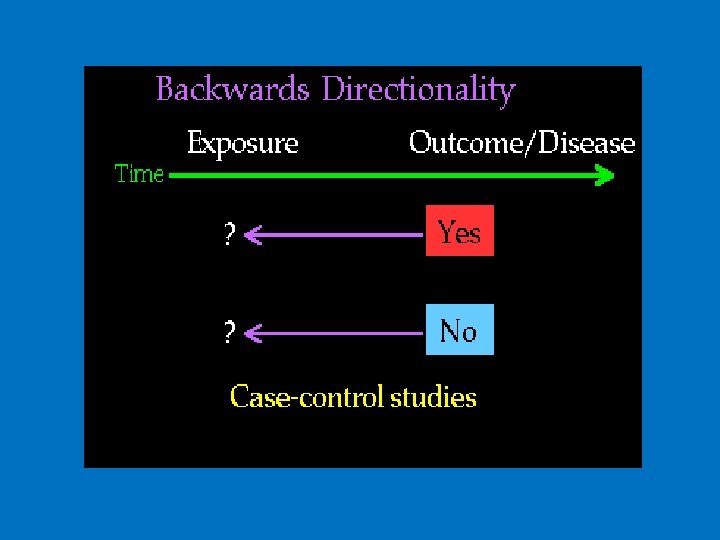
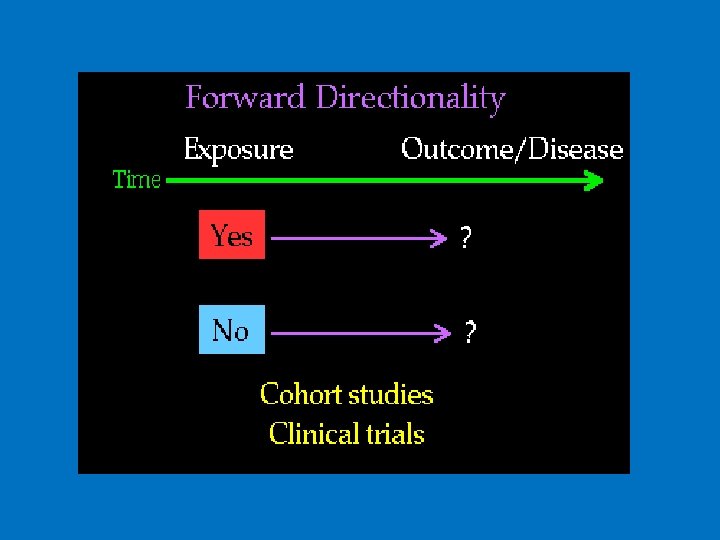
l A major limitation of cross-sectional surveys and casecontrol studies is difficulty to determine if exposure or risk factor preceded the disease or outcome. l Cohort Study: is the Key Point: Presence or absence of risk factor determine before outcome occurs.
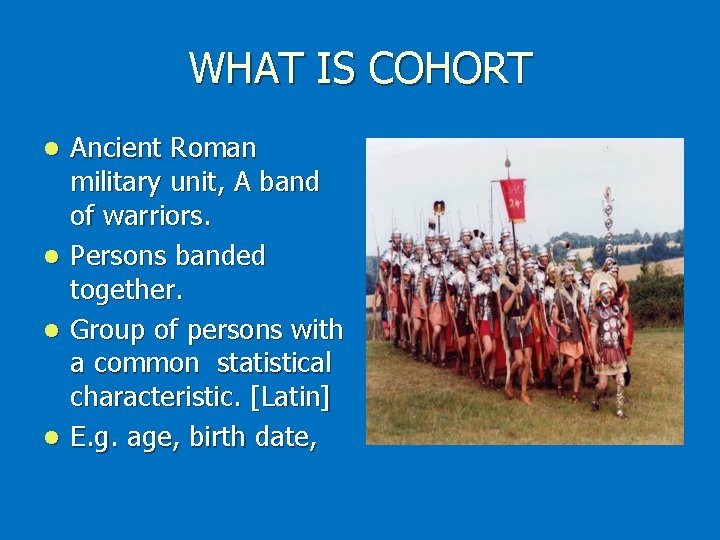
WHAT IS COHORT Ancient Roman military unit, A band of warriors. l Persons banded together. l Group of persons with a common statistical characteristic. [Latin] l E. g. age, birth date, l
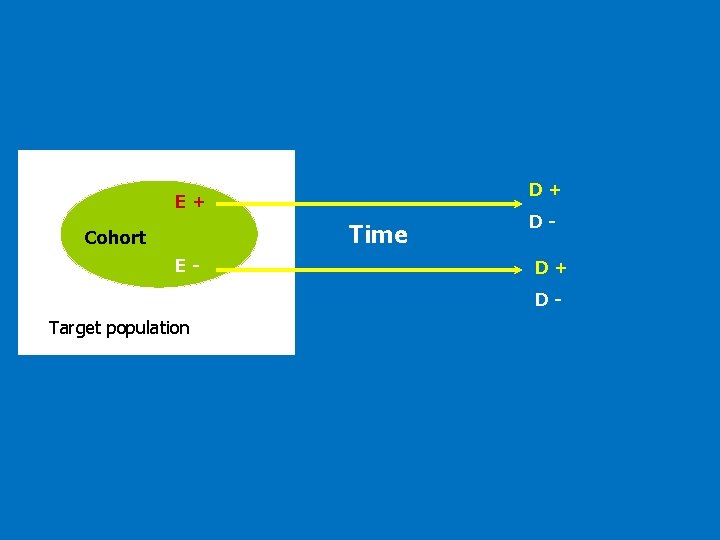
D+ E+ Time Cohort E- DD+ D- Target population
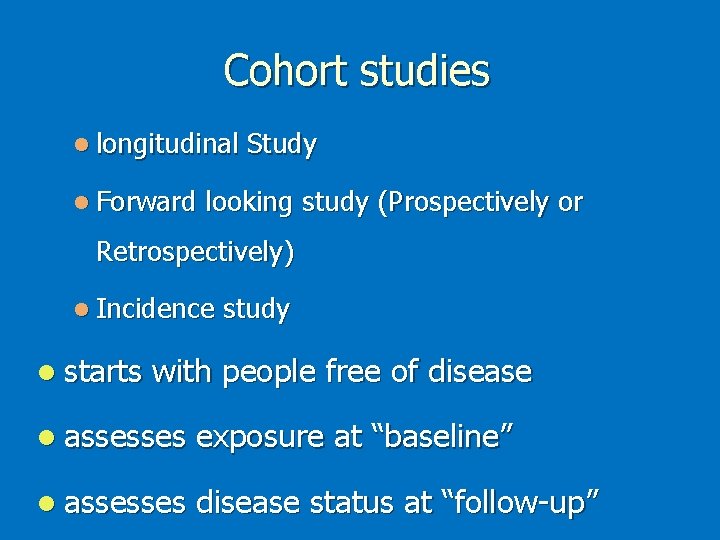
Cohort studies l longitudinal l Forward Study looking study (Prospectively or Retrospectively) l Incidence l starts study with people free of disease l assesses exposure at “baseline” l assesses disease status at “follow-up”
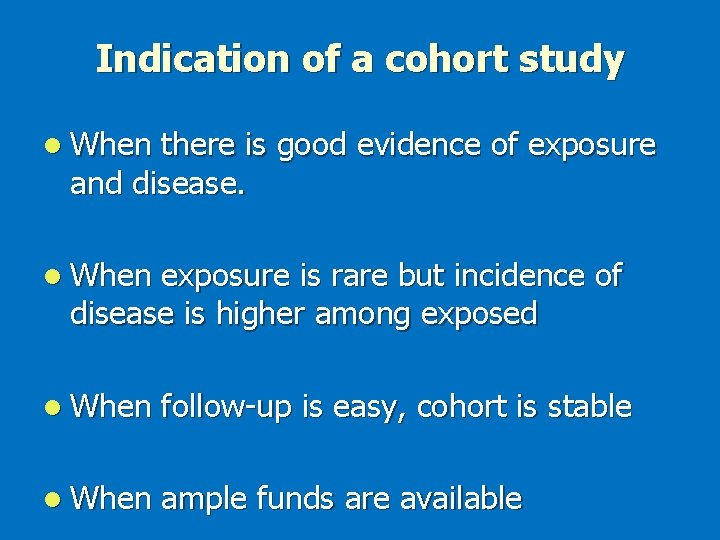
Indication of a cohort study l When there is good evidence of exposure and disease. l When exposure is rare but incidence of disease is higher among exposed l When follow-up is easy, cohort is stable l When ample funds are available
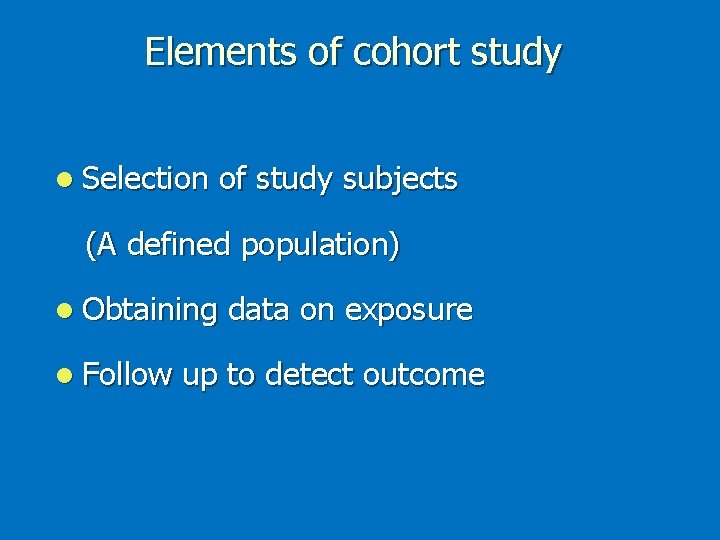
Elements of cohort study l Selection of study subjects (A defined population) l Obtaining l Follow data on exposure up to detect outcome
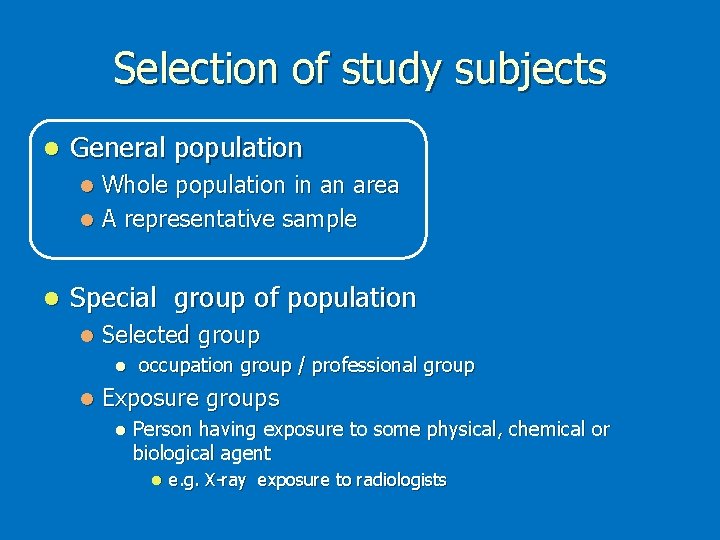
Selection of study subjects l General population Whole population in an area l A representative sample l l Special group of population l Selected group l l occupation group / professional group Exposure groups l Person having exposure to some physical, chemical or biological agent l e. g. X-ray exposure to radiologists
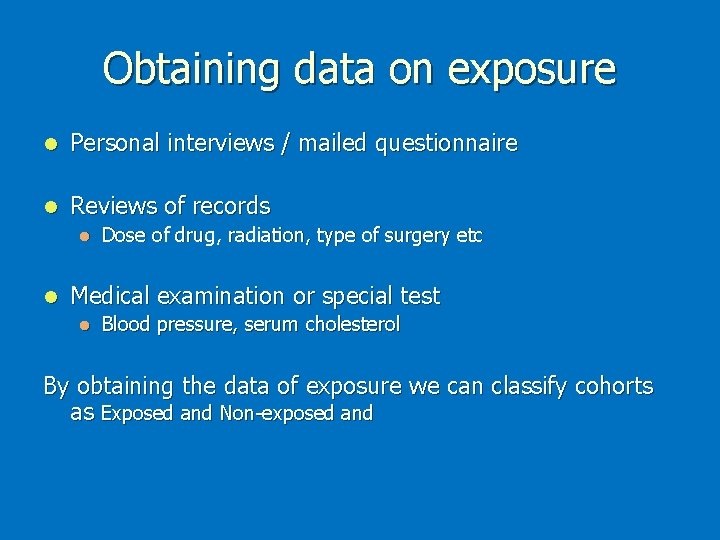
Obtaining data on exposure l Personal interviews / mailed questionnaire l Reviews of records l l Dose of drug, radiation, type of surgery etc Medical examination or special test l Blood pressure, serum cholesterol By obtaining the data of exposure we can classify cohorts as Exposed and Non-exposed and
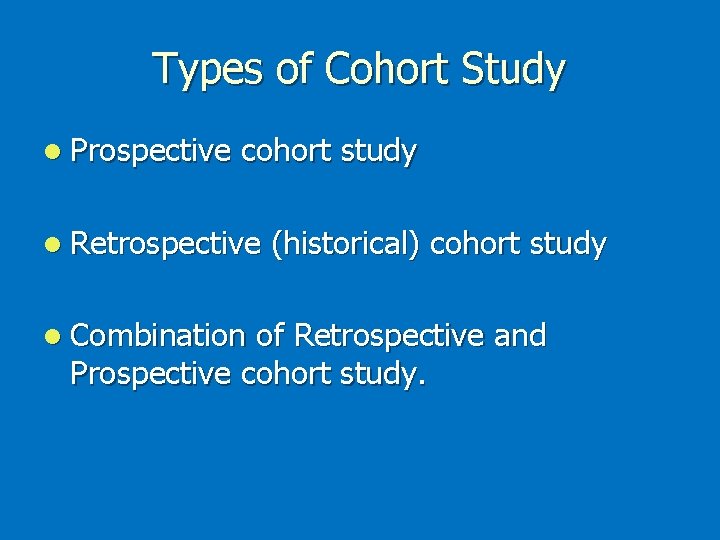
Types of Cohort Study l Prospective cohort study l Retrospective l Combination (historical) cohort study of Retrospective and Prospective cohort study.
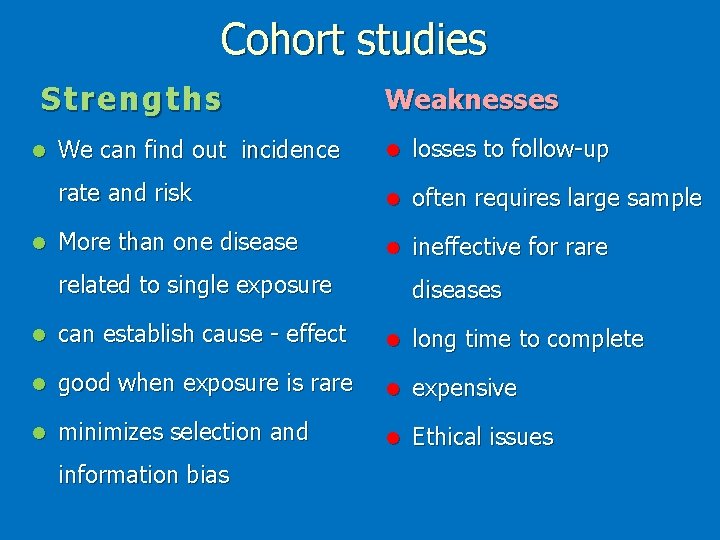
Cohort studies Strengths l l Weaknesses We can find out incidence l losses to follow-up rate and risk l often requires large sample More than one disease l ineffective for rare related to single exposure diseases l can establish cause - effect l long time to complete l good when exposure is rare l expensive l minimizes selection and l Ethical issues information bias
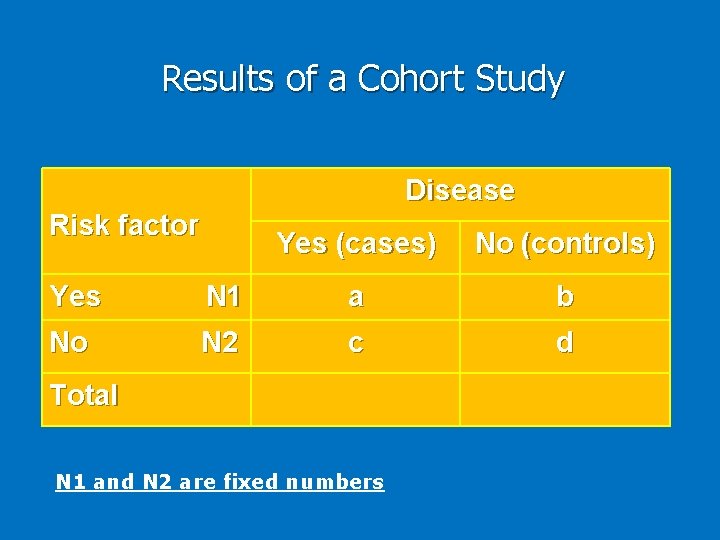
Results of a Cohort Study Disease Risk factor Yes (cases) No (controls) Yes N 1 a b No N 2 c d Total N 1 and N 2 are fixed numbers
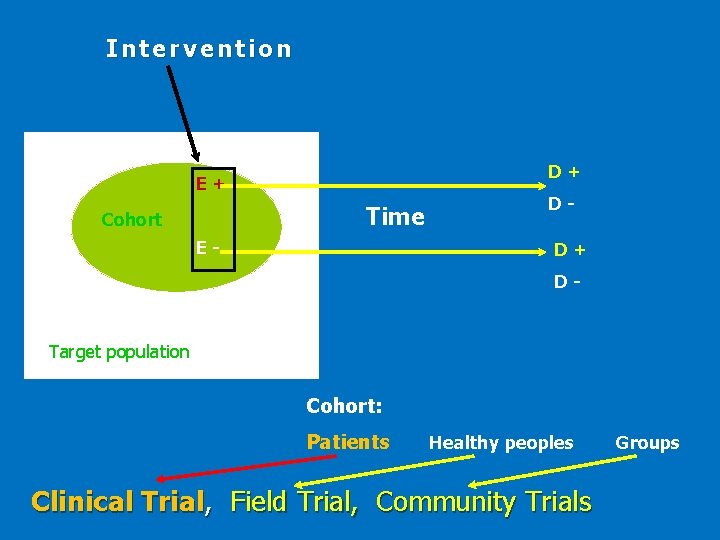
RCT § Randomized § Controlled § Trial Clinical Trial, Field Trial, Community Trials
Intervention D+ E+ Time Cohort E- DD+ D- Target population Cohort: Patients Healthy peoples Clinical Trial, Field Trial, Community Trials Groups
Any Question? Time of team working.