Reptiles of Cat Tien National Park Crocodile and
- Slides: 22
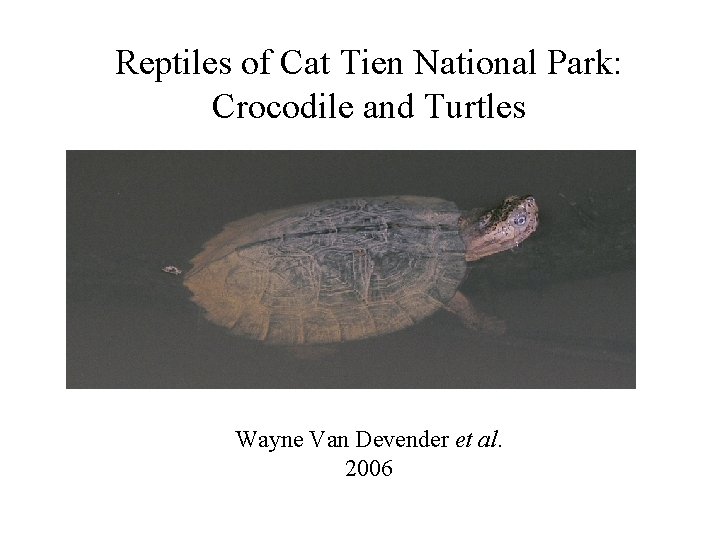
Reptiles of Cat Tien National Park: Crocodile and Turtles Wayne Van Devender et al. 2006
The Crocodile Family of Cat Tien • Crocodylidae - 1 species Turtle Families of Cat Tien (all of Order Testudines) • • Bataguridae - 5 species Platysternidae - 1 species Testudinidae – 1 species Trionychidae – 1 species
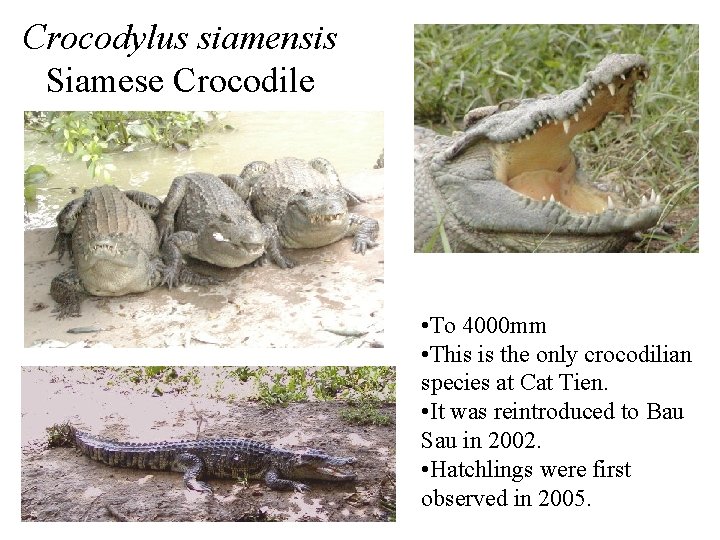
Crocodylus siamensis Siamese Crocodile • To 4000 mm • This is the only crocodilian species at Cat Tien. • It was reintroduced to Bau Sau in 2002. • Hatchlings were first observed in 2005.
Order Testudines - turtles • Skull anapsid, but can have indented parts in temporal area • Shell composed of upper and lower parts: – Carapace = upper shell – Plastron = lower shell • Carapace includes backbone and ribs • Legs, tail, and head can be pulled into shell • 3 -4 families possible at Cat Tien – – Bataguridae – Asiatic pond turtles Platysternidae – big-headed turtles – possibly at Cat Tien Testudinidae – tortoises Trionychidae – softshell turtles
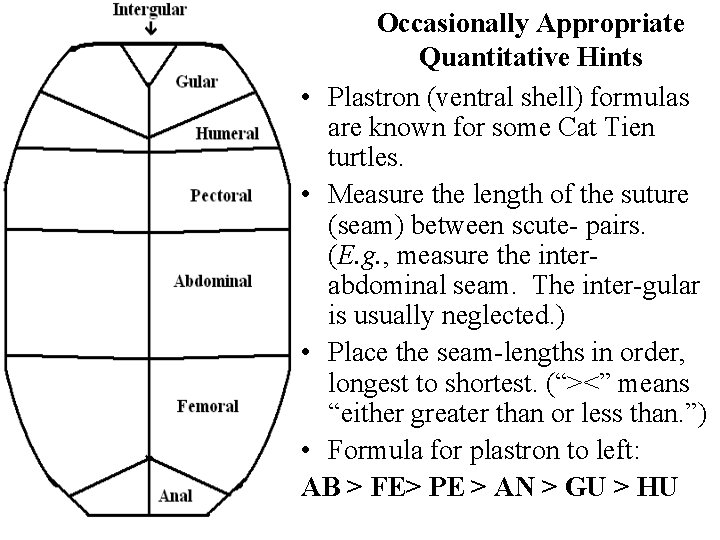
Occasionally Appropriate Quantitative Hints • Plastron (ventral shell) formulas are known for some Cat Tien turtles. • Measure the length of the suture (seam) between scute- pairs. (E. g. , measure the interabdominal seam. The inter-gular is usually neglected. ) • Place the seam-lengths in order, longest to shortest. (“><” means “either greater than or less than. ”) • Formula for plastron to left: AB > FE> PE > AN > GU > HU
The Bataguridae of Cat Tien Tail relatively short, feet without reduced number of toe bones Several aquatic and/or terrestrial forms Most species and genera now threatened We shall list 5 species (5 genera) observed by us at Cat Tie Cuora amboinensis Cyclemys pulchristriata Heosemys grandis Malayemys subtrijuga Siebenrockiella crassicollis
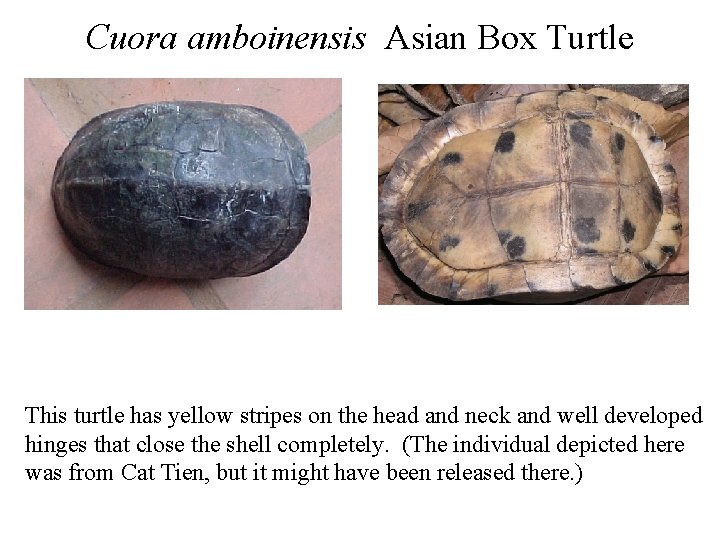
Cuora amboinensis Asian Box Turtle This turtle has yellow stripes on the head and neck and well developed hinges that close the shell completely. (The individual depicted here was from Cat Tien, but it might have been released there. )
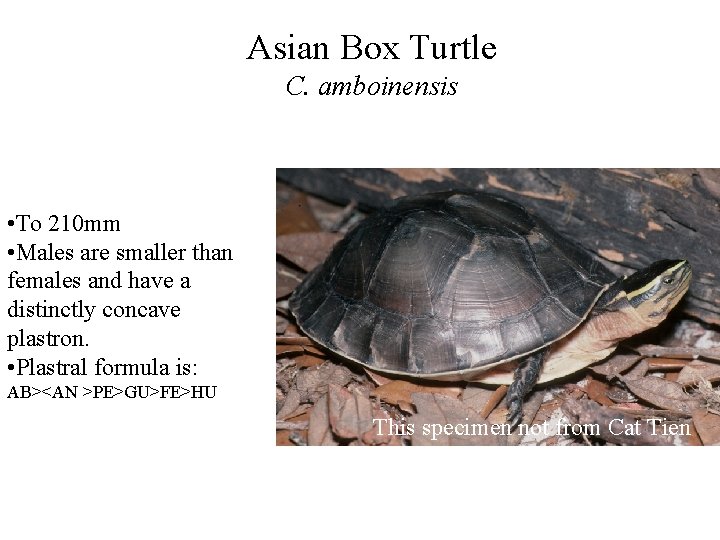
Asian Box Turtle C. amboinensis • To 210 mm • Males are smaller than females and have a distinctly concave plastron. • Plastral formula is: AB><AN >PE>GU>FE>HU This specimen not from Cat Tien
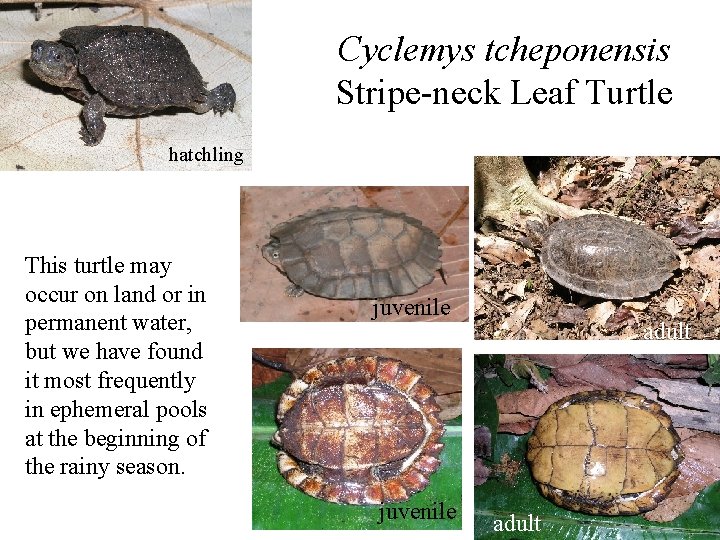
Cyclemys tcheponensis Stripe-neck Leaf Turtle hatchling This turtle may occur on land or in permanent water, but we have found it most frequently in ephemeral pools at the beginning of the rainy season. juvenile adult
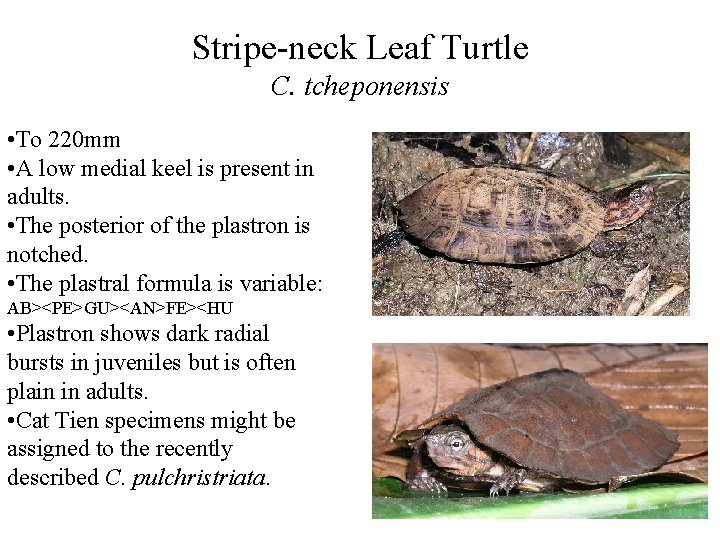
Stripe-neck Leaf Turtle C. tcheponensis • To 220 mm • A low medial keel is present in adults. • The posterior of the plastron is notched. • The plastral formula is variable: AB><PE>GU><AN>FE><HU • Plastron shows dark radial bursts in juveniles but is often plain in adults. • Cat Tien specimens might be assigned to the recently described C. pulchristriata.
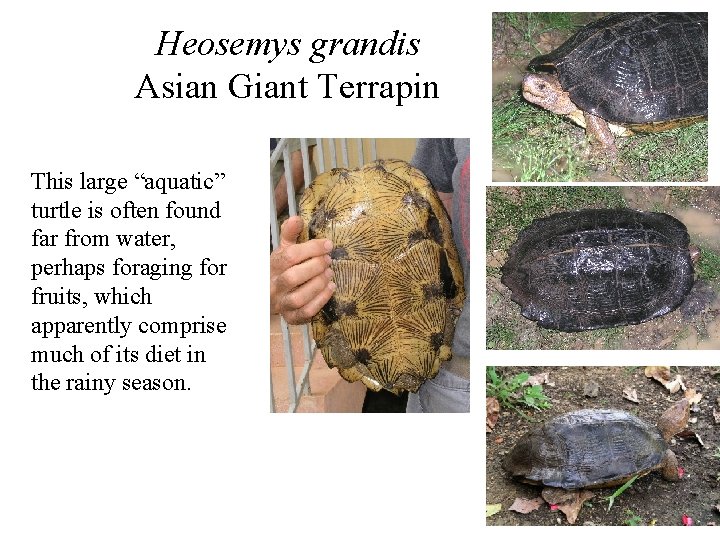
Heosemys grandis Asian Giant Terrapin This large “aquatic” turtle is often found far from water, perhaps foraging for fruits, which apparently comprise much of its diet in the rainy season.
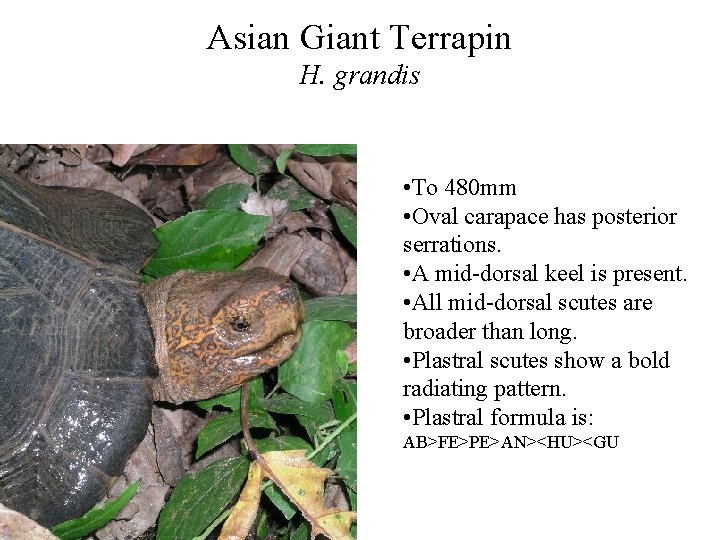
Asian Giant Terrapin H. grandis • To 480 mm • Oval carapace has posterior serrations. • A mid-dorsal keel is present. • All mid-dorsal scutes are broader than long. • Plastral scutes show a bold radiating pattern. • Plastral formula is: AB>FE>PE>AN><HU><GU
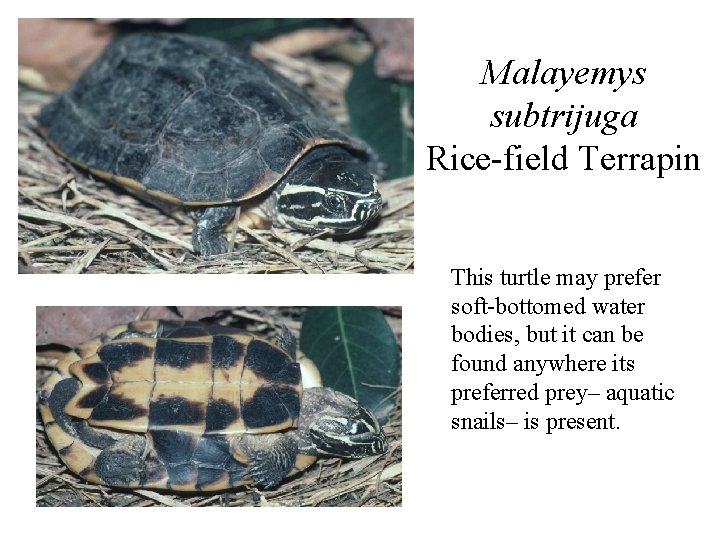
Malayemys subtrijuga Rice-field Terrapin This turtle may prefer soft-bottomed water bodies, but it can be found anywhere its preferred prey– aquatic snails– is present.
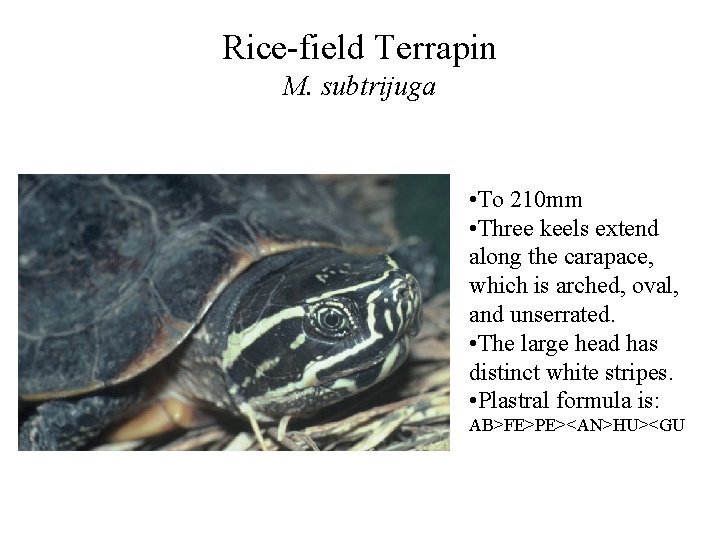
Rice-field Terrapin M. subtrijuga • To 210 mm • Three keels extend along the carapace, which is arched, oval, and unserrated. • The large head has distinct white stripes. • Plastral formula is: AB>FE>PE><AN>HU><GU
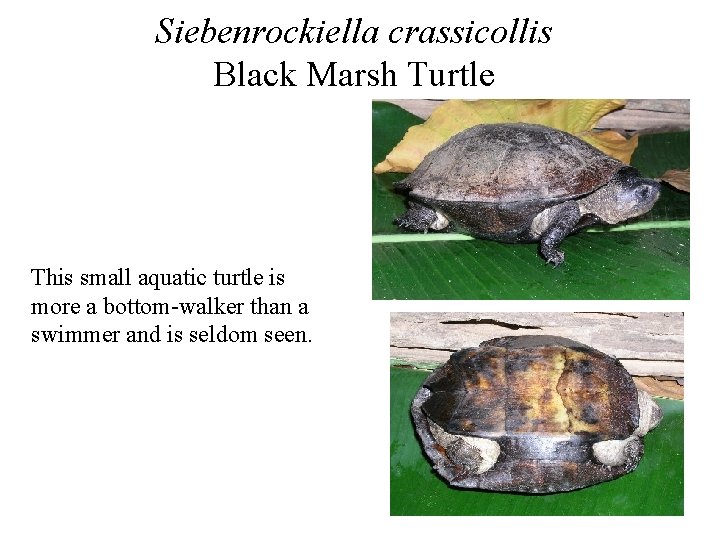
Siebenrockiella crassicollis Black Marsh Turtle This small aquatic turtle is more a bottom-walker than a swimmer and is seldom seen.
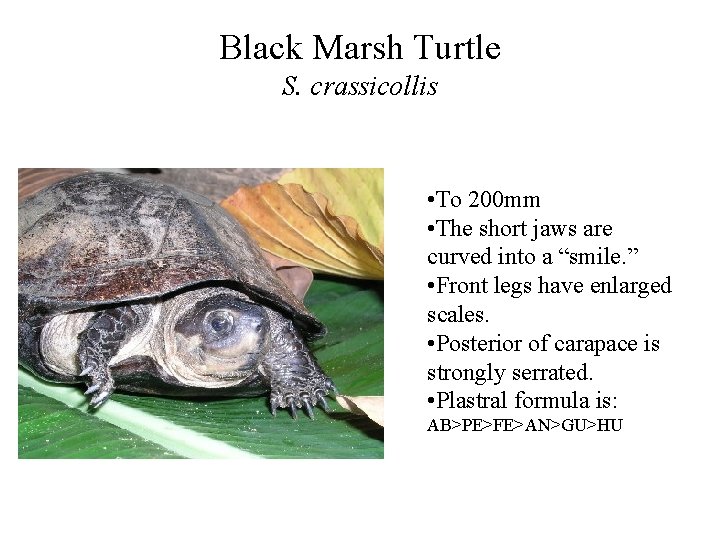
Black Marsh Turtle S. crassicollis • To 200 mm • The short jaws are curved into a “smile. ” • Front legs have enlarged scales. • Posterior of carapace is strongly serrated. • Plastral formula is: AB>PE>FE>AN>GU>HU
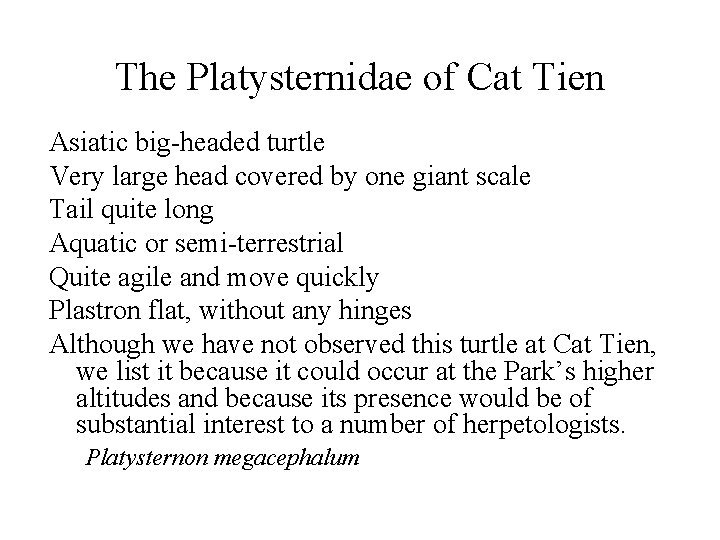
The Platysternidae of Cat Tien Asiatic big-headed turtle Very large head covered by one giant scale Tail quite long Aquatic or semi-terrestrial Quite agile and move quickly Plastron flat, without any hinges Although we have not observed this turtle at Cat Tien, we list it because it could occur at the Park’s higher altitudes and because its presence would be of substantial interest to a number of herpetologists. Platysternon megacephalum
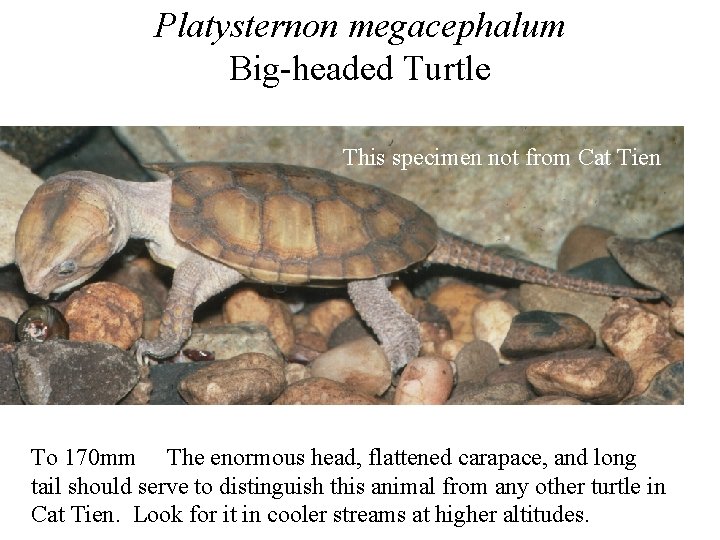
Platysternon megacephalum Big-headed Turtle This specimen not from Cat Tien To 170 mm The enormous head, flattened carapace, and long tail should serve to distinguish this animal from any other turtle in Cat Tien. Look for it in cooler streams at higher altitudes.
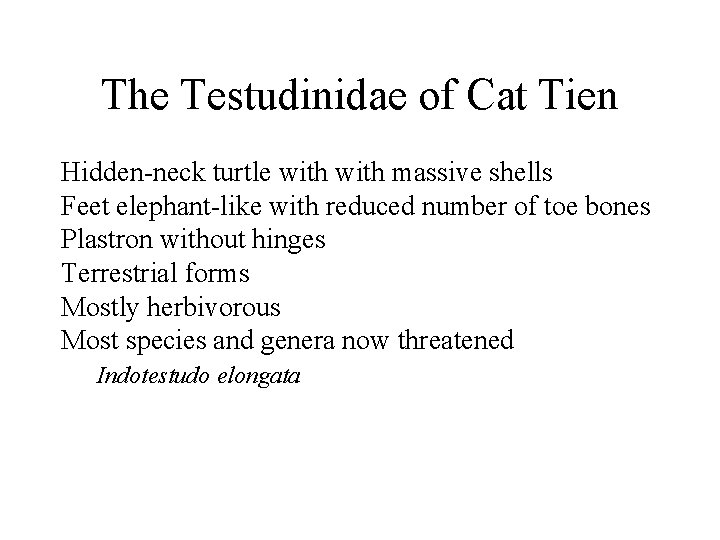
The Testudinidae of Cat Tien Hidden-neck turtle with massive shells Feet elephant-like with reduced number of toe bones Plastron without hinges Terrestrial forms Mostly herbivorous Most species and genera now threatened Indotestudo elongata
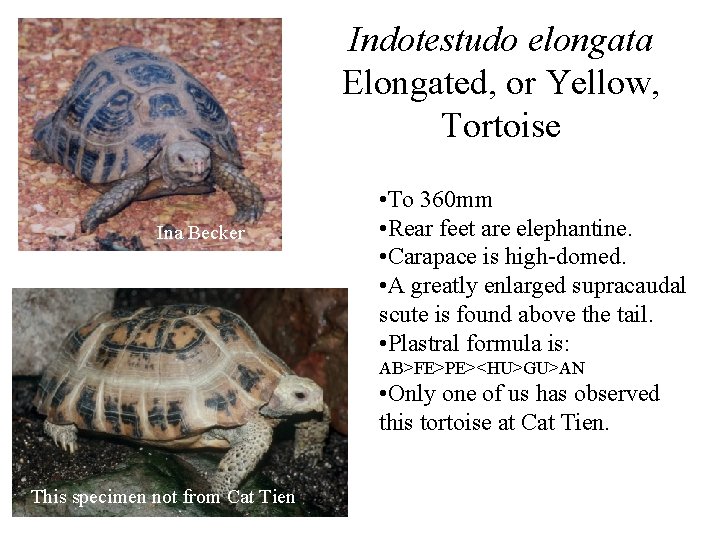
Indotestudo elongata Elongated, or Yellow, Tortoise Ina Becker • To 360 mm • Rear feet are elephantine. • Carapace is high-domed. • A greatly enlarged supracaudal scute is found above the tail. • Plastral formula is: AB>FE>PE><HU>GU>AN • Only one of us has observed this tortoise at Cat Tien. This specimen not from Cat Tien
The Trionychidae of Cat Tien Soft-shelled turtles Hidden-neck turtle without scales on the shell, head, neck, or most of the legs Long necks end with pointed heads with snouts Feet large and fully webbed Highly aquatic forms Can reach immense sizes Most species and genera now threatened Amyda cartilaginea
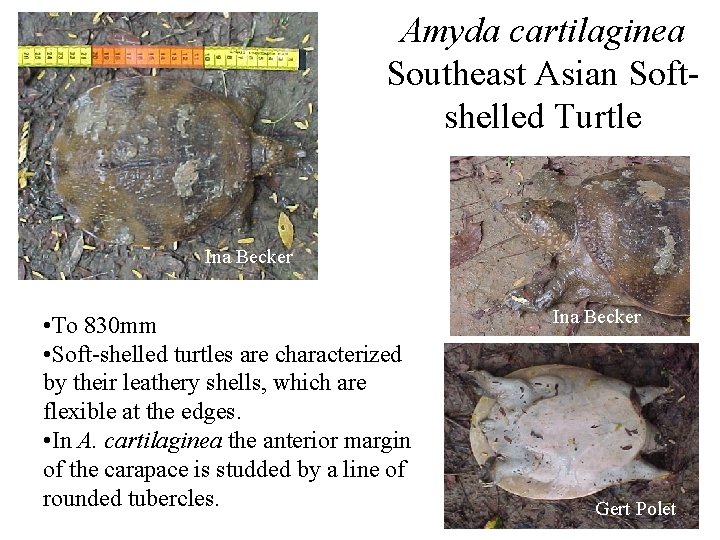
Amyda cartilaginea Southeast Asian Softshelled Turtle Ina Becker • To 830 mm • Soft-shelled turtles are characterized by their leathery shells, which are flexible at the edges. • In A. cartilaginea the anterior margin of the carapace is studded by a line of rounded tubercles. Ina Becker Gert Polet