Religion and Reform Neal Dow Temperance Napoleon of
- Slides: 9
Religion and Reform
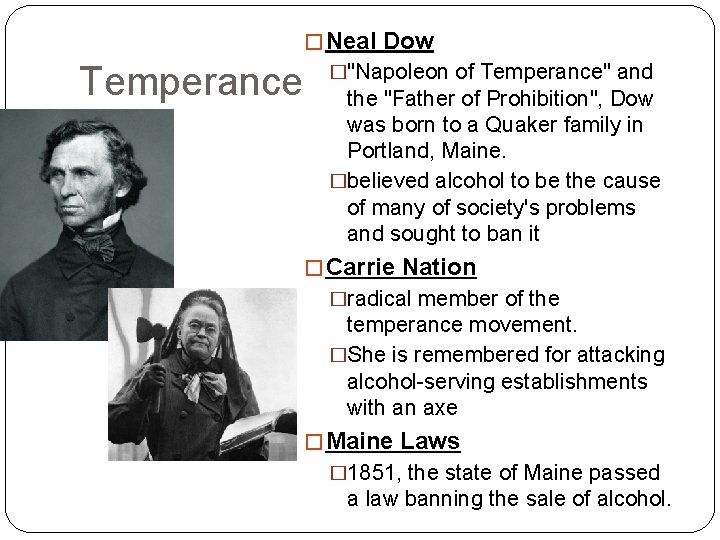
� Neal Dow Temperance �"Napoleon of Temperance" and the "Father of Prohibition", Dow was born to a Quaker family in Portland, Maine. �believed alcohol to be the cause of many of society's problems and sought to ban it � Carrie Nation �radical member of the temperance movement. �She is remembered for attacking alcohol-serving establishments with an axe � Maine Laws � 1851, the state of Maine passed a law banning the sale of alcohol.
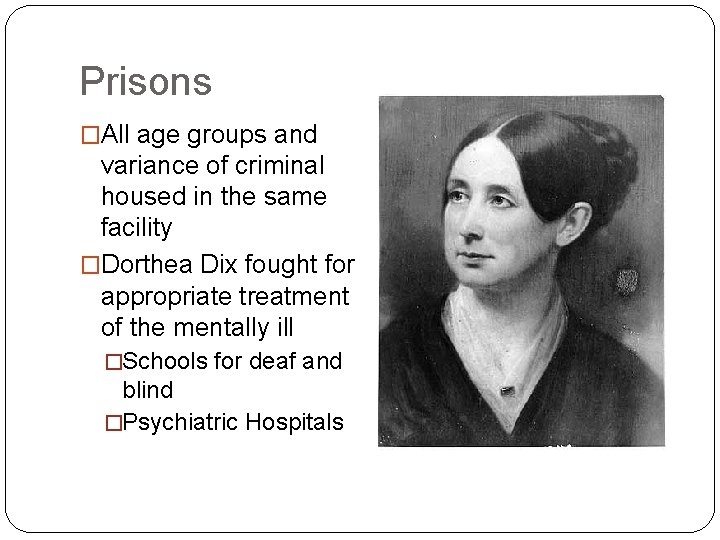
Prisons �All age groups and variance of criminal housed in the same facility �Dorthea Dix fought for appropriate treatment of the mentally ill �Schools for deaf and blind �Psychiatric Hospitals
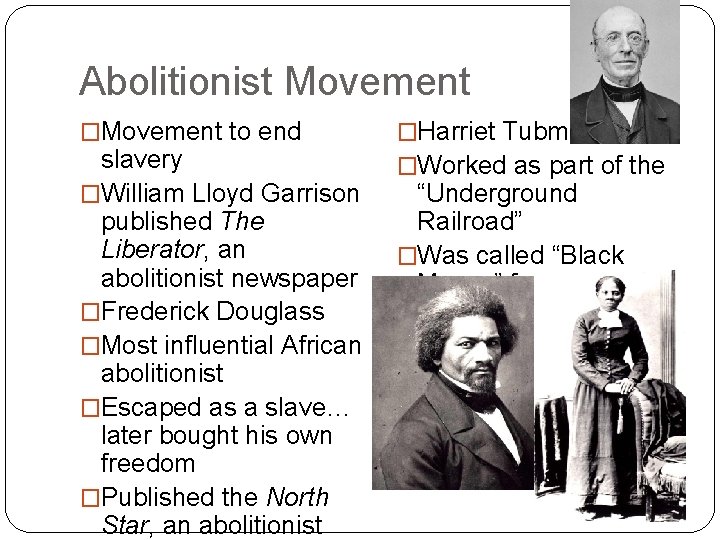
Abolitionist Movement �Movement to end slavery �William Lloyd Garrison published The Liberator, an abolitionist newspaper �Frederick Douglass �Most influential African abolitionist �Escaped as a slave… later bought his own freedom �Published the North Star, an abolitionist �Harriet Tubman �Worked as part of the “Underground Railroad” �Was called “Black Moses” for rescuing over 300 slaves
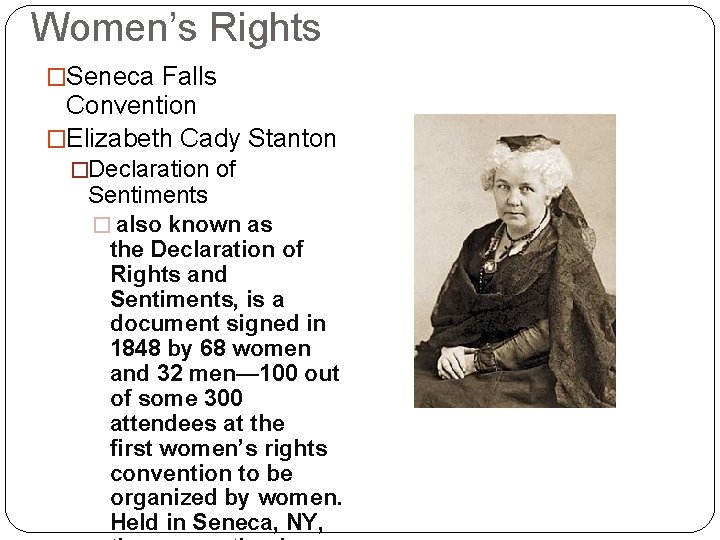
Women’s Rights �Seneca Falls Convention �Elizabeth Cady Stanton �Declaration of Sentiments � also known as the Declaration of Rights and Sentiments, is a document signed in 1848 by 68 women and 32 men— 100 out of some 300 attendees at the first women’s rights convention to be organized by women. Held in Seneca, NY,
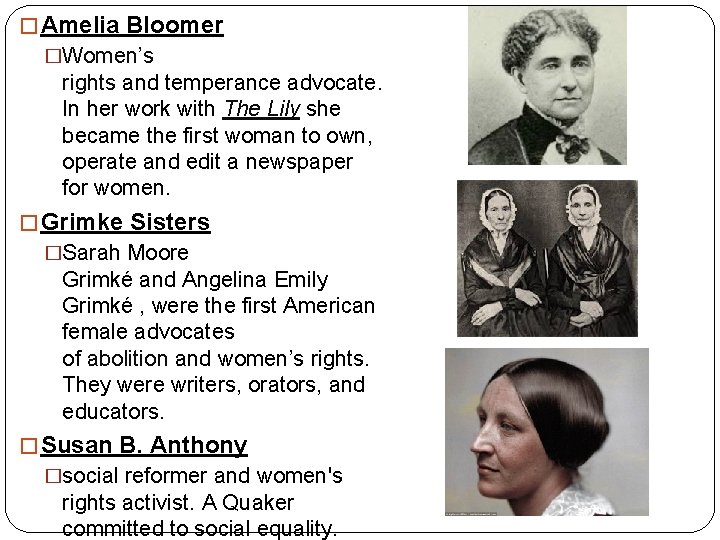
� Amelia Bloomer �Women’s rights and temperance advocate. In her work with The Lily she became the first woman to own, operate and edit a newspaper for women. � Grimke Sisters �Sarah Moore Grimké and Angelina Emily Grimké , were the first American female advocates of abolition and women’s rights. They were writers, orators, and educators. � Susan B. Anthony �social reformer and women's rights activist. A Quaker committed to social equality.
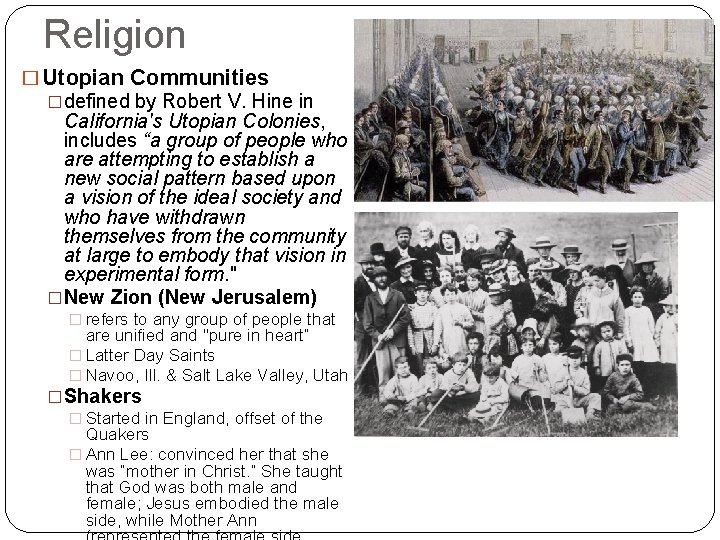
Religion � Utopian Communities �defined by Robert V. Hine in California's Utopian Colonies, includes “a group of people who are attempting to establish a new social pattern based upon a vision of the ideal society and who have withdrawn themselves from the community at large to embody that vision in experimental form. " �New Zion (New Jerusalem) � refers to any group of people that are unified and "pure in heart“ � Latter Day Saints � Navoo, Ill. & Salt Lake Valley, Utah �Shakers � Started in England, offset of the Quakers � Ann Lee: convinced her that she was “mother in Christ. ” She taught that God was both male and female; Jesus embodied the male side, while Mother Ann
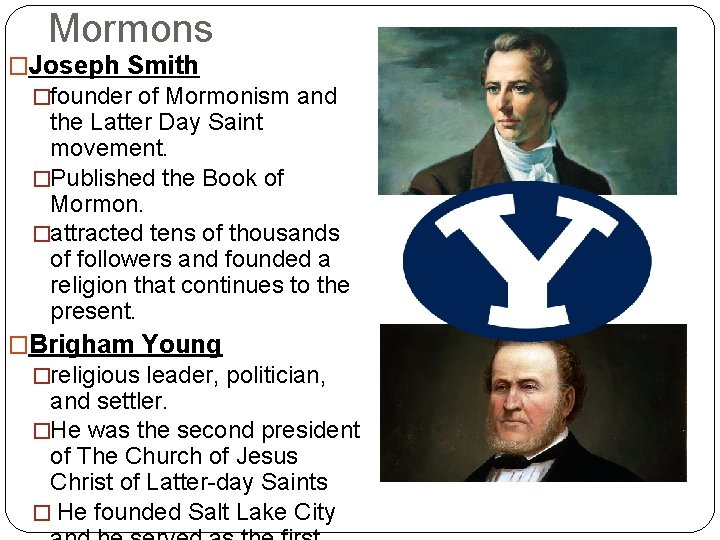
Mormons �Joseph Smith �founder of Mormonism and the Latter Day Saint movement. �Published the Book of Mormon. �attracted tens of thousands of followers and founded a religion that continues to the present. �Brigham Young �religious leader, politician, and settler. �He was the second president of The Church of Jesus Christ of Latter-day Saints � He founded Salt Lake City
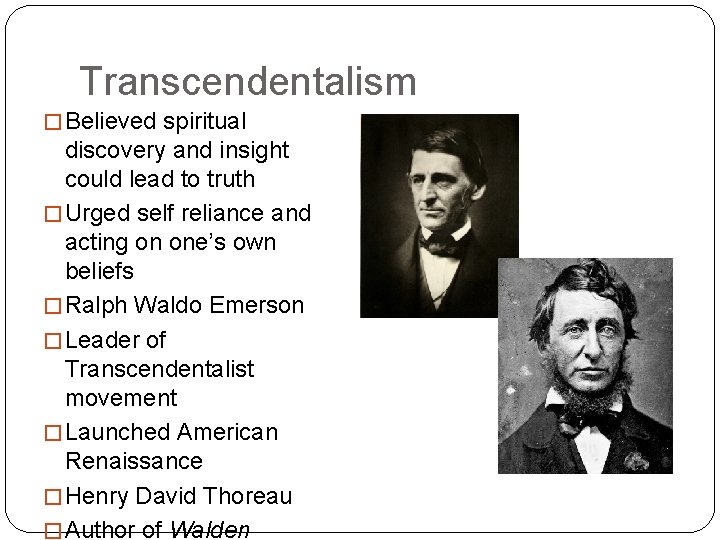
Transcendentalism � Believed spiritual discovery and insight could lead to truth � Urged self reliance and acting on one’s own beliefs � Ralph Waldo Emerson � Leader of Transcendentalist movement � Launched American Renaissance � Henry David Thoreau � Author of Walden