Psychoanalytic Theory Core Concepts 1 Psychic Determinism n

- Slides: 26
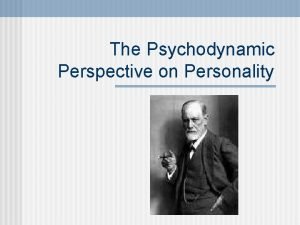
Psychoanalytic Theory
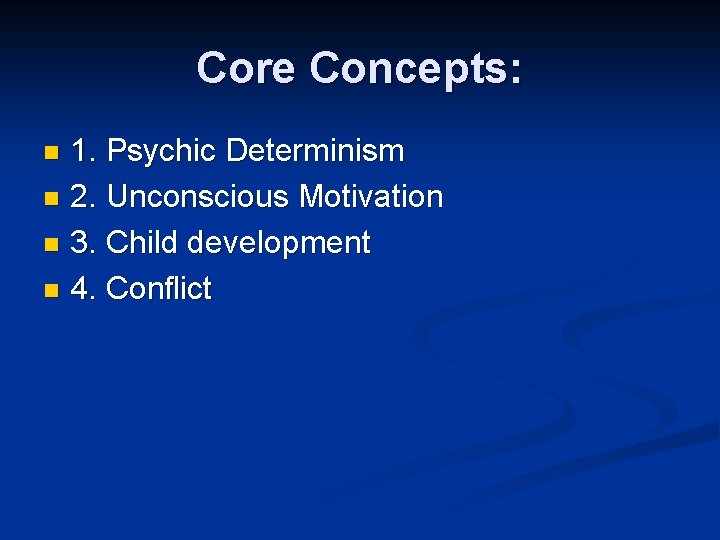
Core Concepts: 1. Psychic Determinism n 2. Unconscious Motivation n 3. Child development n 4. Conflict n
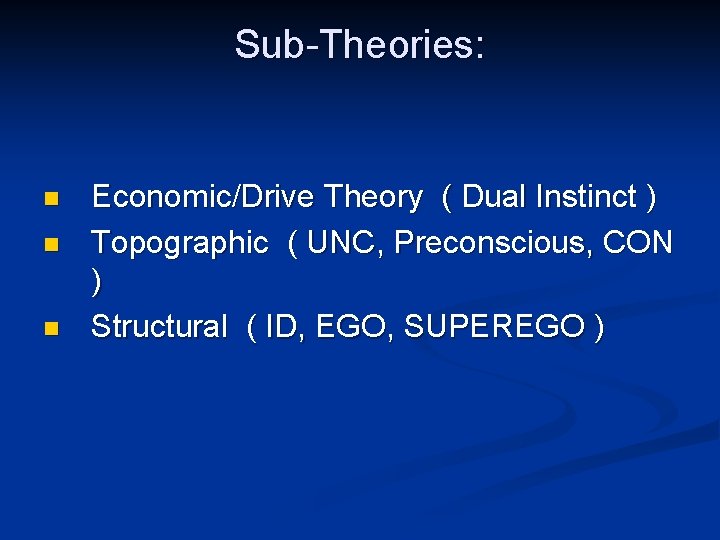
Sub-Theories: n n n Economic/Drive Theory ( Dual Instinct ) Topographic ( UNC, Preconscious, CON ) Structural ( ID, EGO, SUPEREGO )
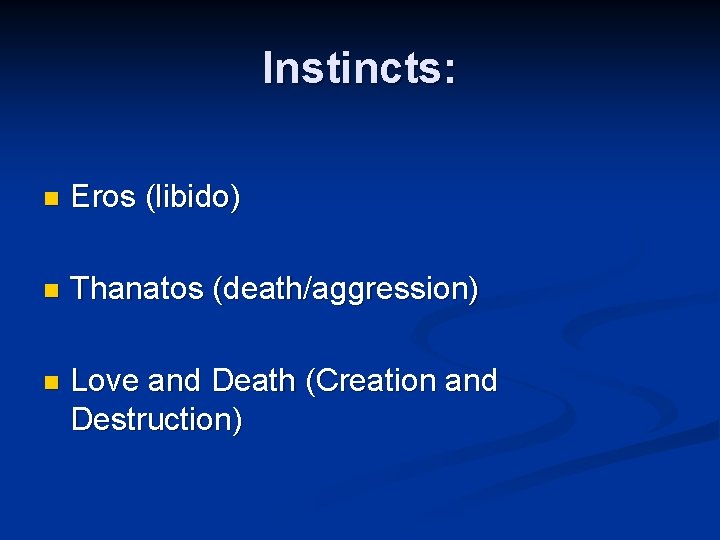
Instincts: n Eros (libido) n Thanatos (death/aggression) n Love and Death (Creation and Destruction)
Cathexis (investment of psychic energy) n Fixation (getting stuck) n
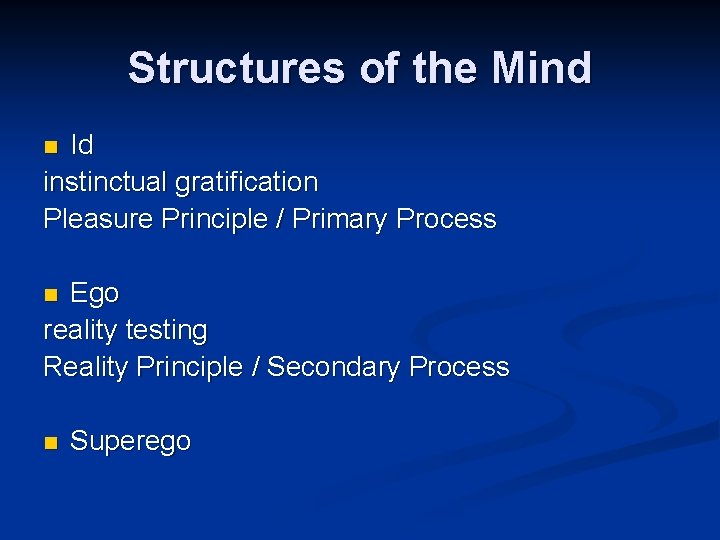
Structures of the Mind Id instinctual gratification Pleasure Principle / Primary Process n Ego reality testing Reality Principle / Secondary Process n n Superego
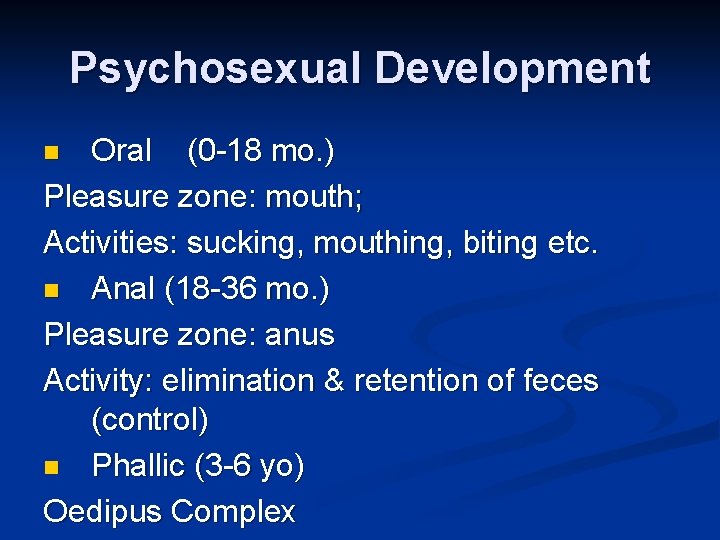
Psychosexual Development Oral (0 -18 mo. ) Pleasure zone: mouth; Activities: sucking, mouthing, biting etc. n Anal (18 -36 mo. ) Pleasure zone: anus Activity: elimination & retention of feces (control) n Phallic (3 -6 yo) Oedipus Complex n
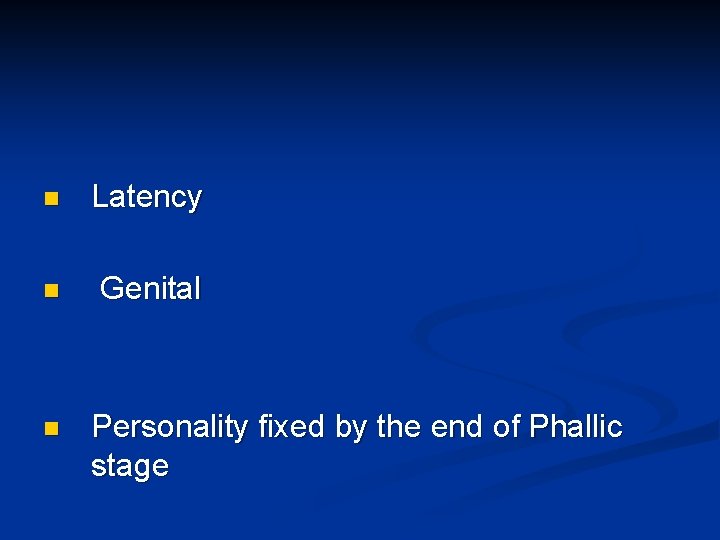
n Latency n Genital n Personality fixed by the end of Phallic stage
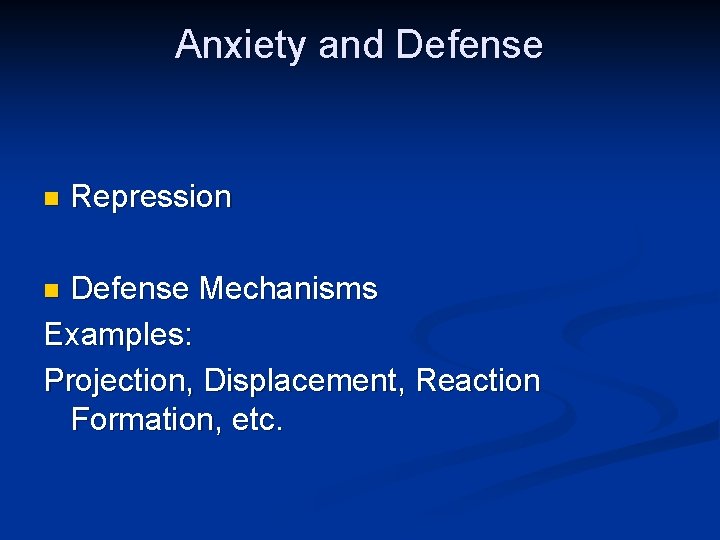
Anxiety and Defense n Repression Defense Mechanisms Examples: Projection, Displacement, Reaction Formation, etc. n
n Character Fixed patterns of conflict and defense.
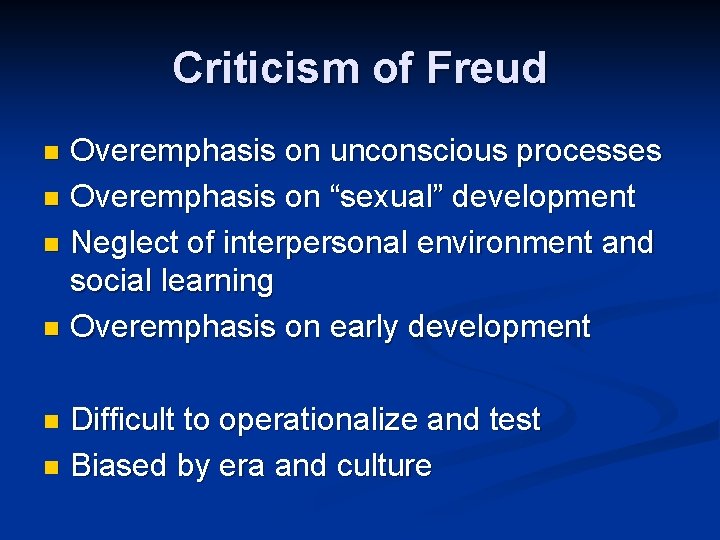
Criticism of Freud Overemphasis on unconscious processes n Overemphasis on “sexual” development n Neglect of interpersonal environment and social learning n Overemphasis on early development n Difficult to operationalize and test n Biased by era and culture n
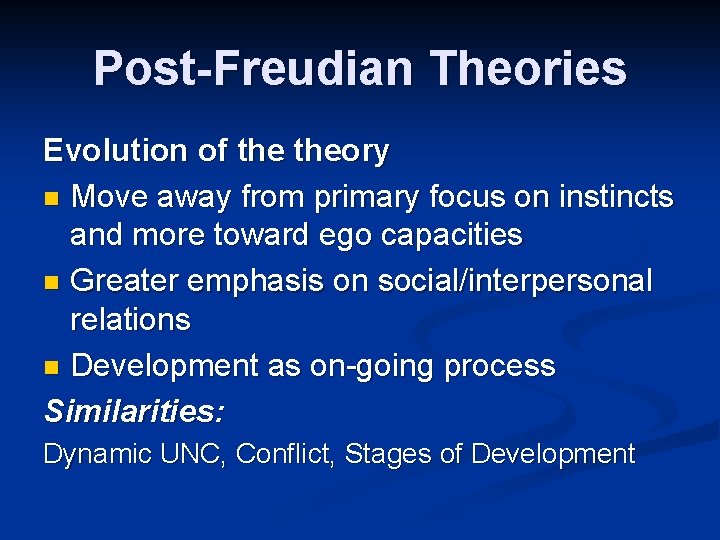
Post-Freudian Theories Evolution of theory n Move away from primary focus on instincts and more toward ego capacities n Greater emphasis on social/interpersonal relations n Development as on-going process Similarities: Dynamic UNC, Conflict, Stages of Development
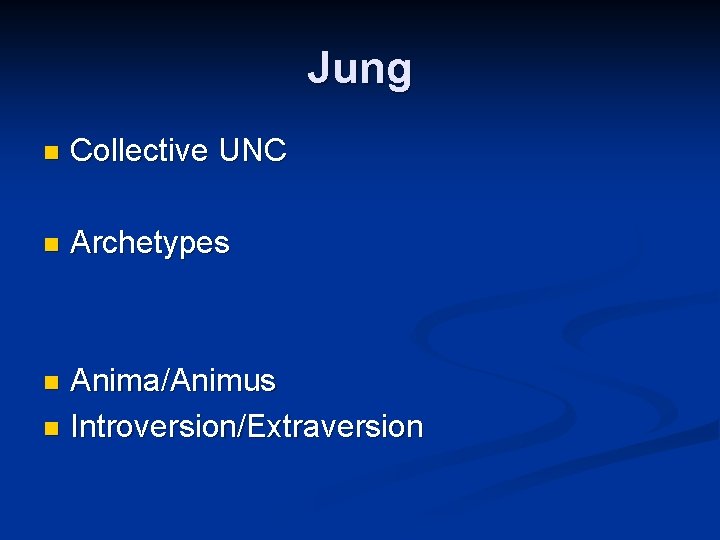
Jung n Collective UNC n Archetypes Anima/Animus n Introversion/Extraversion n
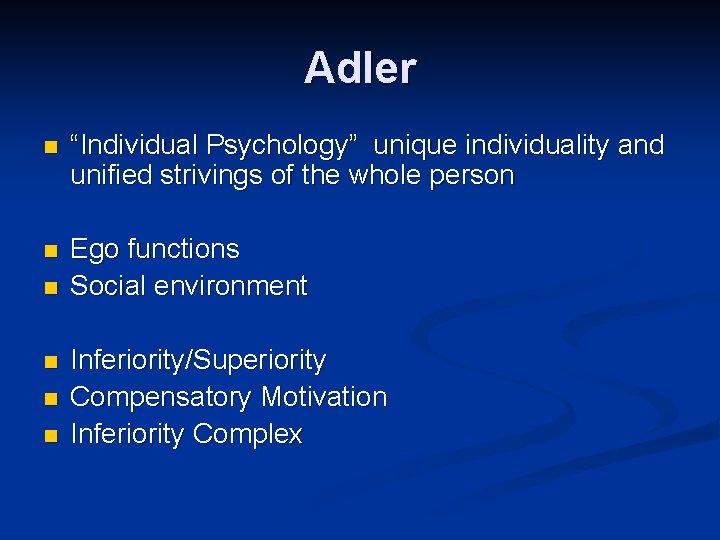
Adler n “Individual Psychology” unique individuality and unified strivings of the whole person n Ego functions Social environment n n Inferiority/Superiority Compensatory Motivation Inferiority Complex
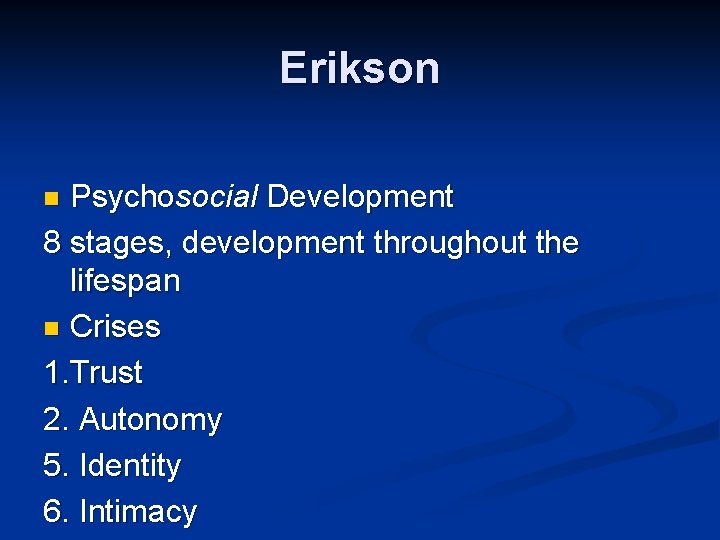
Erikson Psychosocial Development 8 stages, development throughout the lifespan n Crises 1. Trust 2. Autonomy 5. Identity 6. Intimacy n
OBJECT RELATIONS THEORY n Interpersonal relations and the development of the SELF Internalized “object” representations n Fundamental role of ATTACHMENT as primary need n
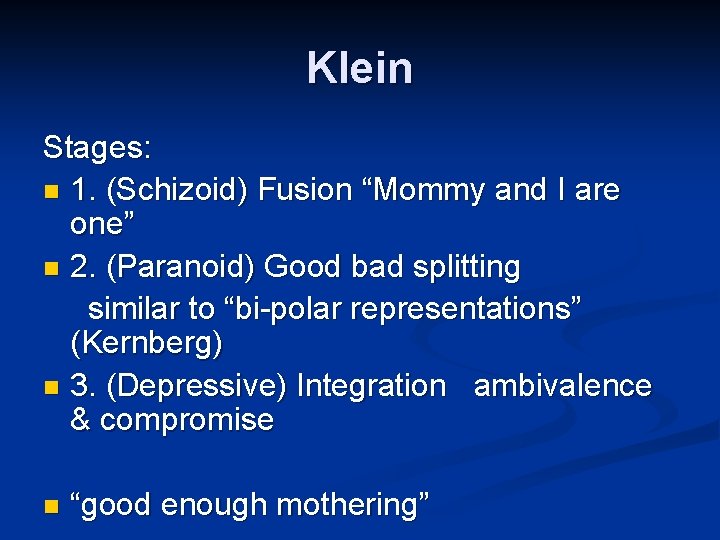
Klein Stages: n 1. (Schizoid) Fusion “Mommy and I are one” n 2. (Paranoid) Good bad splitting similar to “bi-polar representations” (Kernberg) n 3. (Depressive) Integration ambivalence & compromise n “good enough mothering”
Attachment n MAHLER, BOWLBY, AINSWORTH, KERNBERG etc. responsive parenting n secure/anxious/avoidant attachments n
Kohut n SELF PSYCHOLOGY Self-objects n Functions n Mirroring n
Horney n psychosocial and sociocultural factors n “womb envy”
ASSESSMENT n tip of the iceberg n ambiguous stimuli
Projective Testing n Rorschach TAT Murray’s Needs n n “higher order motives” Interrater/Interjudge reliability
Empirical evidence n Criticism superficial n isolated n artificial n
Empirical evidence 1. UNC processing Automaticity 2. UNC motivation Nisbet & Wilson (unconscious behavior) Silverman (subliminal activation) 3. Repression Mixed results Repressed Memory Debate
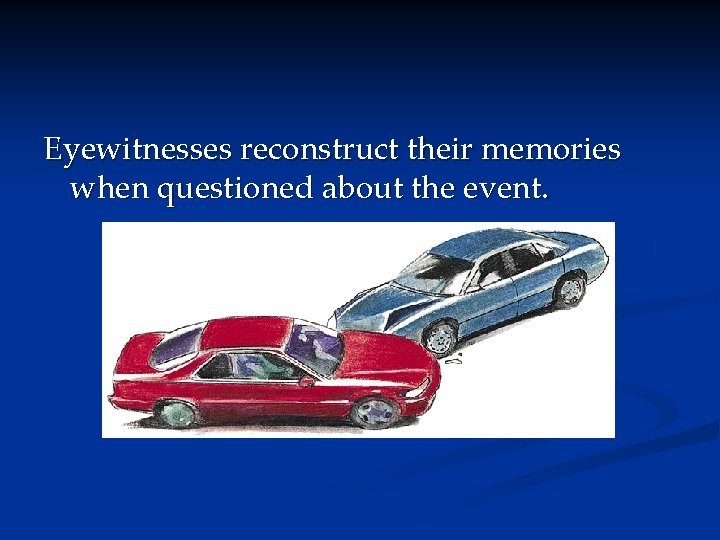
Eyewitnesses reconstruct their memories when questioned about the event.
Group A: How fast were the cars going when they hit each other? Group B: How fast were the cars going when they smashed into each other? A week later they were asked: Was there any broken glass? Group B (smashed into) reported more broken glass than Group A (hit).