PSY Southern Symposium on Solutions to End Youth
- Slides: 19
PSY Southern Symposium on Solutions to End Youth Homelessness: Mental Health and Trauma-Informed Care Linda Grabbe, Ph. D, FNP, PMHNP Nell Hodgson Woodruff School of Nursing Emory University Community Resiliency Model: Certified Teacher, Trauma Resource Institute Community Advanced Practice Nurses Clinic lgrabbe@emory. edu
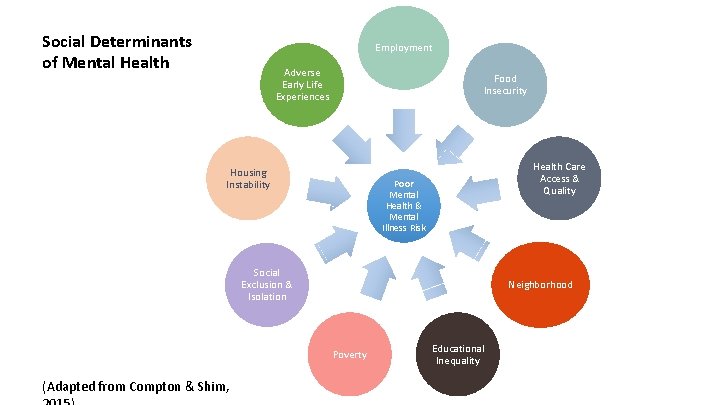
Social Determinants of Mental Health Employment Adverse Early Life Experiences Food Insecurity Housing Instability Health Care Access & Quality Poor Mental Health & Mental Illness Risk Social Exclusion & Isolation Neighborhood Poverty (Adapted from Compton & Shim, Educational Inequality
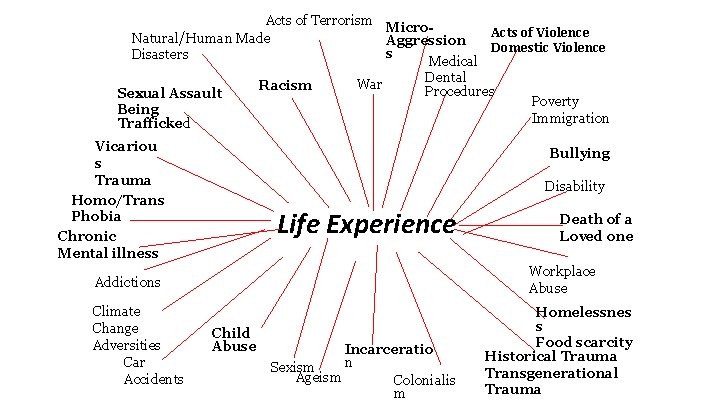
Acts of Terrorism Micro. Acts of Violence Natural/Human Made Aggression Domestic Violence s Disasters Medical Dental War Racism Procedures Sexual Assault Poverty Being Immigration Trafficked Vicariou s Trauma Homo/Trans Phobia Chronic Mental illness Bullying Disability Life Experience Workplace Abuse Addictions Climate Change Adversities Car Accidents Death of a Loved one Child Abuse Incarceratio n Sexism Ageism Colonialis m Homelessnes s Food scarcity Historical Trauma Transgenerational Trauma
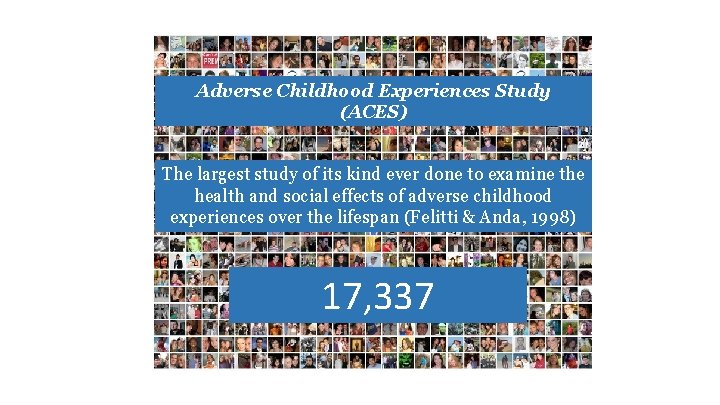
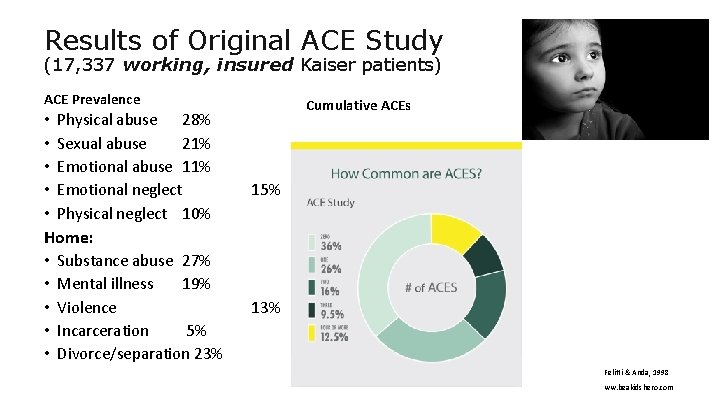
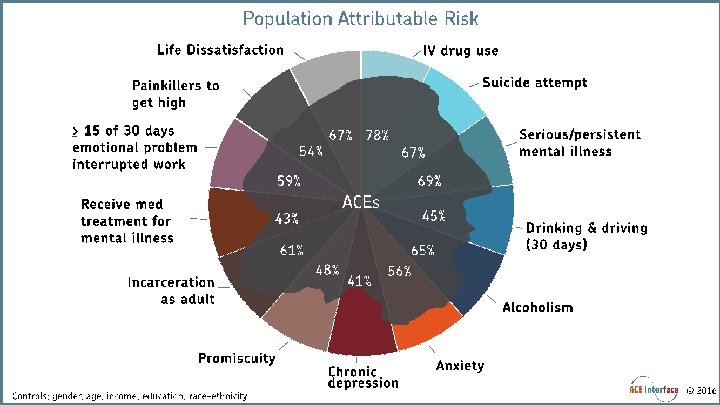
Adverse Childhood Experiences Study (ACES) The largest study of its kind ever done to examine the health and social effects of adverse childhood experiences over the lifespan (Felitti & Anda, 1998) 17, 337
Results of Original ACE Study (17, 337 working, insured Kaiser patients) ACE Prevalence • • • Physical abuse 28% Sexual abuse 21% Emotional abuse 11% Emotional neglect Physical neglect 10% Cumulative ACEs 15% Home: • • • Substance abuse 27% Mental illness 19% Violence Incarceration 5% Divorce/separation 23% 13% Felitti & Anda, 1998 ww. beakidshero. com
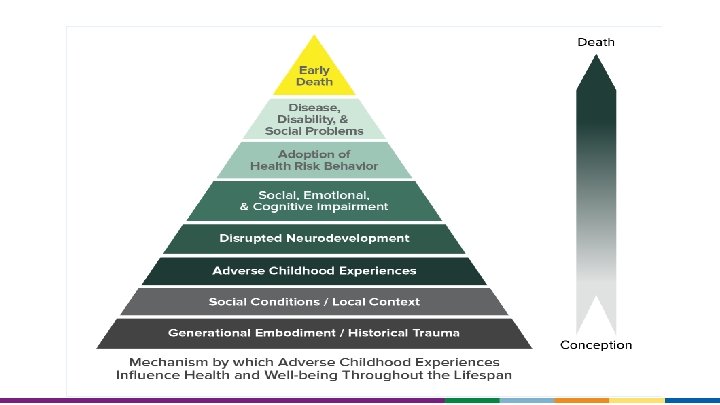
Mechanism by which Adverse Childhood Experiences Influence Health and Well-being Throughout the Lifespan
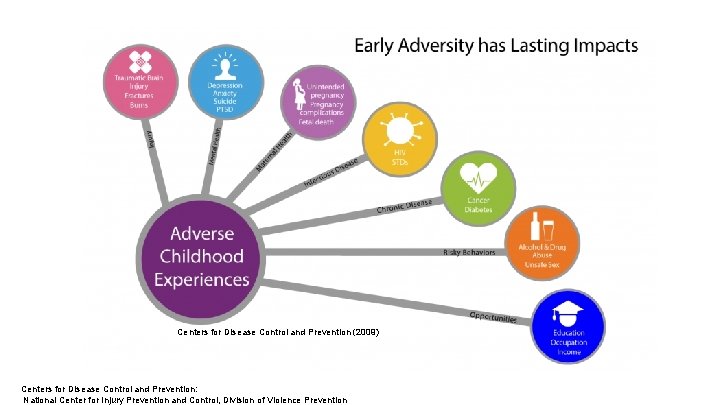
Centers for Disease Control and Prevention (2009) Centers for Disease Control and Prevention: National Center for Injury Prevention and Control, Division of Violence Prevention
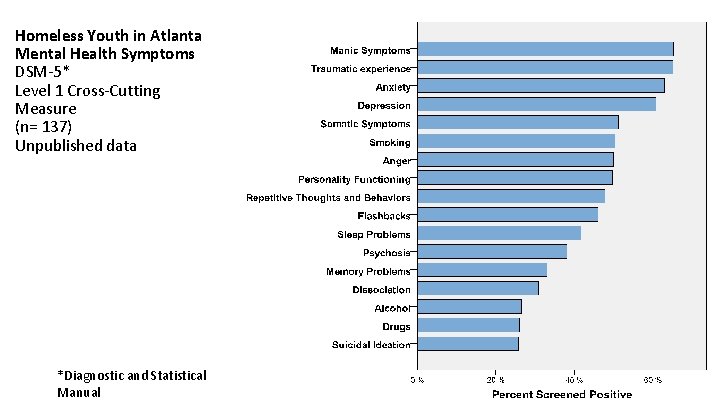
Homeless Youth in Atlanta Mental Health Symptoms DSM-5* Level 1 Cross-Cutting Measure (n= 137) Unpublished data *Diagnostic and Statistical Manual
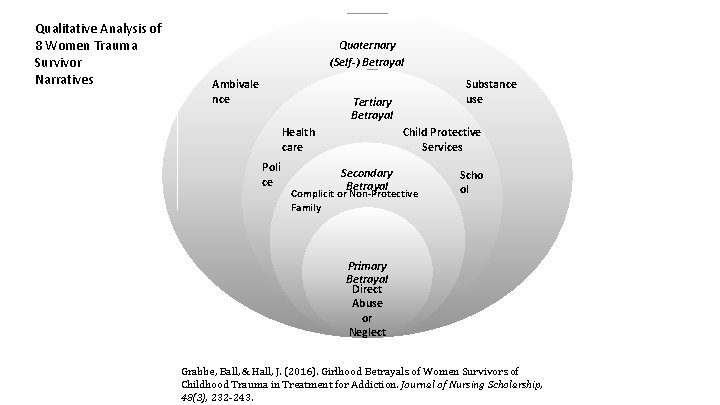
Qualitative Analysis of 8 Women Trauma Survivor Narratives Quaternary (Self-) Betrayal Ambivale nce Substance use Tertiary Betrayal Child Protective Services Health care Poli ce Secondary Betrayal Complicit or Non-Protective Family Scho ol Primary Betrayal Direct Abuse or Neglect Grabbe, Ball, & Hall, J. (2016). Girlhood Betrayals of Women Survivors of Childhood Trauma in Treatment for Addiction. Journal of Nursing Scholarship, 48(3), 232 -243.
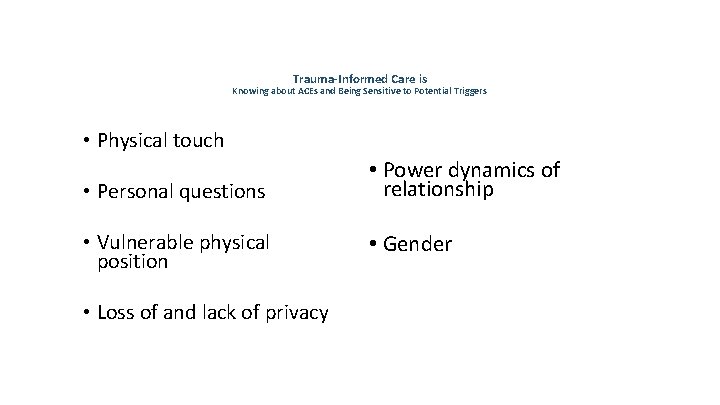
Trauma-Informed Care is Knowing about ACEs and Being Sensitive to Potential Triggers • Physical touch • Personal questions • Vulnerable physical position • Loss of and lack of privacy • Power dynamics of relationship • Gender
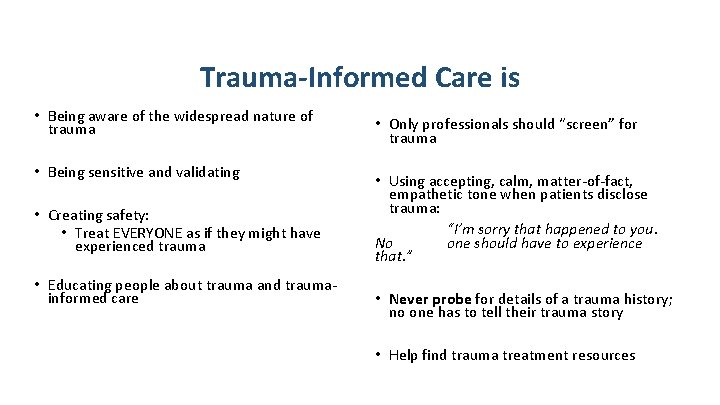
Trauma-Informed Care is • Being aware of the widespread nature of trauma • Being sensitive and validating • Creating safety: • Treat EVERYONE as if they might have experienced trauma • Educating people about trauma and traumainformed care • Only professionals should “screen” for trauma • Using accepting, calm, matter-of-fact, empathetic tone when patients disclose trauma: “I’m sorry that happened to you. No one should have to experience that. ” • Never probe for details of a trauma history; no one has to tell their trauma story • Help find trauma treatment resources
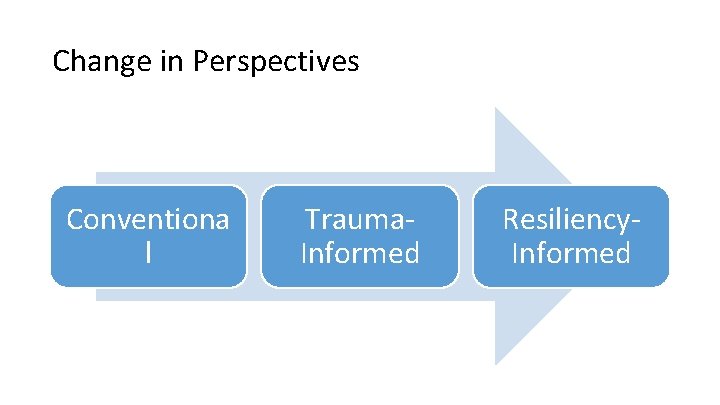
Change in Perspectives Conventiona l Trauma. Informed Resiliency. Informed
The Community Resiliency Model • A set of six wellness skills, can be used for self-care, restoring balance to mind, body and spirit • Body-based, uses language of sensation • Impacts autonomic nervous system www. traumaresourceinstitute. com
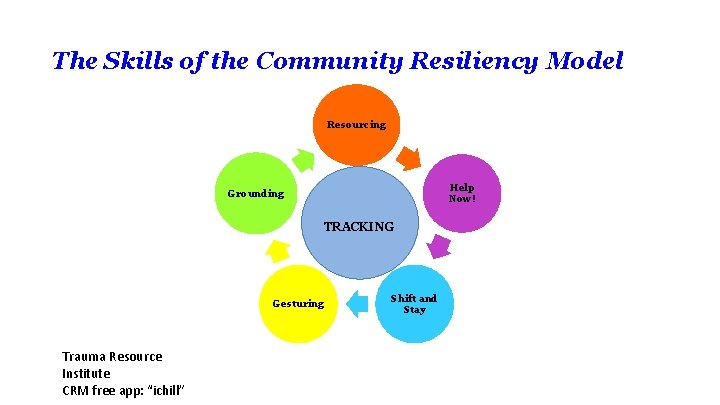
The Skills of the Community Resiliency Model Resourcing Help Now! Grounding TRACKING Gesturing Trauma Resource Institute CRM free app: “ichill” Shift and Stay
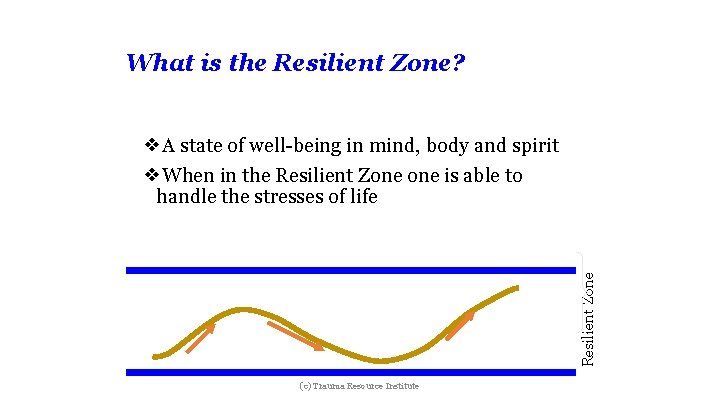
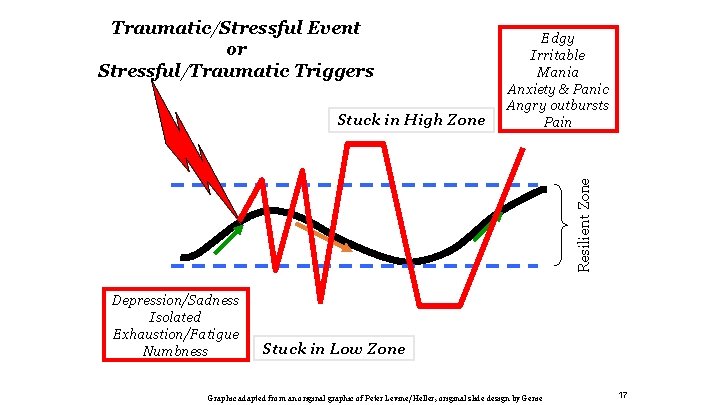
What is the Resilient Zone? Resilient Zone ❖A state of well-being in mind, body and spirit ❖When in the Resilient Zone is able to handle the stresses of life (c) Trauma Resource Institute
Traumatic/Stressful Event or Stressful/Traumatic Triggers Resilient Zone Stuck in High Zone Edgy Irritable Mania Anxiety & Panic Angry outbursts Pain Depression/Sadness Isolated Exhaustion/Fatigue Numbness Stuck in Low Zone Graphic adapted from an original graphic of Peter Levine/Heller, original slide design by Genie 17
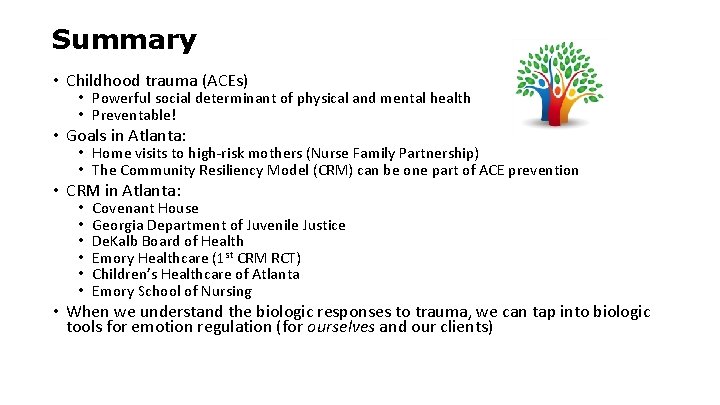
Summary • Childhood trauma (ACEs) • Powerful social determinant of physical and mental health • Preventable! • Goals in Atlanta: • Home visits to high-risk mothers (Nurse Family Partnership) • The Community Resiliency Model (CRM) can be one part of ACE prevention • CRM in Atlanta: • • • Covenant House Georgia Department of Juvenile Justice De. Kalb Board of Health Emory Healthcare (1 st CRM RCT) Children’s Healthcare of Atlanta Emory School of Nursing • When we understand the biologic responses to trauma, we can tap into biologic tools for emotion regulation (for ourselves and our clients)
Additional resources • CDC https: //www. cdc. gov/violenceprevention/acestudy/ACE_graphics. html • To get your own ace score http: //www. npr. org/sections/health-shots/2015/03/02/387007941/take-the-ace-quiz-and-learn-what-it-does-and-doesnt-mean • Watch Nadine Burke Harris Ted Med • https: //www. google. com/search? q=nadine+burke+harris+ted&oq=nadine+burke&aqs=chrome. 2. 0 j 69 i 57 j 0 l 4. 8199 j 0 j 8&sourceid=chrome&ie=UTF-8 • Watch Stan Sonu Ted Med; https: //www. youtube. com/watch? v=QIlh 5 m 6 r. S 2 s • Van der Kolk, B. (2014). The body keeps the score: Brain, mind, and body in the healing of trauma. New York: Penguin Publishing Group. Or • https: //www. youtube. com/watch? v=GWEjn. Gs. LN-0 • Miller-Karas, E. (2015). Building resilience to trauma: The trauma and community resiliency models. New York: Routledge, Taylor & Francis Group • Trailer for movie: Resilience https: //www. youtube. com/watch? v=We 2 Bqmj. HN 0 k • Dan Siegal’s Hand Brain Model https: //www. youtube. com/watch? v=q. FTlj. Lo 1 b. K 8 • Georgia Crisis Access Line 1 800 715 -4225 For youth: My. GCAL app. • Treatment Locator https: //findtreatment. samhsa. gov/