PREDATOR Predictive False Sharing Detection Tongping Liu Chen





- Slides: 36
PREDATOR: Predictive False Sharing Detection Tongping Liu*, Chen Tian, Ziang Hu, Emery Berger* *University of Massachusetts Amherst Huawei US Research Center UNIVERSITY OF MASSACHUSETTS, AMHERST • School of Computer Science 1
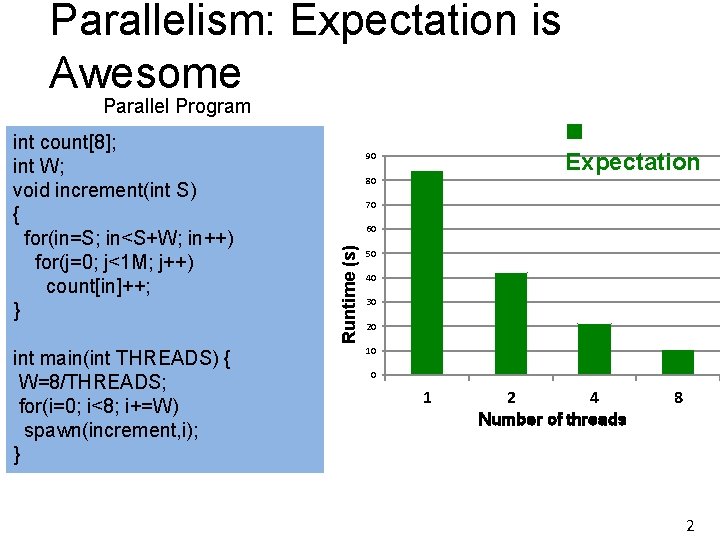
Parallelism: Expectation is Awesome Parallel Program int main(int THREADS) { W=8/THREADS; for(i=0; i<8; i+=W) spawn(increment, i); } Expectation 90 80 70 60 Runtime (s) int count[8]; int W; void increment(int S) { for(in=S; in<S+W; in++) for(j=0; j<1 M; j++) count[in]++; } 50 40 30 20 10 0 1 2 4 Number of threads 8 2
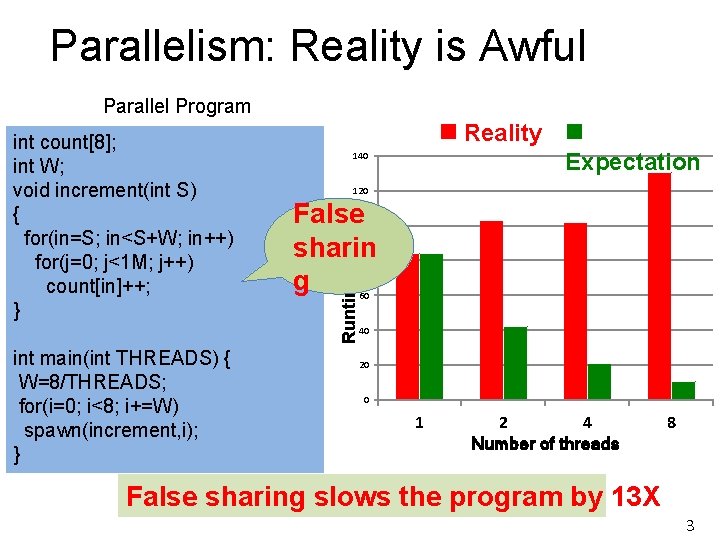
Parallelism: Reality is Awful Parallel Program Reality Expectation 140 120 False sharin g 100 Runtime (s) int count[8]; int W; void increment(int S) { for(in=S; in<S+W; in++) for(j=0; j<1 M; j++) count[in]++; } 80 60 40 int main(int THREADS) { W=8/THREADS; for(i=0; i<8; i+=W) spawn(increment, i); } 20 0 1 2 4 Number of threads 8 False sharing slows the program by 13 X 3
False Sharing in Real Applications False sharing slows My. SQL by 50% 4
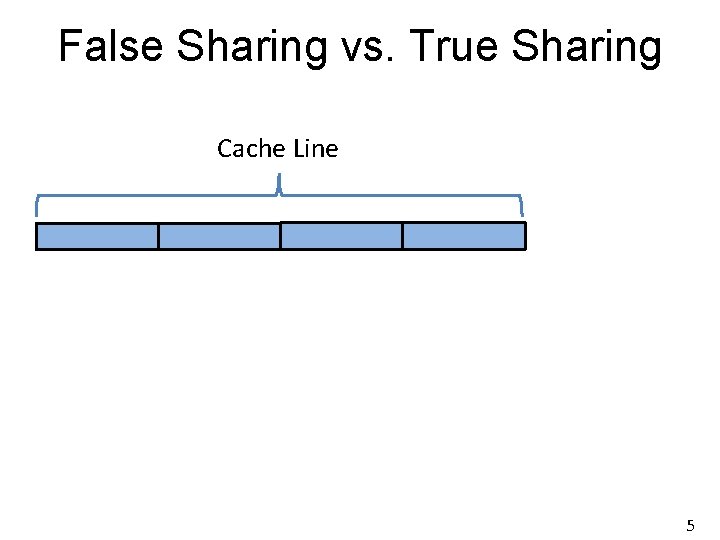
False Sharing vs. True Sharing Cache Line 5
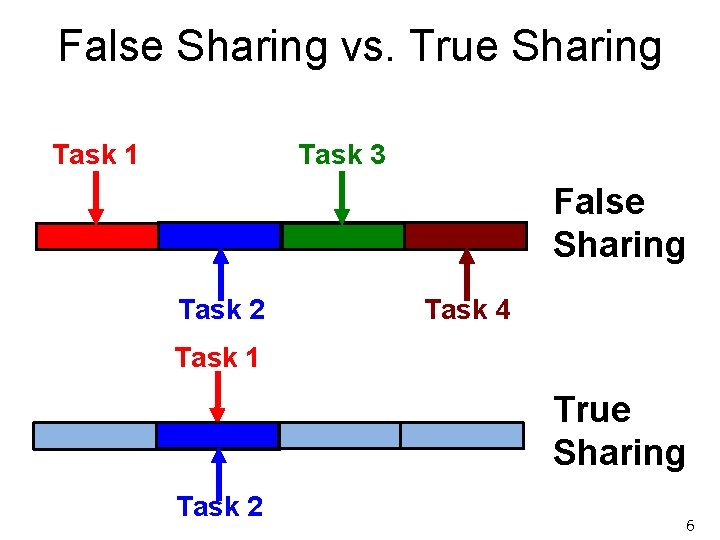
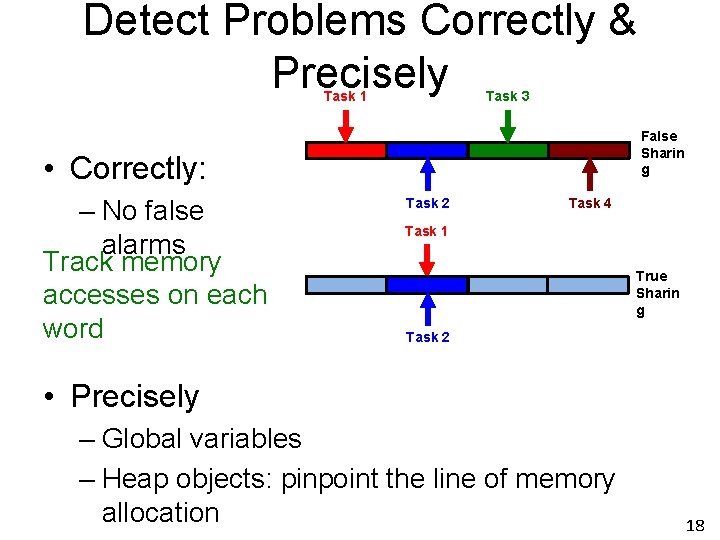
False Sharing vs. True Sharing Task 1 Task 3 False Sharing Task 2 Task 4 Task 1 True Sharing Task 2 6
Resource Contention at Cache Line Level 7
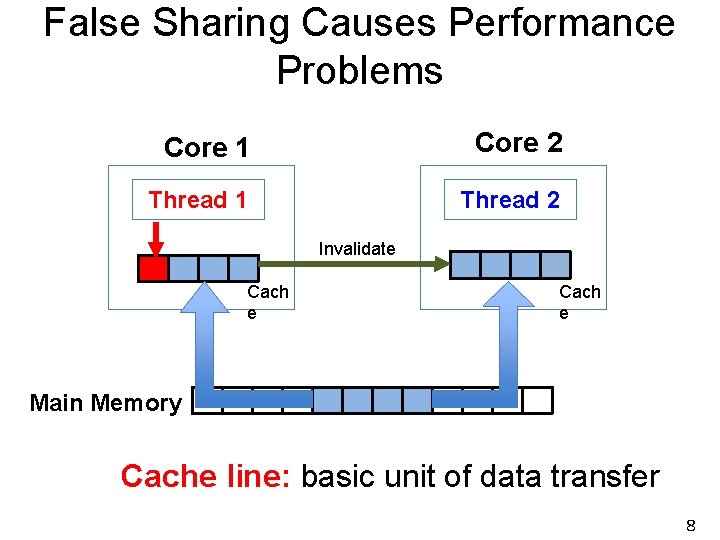
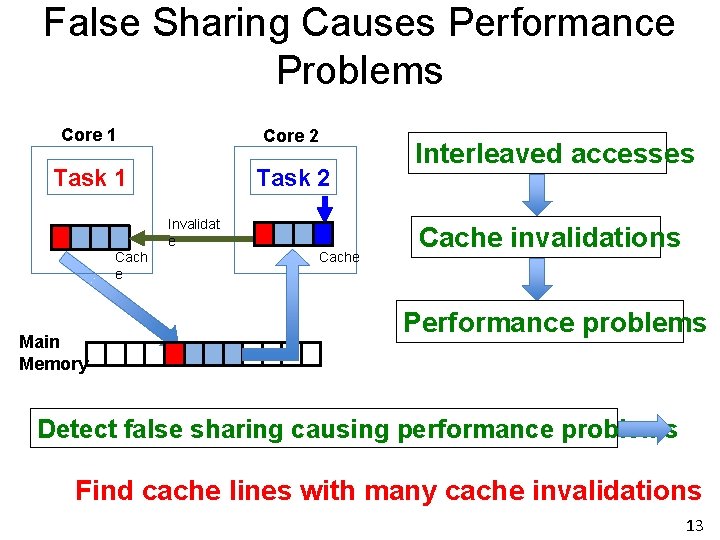
False Sharing Causes Performance Problems Core 1 Core 2 Thread 1 Thread 2 Invalidate Cach e Main Memory Cache line: basic unit of data transfer 8
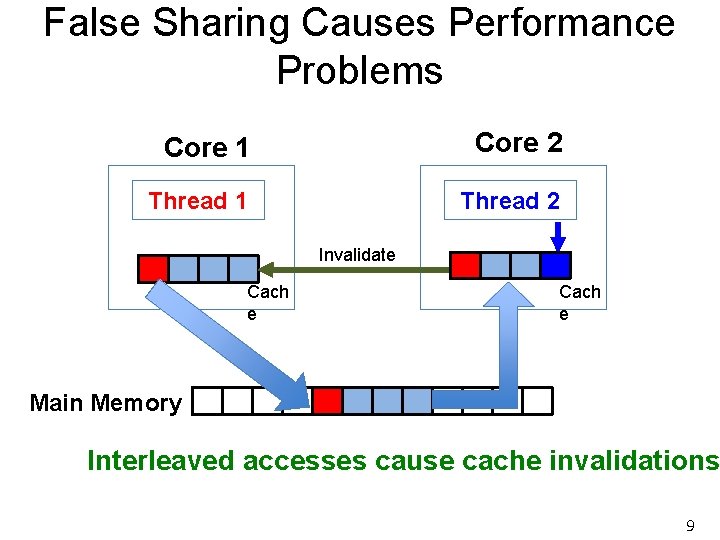
False Sharing Causes Performance Problems Core 1 Core 2 Thread 1 Thread 2 Invalidate Cach e Main Memory Interleaved accesses cause cache invalidations 9
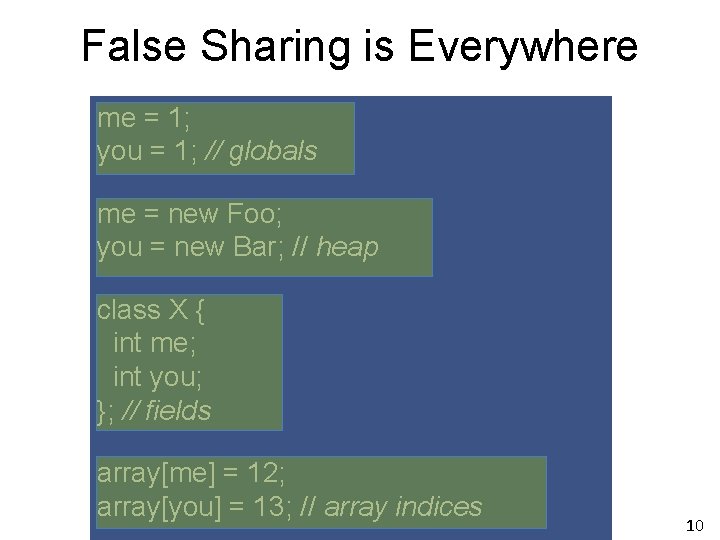
False Sharing is Everywhere me = 1; you = 1; // globals me = new Foo; you = new Bar; // heap class X { int me; int you; }; // fields array[me] = 12; array[you] = 13; // array indices 10
False Sharing is Hard to Diagnose Multiple experts worked together to diagnose My. SQL scalability issue (1. 5 M LOC) 11
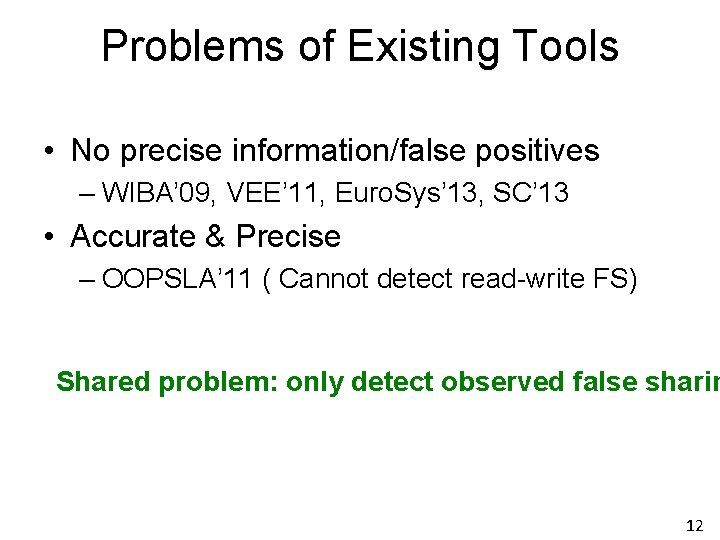
Problems of Existing Tools • No precise information/false positives – WIBA’ 09, VEE’ 11, Euro. Sys’ 13, SC’ 13 • Accurate & Precise – OOPSLA’ 11 ( Cannot detect read-write FS) Shared problem: only detect observed false sharin 12
False Sharing Causes Performance Problems Core 1 Core 2 Task 1 Task 2 Invalidat e Cach e Main Memory Cache Interleaved accesses Cache invalidations Performance problems Detect false sharing causing performance problems Find cache lines with many cache invalidations 13
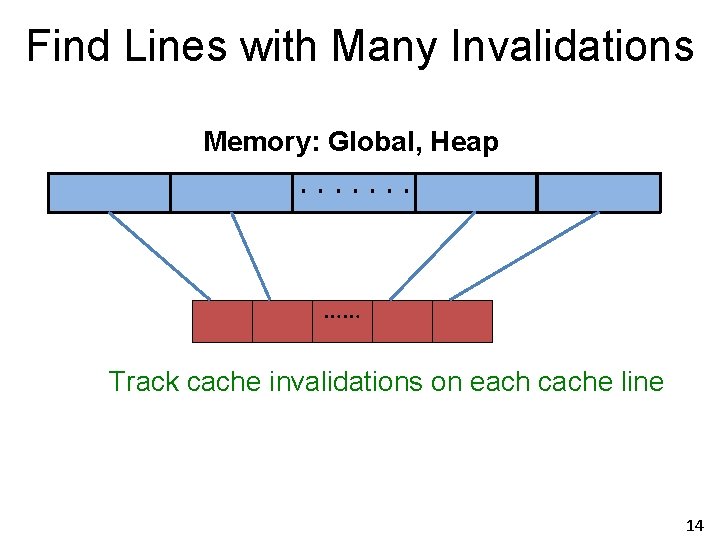
Find Lines with Many Invalidations Memory: Global, Heap . . . . …… Track cache invalidations on each cache line 14
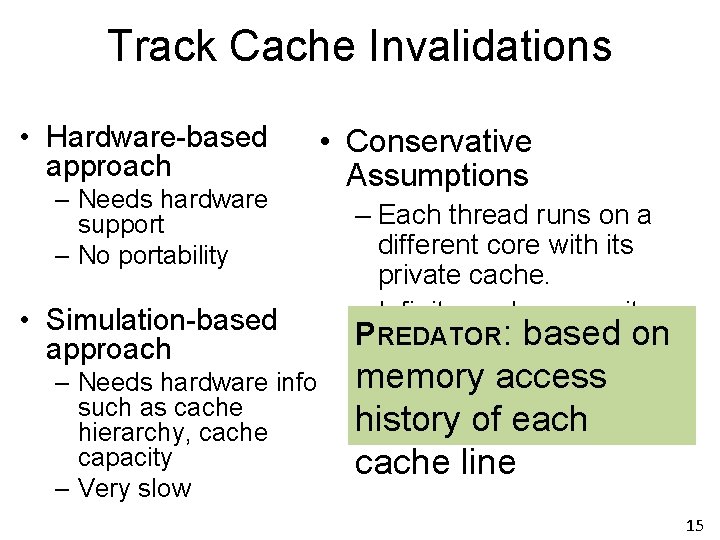
Track Cache Invalidations • Hardware-based approach – Needs hardware support – No portability • Simulation-based approach – Needs hardware info such as cache hierarchy, cache capacity – Very slow • Conservative Assumptions – Each thread runs on a different core with its private cache. – Infinite cache capacity. PREDATOR: based on memory access history of each cache line 15
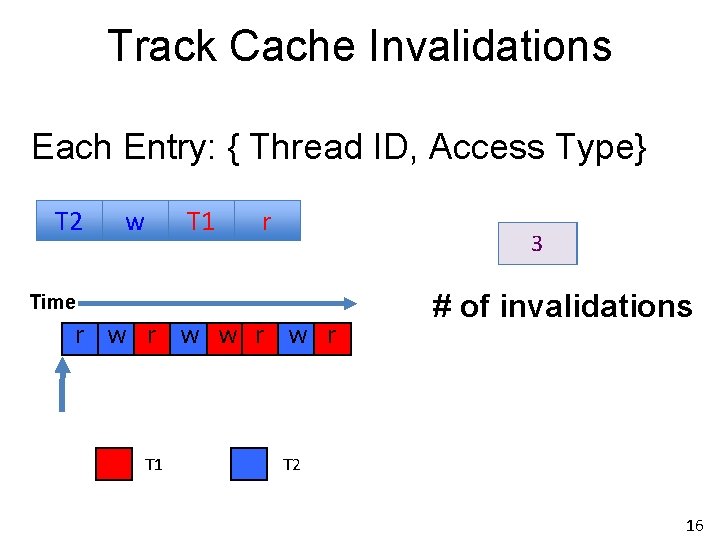
Track Cache Invalidations Each Entry: { Thread ID, Access Type} T 1 0 T 2 0 r w T 1 0 0 r 31 0 2 Time r w r T 1 w w r # of invalidations T 2 16
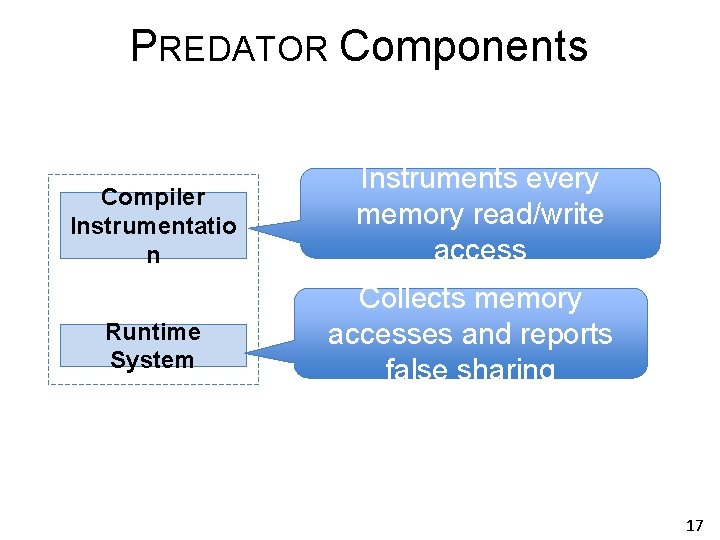
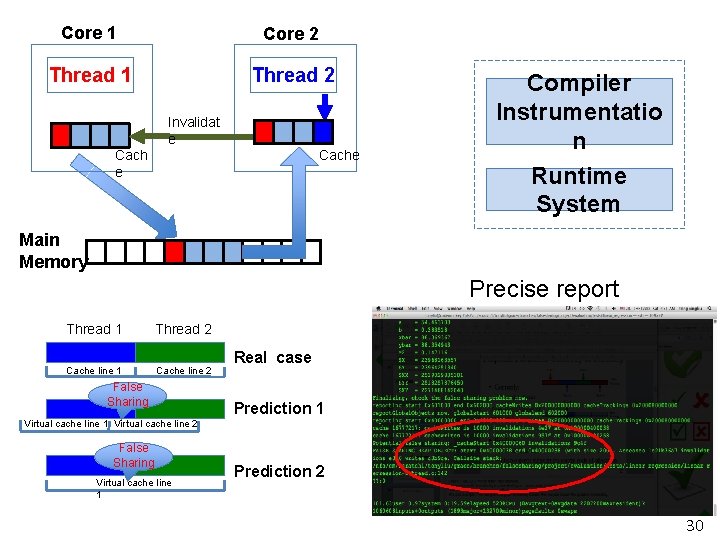
PREDATOR Components Compiler Instrumentatio n Runtime System Instruments every memory read/write access Collects memory accesses and reports false sharing 17
Detect Problems Correctly & Precisely Task 1 Task 3 False Sharin g • Correctly: – No false alarms Track memory accesses on each word Task 2 Task 4 Task 1 True Sharin g Task 2 • Precisely – Global variables – Heap objects: pinpoint the line of memory allocation 18
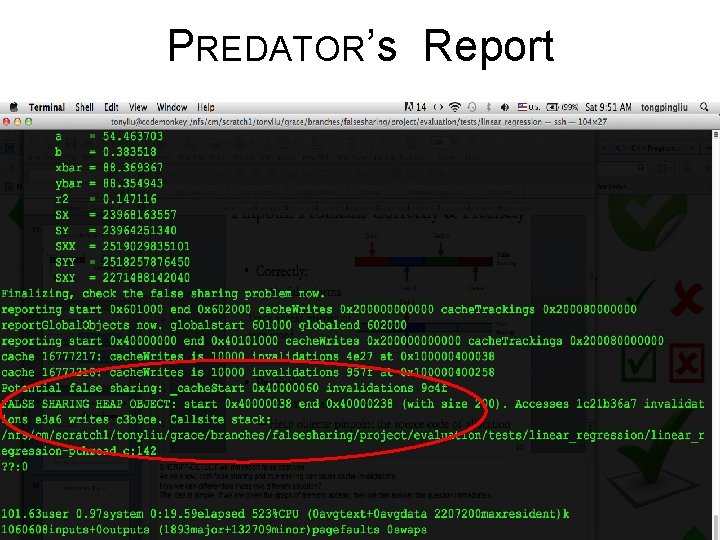
PREDATOR’s Report 19
Why do we need prediction? 20
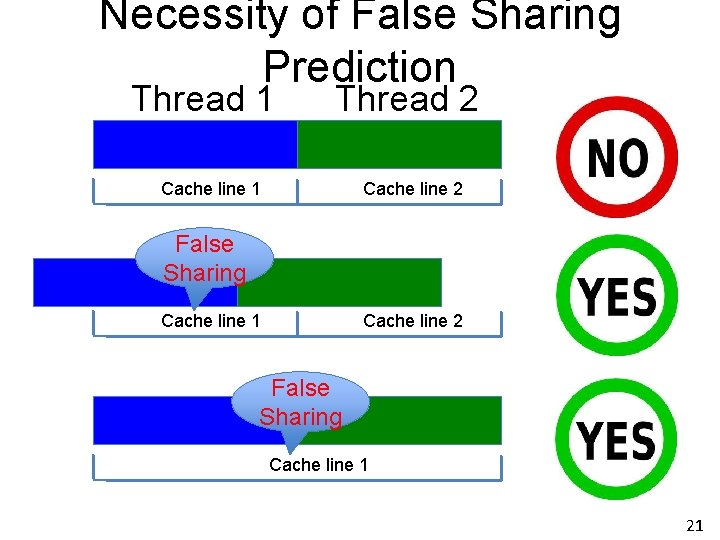
Necessity of False Sharing Prediction Thread 1 Thread 2 Cache line 1 Cache line 2 False Sharing Cache line 1 21
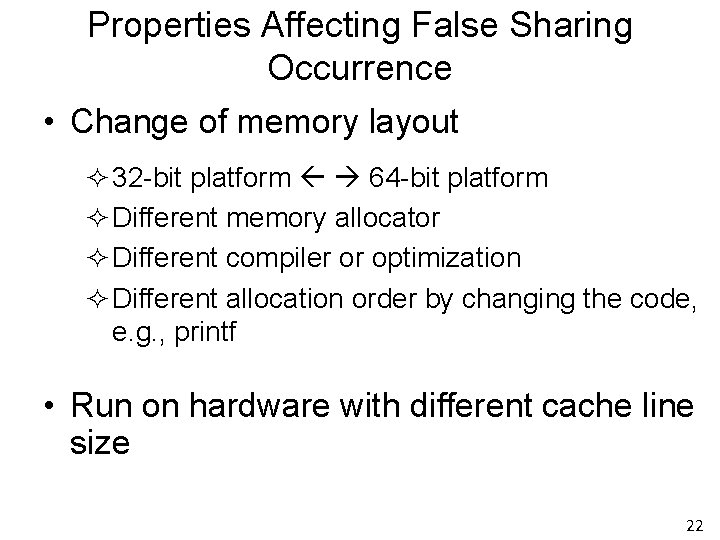
Properties Affecting False Sharing Occurrence • Change of memory layout ² 32 -bit platform 64 -bit platform ² Different memory allocator ² Different compiler or optimization ² Different allocation order by changing the code, e. g. , printf • Run on hardware with different cache line size 22
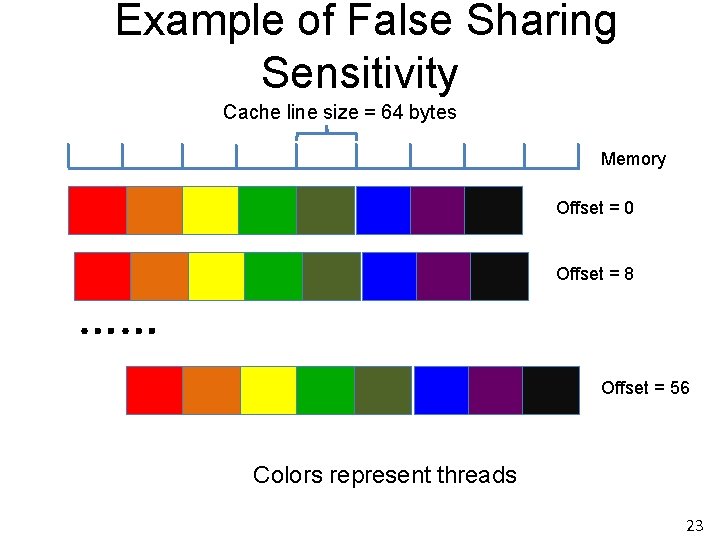
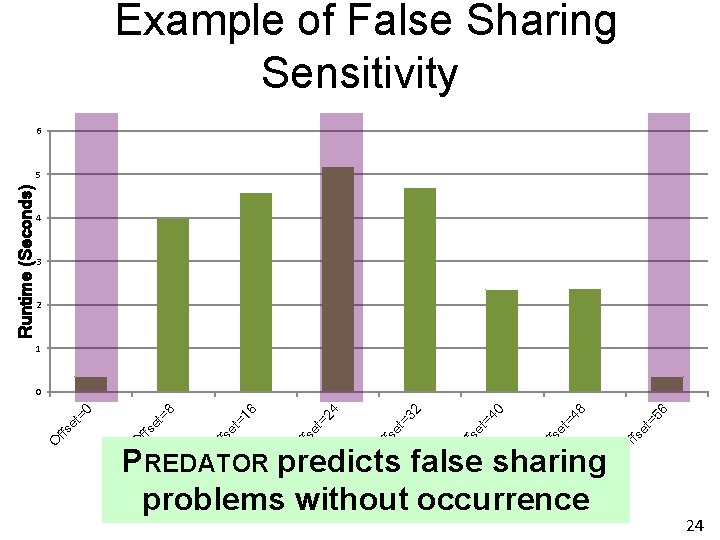
Example of False Sharing Sensitivity Cache line size = 64 bytes Memory Offset = 0 Offset = 8 …… Offset = 56 Colors represent threads 23
Example of False Sharing Sensitivity 6 4 3 2 1 O 6 =5 ffs et O O PREDATOR predicts false sharing problems without occurrence O ffs et =4 =4 8 0 2 ffs et =3 4 6 =1 ffs et et ffs O ffs et =8 =0 0 O Runtime (Seconds) 5 24
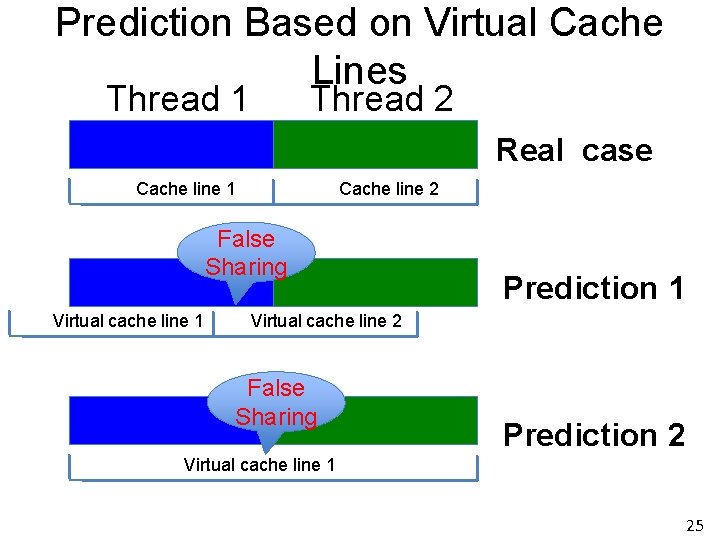
Prediction Based on Virtual Cache Lines Thread 1 Thread 2 Real case Cache line 1 Cache line 2 False Sharing Virtual cache line 1 Prediction 1 Virtual cache line 2 False Sharing Prediction 2 Virtual cache line 1 25
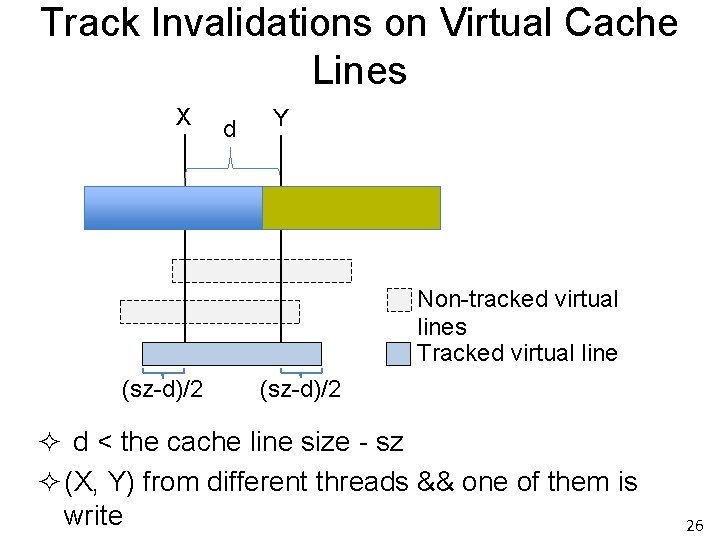
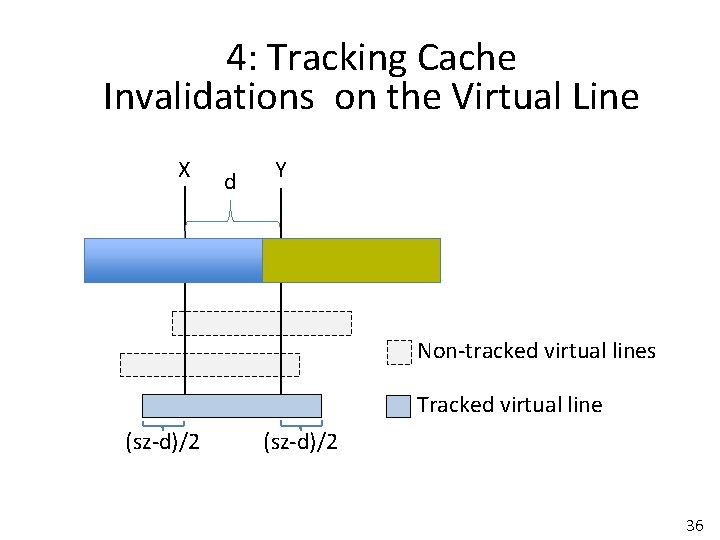
Track Invalidations on Virtual Cache Lines X d Y Non-tracked virtual lines Tracked virtual line (sz-d)/2 ² d < the cache line size - sz ² (X, Y) from different threads && one of them is write 26
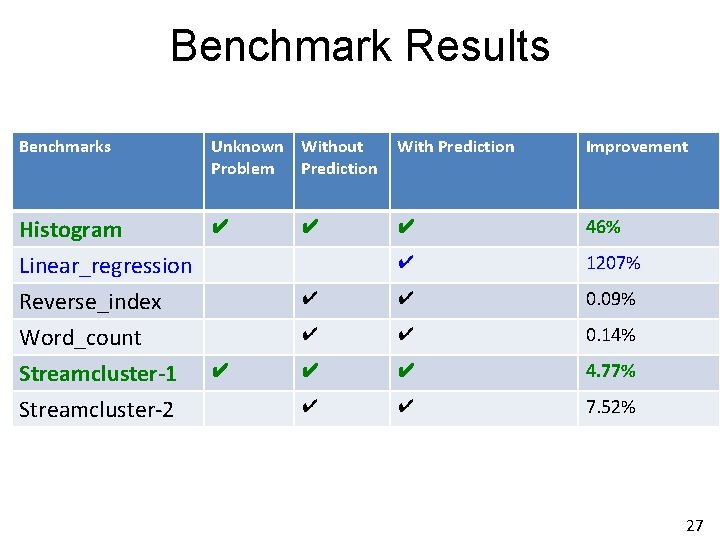
Benchmark Results Benchmarks Unknown Without Problem Prediction With Prediction Improvement Histogram Linear_regression ✔ ✔ 46% ✔ 1207% ✔ ✔ 0. 09% ✔ ✔ 0. 14% ✔ ✔ 4. 77% ✔ ✔ 7. 52% Reverse_index Word_count Streamcluster-1 Streamcluster-2 ✔ ✔ 27
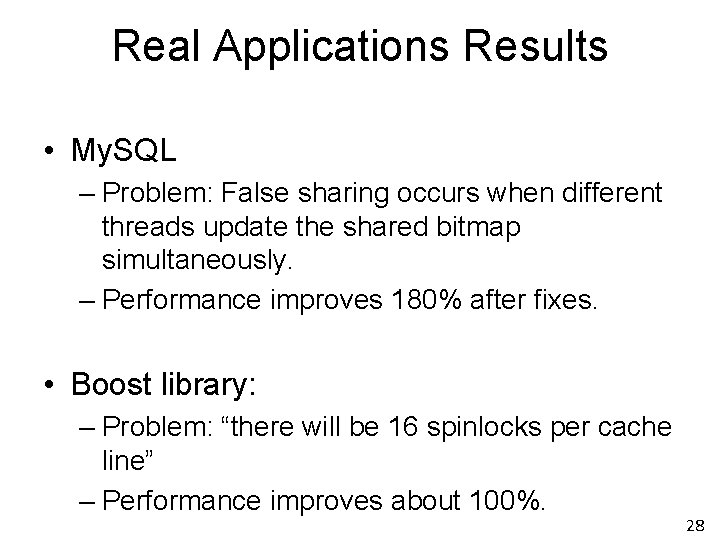
Real Applications Results • My. SQL – Problem: False sharing occurs when different threads update the shared bitmap simultaneously. – Performance improves 180% after fixes. • Boost library: – Problem: “there will be 16 spinlocks per cache line” – Performance improves about 100%. 28
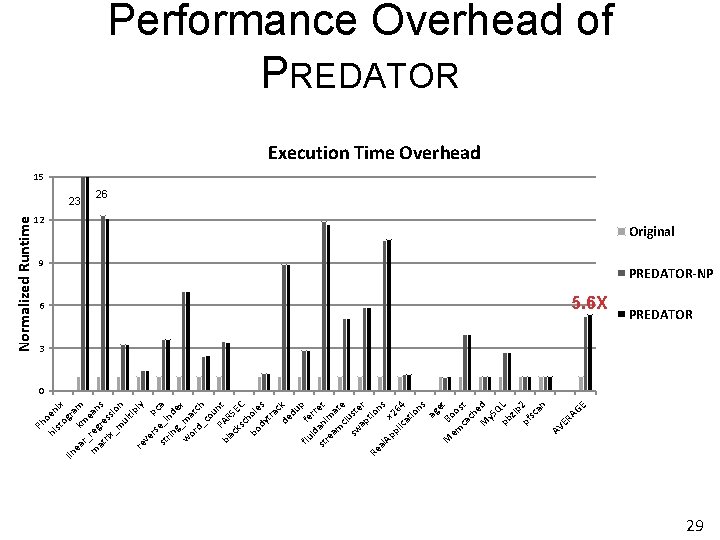
E 6 AG Normalized Runtime 23 AV ER Ph hi oen st ix og lin r ea k am m r_ m reg ean at re s rix ss _m ion ul tip ly re ve rs pc st e_i a rin nd g e w _ma x or t d_ ch co un bl PAR t ac S ks EC c bo hole dy s tra c de k du flu fe p id rr st ani et re m am at cl e sw uste ap r tio Re n al Ap x s pl 26 ica 4 tio ns ag e M Bo t em o ca st ch e M d y. S Q pb L zip pf 2 sc an Performance Overhead of PREDATOR Execution Time Overhead 15 26 12 Original 9 PREDATOR-NP 5. 6 X PREDATOR 3 0 29
Core 1 Core 2 Thread 1 Thread 2 Invalidat e Cache Compiler Instrumentatio n Runtime System Main Memory Precise report Thread 1 Thread 2 Cache line 1 Cache line 2 False Sharing Real case Prediction 1 Virtual cache line 2 False Sharing Virtual cache line 1 Prediction 2 30
31
False Sharing is Hard to Diagnose Multiple experts worked together to diagnose My. SQL scalability issue (1. 5 M LOC) 32
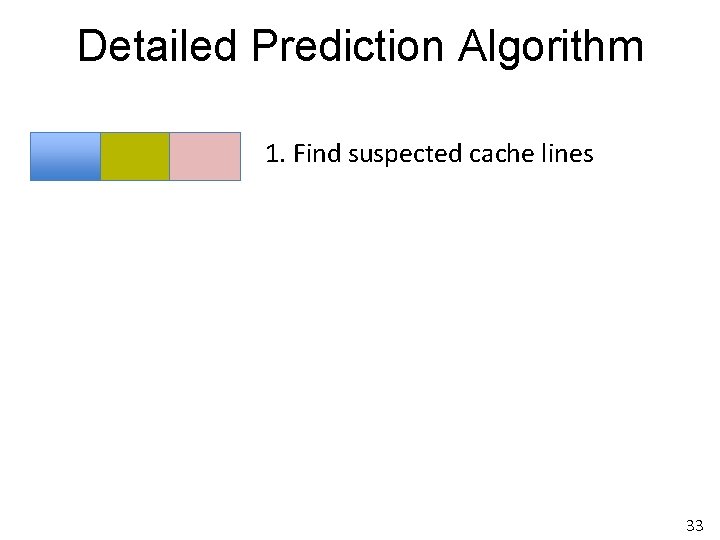
Detailed Prediction Algorithm 1. Find suspected cache lines 33
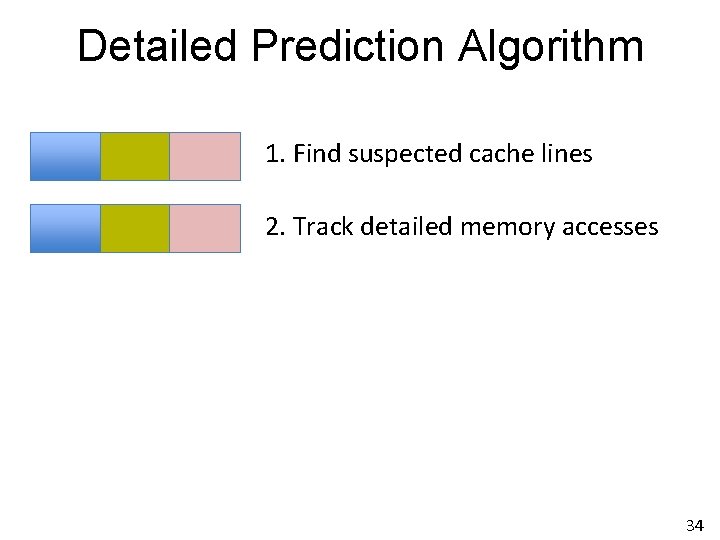
Detailed Prediction Algorithm 1. Find suspected cache lines 2. Track detailed memory accesses 34
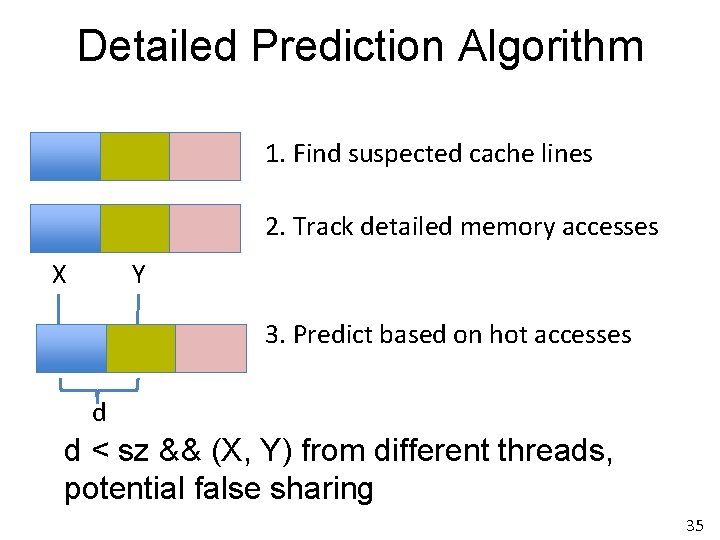
Detailed Prediction Algorithm 1. Find suspected cache lines 2. Track detailed memory accesses X Y 3. Predict based on hot accesses d d < sz && (X, Y) from different threads, potential false sharing 35
4: Tracking Cache Invalidations on the Virtual Line X d Y Non-tracked virtual lines Tracked virtual line (sz-d)/2 36