Population Genetics and Speciation 02 05 08 02
- Slides: 17
Population Genetics and Speciation 02. 05. 08 / 02. 06. 08
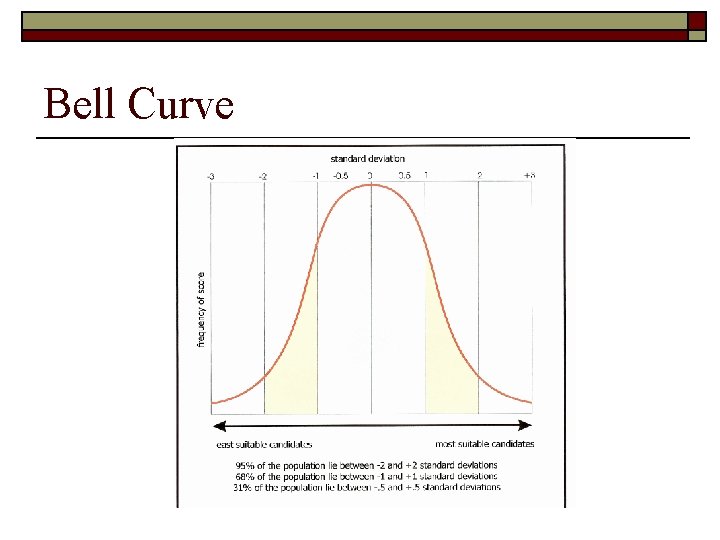
Genetic Equilibrium o o Population biologists study many different traits in populations, such as size and color Causes of variation: n n Traits vary and can be mapped along a bell curve, which shows that most individuals have average traits, whereas a few individuals have extreme traits. Variations in genotype arise by mutation, recombination, and the random pairing of gametes.
Bell Curve
Genetic Equilibrium o o o The total genetic information available in a population is called the gene pool. Allele – one of the alternative forms of a gene that governs a certain characteristic Allele frequency is determined by dividing the total number of a certain allele by the total number of alleles of all types in the population.
Genetic Equilibrium o o Phenotype – a detectable characteristic that results from genotype and environment Phenotype frequency is equal to the number of individuals with a particular phenotype divided by the total number of individuals in the population.
Genetic Equilibrium o Hardy-Weinberg genetic equilibrium is a theoretical model of a population in which no evolution occurs and the gene pool of the population is stable. n o Serves as the null hypothesis Allele frequencies in the gene pool do not change unless acted upon by certain forces.
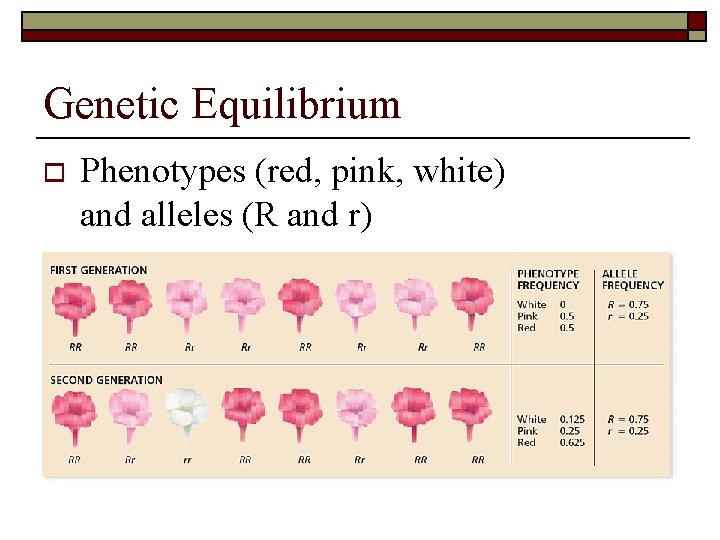
Genetic Equilibrium o Phenotypes (red, pink, white) and alleles (R and r)
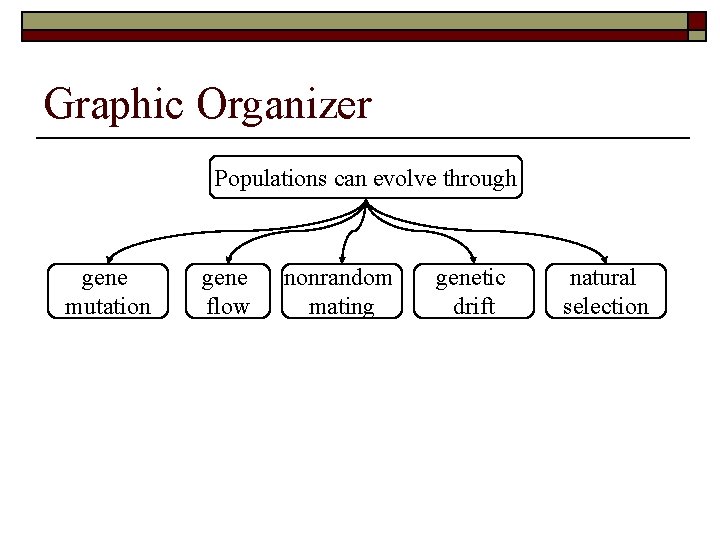
Disruption of Genetic Equilibrium o o Evolution may take place when populations are subject to genetic mutations, gene flow, genetic drift, nonrandom mating, or natural selection. Mutations are changes in the DNA. n There an estimated 1. 6 allele mutations created with each person
Disruption of Genetic Equilibrium o Gene Flow is the process of genes moving from one population to another n o Emigration and immigration cause gene flow between populations and can thus affect gene frequencies. Genetic drift is a change in allele frequencies due to random events. n operates most strongly in small populations.
Disruption of Genetic Equilibrium o Nonrandom mating n o Mating is nonrandom whenever individuals may choose partners. There are two types of selection: n n sexual selection natural selection
Disruption of Genetic Equilibrium o Sexual selection occurs when certain traits increase an individual’s success at mating. n Sexual selection explains the development of traits that improve reproductive success but that may harm the individual.
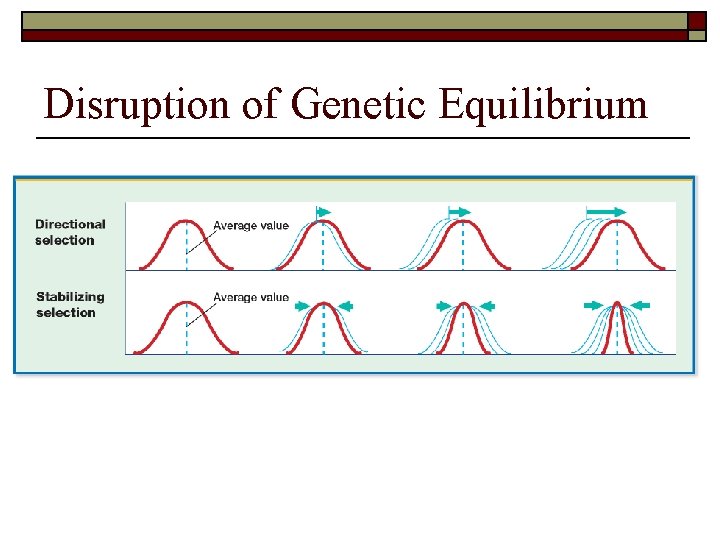
Disruption of Genetic Equilibrium o Natural selection can influence evolution in one of three general patterns. n n n Stabilizing selection favors the formation of average traits. Disruptive selection favors extreme traits rather than average traits. Directional selection favors the formation of more-extreme traits.
Disruption of Genetic Equilibrium
Graphic Organizer Populations can evolve through gene mutation gene flow nonrandom mating genetic drift natural selection
Formation of Species o According to the biological species concept, a species is a population of organisms that can successfully interbreed but cannot breed with other groups. n n Donkeys and horses can produce mules, but mules are sterile Fitness is measured in grandchildren
Formation of Species o Geographic isolation results from the separation of population subgroups by geographic barriers. n o Geographic isolation may lead to allopatric speciation. o allo (different) and patric (patriot) Reproductive isolation results from the separation of population subgroups by barriers to successful breeding. n Reproductive isolation within the same geographic area is known as sympatric speciation. o sym (together) and patric (patriot)
Formation of Species o o In the gradual model of speciation (gradualism), species undergo small changes at a constant rate. Under punctuated equilibrium, new species arise abruptly, differ greatly from their ancestors, and then change little over long periods.