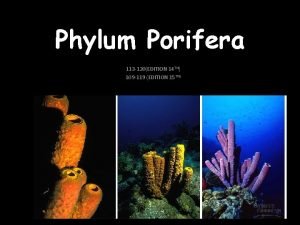
Phylum Porifera Dr Shivani Gupta PGGCG11 Chandigarh 1



- Slides: 22
Phylum Porifera Dr. Shivani Gupta, PGGCG-11, Chandigarh 1
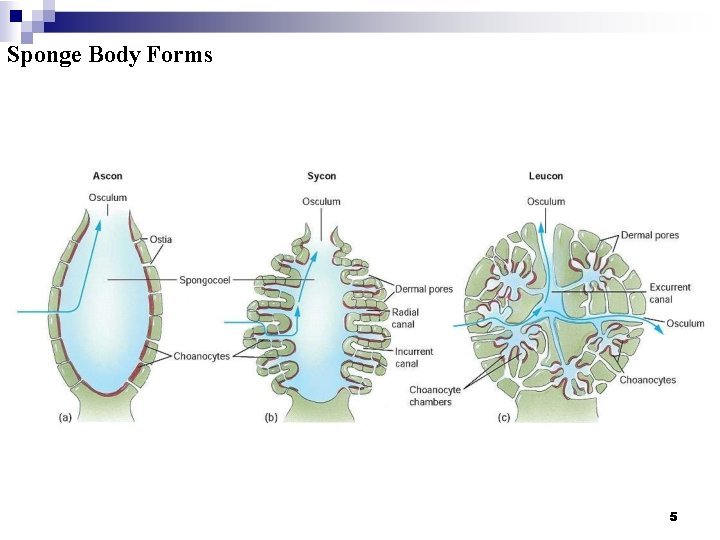
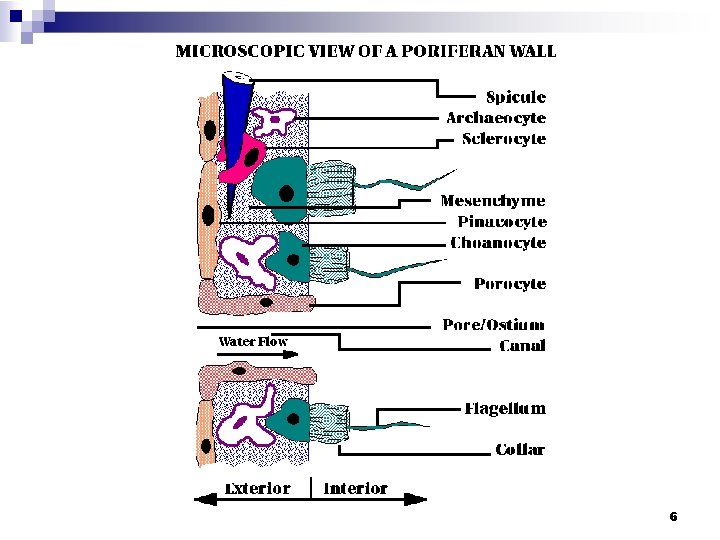
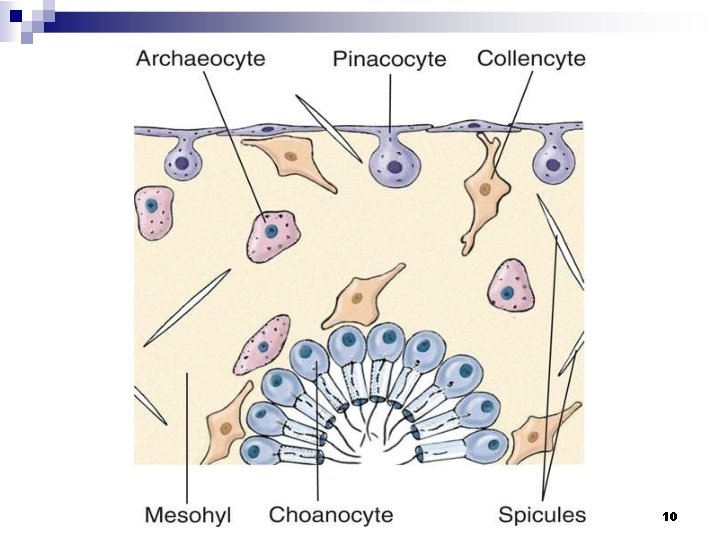
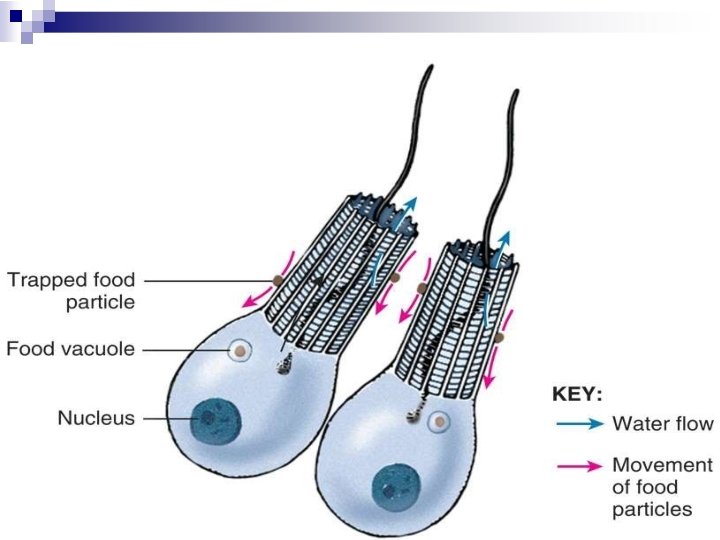
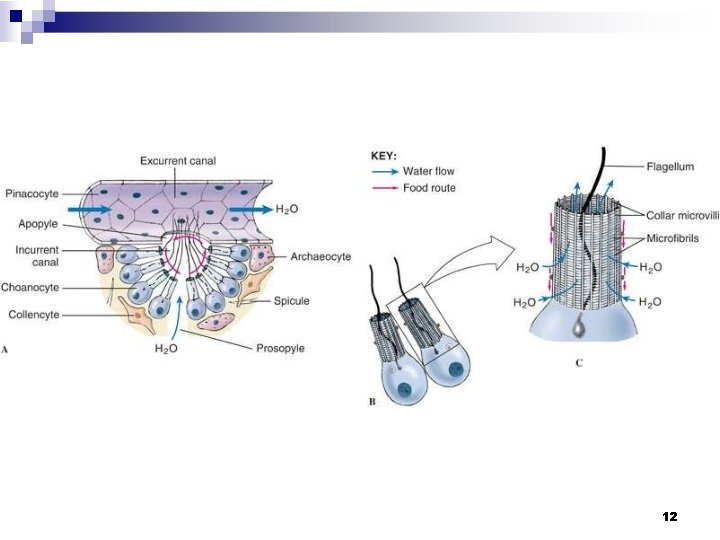
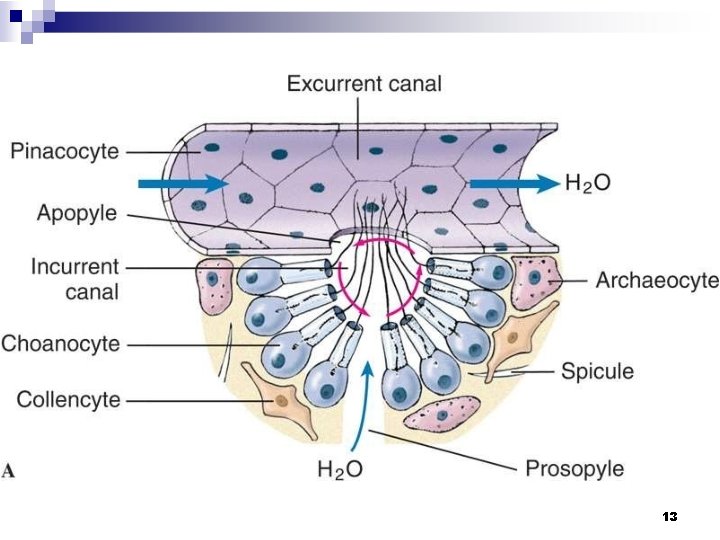
General Characters -Most are marine; a few live in fresh water one family Spongillidae -Metazoan, with loosely aggregated cells, therefore no organs or true tissues. -Asymmetrical or radial symmetry -Body with pores (ostia and osculum), canals, and chambers through which a water currentflows. -Epidermis of flat pinacocytes; -Inner surfaces lined with flagellated collar cells (choanocytes)-create water currents 2
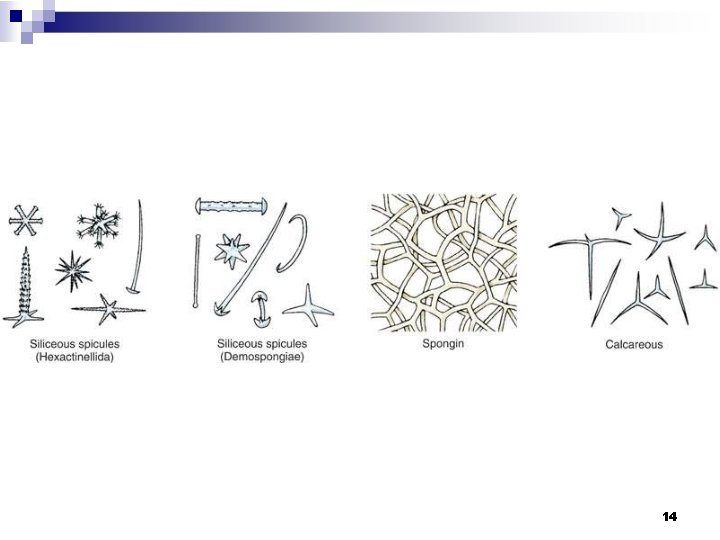
General Characters -matrix called mesohyl contains amebocytes and skeletal elements -Skeleton of calcareous or siliceous crystalline spicules and/or protein fibers (spongin) -Digestion intracellular -Respiration and excretion by diffusion -Nervous system absent -All adults sessile and attached to substrate -Asexual reproduction by buds or gemmules -Sexual reproduction by eggs and sperm -Free-swimming ciliated amphiblastula larvae 3
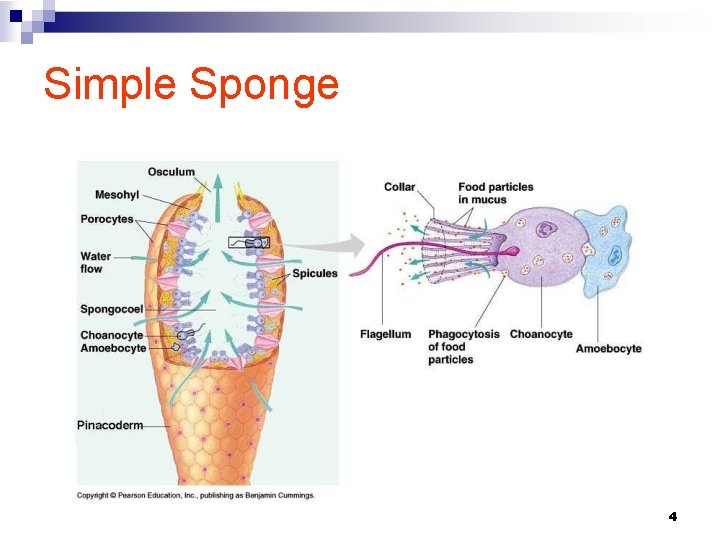
Simple Sponge 4
Sponge Body Forms 5
6
7
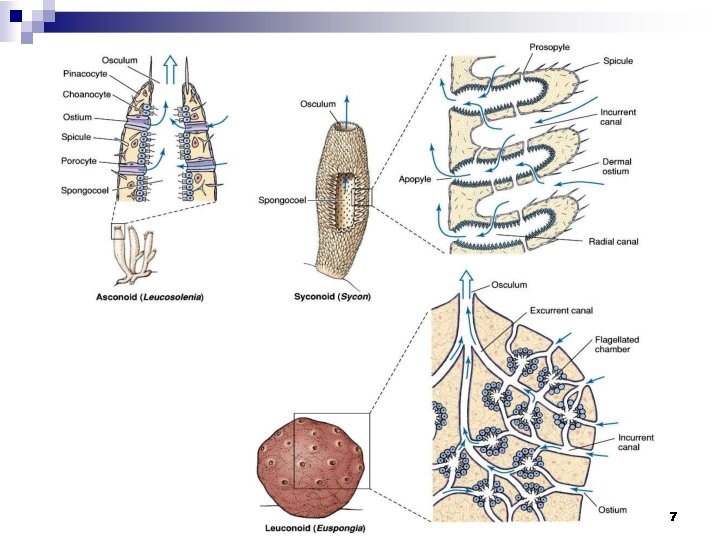
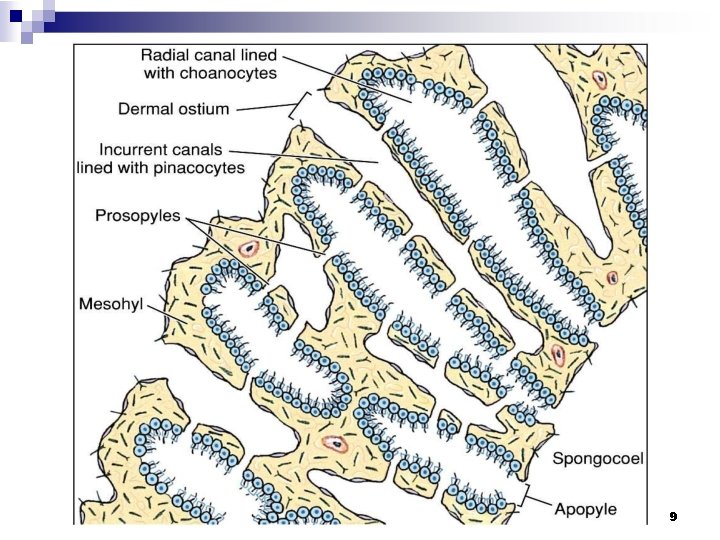
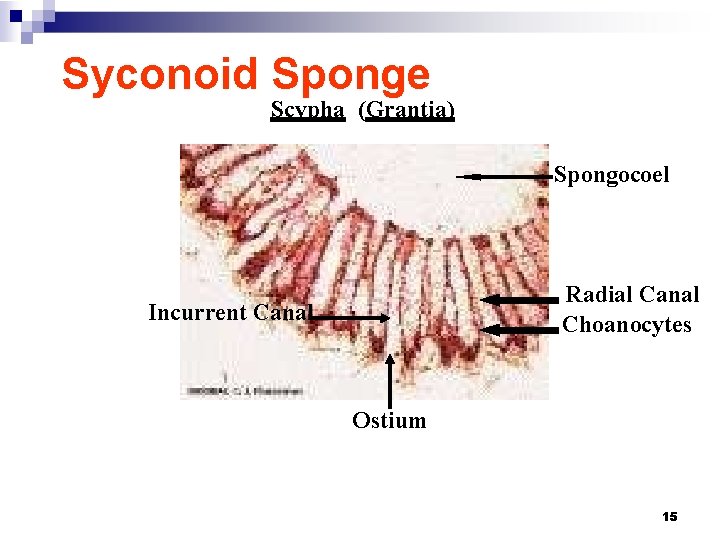
Syconoid Sponge Osculum Incurrent Canal Ostium Spongocoel Radial Canal Choanocytes 8
9
10
11
12
Figure 12. 12 a 13
14
Syconoid Sponge Scypha (Grantia) Spongocoel Radial Canal Choanocytes Incurrent Canal Ostium 15
Leuconoid Sponge Osculum Excurrent canal Incurrent pore Incurrent canal Choanocyte chamber 16
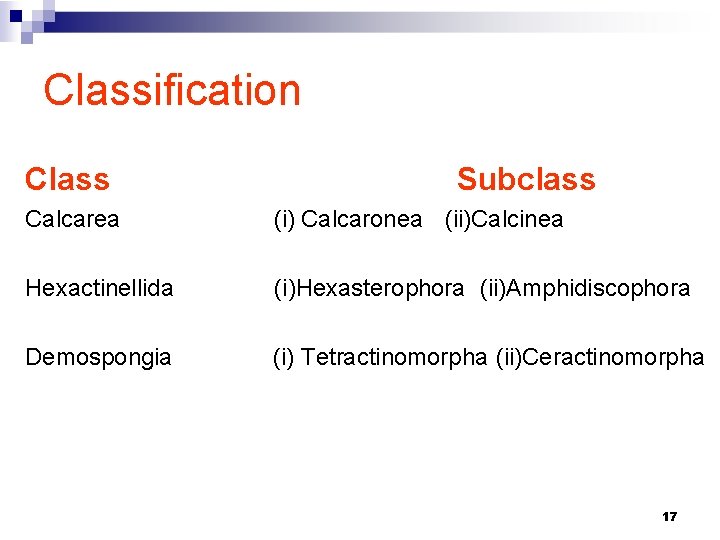
Classification Class Subclass Calcarea (i) Calcaronea (ii)Calcinea Hexactinellida (i)Hexasterophora (ii)Amphidiscophora Demospongia (i) Tetractinomorpha (ii)Ceractinomorpha 17
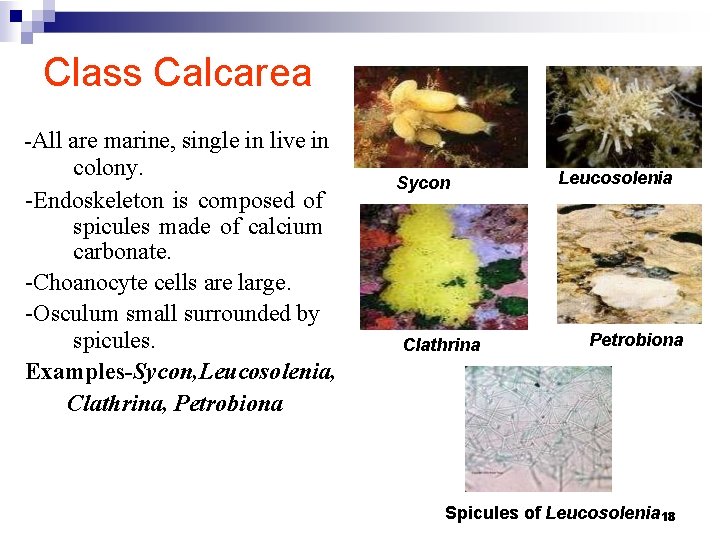
Class Calcarea -All are marine, single in live in colony. -Endoskeleton is composed of spicules made of calcium carbonate. -Choanocyte cells are large. -Osculum small surrounded by spicules. Examples-Sycon, Leucosolenia, Clathrina, Petrobiona Sycon Clathrina Leucosolenia Petrobiona Spicules of Leucosolenia 18
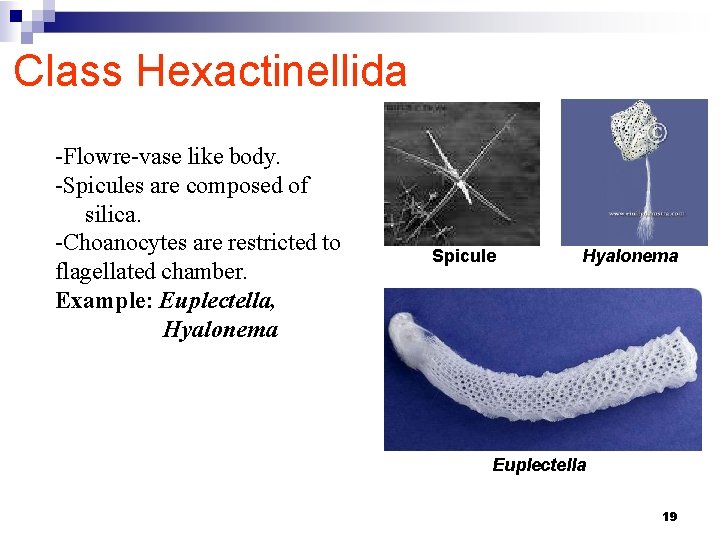
Class Hexactinellida -Flowre-vase like body. -Spicules are composed of silica. -Choanocytes are restricted to flagellated chamber. Example: Euplectella, Hyalonema Spicule Hyalonema Euplectella 19
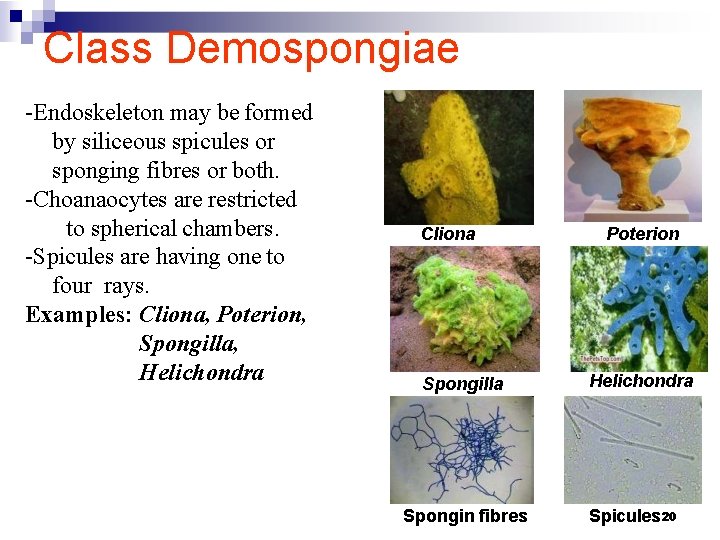
Class Demospongiae -Endoskeleton may be formed by siliceous spicules or sponging fibres or both. -Choanaocytes are restricted to spherical chambers. -Spicules are having one to four rays. Examples: Cliona, Poterion, Spongilla, Helichondra Cliona Spongilla Spongin fibres Poterion Helichondra Spicules 20
Sexual Reproduction -Monoecious Both male and female -Sperm and egg derived from choanocytes -Ciliated larva Swim to new location 21
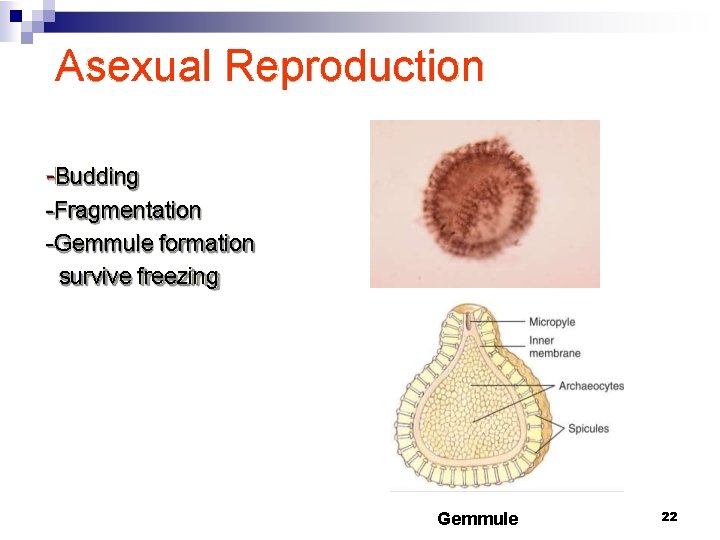
Asexual Reproduction -Budding -Fragmentation -Gemmule formation survive freezing Gemmule 22