Phylum Platyhelminthes common name flatworms More than 20



- Slides: 9
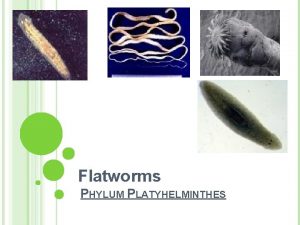
• Phylum Platyhelminthes – common name “flatworms” • More than 20, 000 species • Bilaterally symmetrical • Cephalized – definite anterior and posterior ends • Acoelomates • Triploblastic (3 germ layers)
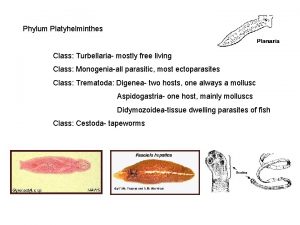
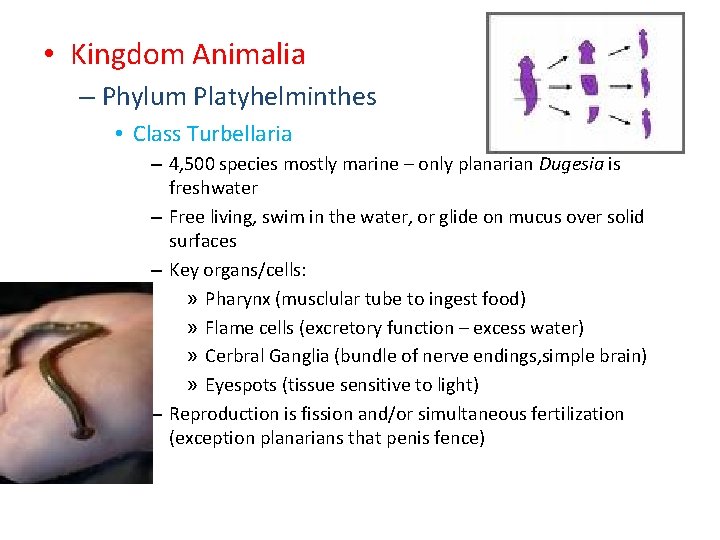
• Kingdom Animalia – Phylum Platyhelminthes • Class Turbellaria – 4, 500 species mostly marine – only planarian Dugesia is freshwater – Free living, swim in the water, or glide on mucus over solid surfaces – Key organs/cells: » Pharynx (musclular tube to ingest food) » Flame cells (excretory function – excess water) » Cerbral Ganglia (bundle of nerve endings, simple brain) » Eyespots (tissue sensitive to light) – Reproduction is fission and/or simultaneous fertilization (exception planarians that penis fence)
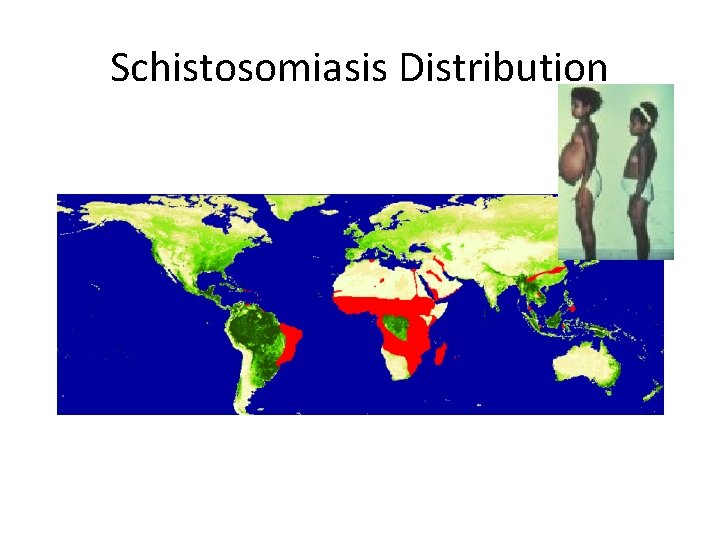
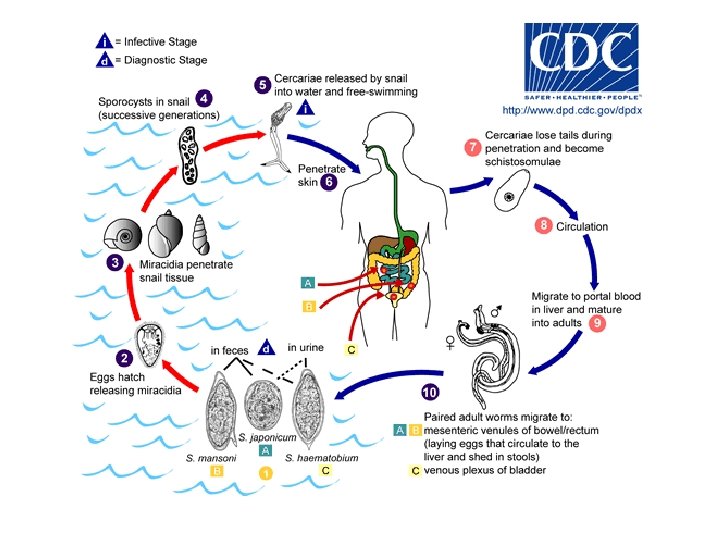
• Classes cont’d: – Class Trematoda • 9, 000 species commonly called flukes -freshwater • parasitic • Key organs/cells – Tegument ( outer covering to resist hosts defenses ) – Anterior sucker (to cling to host) – Nervous system is similar to planarian –but no eyespots • Reproductive cycle involves primary host (adult) and intermediate host (larva) BILHARZIA • Diseases : Schistosomiasis -200 -300 million Asia, Africa and South America, Swimmer’s Itch North America
Schistosomiasis Distribution
• Classes cont’d: – Class Cestoda • 5, 000 species or tapeworms • Parasitic • Key organ/cells – – Scolex (anterior end with hooks and suckers for attachment) Proglottids (reproductive segments contain ovaries and testes) Nervous system is like planarians –no eyespots No pharynx or gv cavity • Reproductive cycle includes primary host (adult) and intermediate host (larva) • Tapeworms that infect humans are beef, pork and fish
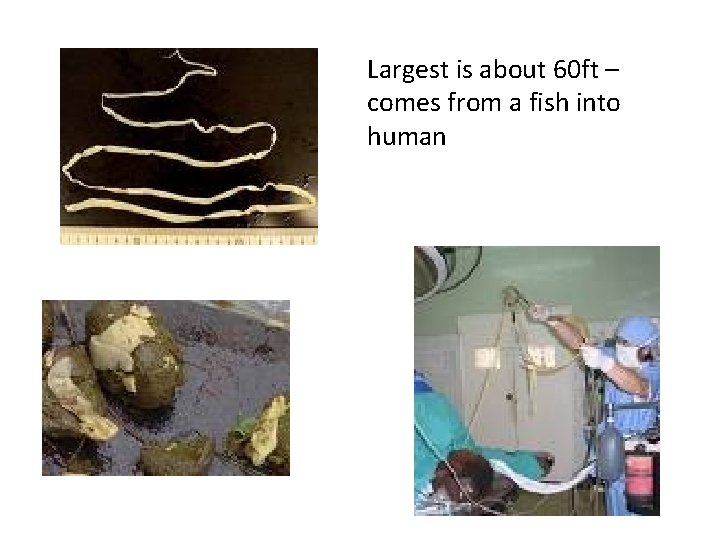
Largest is about 60 ft – comes from a fish into human
• Acoelomate condition restricts the flatworm size. – All cells must remain close enough to the surface so that O 2 can diffuse into them. – The lack of a coelom also means that nutrients can’t diffuse easily. To improve nutrient dispersal, the larger flatworms have a branched gut.
• Reproduction – Hermaphroditic – Both asexual and sexual