PAST PERFECT PRESENT PERFECT FIRST CONDITIONAL RECURSO RUTA
- Slides: 13
PAST PERFECT - PRESENT PERFECT –FIRST CONDITIONAL RECURSO RUTA INTERDISCIPLINAR 8 – 2º MEDIOS
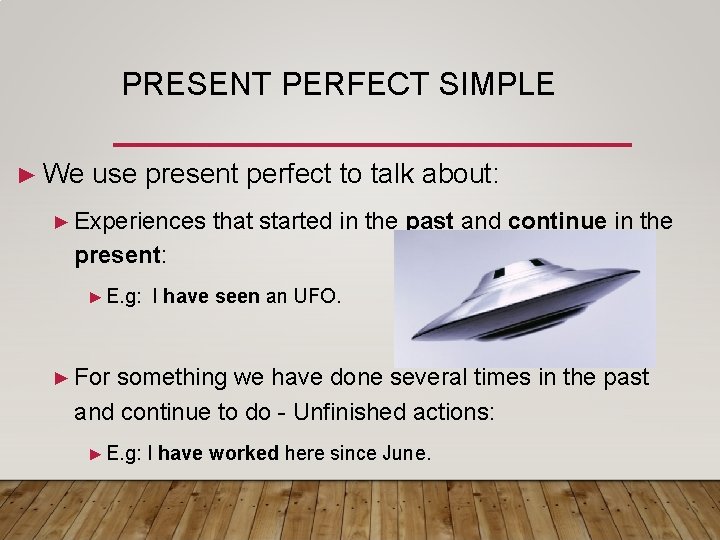
PRESENT PERFECT SIMPLE ► We use present perfect to talk about: ► Experiences that started in the past and continue in the present: ► E. g: I have seen an UFO. ► For something we have done several times in the past and continue to do - Unfinished actions: ► E. g: I have worked here since June.
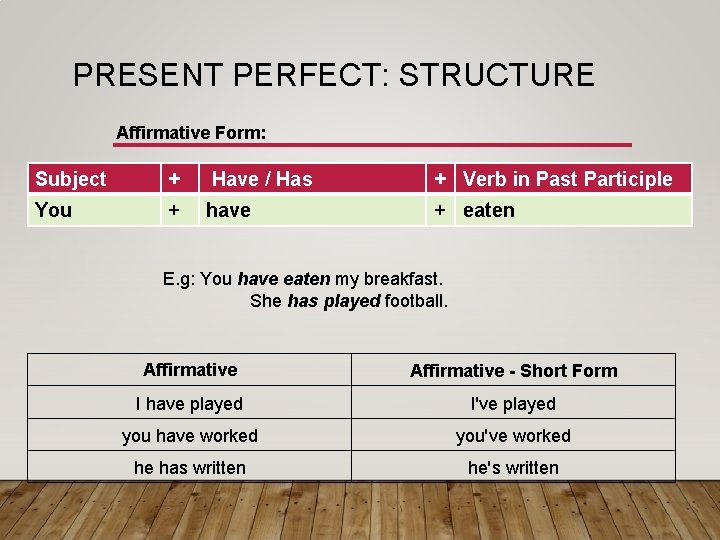
PRESENT PERFECT: STRUCTURE Affirmative Form: Subject + Have / Has + Verb in Past Participle You + have + eaten E. g: You have eaten my breakfast. She has played football. Affirmative - Short Form I have played I've played you have worked you've worked he has written he's written
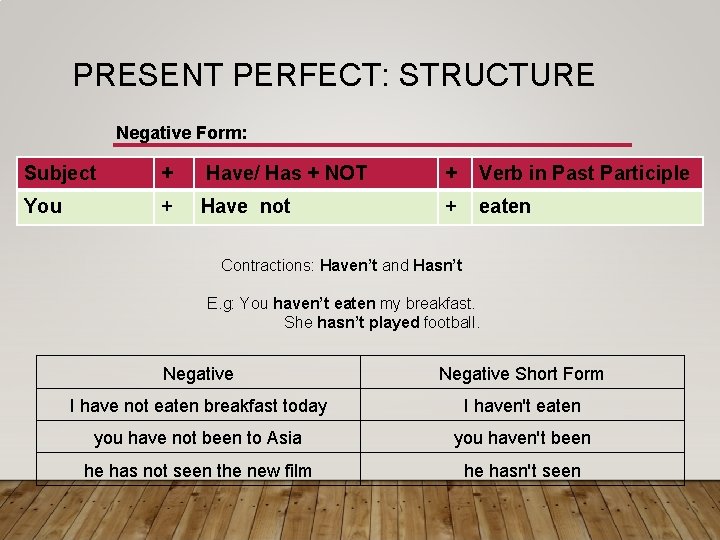
PRESENT PERFECT: STRUCTURE Negative Form: Subject + Have/ Has + NOT + Verb in Past Participle You + Have not + eaten Contractions: Haven’t and Hasn’t E. g: You haven’t eaten my breakfast. She hasn’t played football. Negative Short Form I have not eaten breakfast today I haven't eaten you have not been to Asia you haven't been he has not seen the new film he hasn't seen
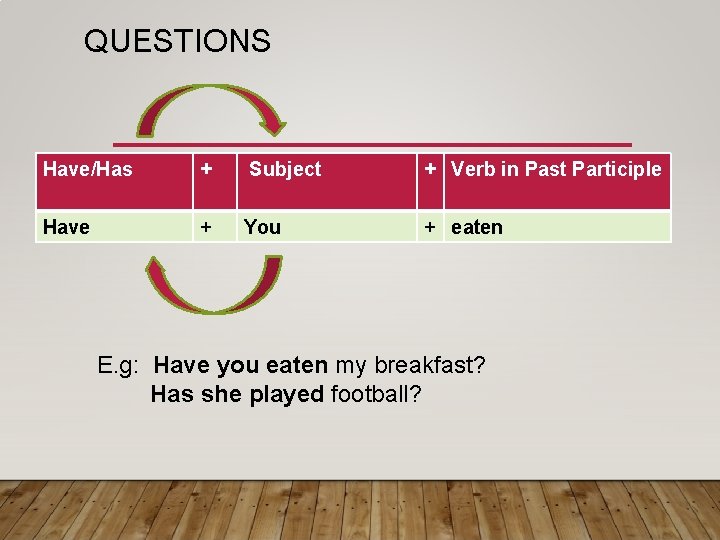
QUESTIONS Have/Has + Subject + Verb in Past Participle Have + You + eaten E. g: Have you eaten my breakfast? Has she played football?
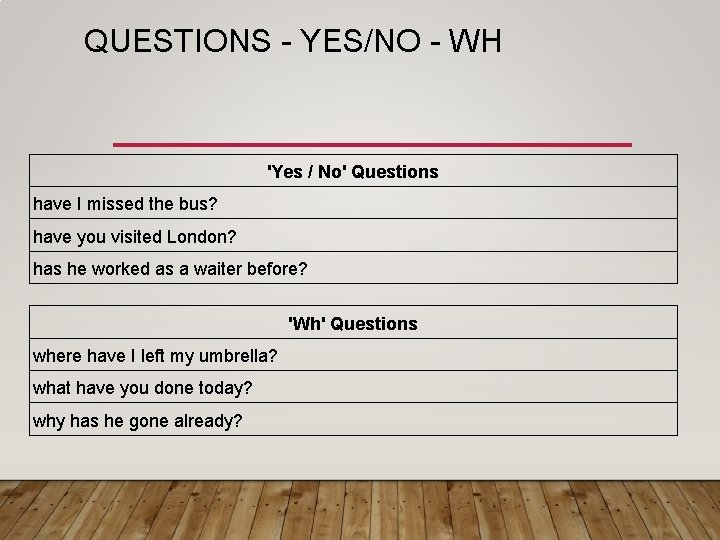
QUESTIONS - YES/NO - WH 'Yes / No' Questions have I missed the bus? have you visited London? has he worked as a waiter before? 'Wh' Questions where have I left my umbrella? what have you done today? why has he gone already?
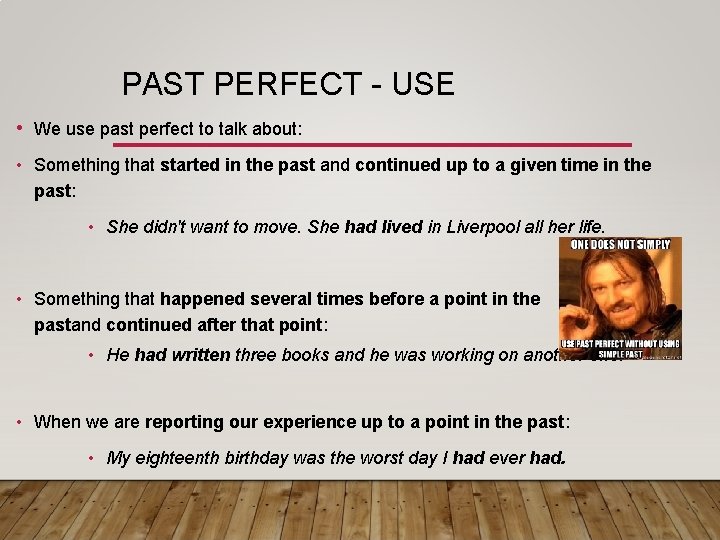
PAST PERFECT - USE • We use past perfect to talk about: • Something that started in the past and continued up to a given time in the past: • She didn't want to move. She had lived in Liverpool all her life. • Something that happened several times before a point in the pastand continued after that point: • He had written three books and he was working on another one. • When we are reporting our experience up to a point in the past: • My eighteenth birthday was the worst day I had ever had.
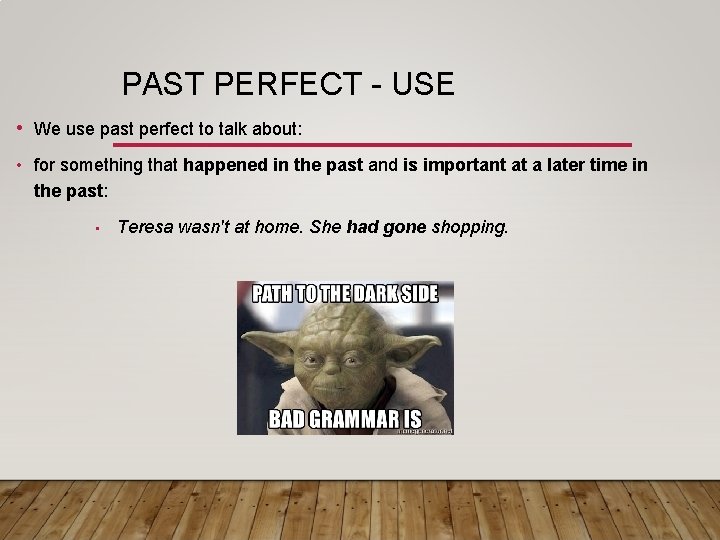
PAST PERFECT - USE • We use past perfect to talk about: • for something that happened in the past and is important at a later time in the past: • Teresa wasn't at home. She had gone shopping.
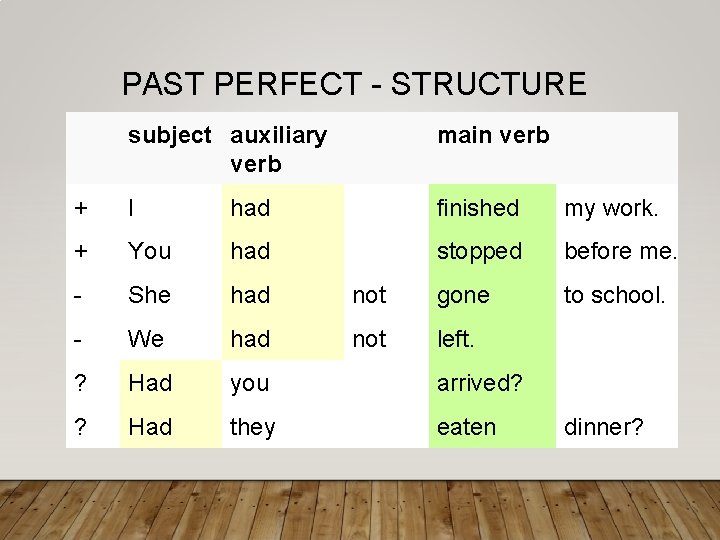
PAST PERFECT - STRUCTURE subject auxiliary verb main verb + I had finished my work. + You had stopped before me. - She had not gone to school. - We had not left. ? Had you arrived? ? Had they eaten dinner?
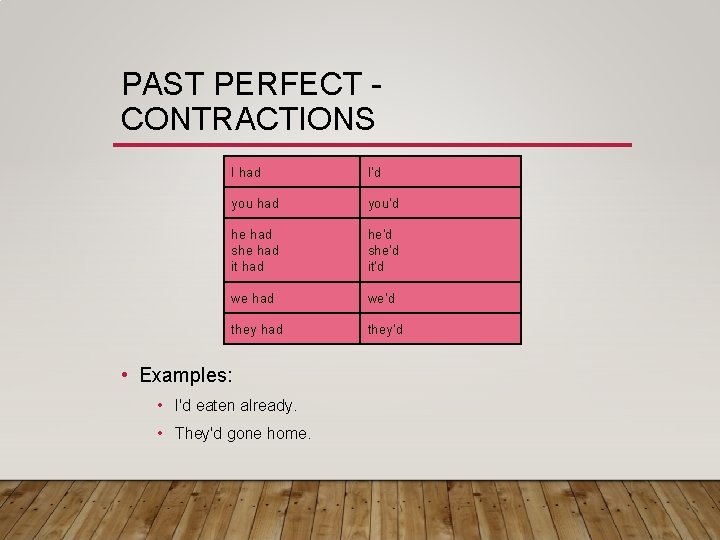
PAST PERFECT CONTRACTIONS I had I'd you had you'd he had she had it had he'd she'd it'd we had we'd they had they'd • Examples: • I'd eaten already. • They'd gone home.
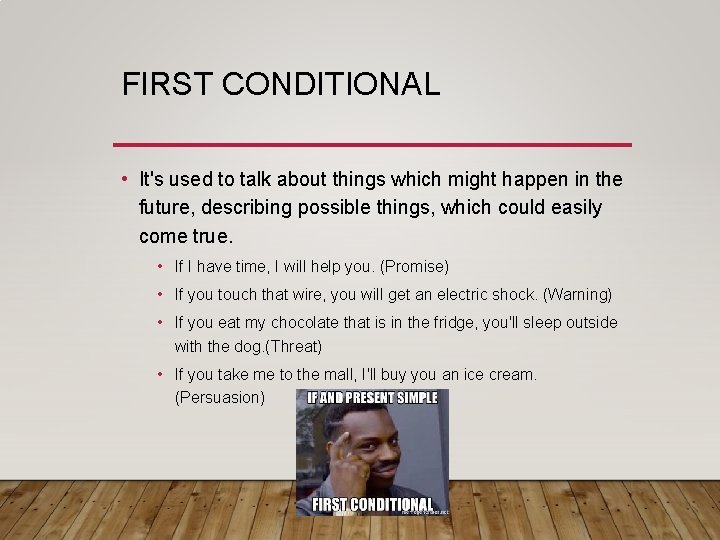
FIRST CONDITIONAL • It's used to talk about things which might happen in the future, describing possible things, which could easily come true. • If I have time, I will help you. (Promise) • If you touch that wire, you will get an electric shock. (Warning) • If you eat my chocolate that is in the fridge, you'll sleep outside with the dog. (Threat) • If you take me to the mall, I'll buy you an ice cream. (Persuasion)
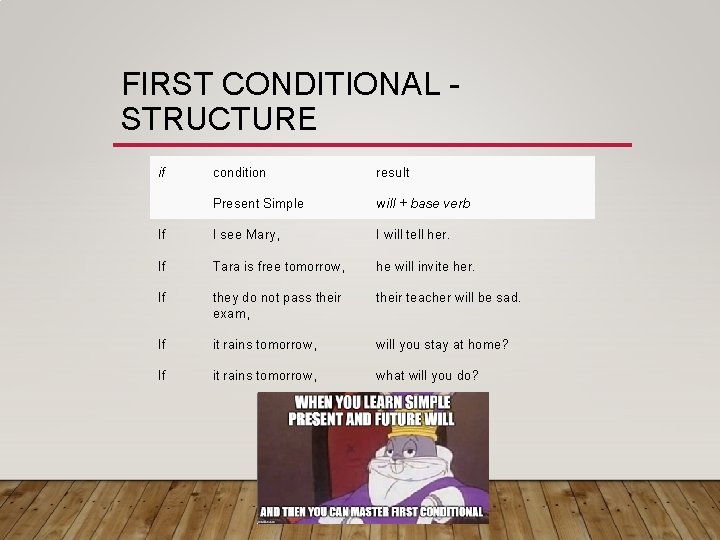
FIRST CONDITIONAL STRUCTURE if condition result Present Simple will + base verb If I see Mary, I will tell her. If Tara is free tomorrow, he will invite her. If they do not pass their exam, their teacher will be sad. If it rains tomorrow, will you stay at home? If it rains tomorrow, what will you do?
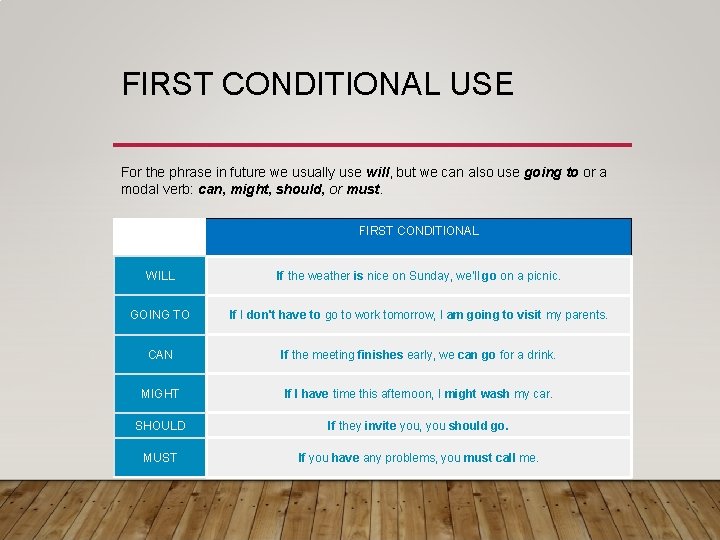
FIRST CONDITIONAL USE For the phrase in future we usually use will, but we can also use going to or a modal verb: can, might, should, or must. FIRST CONDITIONAL WILL If the weather is nice on Sunday, we'll go on a picnic. GOING TO If I don't have to go to work tomorrow, I am going to visit my parents. CAN If the meeting finishes early, we can go for a drink. MIGHT If I have time this afternoon, I might wash my car. SHOULD If they invite you, you should go. MUST If you have any problems, you must call me.