Optometry Association of Schools and Colleges of Optometry

- Slides: 14
Optometry Association of Schools and Colleges of Optometry (ASCO)
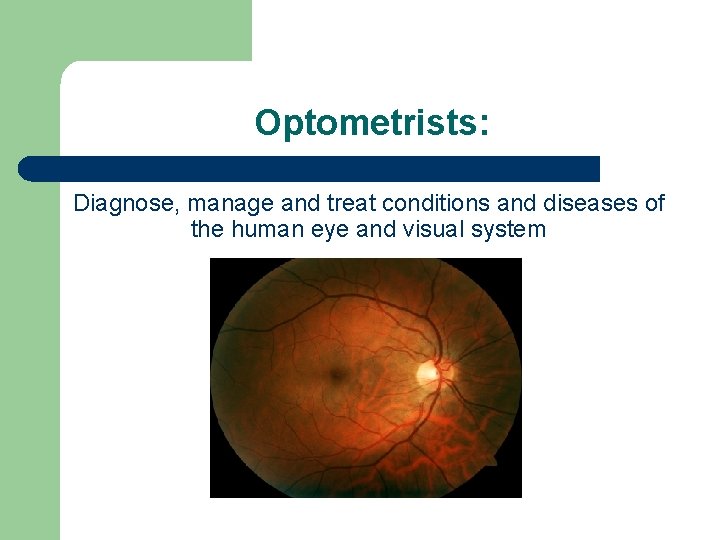
Optometrists: Diagnose, manage and treat conditions and diseases of the human eye and visual system
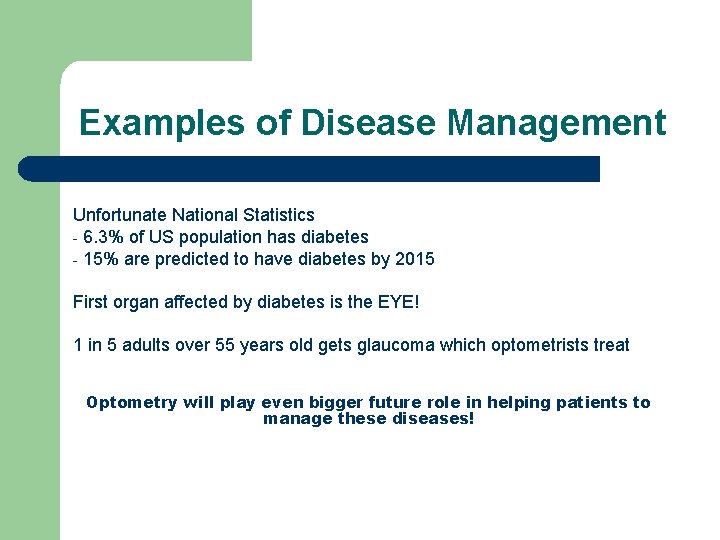
Examples of Disease Management Unfortunate National Statistics - 6. 3% of US population has diabetes - 15% are predicted to have diabetes by 2015 First organ affected by diabetes is the EYE! 1 in 5 adults over 55 years old gets glaucoma which optometrists treat Optometry will play even bigger future role in helping patients to manage these diseases!
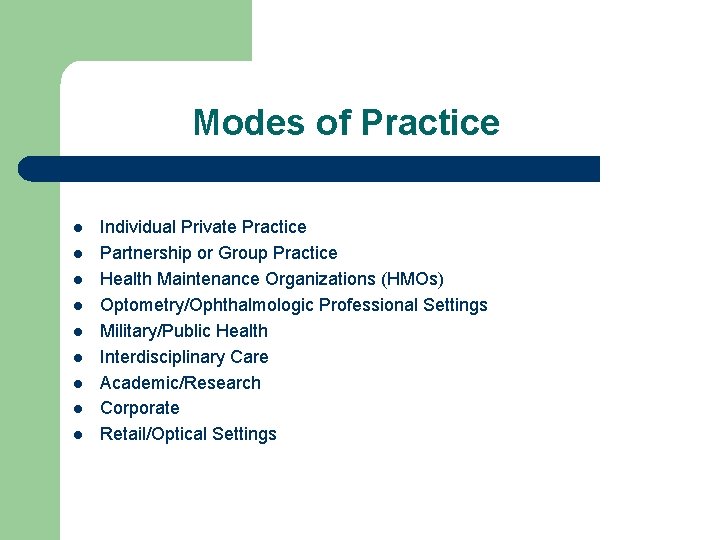
Modes of Practice l l l l l Individual Private Practice Partnership or Group Practice Health Maintenance Organizations (HMOs) Optometry/Ophthalmologic Professional Settings Military/Public Health Interdisciplinary Care Academic/Research Corporate Retail/Optical Settings
Optometry has once again received superior career forecast rankings: l l 13 Best Careers for 2010 -2020 – Kiplinger. com “Optometrist” Makes CNNMoney’s 100 Best Jobs in America at #12
US Bureau of Labor Statistics Federal data indicate employment of optometrists is projected to grow 24% from 2008 to 2018 Reasons: – – A growing population that recognizes the importance of good vision care will increase demand for optometrists Most health insurance plans now include vision care
Why is optometry such a great career choice? l l l One-on-one helping career which improves quality of life Get to work with all age patients with potential for lasting doctor/patient relationships Great work/life balance – flexibility in scheduling and minimum emergency calls Broad scope of practice including privileges to prescribe therapeutic drugs Pleasant and professional work environment Not physically demanding – a long professional life
Compensation The average net income from the primary practice of optometry was $129, 385, according to the 2012 Survey of Optometric Practice
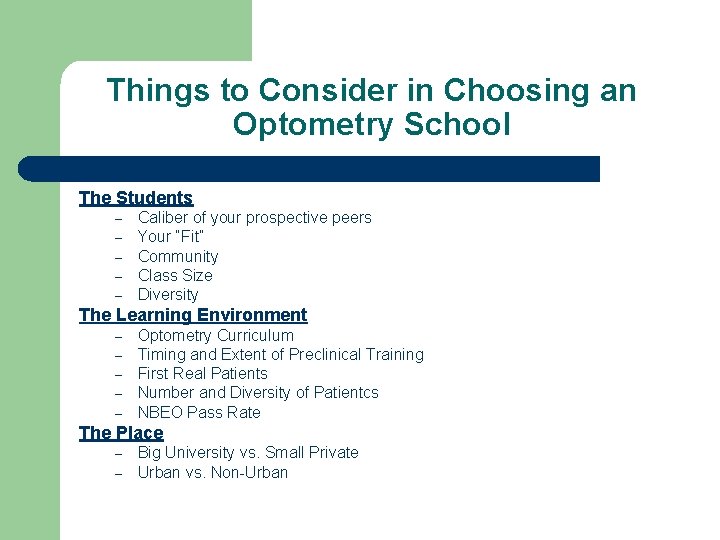
Things to Consider in Choosing an Optometry School The Students – – – Caliber of your prospective peers Your “Fit” Community Class Size Diversity The Learning Environment – – – Optometry Curriculum Timing and Extent of Preclinical Training First Real Patients Number and Diversity of Patientcs NBEO Pass Rate The Place – – Big University vs. Small Private Urban vs. Non-Urban
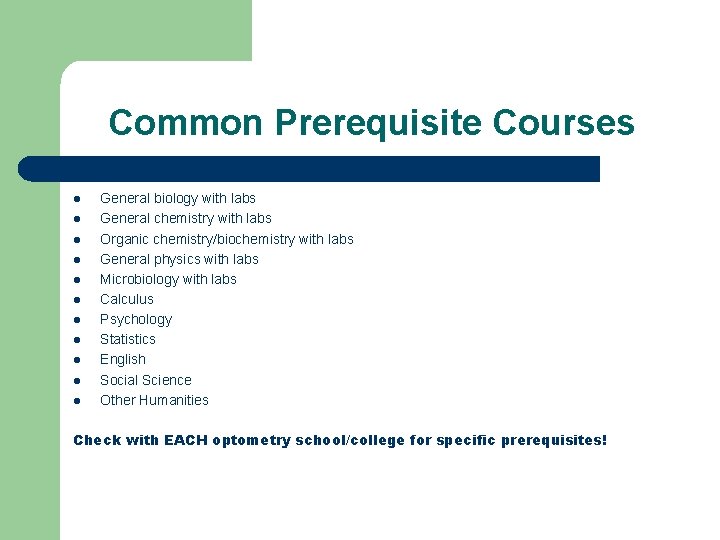
Common Prerequisite Courses l l l General biology with labs General chemistry with labs Organic chemistry/biochemistry with labs General physics with labs Microbiology with labs Calculus Psychology Statistics English Social Science Other Humanities Check with EACH optometry school/college for specific prerequisites!
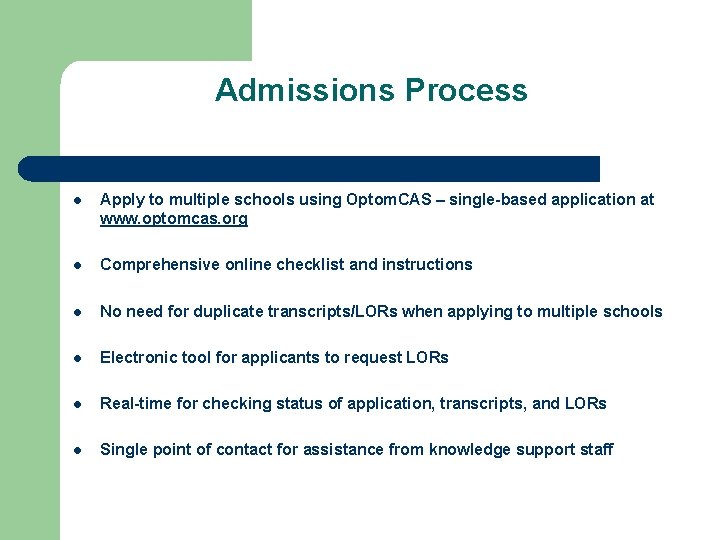
Admissions Process l Apply to multiple schools using Optom. CAS – single-based application at www. optomcas. org l Comprehensive online checklist and instructions l No need for duplicate transcripts/LORs when applying to multiple schools l Electronic tool for applicants to request LORs l Real-time for checking status of application, transcripts, and LORs l Single point of contact for assistance from knowledge support staff
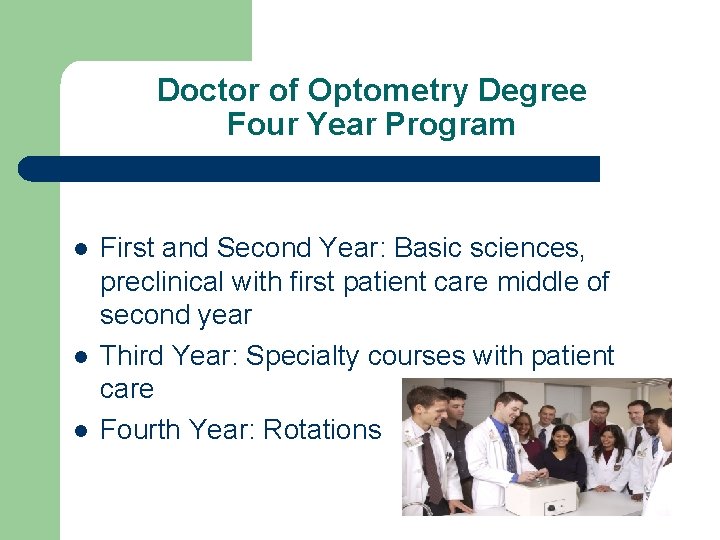
Doctor of Optometry Degree Four Year Program l l l First and Second Year: Basic sciences, preclinical with first patient care middle of second year Third Year: Specialty courses with patient care Fourth Year: Rotations
Residencies (optional) l One year duration l Residencies are located within hospitals, VA facilities, outpatient clinics, or clinical facilities of the various schools and colleges of optometry l Some areas of emphasis include: Pediatrics, Geriatrics, Cornea and Contact Lenses, Low Vision Rehabilitation, Vision Therapy, Binocular Vision and Sports Vision
Summary l Optometry is a well respected profession with a great future job outlook (good news in this economy) l Excellent potential salary and work/life balance l Wide variety of modes of practice l And now it will be easy to apply through Optom. CAS! Thank You!