Nutrients Food a fact of life 2009 Foundation

- Slides: 32
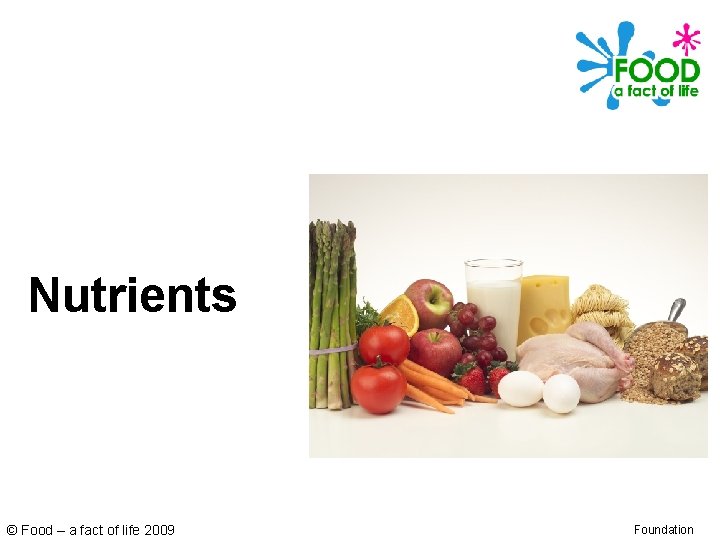
Nutrients © Food – a fact of life 2009 Foundation
Learning objectives • To introduce macronutrients and micronutrients. • To explain the sources and functions of carbohydrates, protein and fats. • To explain the source and functions of different vitamins and minerals. © Food – a fact of life 2009
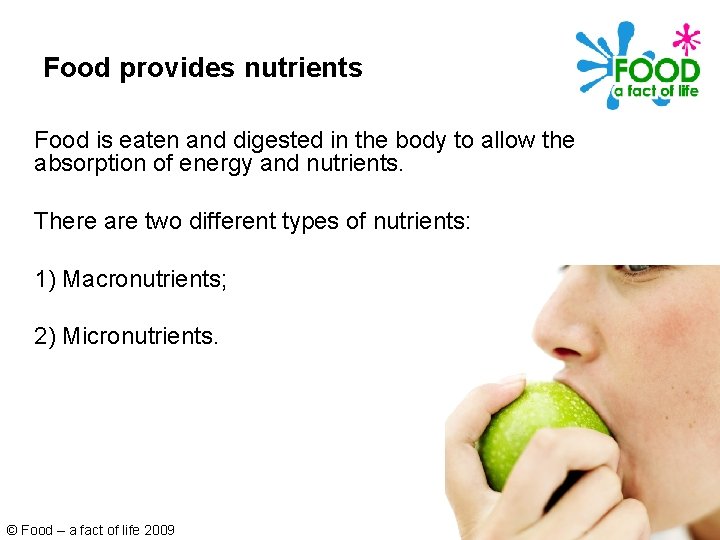
Food provides nutrients Food is eaten and digested in the body to allow the absorption of energy and nutrients. There are two different types of nutrients: 1) Macronutrients; 2) Micronutrients. © Food – a fact of life 2009
Macronutrients There are three different types of macronutrients essential for health. These are: • Carbohydrate; • Protein; • Fat. Macronutrients are measured in grams (g). © Food – a fact of life 2009
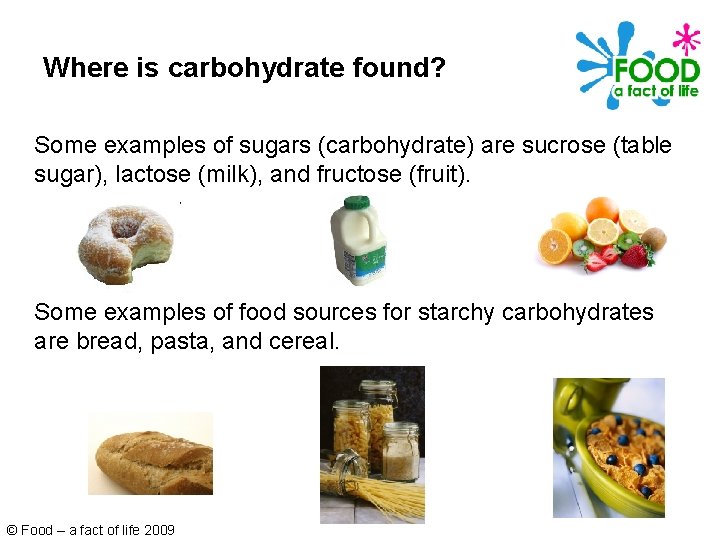
Where is carbohydrate found? Some examples of sugars (carbohydrate) are sucrose (table sugar), lactose (milk), and fructose (fruit). Some examples of food sources for starchy carbohydrates are bread, pasta, and cereal. © Food – a fact of life 2009
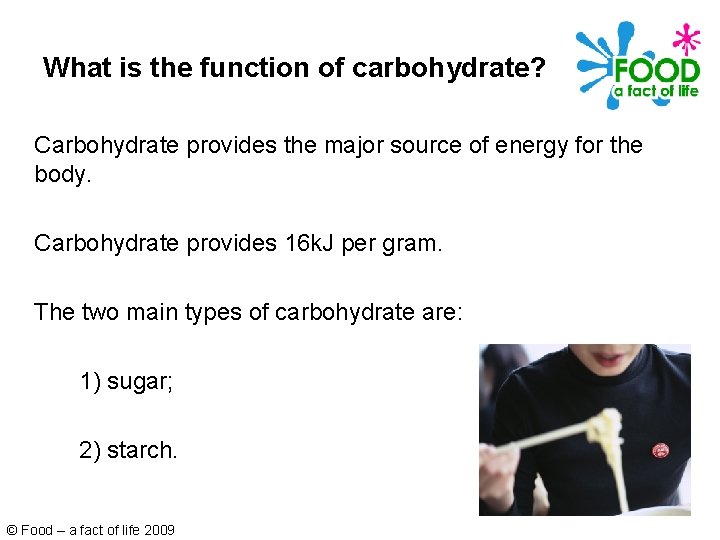
What is the function of carbohydrate? Carbohydrate provides the major source of energy for the body. Carbohydrate provides 16 k. J per gram. The two main types of carbohydrate are: 1) sugar; 2) starch. © Food – a fact of life 2009
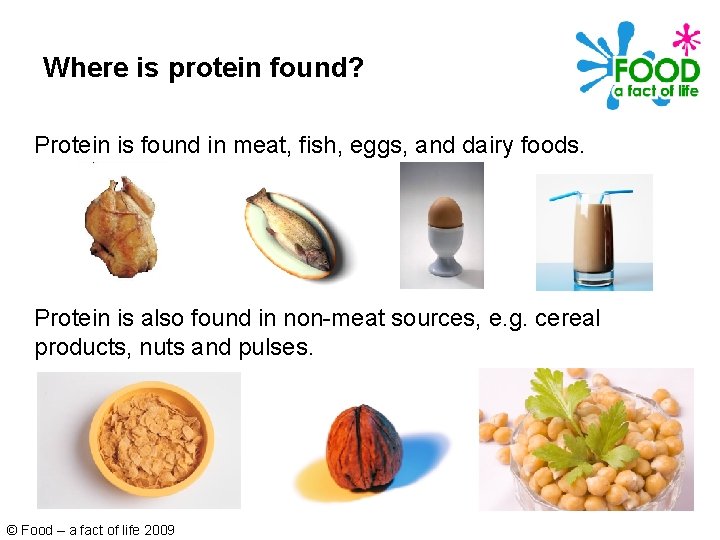
Where is protein found? Protein is found in meat, fish, eggs, and dairy foods. Protein is also found in non-meat sources, e. g. cereal products, nuts and pulses. © Food – a fact of life 2009
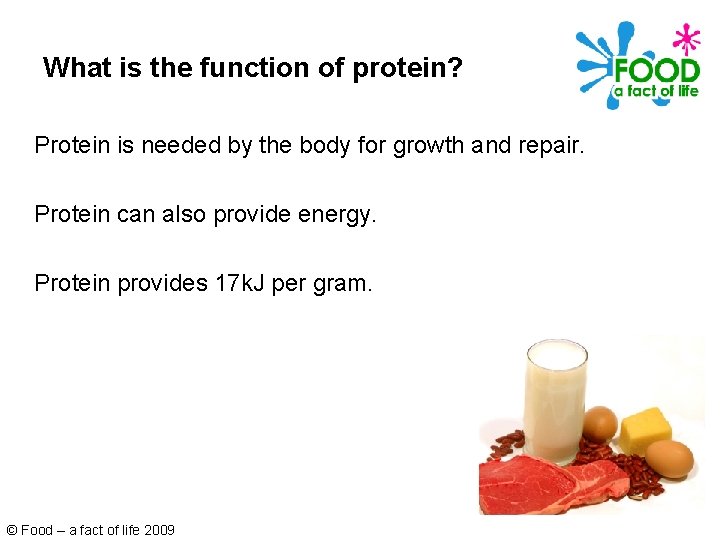
What is the function of protein? Protein is needed by the body for growth and repair. Protein can also provide energy. Protein provides 17 k. J per gram. © Food – a fact of life 2009
Why is protein needed? The body needs protein to repair tissue. Some people have extra protein needs. Babies, children and adolescents need protein for growth. Pregnant women need extra protein for the growth of their baby. Women who are breastfeeding need protein to produce milk. Vegetarians need to be careful to eat a wide variety of foods to meet their protein needs because individual plant sources of protein tend not to contain enough. © Food – a fact of life 2009
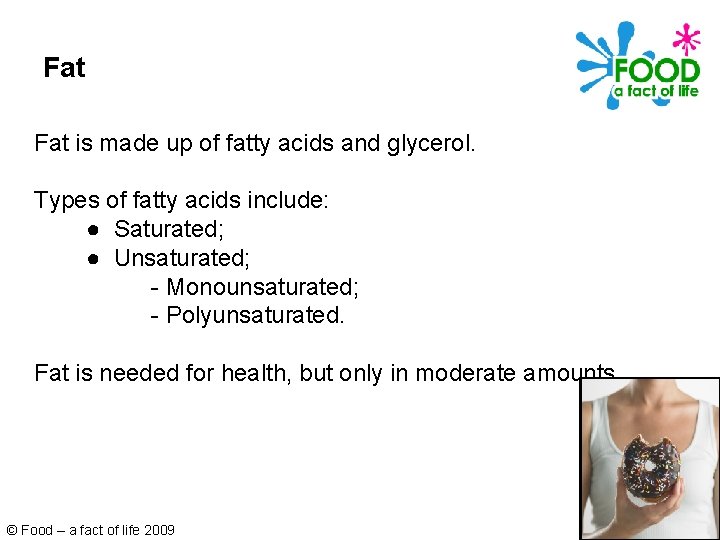
Fat is made up of fatty acids and glycerol. Types of fatty acids include: ● Saturated; ● Unsaturated; - Monounsaturated; - Polyunsaturated. Fat is needed for health, but only in moderate amounts. © Food – a fact of life 2009
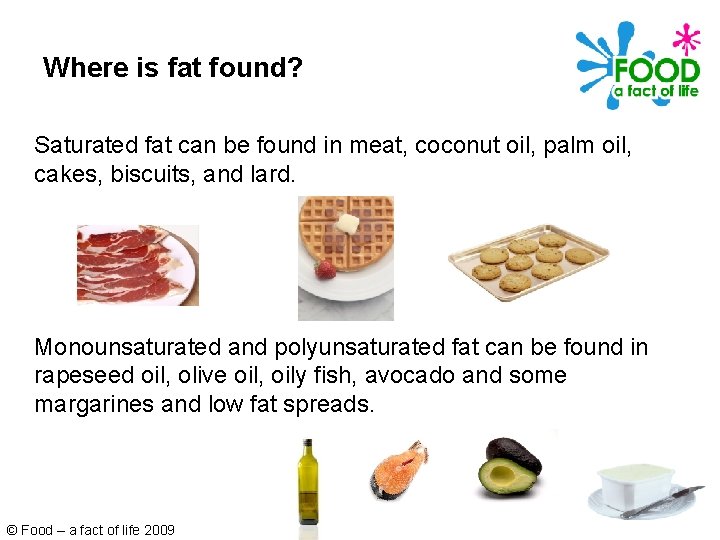
Where is fat found? Saturated fat can be found in meat, coconut oil, palm oil, cakes, biscuits, and lard. Monounsaturated and polyunsaturated fat can be found in rapeseed oil, olive oil, oily fish, avocado and some margarines and low fat spreads. © Food – a fact of life 2009
What is the function of fat? Fat provides the body with energy. One gram of fat provides 37 k. J. Fat provides a store of energy for the body. Fat also provides protection for the major organs in the body. The body needs fat to absorb the fat soluble vitamins A, D, E and K. © Food – a fact of life 2009
Micronutrients The micronutrients are divided into: • vitamins; • minerals. Vitamins are needed in smaller amounts macronutrients These are measured in milligrams (1 mg = 0. 001 g)and micrograms (1μg = 0. 001 mg). © Food – a fact of life 2009
Micronutrients - vitamins Vitamins are found in a wide variety of foods and they have many uses within the body. There are two groups of vitamins: ● Fat soluble vitamins, e. g. vitamins A, D and K ● Water soluble vitamins, e. g. B vitamins and vitamin C. © Food – a fact of life 2009
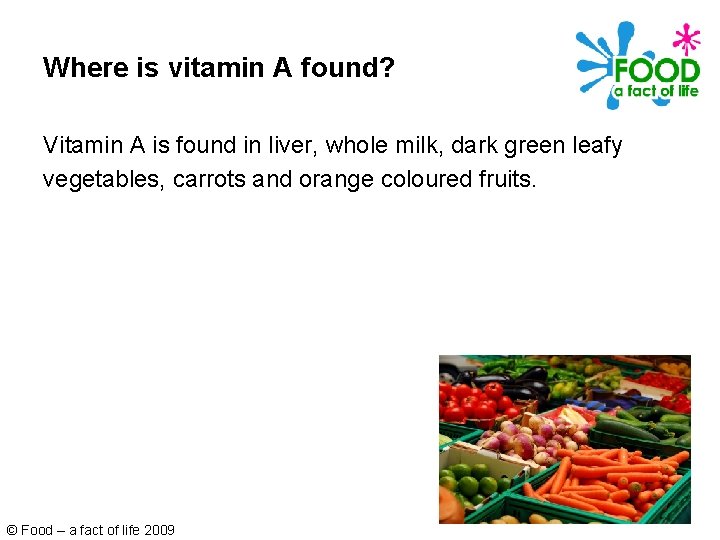
Where is vitamin A found? Vitamin A is found in liver, whole milk, dark green leafy vegetables, carrots and orange coloured fruits. © Food – a fact of life 2009
What is the function of vitamin A? Vitamin A is needed for: • vision in dim light; • healthy skin and eyes; • growth. This vitamin is fat soluble. © Food – a fact of life 2009
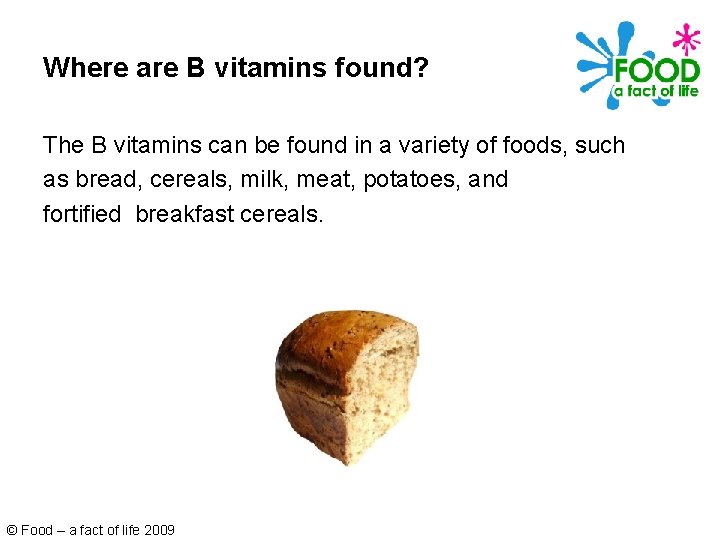
Where are B vitamins found? The B vitamins can be found in a variety of foods, such as bread, cereals, milk, meat, potatoes, and fortified breakfast cereals. © Food – a fact of life 2009
What are the functions of B vitamins? B vitamins are water soluble vitamins needed for the release of energy from food. There are many different B vitamins and each has a specific function in the body. © Food – a fact of life 2009
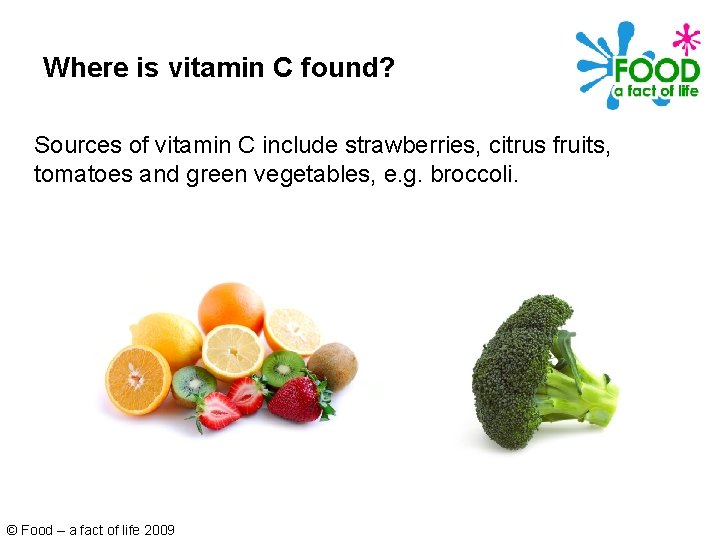
Where is vitamin C found? Sources of vitamin C include strawberries, citrus fruits, tomatoes and green vegetables, e. g. broccoli. © Food – a fact of life 2009
What is the function of vitamin C? Vitamin C is a water soluble vitamin needed for the production of collagen, an important protein which helps bones to grow and wounds to heal. Vitamin C also helps the body to absorb the mineral iron from plants. A lack of vitamin C in the diet causes bleeding gums, and wounds take longer to heal. This deficiency disease is called scurvy. © Food – a fact of life 2009
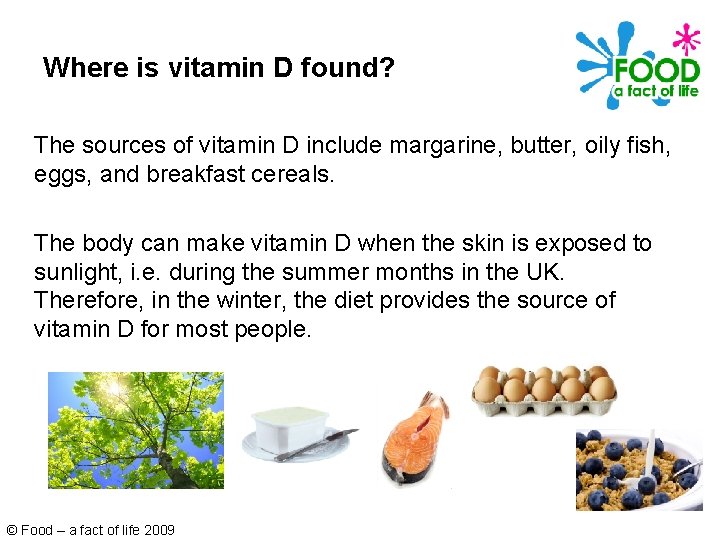
Where is vitamin D found? The sources of vitamin D include margarine, butter, oily fish, eggs, and breakfast cereals. The body can make vitamin D when the skin is exposed to sunlight, i. e. during the summer months in the UK. Therefore, in the winter, the diet provides the source of vitamin D for most people. © Food – a fact of life 2009
What is the function of vitamin D? Vitamin D is needed for the development of healthy bones and teeth. This vitamin helps the body to absorb the mineral calcium from food. Vitamin D is a fat soluble vitamin. A lack of vitamin D causes rickets in children, where the legs are bent. Osteomalacia occurs in adults deficient in vitamin D. This causes pain in the bones and muscles. © Food – a fact of life 2009
Minerals have many uses in the body: • to form bones and teeth; • as part of our body fluids; • to help nerves work. The amount of different minerals needed by the body changes over time. © Food – a fact of life 2009
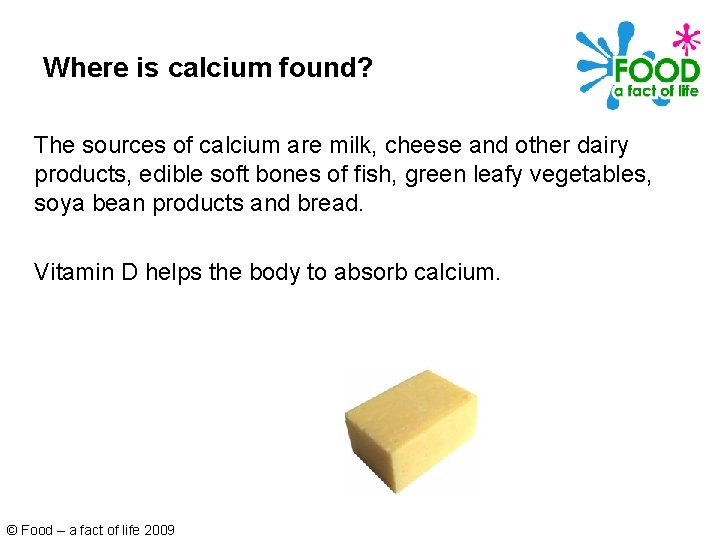
Where is calcium found? The sources of calcium are milk, cheese and other dairy products, edible soft bones of fish, green leafy vegetables, soya bean products and bread. Vitamin D helps the body to absorb calcium. © Food – a fact of life 2009
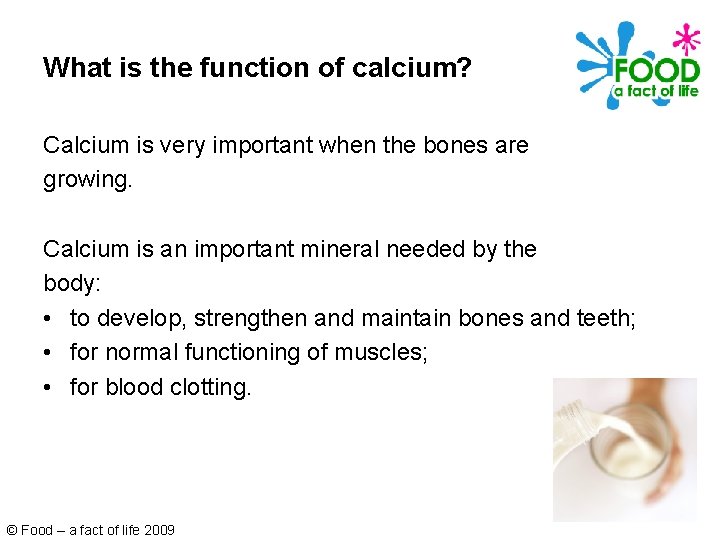
What is the function of calcium? Calcium is very important when the bones are growing. Calcium is an important mineral needed by the body: • to develop, strengthen and maintain bones and teeth; • for normal functioning of muscles; • for blood clotting. © Food – a fact of life 2009
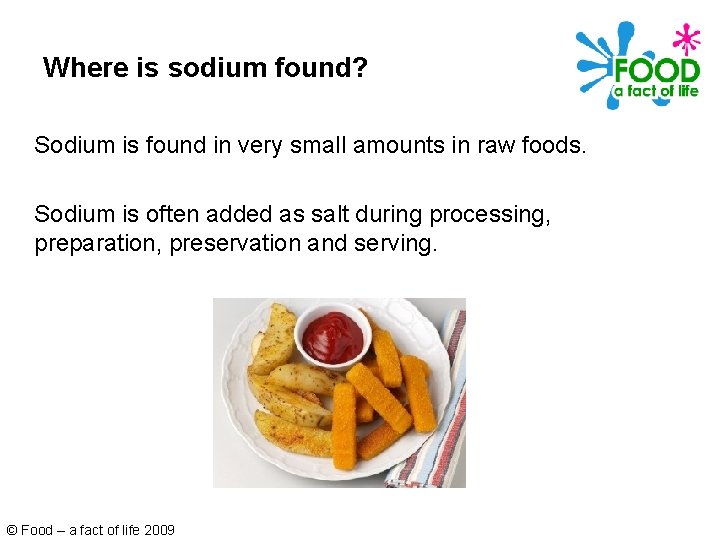
Where is sodium found? Sodium is found in very small amounts in raw foods. Sodium is often added as salt during processing, preparation, preservation and serving. © Food – a fact of life 2009
What is the function of sodium? Sodium is found in all cells and body fluids. It helps to regulate body water content and electrolyte balance, and is involved in nerve function. High intakes of sodium are linked to high blood pressure which increases the risk of stroke and coronary heart disease. © Food – a fact of life 2009
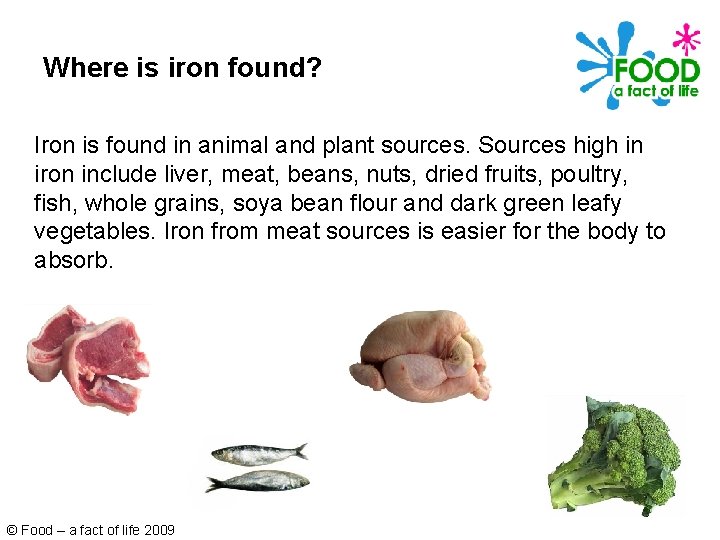
Where is iron found? Iron is found in animal and plant sources. Sources high in iron include liver, meat, beans, nuts, dried fruits, poultry, fish, whole grains, soya bean flour and dark green leafy vegetables. Iron from meat sources is easier for the body to absorb. © Food – a fact of life 2009
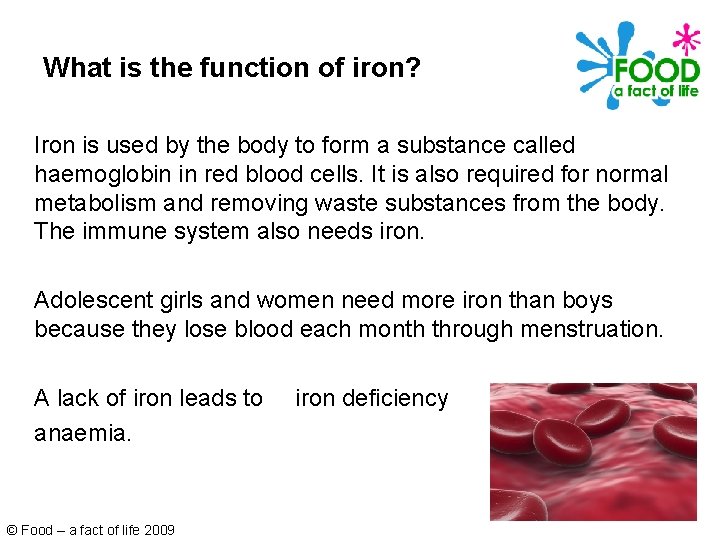
What is the function of iron? Iron is used by the body to form a substance called haemoglobin in red blood cells. It is also required for normal metabolism and removing waste substances from the body. The immune system also needs iron. Adolescent girls and women need more iron than boys because they lose blood each month through menstruation. A lack of iron leads to anaemia. © Food – a fact of life 2009 iron deficiency
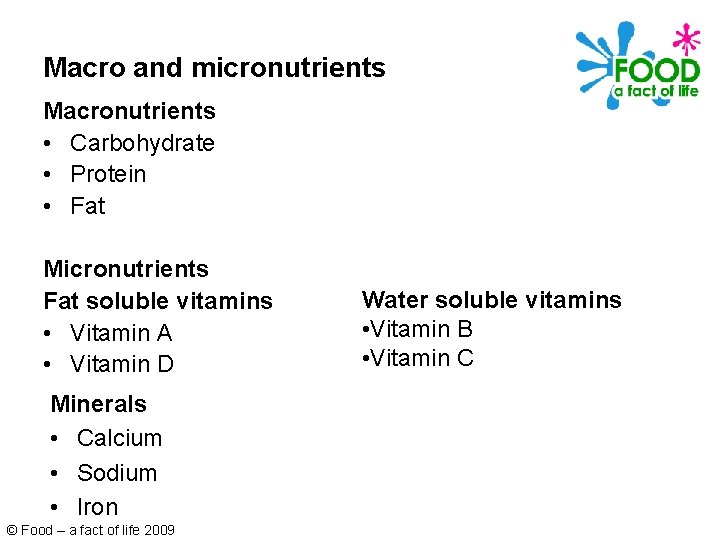
Macro and micronutrients Macronutrients • Carbohydrate • Protein • Fat Micronutrients Fat soluble vitamins • Vitamin A • Vitamin D Minerals • Calcium • Sodium • Iron © Food – a fact of life 2009 Water soluble vitamins • Vitamin B • Vitamin C
Review of the learning objectives • To introduce macronutrients and micronutrients. • To explain the sources and functions of carbohydrates, protein and fats. • To explain the sources and functions of different vitamins and minerals. © Food – a fact of life 2009
For more information visit www. foodafactoflife. org. uk © Food – a fact of life 2009