Nitrogen Cycle 1 2 NH 4 NO 3
- Slides: 18
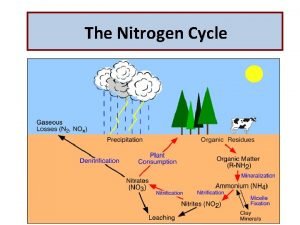
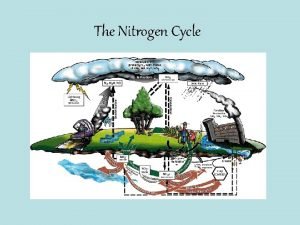
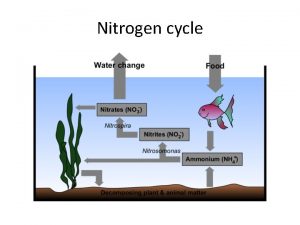
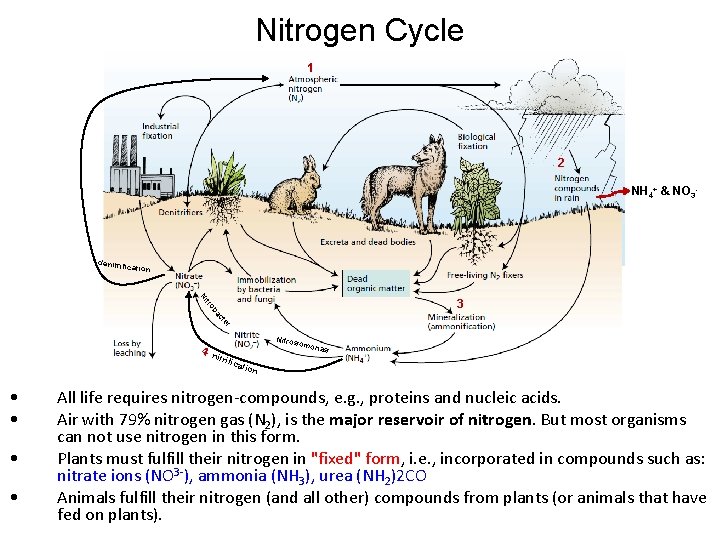
Nitrogen Cycle 1 2 NH 4+ & NO 3 - denitrifi cation tr Ni r te ac ob 3 4 n itrif icat ion • • Nitros omon as All life requires nitrogen-compounds, e. g. , proteins and nucleic acids. Air with 79% nitrogen gas (N 2), is the major reservoir of nitrogen. But most organisms can not use nitrogen in this form. Plants must fulfill their nitrogen in "fixed" form, i. e. , incorporated in compounds such as: nitrate ions (NO 3 -), ammonia (NH 3), urea (NH 2)2 CO Animals fulfill their nitrogen (and all other) compounds from plants (or animals that have fed on plants).
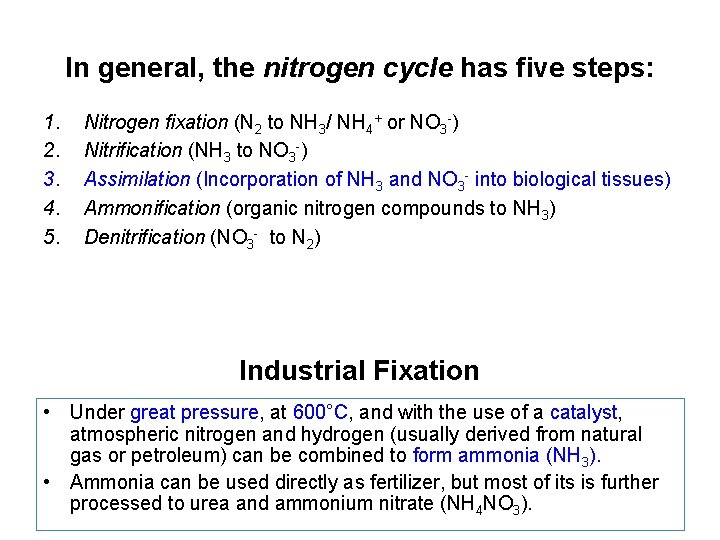
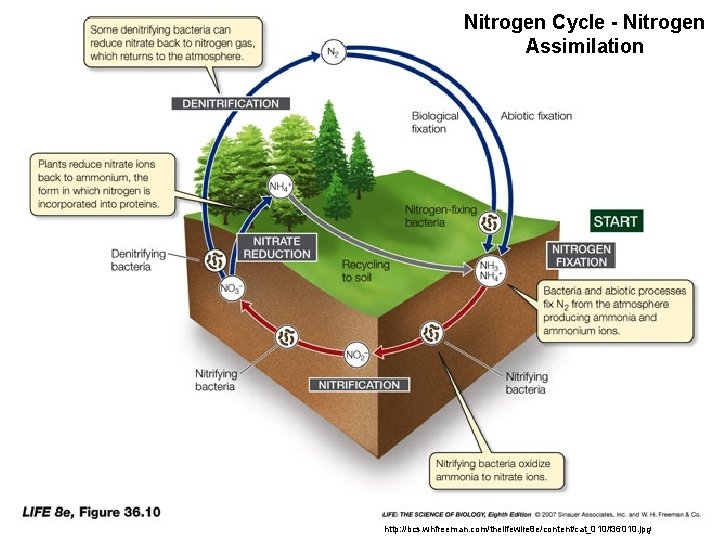
In general, the nitrogen cycle has five steps: 1. 2. 3. 4. 5. Nitrogen fixation (N 2 to NH 3/ NH 4+ or NO 3 -) Nitrification (NH 3 to NO 3 -) Assimilation (Incorporation of NH 3 and NO 3 - into biological tissues) Ammonification (organic nitrogen compounds to NH 3) Denitrification (NO 3 - to N 2) Industrial Fixation • Under great pressure, at 600°C, and with the use of a catalyst, atmospheric nitrogen and hydrogen (usually derived from natural gas or petroleum) can be combined to form ammonia (NH 3). • Ammonia can be used directly as fertilizer, but most of its is further processed to urea and ammonium nitrate (NH 4 NO 3).
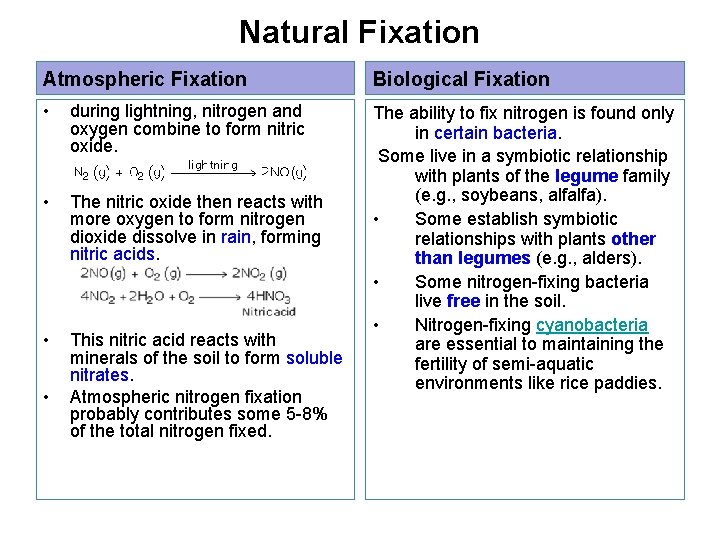
Natural Fixation Atmospheric Fixation Biological Fixation • during lightning, nitrogen and oxygen combine to form nitric oxide. • The nitric oxide then reacts with more oxygen to form nitrogen dioxide dissolve in rain, forming nitric acids. • This nitric acid reacts with minerals of the soil to form soluble nitrates. Atmospheric nitrogen fixation probably contributes some 5 -8% of the total nitrogen fixed. The ability to fix nitrogen is found only in certain bacteria. Some live in a symbiotic relationship with plants of the legume family (e. g. , soybeans, alfalfa). • Some establish symbiotic relationships with plants other than legumes (e. g. , alders). • Some nitrogen-fixing bacteria live free in the soil. • Nitrogen-fixing cyanobacteria are essential to maintaining the fertility of semi-aquatic environments like rice paddies. •
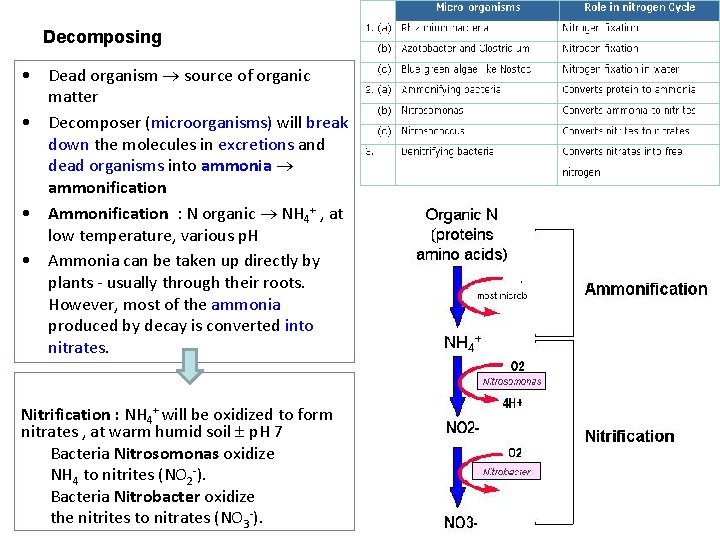
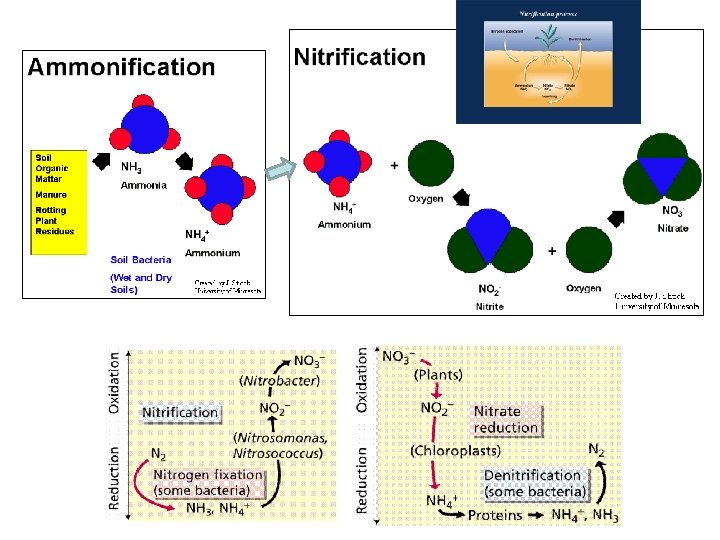
Decomposing • Dead organism source of organic matter • Decomposer (microorganisms) will break down the molecules in excretions and dead organisms into ammonia ammonification • Ammonification : N organic NH 4+ , at low temperature, various p. H • Ammonia can be taken up directly by plants - usually through their roots. However, most of the ammonia produced by decay is converted into nitrates. Nitrification : NH 4+ will be oxidized to form nitrates , at warm humid soil p. H 7 Bacteria Nitrosomonas oxidize NH 4 to nitrites (NO 2 -). Bacteria Nitrobacter oxidize the nitrites to nitrates (NO 3 -).
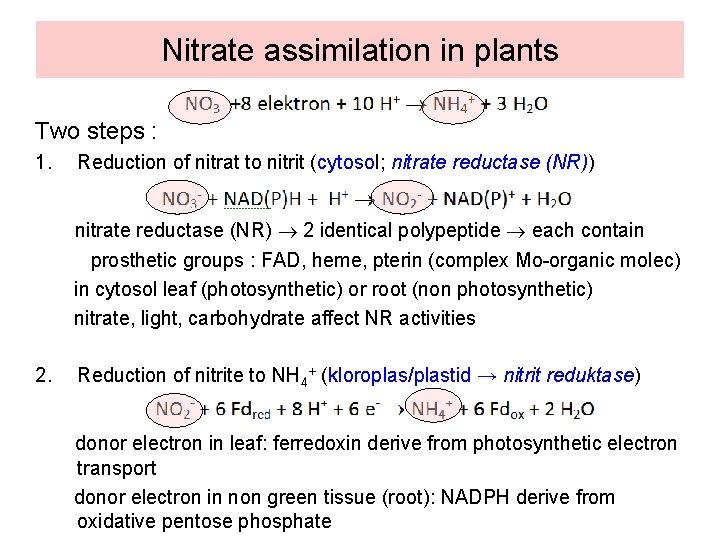
Nitrate assimilation in plants Two steps : 1. Reduction of nitrat to nitrit (cytosol; nitrate reductase (NR)) nitrate reductase (NR) 2 identical polypeptide each contain prosthetic groups : FAD, heme, pterin (complex Mo-organic molec) in cytosol leaf (photosynthetic) or root (non photosynthetic) nitrate, light, carbohydrate affect NR activities 2. Reduction of nitrite to NH 4+ (kloroplas/plastid → nitrit reduktase) donor electron in leaf: ferredoxin derive from photosynthetic electron transport donor electron in non green tissue (root): NADPH derive from oxidative pentose phosphate
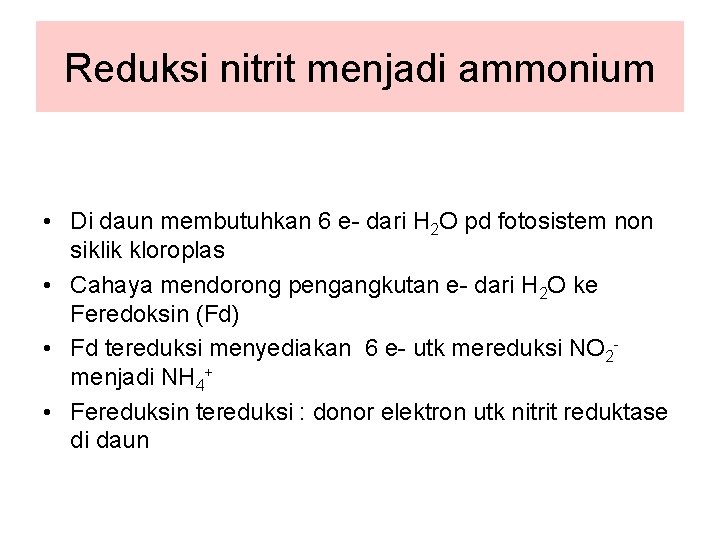
Reduksi nitrit menjadi ammonium • Di daun membutuhkan 6 e- dari H 2 O pd fotosistem non siklik kloroplas • Cahaya mendorong pengangkutan e- dari H 2 O ke Feredoksin (Fd) • Fd tereduksi menyediakan 6 e- utk mereduksi NO 2 menjadi NH 4+ • Fereduksin tereduksi : donor elektron utk nitrit reduktase di daun
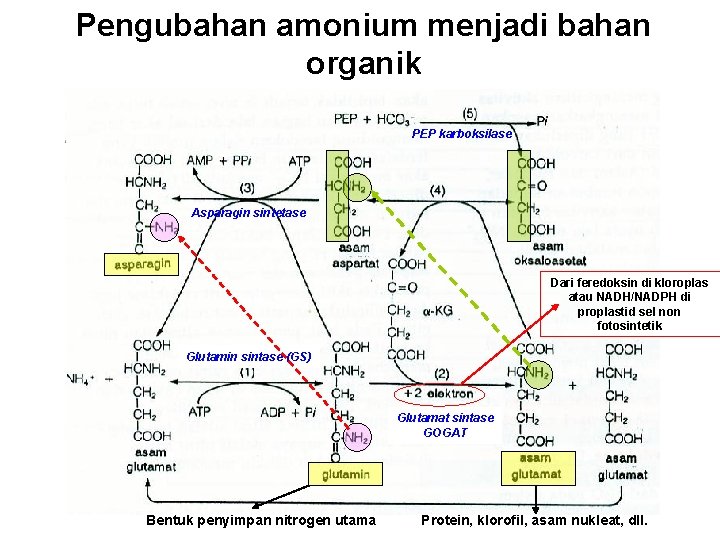
Pengubahan amonium menjadi bahan organik • NH 4+ tidak ditimbun di suatu tempat di tumbuhan • NH 4+ bersifat toksik : menghambat pembentukan ATP di mitokondria / kloroplas • NH 4+ diubah menjadi gugus amina pada glutamin • Selanjutnya membentuk: glutamat, asam aspartat, asparagin
Pengubahan amonium menjadi bahan organik PEP karboksilase Asparagin sintetase Dari feredoksin di kloroplas atau NADH/NADPH di proplastid sel non fotosintetik Glutamin sintase (GS) Glutamat sintase GOGAT Bentuk penyimpan nitrogen utama Protein, klorofil, asam nukleat, dll.
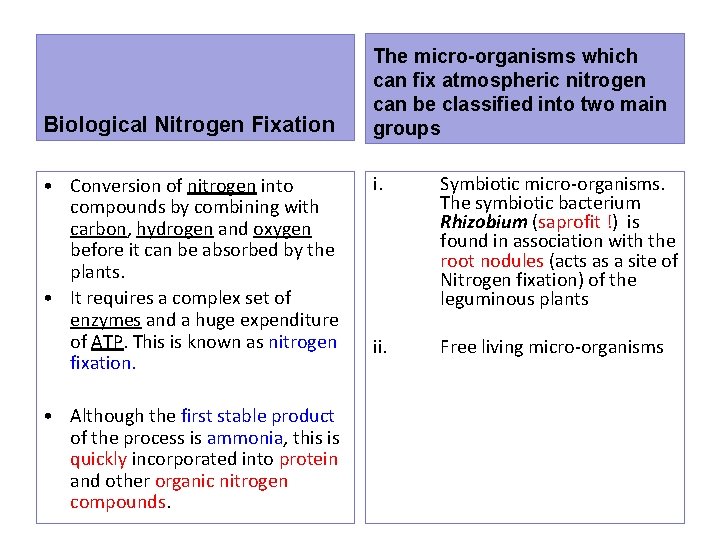
Biological Nitrogen Fixation • Conversion of nitrogen into compounds by combining with carbon, hydrogen and oxygen before it can be absorbed by the plants. • It requires a complex set of enzymes and a huge expenditure of ATP. This is known as nitrogen fixation. • Although the first stable product of the process is ammonia, this is quickly incorporated into protein and other organic nitrogen compounds. The micro-organisms which can fix atmospheric nitrogen can be classified into two main groups i. Symbiotic micro-organisms. The symbiotic bacterium Rhizobium (saprofit !) is found in association with the root nodules (acts as a site of Nitrogen fixation) of the leguminous plants ii. Free living micro-organisms
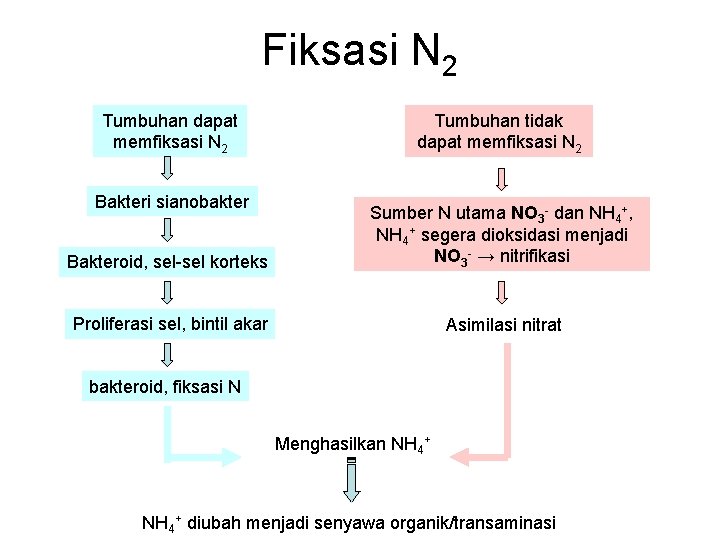
Fiksasi N 2 Tumbuhan dapat memfiksasi N 2 Bakteri sianobakter Tumbuhan tidak dapat memfiksasi N 2 Bakteroid, sel-sel korteks Sumber N utama NO 3 - dan NH 4+, NH 4+ segera dioksidasi menjadi NO 3 - → nitrifikasi Proliferasi sel, bintil akar Asimilasi nitrat bakteroid, fiksasi N Menghasilkan NH 4+ diubah menjadi senyawa organik/transaminasi
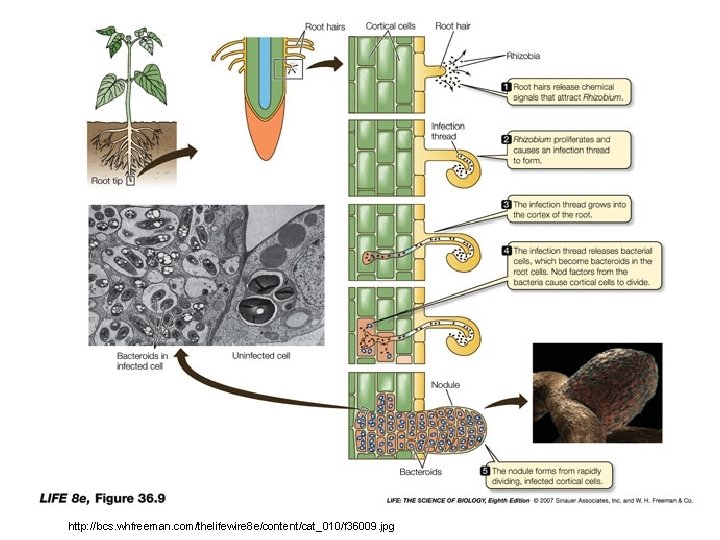
http: //bcs. whfreeman. com/thelifewire 8 e/content/cat_010/f 36009. jpg
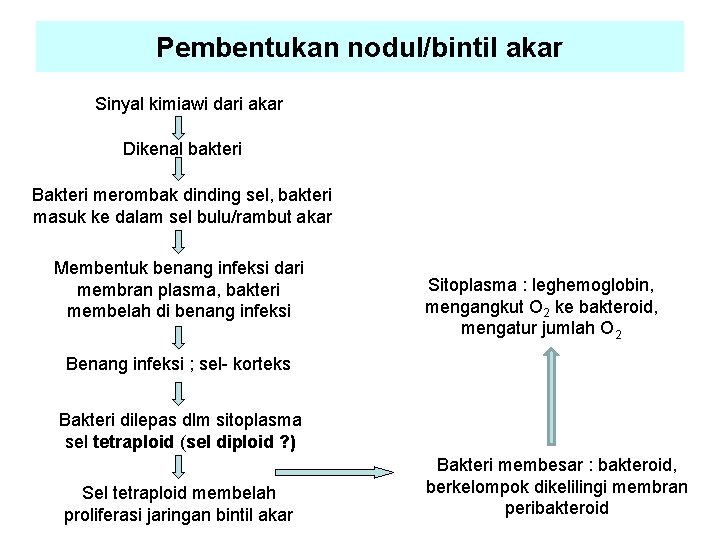
Pembentukan nodul/bintil akar Sinyal kimiawi dari akar Dikenal bakteri Bakteri merombak dinding sel, bakteri masuk ke dalam sel bulu/rambut akar Membentuk benang infeksi dari membran plasma, bakteri membelah di benang infeksi Sitoplasma : leghemoglobin, mengangkut O 2 ke bakteroid, mengatur jumlah O 2 Benang infeksi ; sel- korteks Bakteri dilepas dlm sitoplasma sel tetraploid (sel diploid ? ) Sel tetraploid membelah proliferasi jaringan bintil akar Bakteri membesar : bakteroid, berkelompok dikelilingi membran peribakteroid
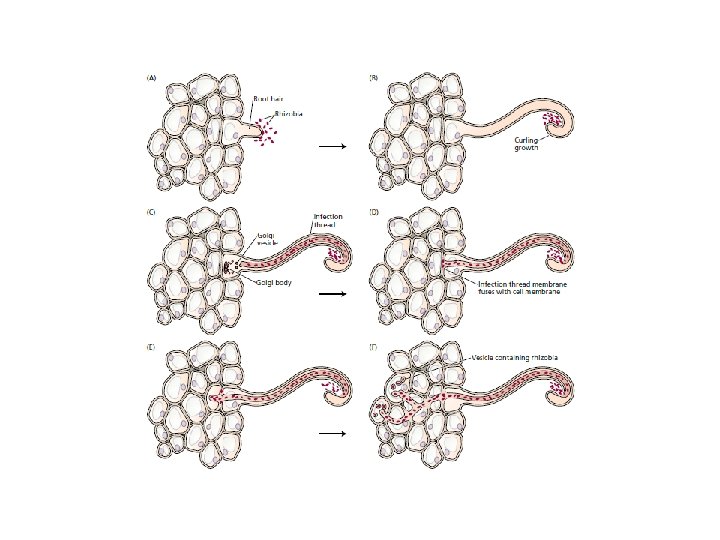
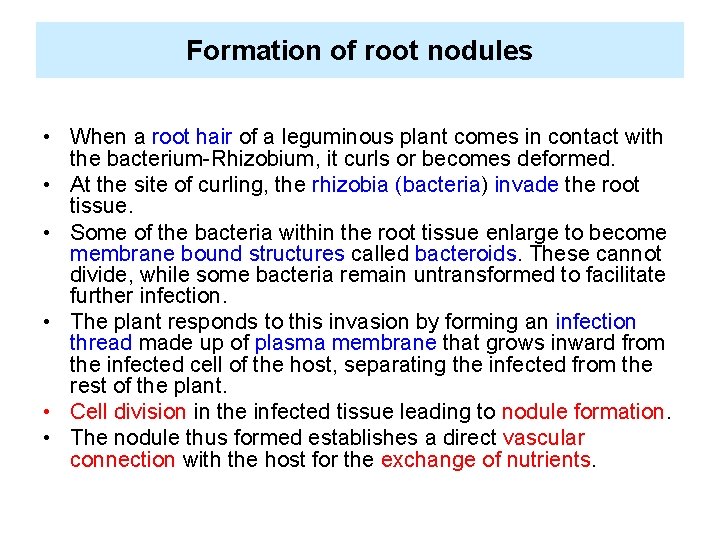
Formation of root nodules • When a root hair of a leguminous plant comes in contact with the bacterium-Rhizobium, it curls or becomes deformed. • At the site of curling, the rhizobia (bacteria) invade the root tissue. • Some of the bacteria within the root tissue enlarge to become membrane bound structures called bacteroids. These cannot divide, while some bacteria remain untransformed to facilitate further infection. • The plant responds to this invasion by forming an infection thread made up of plasma membrane that grows inward from the infected cell of the host, separating the infected from the rest of the plant. • Cell division in the infected tissue leading to nodule formation. • The nodule thus formed establishes a direct vascular connection with the host for the exchange of nutrients.
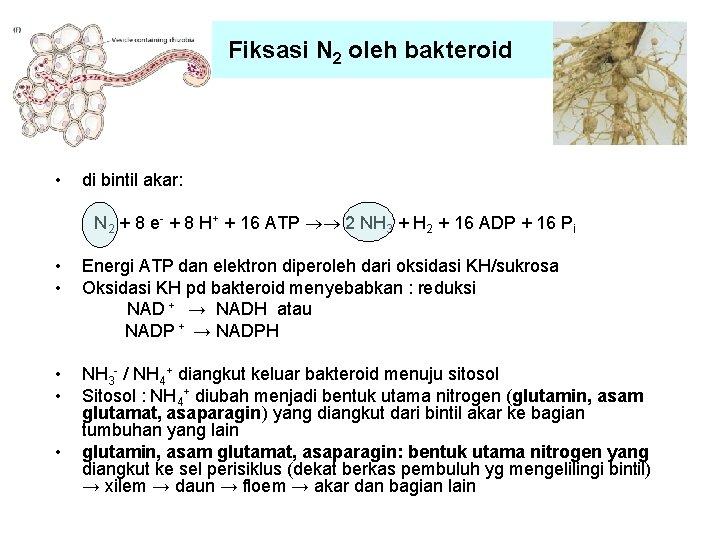
Fiksasi N 2 oleh bakteroid • di bintil akar: N 2 + 8 e- + 8 H+ + 16 ATP 2 NH 3 + H 2 + 16 ADP + 16 Pi • • Energi ATP dan elektron diperoleh dari oksidasi KH/sukrosa Oksidasi KH pd bakteroid menyebabkan : reduksi NAD + → NADH atau NADP + → NADPH • • NH 3 - / NH 4+ diangkut keluar bakteroid menuju sitosol Sitosol : NH 4+ diubah menjadi bentuk utama nitrogen (glutamin, asam glutamat, asaparagin) yang diangkut dari bintil akar ke bagian tumbuhan yang lain glutamin, asam glutamat, asaparagin: bentuk utama nitrogen yang diangkut ke sel perisiklus (dekat berkas pembuluh yg mengelilingi bintil) → xilem → daun → floem → akar dan bagian lain •
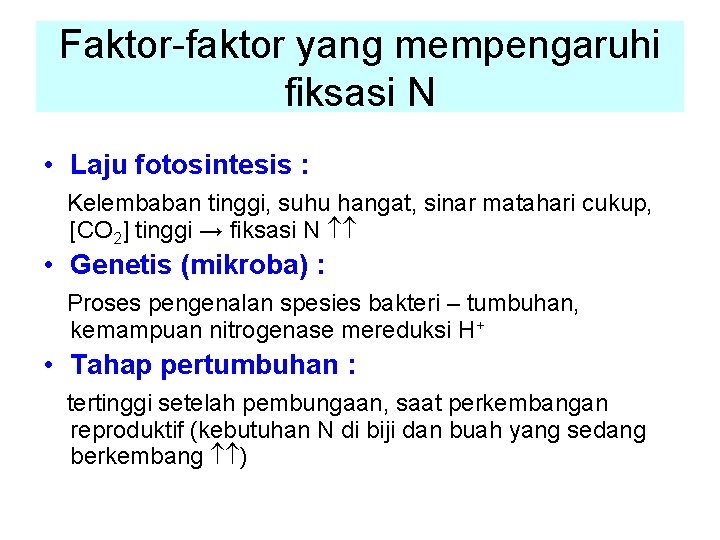
Faktor-faktor yang mempengaruhi fiksasi N • Laju fotosintesis : Kelembaban tinggi, suhu hangat, sinar matahari cukup, [CO 2] tinggi → fiksasi N • Genetis (mikroba) : Proses pengenalan spesies bakteri – tumbuhan, kemampuan nitrogenase mereduksi H+ • Tahap pertumbuhan : tertinggi setelah pembungaan, saat perkembangan reproduktif (kebutuhan N di biji dan buah yang sedang berkembang )
Nitrogen Cycle - Nitrogen Assimilation http: //bcs. whfreeman. com/thelifewire 8 e/content/cat_010/f 36010. jpg