Newtons Universal Law of Gravitation Chapter 8 Gravity




- Slides: 19
Newton’s Universal Law of Gravitation Chapter 8
Gravity What is it? The force of between any in the universe. It depends upon: • The bodies. • the • ( between the two of the ) of the two bodies.
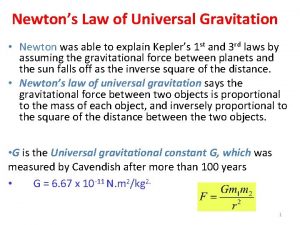
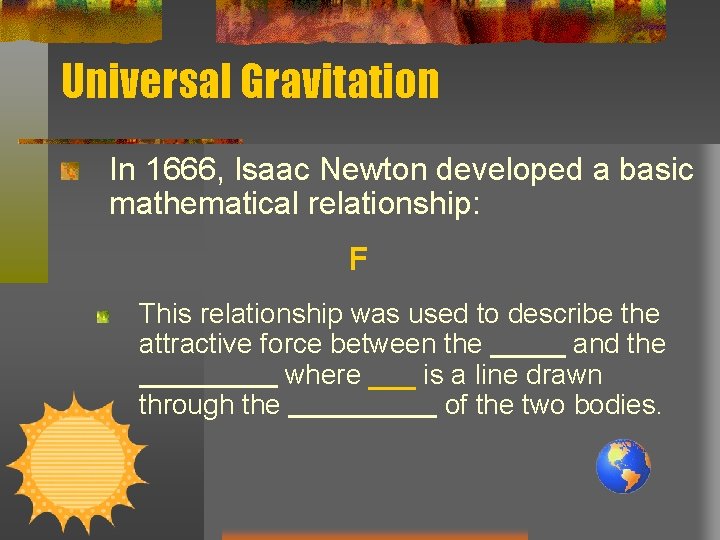
Universal Gravitation In 1666, Isaac Newton developed a basic mathematical relationship: F This relationship was used to describe the attractive force between the and the where ___ is a line drawn through the of the two bodies.
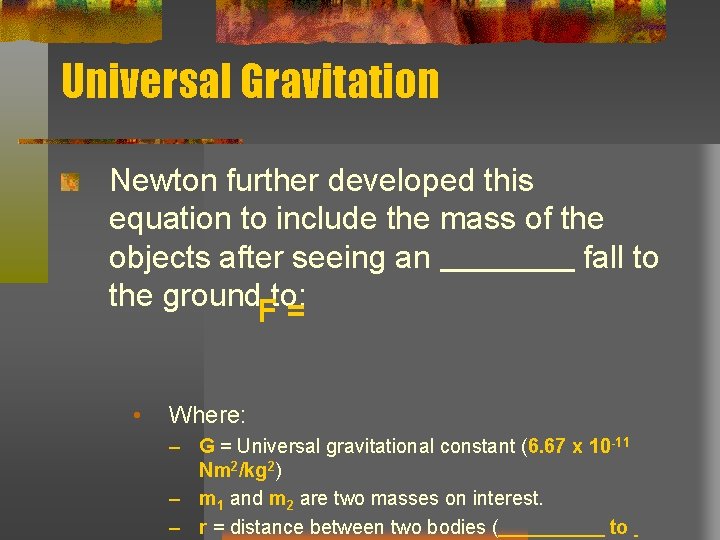
Universal Gravitation Newton further developed this equation to include the mass of the objects after seeing an fall to the ground to: F= • Where: – G = Universal gravitational constant (6. 67 x 10 -11 Nm 2/kg 2) – m 1 and m 2 are two masses on interest. – r = distance between two bodies ( to
Gravitational Fields Objects with MASS produce Field lines point DIRECTIONS from ALL
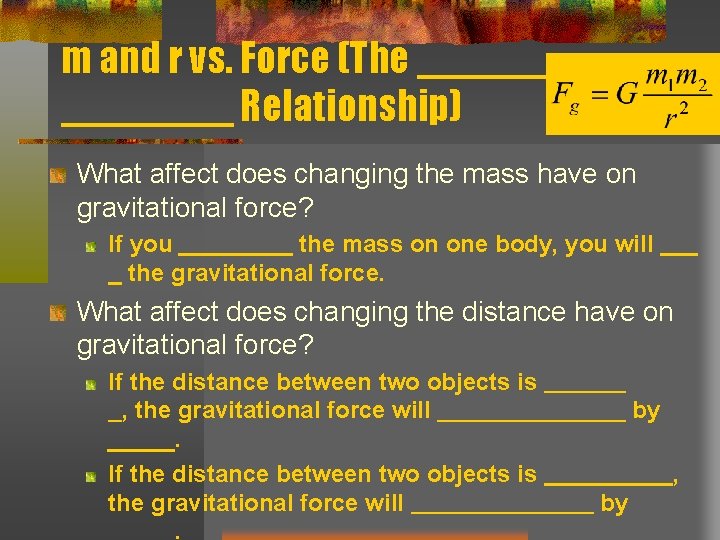
m and r vs. Force (The Relationship) What affect does changing the mass have on gravitational force? If you the mass on one body, you will the gravitational force. What affect does changing the distance have on gravitational force? If the distance between two objects is , the gravitational force will _____. If the distance between two objects is the gravitational force will _____. by , by
The Effects of Mass and Distance on Fg
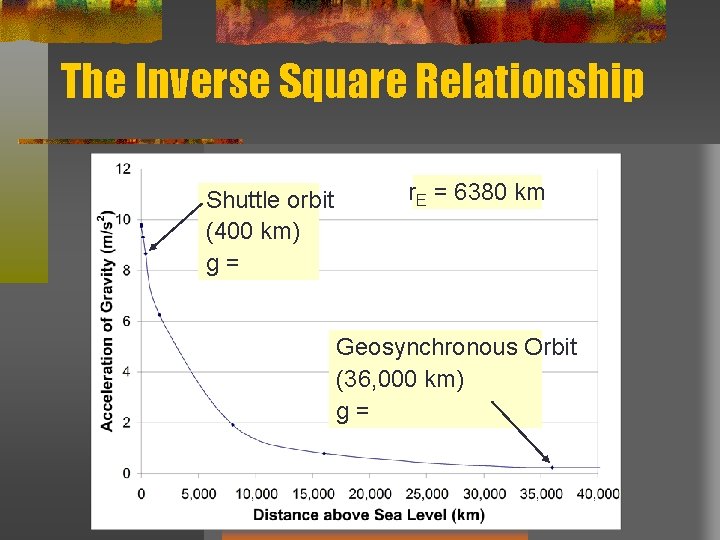
The Inverse Square Relationship Shuttle orbit (400 km) g= r. E = 6380 km Geosynchronous Orbit (36, 000 km) g=
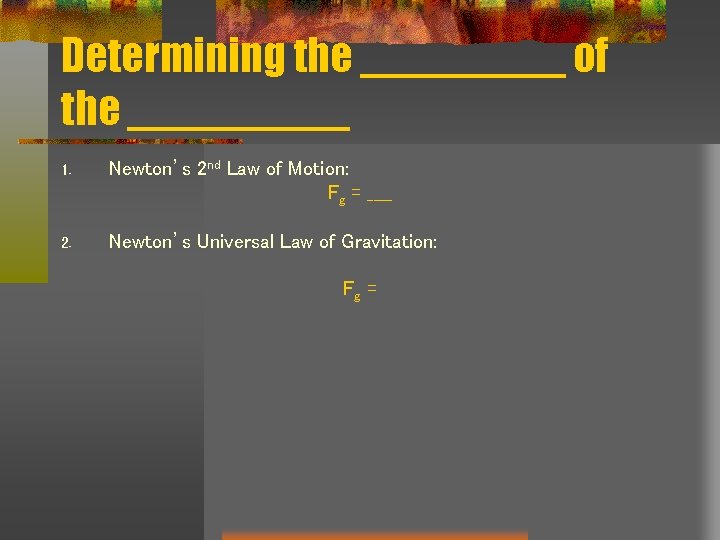
Determining the 1. Newton’s 2 nd Law of Motion: Fg = ____ 2. Newton’s Universal Law of Gravitation: Fg = of
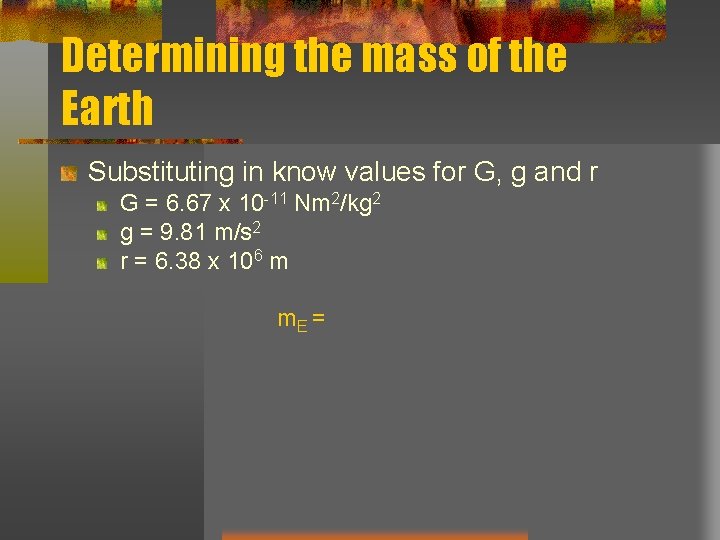
Determining the mass of the Earth Substituting in know values for G, g and r G = 6. 67 x 10 -11 Nm 2/kg 2 g = 9. 81 m/s 2 r = 6. 38 x 106 m m. E =
Why do all objects fall at the rate? The gravitational acceleration of an object like a rock does not depend on its because _____ in the equation for acceleration _____ in the equation for gravitational force This “coincidence” was not understood until Einstein’s general theory of relativity.
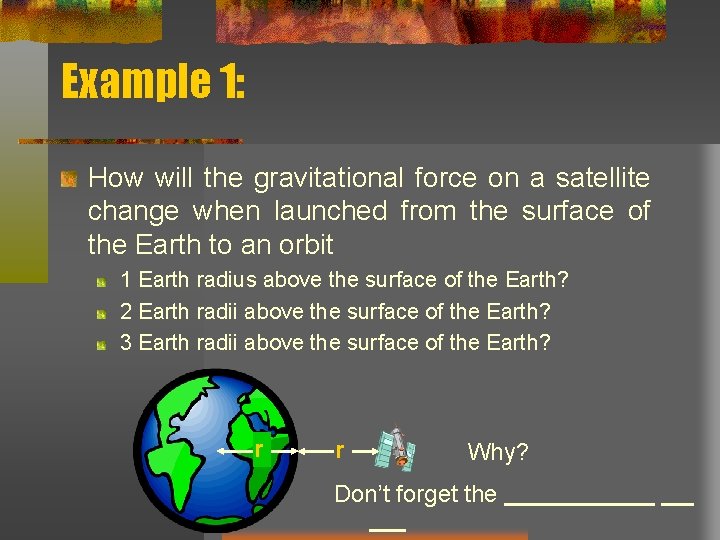
Example 1: How will the gravitational force on a satellite change when launched from the surface of the Earth to an orbit 1 Earth radius above the surface of the Earth? 2 Earth radii above the surface of the Earth? 3 Earth radii above the surface of the Earth? r r Why? Don’t forget the
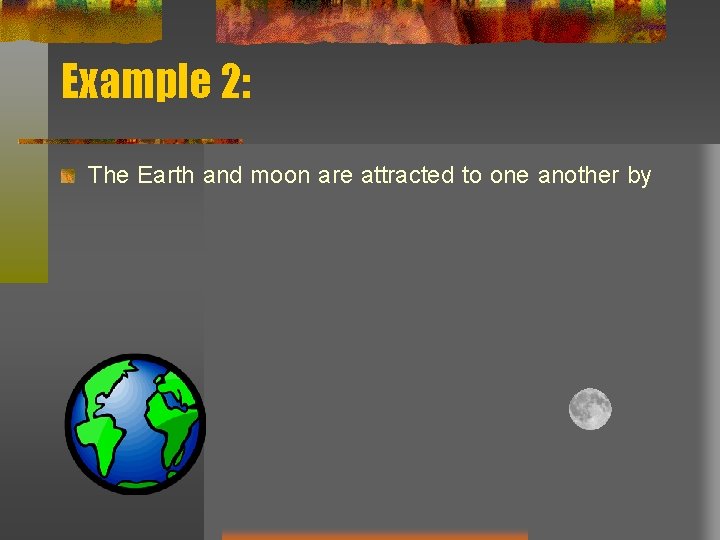
Example 2: The Earth and moon are attracted to one another by
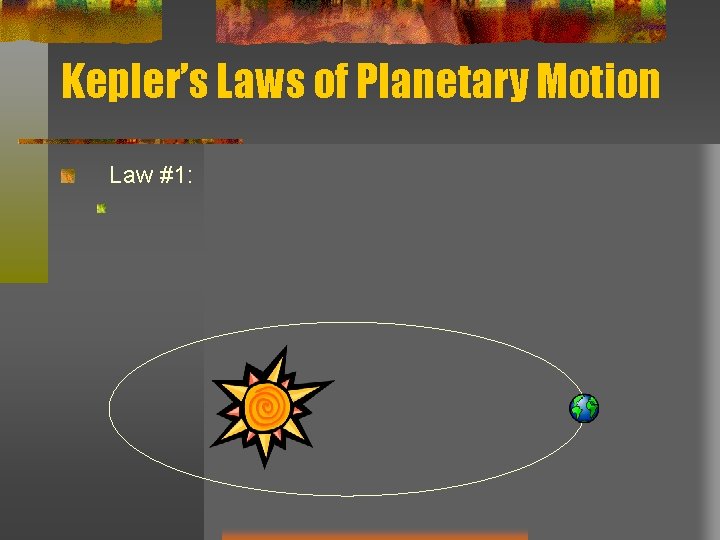
Kepler’s Laws of Planetary Motion Law #1:
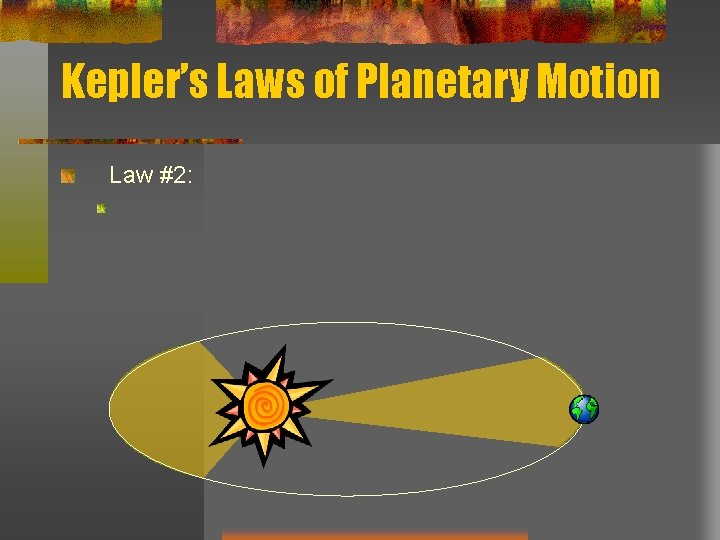
Kepler’s Laws of Planetary Motion Law #2:
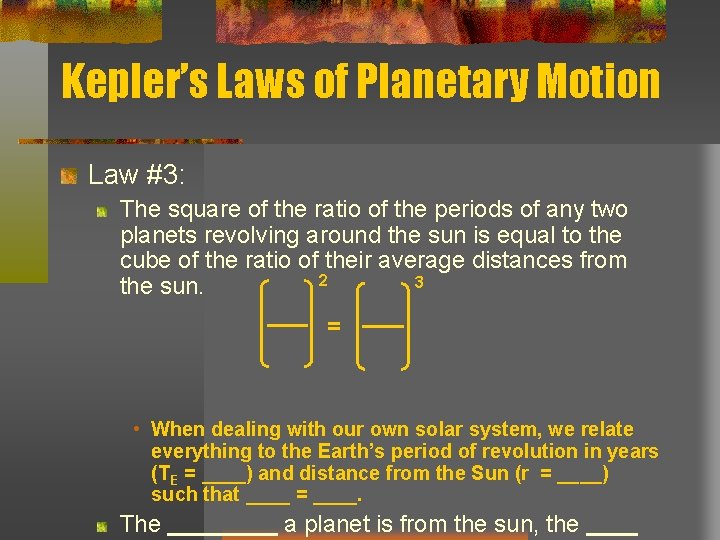
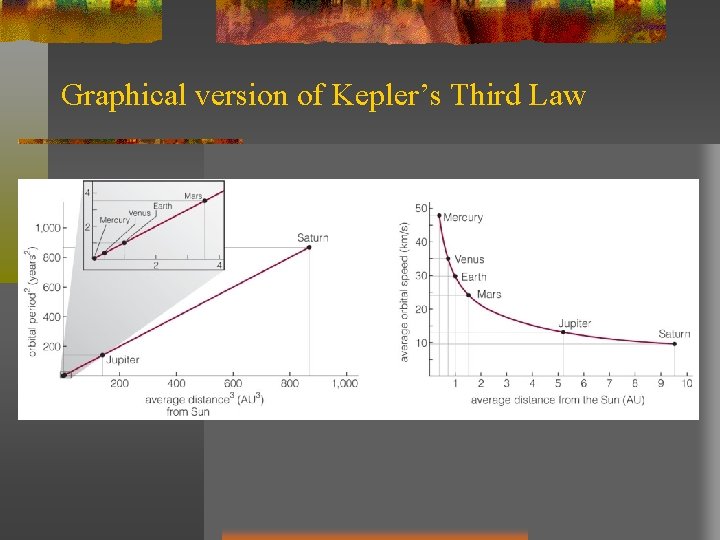
Kepler’s Laws of Planetary Motion Law #3: The square of the ratio of the periods of any two planets revolving around the sun is equal to the cube of the ratio of their average distances from 2 3 the sun. = • When dealing with our own solar system, we relate everything to the Earth’s period of revolution in years (TE = ____) and distance from the Sun (r = ____) such that ____ = ____. The a planet is from the sun, the
Graphical version of Kepler’s Third Law
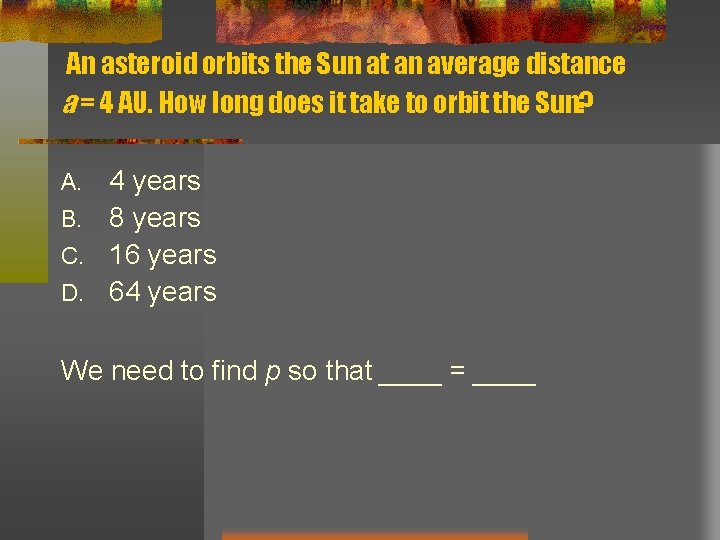
An asteroid orbits the Sun at an average distance a = 4 AU. How long does it take to orbit the Sun? 4 years B. 8 years C. 16 years D. 64 years A. We need to find p so that ____ = ____
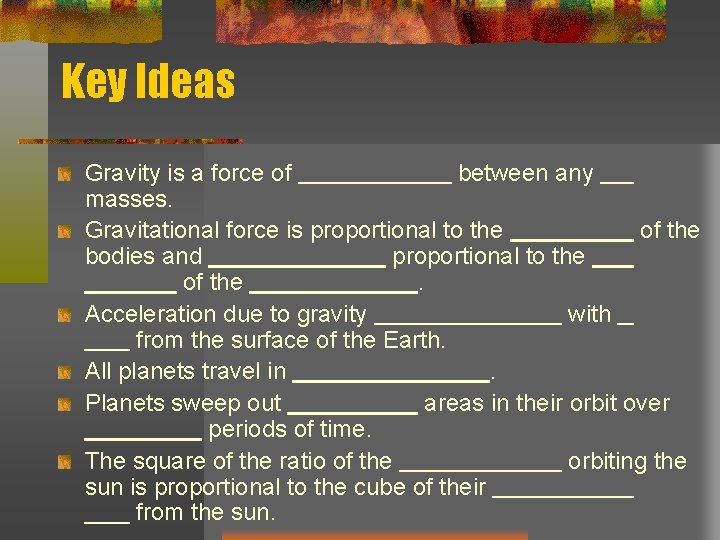
Key Ideas Gravity is a force of between any masses. Gravitational force is proportional to the of the bodies and proportional to the of the. Acceleration due to gravity with from the surface of the Earth. All planets travel in. Planets sweep out areas in their orbit over periods of time. The square of the ratio of the orbiting the sun is proportional to the cube of their from the sun.