National Decentralization Policy Department of Local Governance Ministry


- Slides: 14
National Decentralization Policy Department of Local Governance Ministry of Home and Cultural Affairs
Financial and Technical Support
Outline of the presentation • • Brief background Objectives Principles of the policy Types of decentralization being proposed Framework for enunciation of the Policy Summary of Policy statements Key aspects of the Policy Q&A
Background • NC recommended to conduct a Diagnostic Study on local governance. • Local Governance Assessment Study was commissioned and funded by the SDC. • Study recommended to develop a consolidated National Decentralization Policy • In 2016, the Prime Minister had directed the Home Ministry to review the CDG, GDG and DDG in the form of annual capital grants, and capacity development of the Human Resource in the Local Governments. • Concept Note approved by the 150 th session of the Lhengye Zhungtshog on 9 th January 2018.
Objectives of the Policy • To provide the vision and a holistic framework for decentralization process. • To establish a coherent policy and legal framework that provides strategic guidance for a coordinated and integrated approach to decentralization among all stakeholders • To improve the enabling environment for LGs to be more selfreliant, autonomous with adequate human and financial resources • To lay the foundation for a Decentralization Implementation Plan
Principles of the Policy 1. Unity and harmony 2. Sustainability 3. Gradualism and flexibility 4. Participation 5. Equity and inclusiveness 6. Transparency and accountability 7. Responsiveness 8. Non-partisanship 9. Multi-sector and multi-stakeholder 10. Subsidiarity
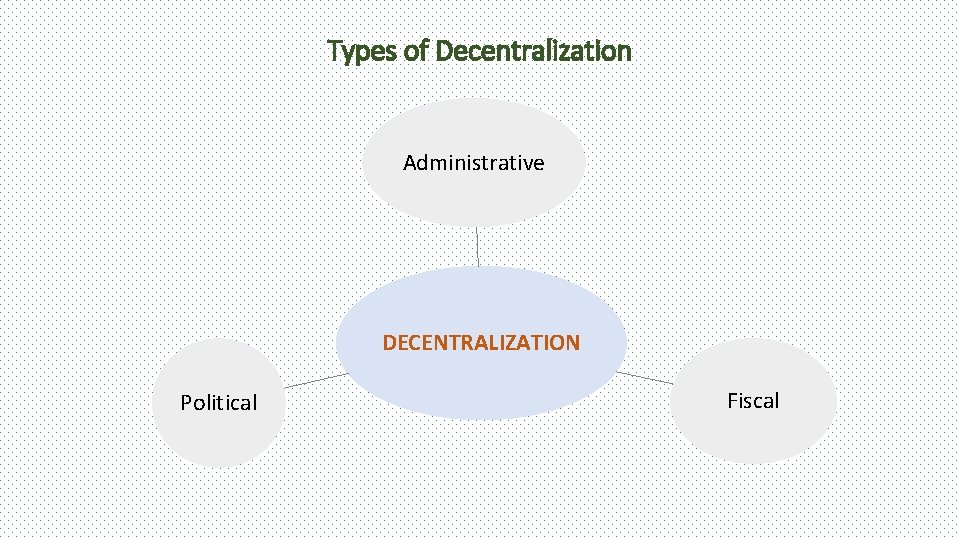
Types of Decentralization Administrative DECENTRALIZATION Political Fiscal
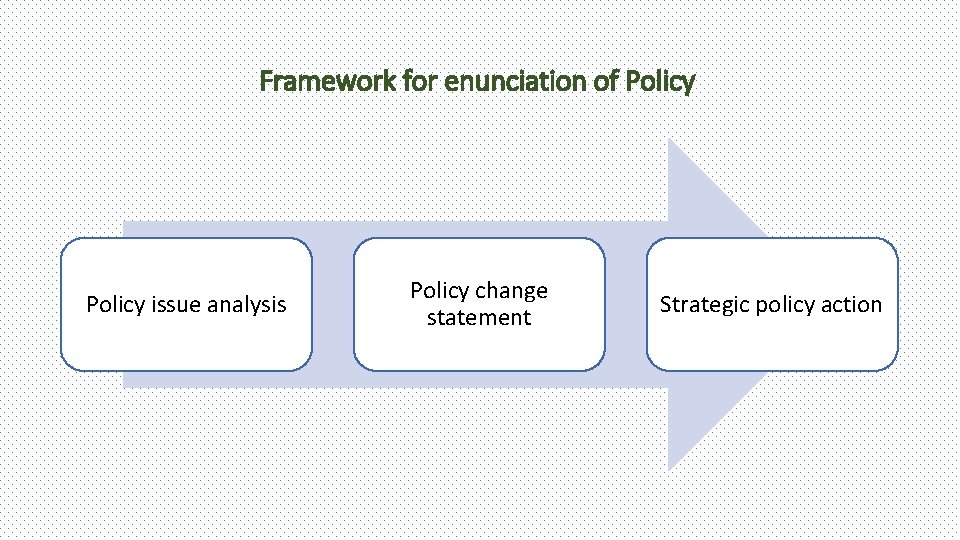
Framework for enunciation of Policy issue analysis Policy change statement Strategic policy action
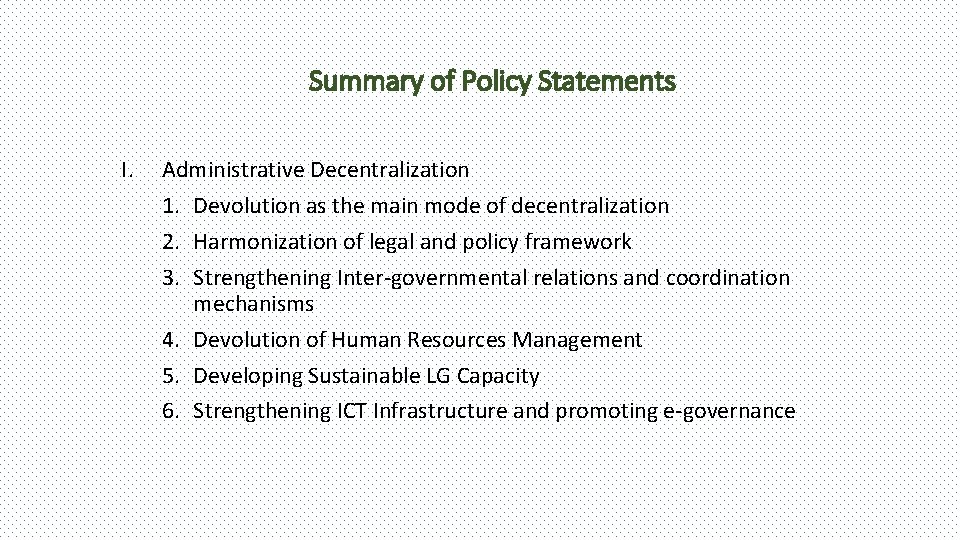
Summary of Policy Statements I. Administrative Decentralization 1. Devolution as the main mode of decentralization 2. Harmonization of legal and policy framework 3. Strengthening Inter-governmental relations and coordination mechanisms 4. Devolution of Human Resources Management 5. Developing Sustainable LG Capacity 6. Strengthening ICT Infrastructure and promoting e-governance
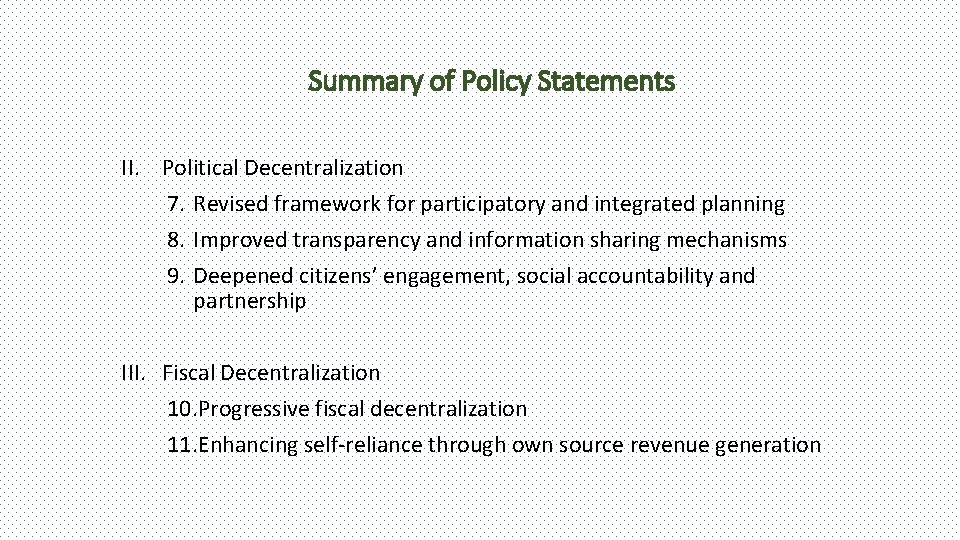
Summary of Policy Statements II. Political Decentralization 7. Revised framework for participatory and integrated planning 8. Improved transparency and information sharing mechanisms 9. Deepened citizens’ engagement, social accountability and partnership III. Fiscal Decentralization 10. Progressive fiscal decentralization 11. Enhancing self-reliance through own source revenue generation
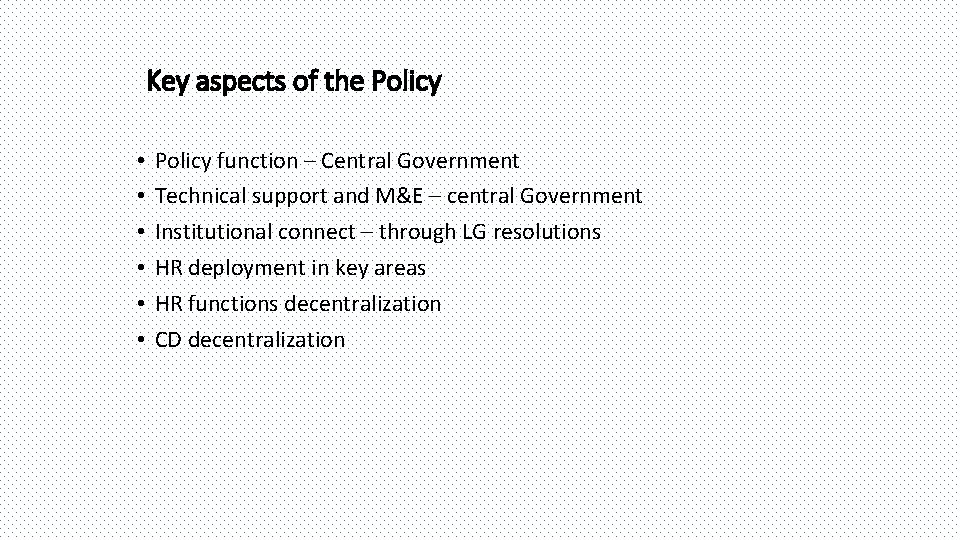
Key aspects of the Policy • • • Policy function – Central Government Technical support and M&E – central Government Institutional connect – through LG resolutions HR deployment in key areas HR functions decentralization CD decentralization
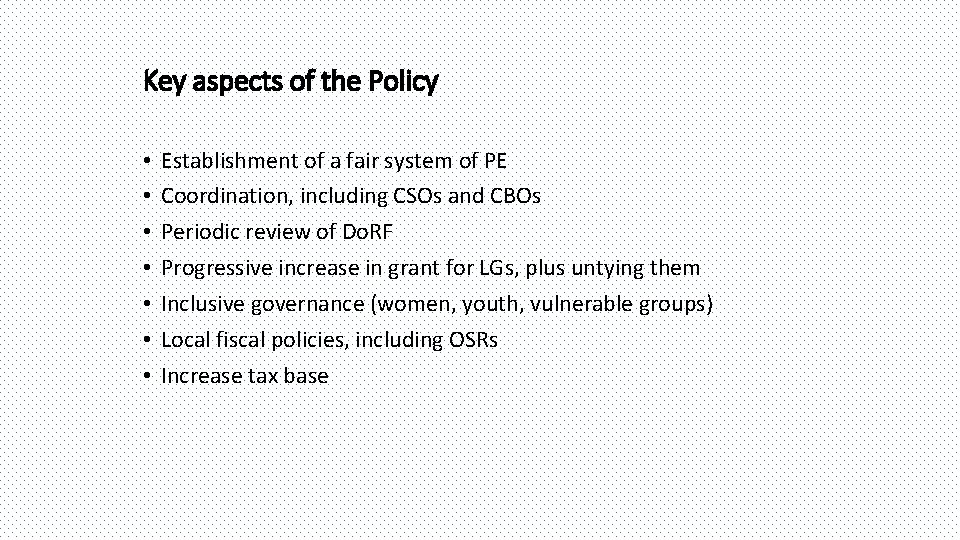
Key aspects of the Policy • • Establishment of a fair system of PE Coordination, including CSOs and CBOs Periodic review of Do. RF Progressive increase in grant for LGs, plus untying them Inclusive governance (women, youth, vulnerable groups) Local fiscal policies, including OSRs Increase tax base
Q&A
KADINCHE LA!