
DECENTRALIZATION Martina Dal Molin mdalmolinliuc it AY 20172018

- Slides: 20
DECENTRALIZATION Martina Dal Molin mdalmolin@liuc. it AY 2017/2018
Agenda • Introduction • Vertical decentralization • Horizontal decentralization • Five types of decentralization 2
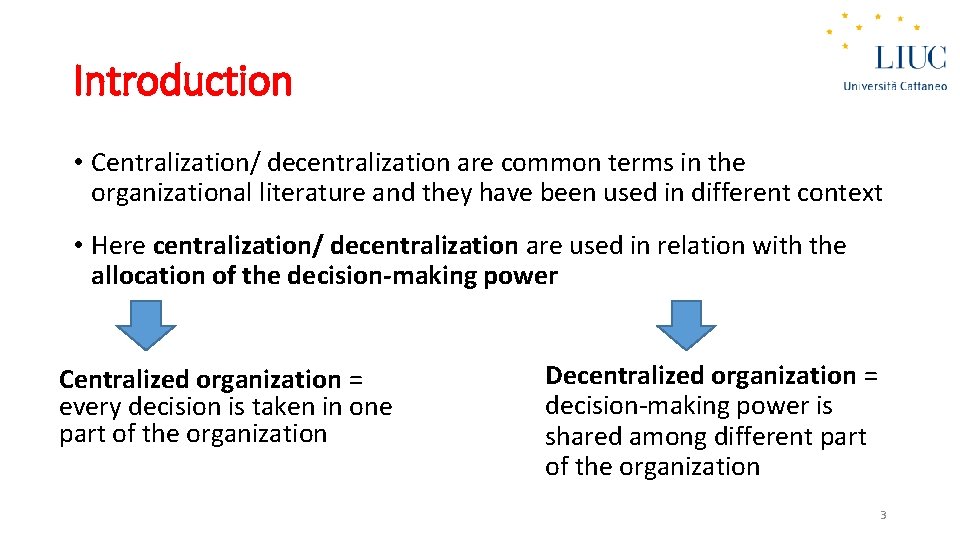
Introduction • Centralization/ decentralization are common terms in the organizational literature and they have been used in different context • Here centralization/ decentralization are used in relation with the allocation of the decision-making power Centralized organization = every decision is taken in one part of the organization Decentralized organization = decision-making power is shared among different part of the organization 3
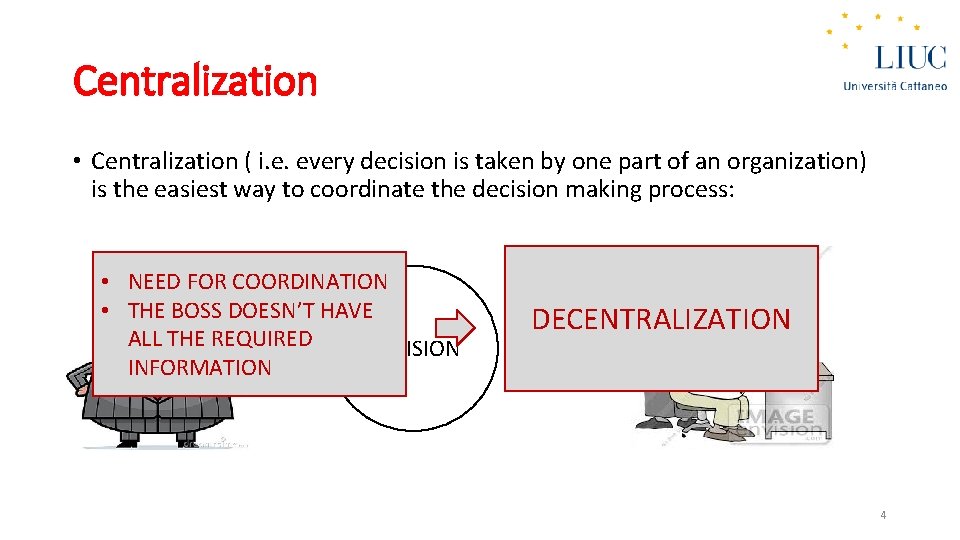
Centralization • Centralization ( i. e. every decision is taken by one part of an organization) is the easiest way to coordinate the decision making process: • NEED FOR COORDINATION • THE BOSS DOESN’T HAVE ALL THE REQUIRED DECISION INFORMATION DECENTRALIZATION 4
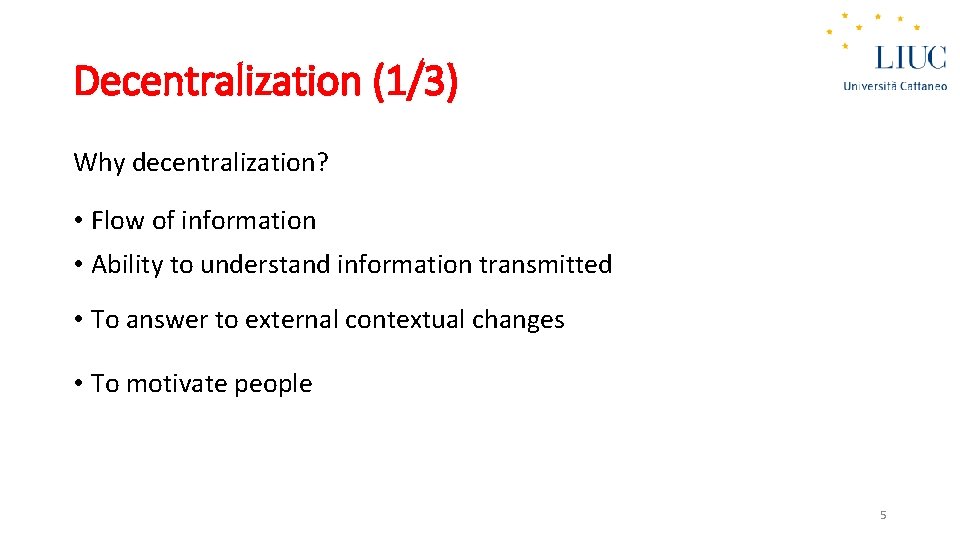
Decentralization (1/3) Why decentralization? • Flow of information • Ability to understand information transmitted • To answer to external contextual changes • To motivate people 5
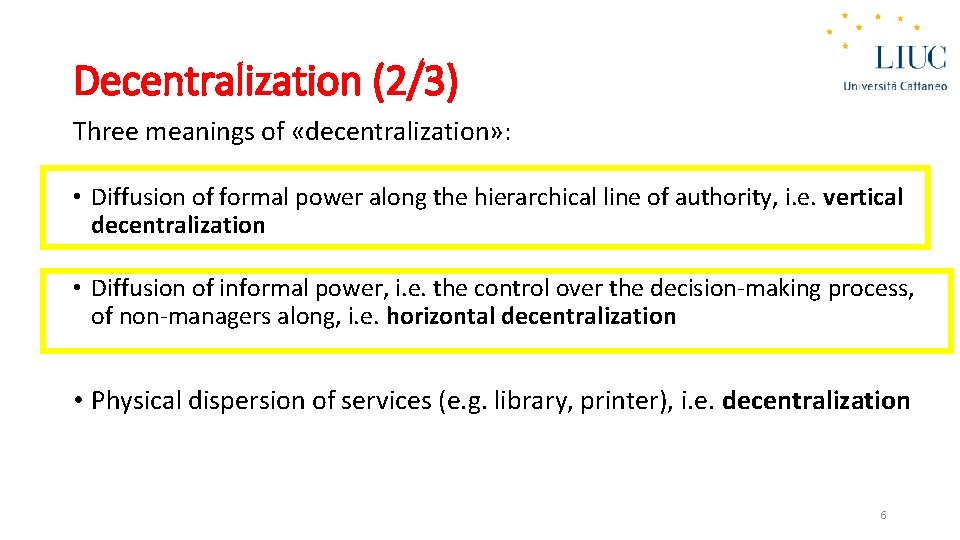
Decentralization (2/3) Three meanings of «decentralization» : • Diffusion of formal power along the hierarchical line of authority, i. e. vertical decentralization • Diffusion of informal power, i. e. the control over the decision-making process, of non-managers along, i. e. horizontal decentralization • Physical dispersion of services (e. g. library, printer), i. e. decentralization 6
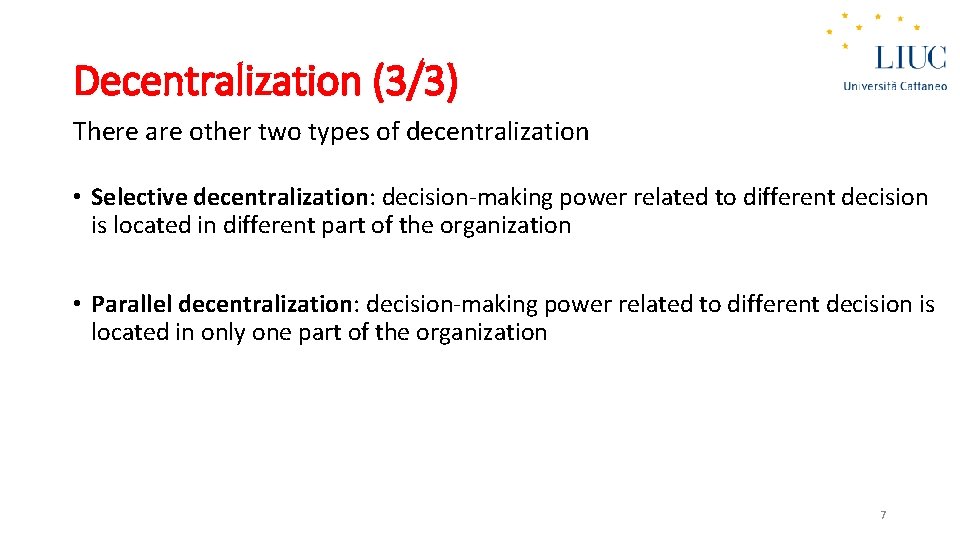
Decentralization (3/3) There are other two types of decentralization • Selective decentralization: decision-making power related to different decision is located in different part of the organization • Parallel decentralization: decision-making power related to different decision is located in only one part of the organization 7
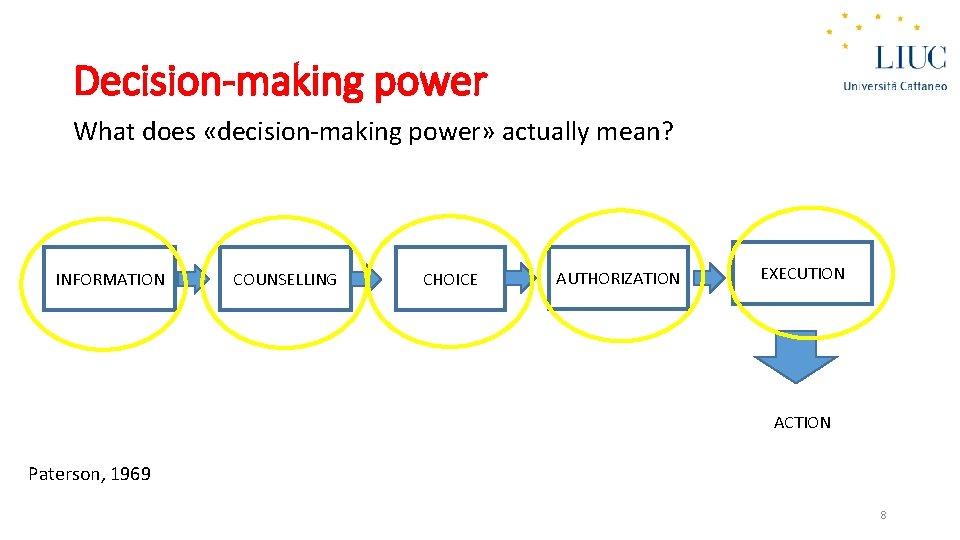
Decision-making power What does «decision-making power» actually mean? INFORMATION COUNSELLING CHOICE AUTHORIZATION EXECUTION ACTION Paterson, 1969 8
VERTICAL DECENTRALIZATION AY 2017/2018
Vertical decentralization • It refers to the delegation of power from the strategic apex to the intermediate line • Focus: formal power • Three key questions: o What power should be delegate? o To which organizational unit? o How to coordinate and control the delegated power? 10
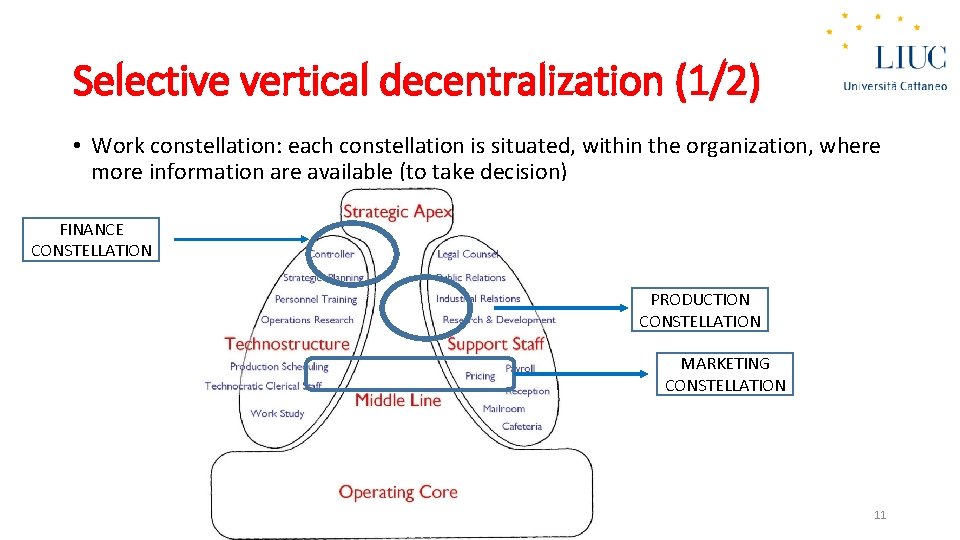
Selective vertical decentralization (1/2) • Work constellation: each constellation is situated, within the organization, where more information are available (to take decision) FINANCE CONSTELLATION PRODUCTION CONSTELLATION MARKETING CONSTELLATION 11
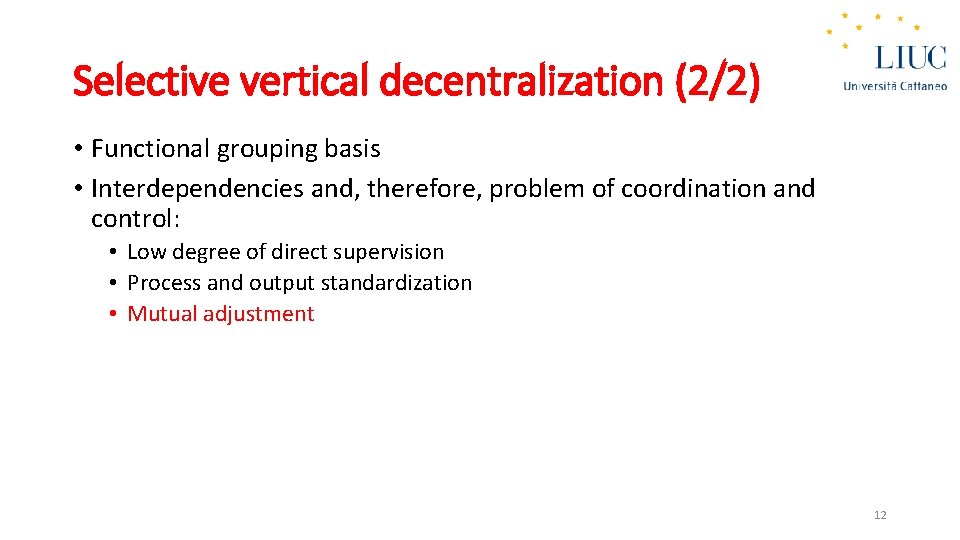
Selective vertical decentralization (2/2) • Functional grouping basis • Interdependencies and, therefore, problem of coordination and control: • Low degree of direct supervision • Process and output standardization • Mutual adjustment 12
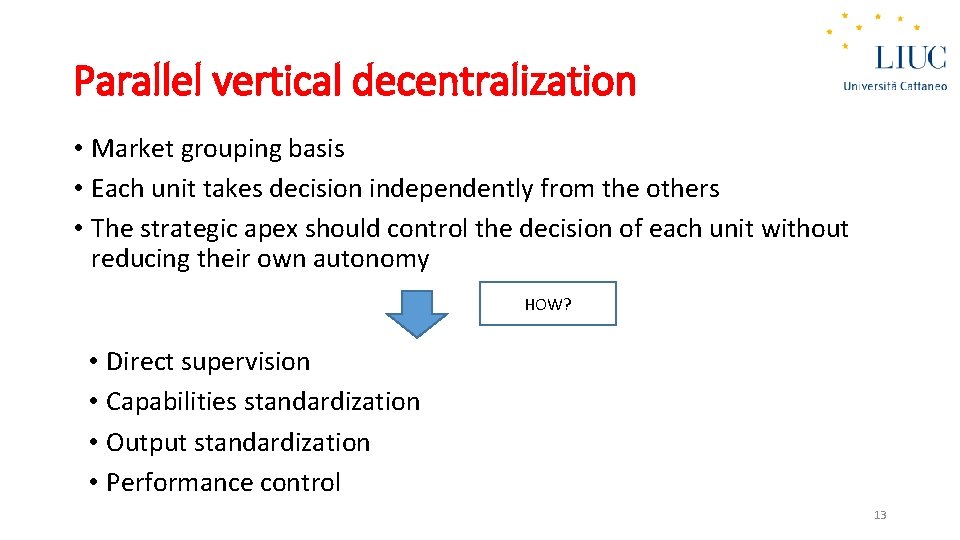
Parallel vertical decentralization • Market grouping basis • Each unit takes decision independently from the others • The strategic apex should control the decision of each unit without reducing their own autonomy HOW? • Direct supervision • Capabilities standardization • Output standardization • Performance control 13
HORIZONTAL DECENTRALIZATION AY 2017/2018
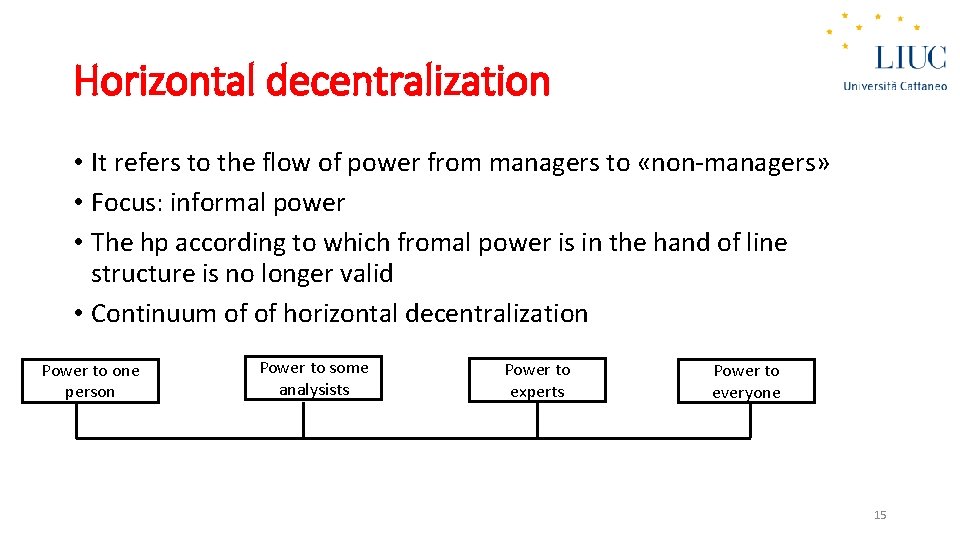
Horizontal decentralization • It refers to the flow of power from managers to «non-managers» • Focus: informal power • The hp according to which fromal power is in the hand of line structure is no longer valid • Continuum of of horizontal decentralization Power to one person Power to some analysists Power to experts Power to everyone 15
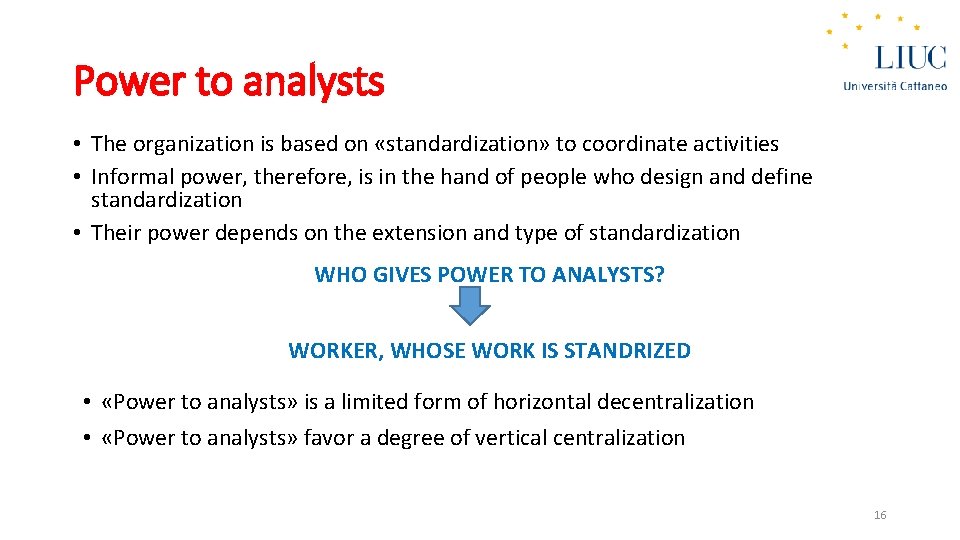
Power to analysts • The organization is based on «standardization» to coordinate activities • Informal power, therefore, is in the hand of people who design and define standardization • Their power depends on the extension and type of standardization WHO GIVES POWER TO ANALYSTS? WORKER, WHOSE WORK IS STANDRIZED • «Power to analysts» is a limited form of horizontal decentralization • «Power to analysts» favor a degree of vertical centralization 16
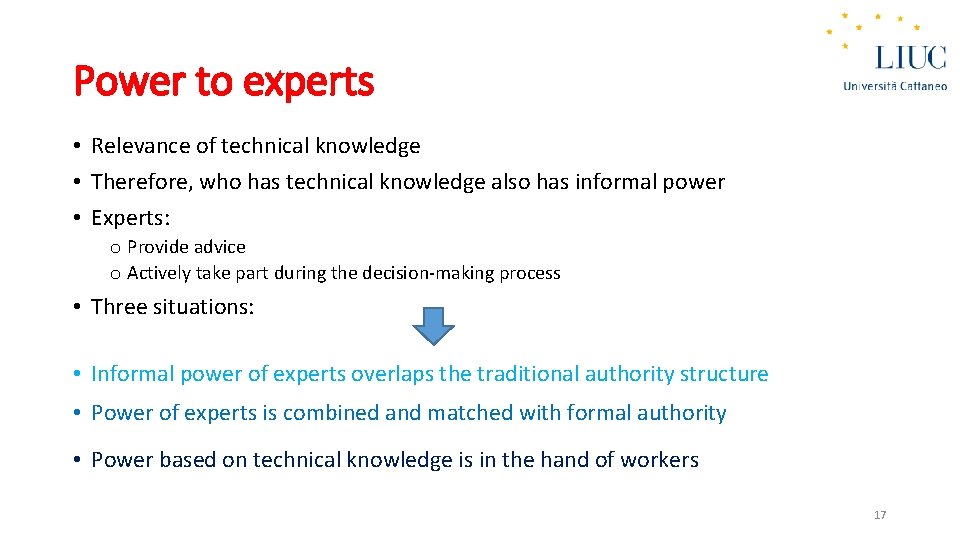
Power to experts • Relevance of technical knowledge • Therefore, who has technical knowledge also has informal power • Experts: o Provide advice o Actively take part during the decision-making process • Three situations: • Informal power of experts overlaps the traditional authority structure • Power of experts is combined and matched with formal authority • Power based on technical knowledge is in the hand of workers 17
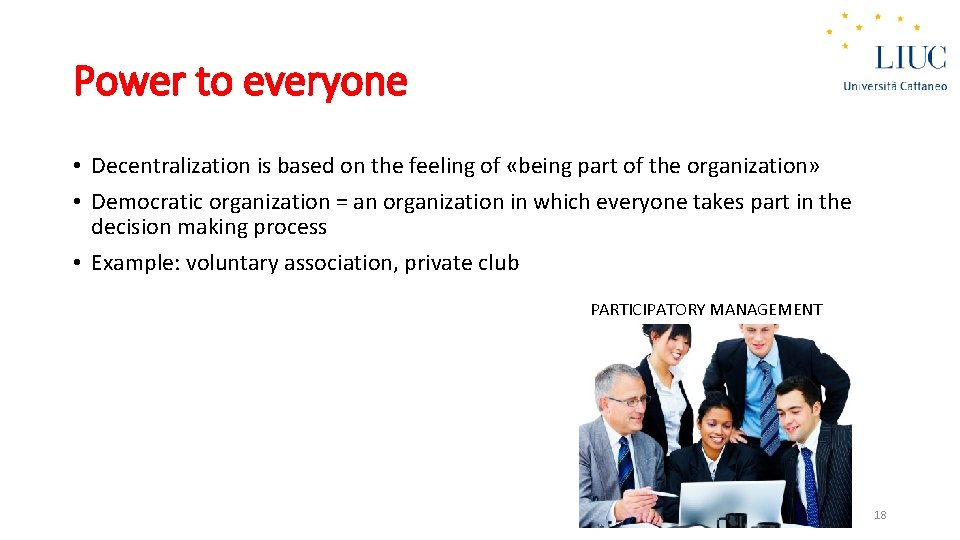
Power to everyone • Decentralization is based on the feeling of «being part of the organization» • Democratic organization = an organization in which everyone takes part in the decision making process • Example: voluntary association, private club PARTICIPATORY MANAGEMENT 18
5 TYPES of DECENTRALIZATION AA 2015/2016
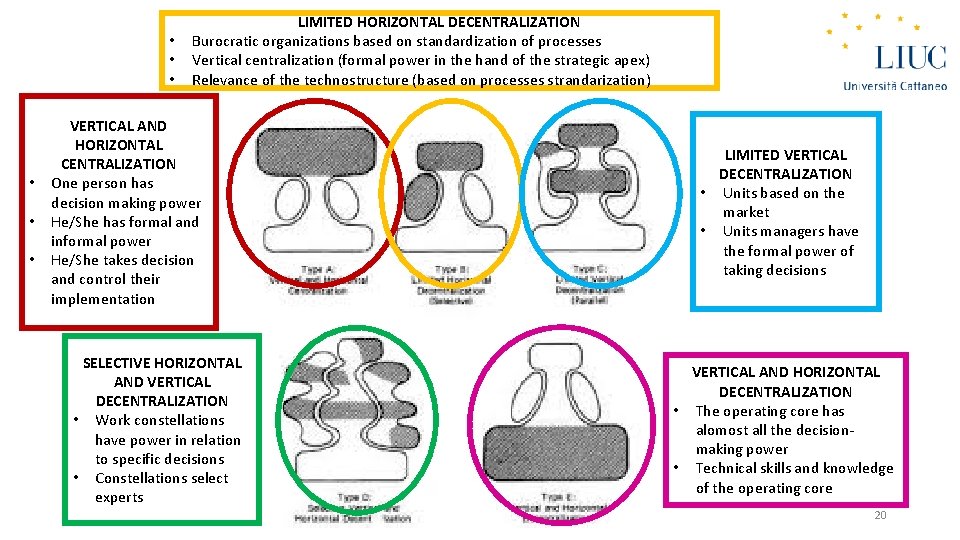
• • • LIMITED HORIZONTAL DECENTRALIZATION Burocratic organizations based on standardization of processes Vertical centralization (formal power in the hand of the strategic apex) Relevance of the technostructure (based on processes strandarization) VERTICAL AND HORIZONTAL CENTRALIZATION One person has decision making power He/She has formal and informal power He/She takes decision and control their implementation SELECTIVE HORIZONTAL AND VERTICAL DECENTRALIZATION • Work constellations have power in relation to specific decisions • Constellations select experts LIMITED VERTICAL DECENTRALIZATION • Units based on the market • Units managers have the formal power of taking decisions VERTICAL AND HORIZONTAL DECENTRALIZATION • The operating core has alomost all the decisionmaking power • Technical skills and knowledge of the operating core 20