Movie of CO 2 and H 2 Permeation


- Slides: 26
Movie of CO 2 and H 2 Permeation Movie courtesy of Josh Chamot, NSF: http: //www. nsf. gov/news_summ. jsp? cntn_id=105797&org=NSF 1
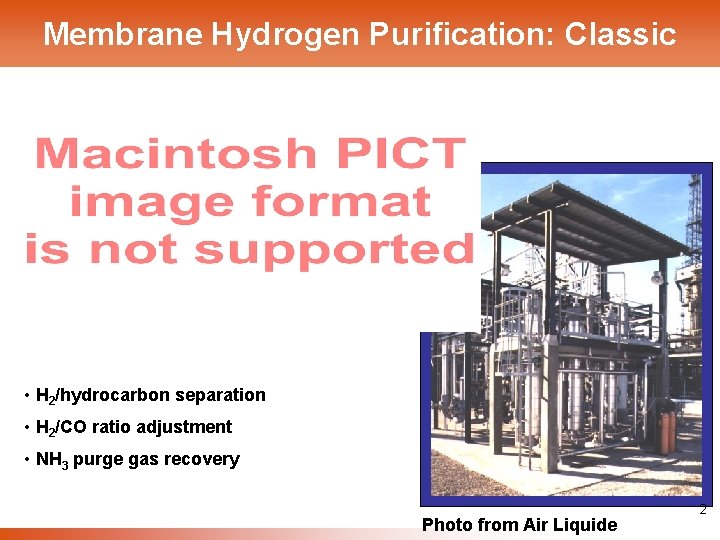
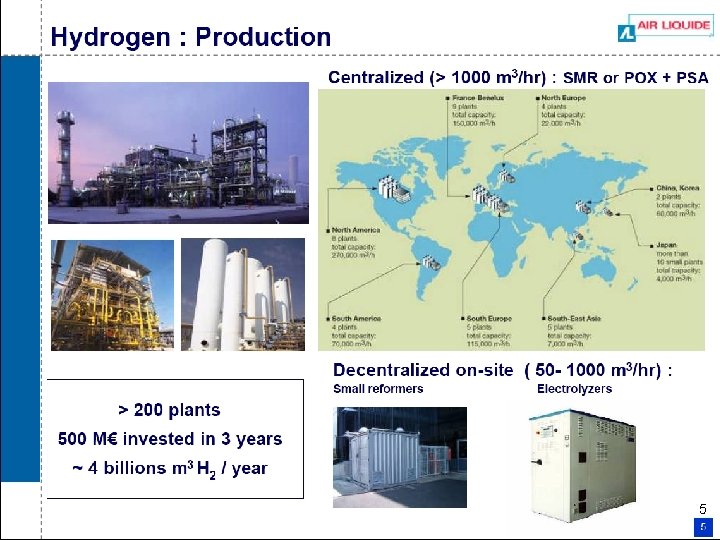
Membrane Hydrogen Purification: Classic • H 2/hydrocarbon separation • H 2/CO ratio adjustment • NH 3 purge gas recovery Photo from Air Liquide 2
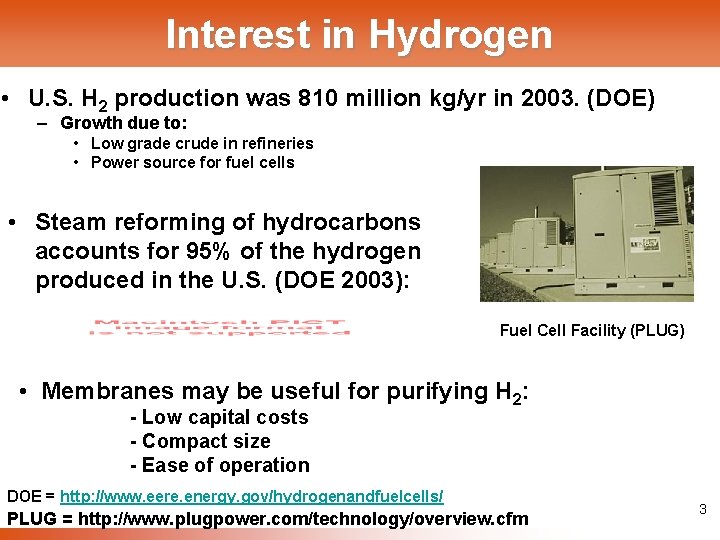
Interest in Hydrogen • U. S. H 2 production was 810 million kg/yr in 2003. (DOE) – Growth due to: • Low grade crude in refineries • Power source for fuel cells • Steam reforming of hydrocarbons accounts for 95% of the hydrogen produced in the U. S. (DOE 2003): Fuel Cell Facility (PLUG) • Membranes may be useful for purifying H 2: - Low capital costs - Compact size - Ease of operation DOE = http: //www. eere. energy. gov/hydrogenandfuelcells/ PLUG = http: //www. plugpower. com/technology/overview. cfm 3
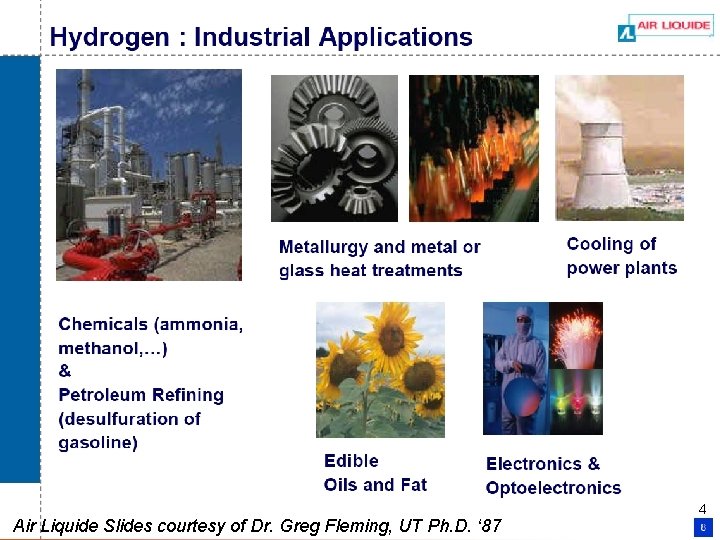
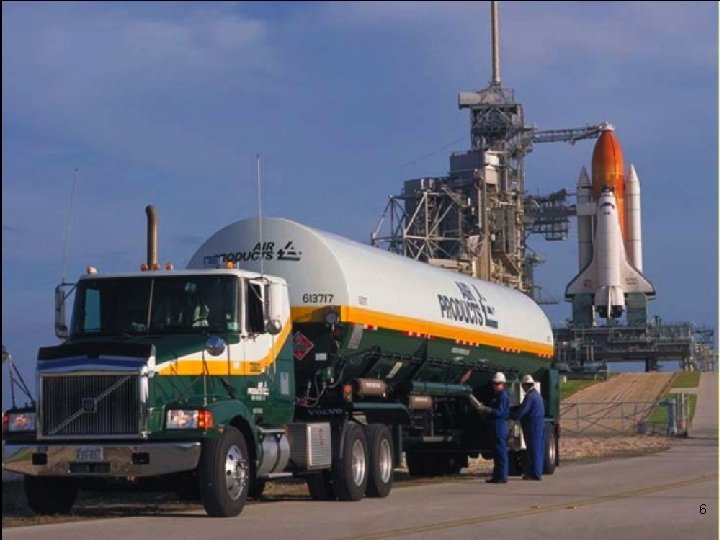
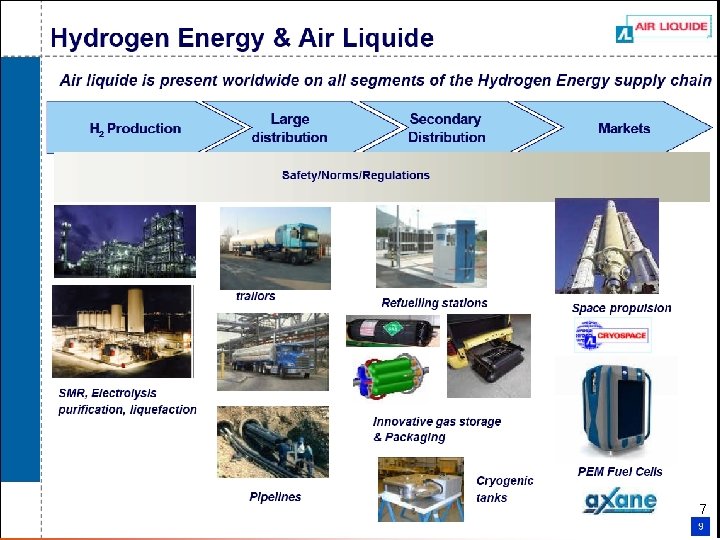
Air Liquide Slides courtesy of Dr. Greg Fleming, UT Ph. D. ‘ 87 4
5
6
7
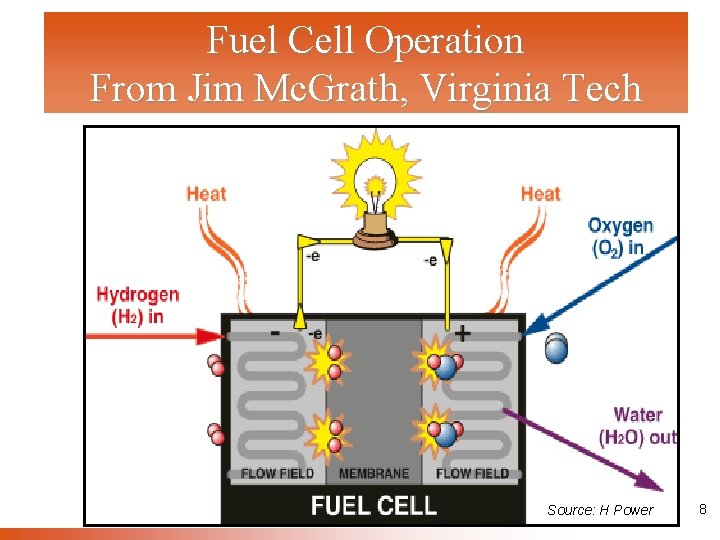
Fuel Cell Operation From Jim Mc. Grath, Virginia Tech Source: H Power 8
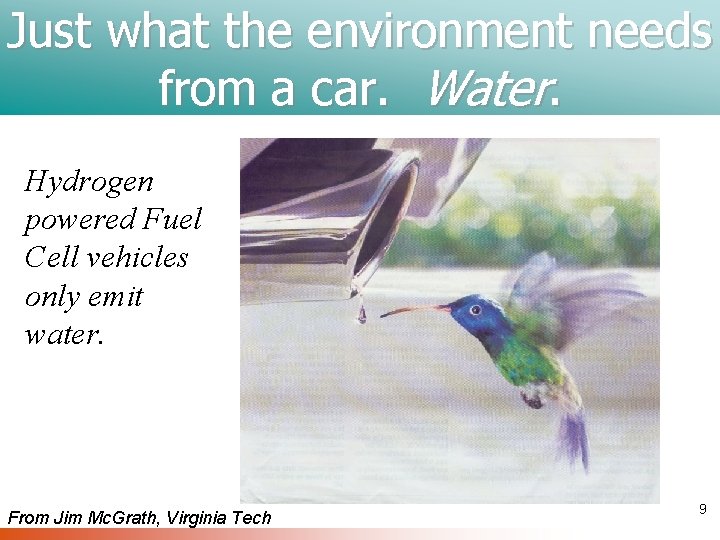
Just what the environment needs from a car. Water. Hydrogen powered Fuel Cell vehicles only emit water. From Jim Mc. Grath, Virginia Tech 9
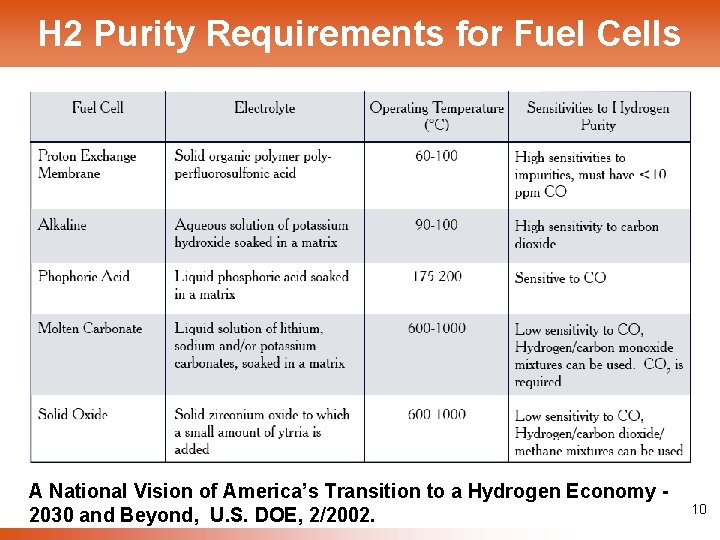
H 2 Purity Requirements for Fuel Cells A National Vision of America’s Transition to a Hydrogen Economy 2030 and Beyond, U. S. DOE, 2/2002. 10
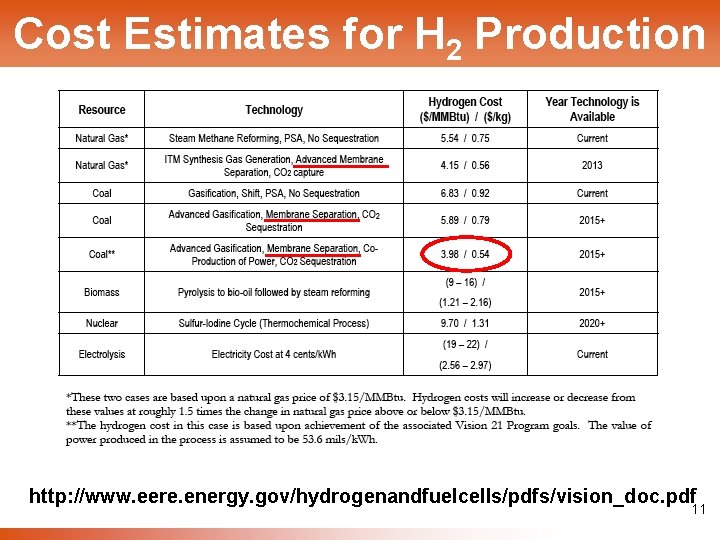
Cost Estimates for H 2 Production http: //www. eere. energy. gov/hydrogenandfuelcells/pdfs/vision_doc. pdf 11
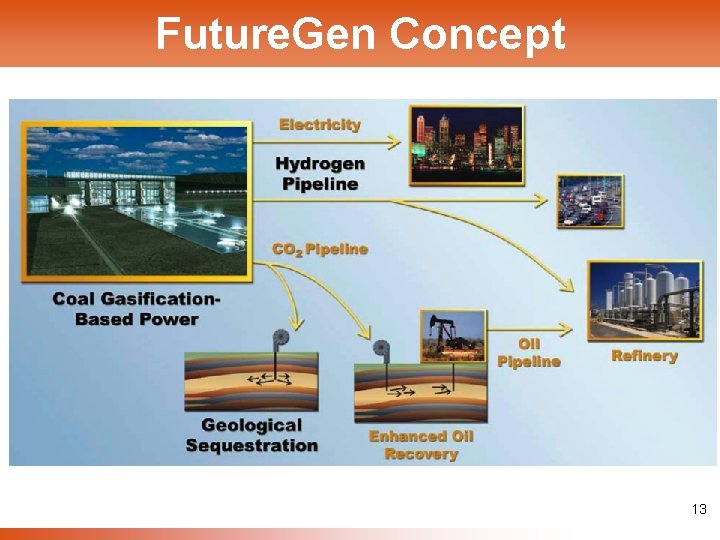
Future. Gen "Today I am pleased to announce that the United States will sponsor a $1 billion, 10 -year demonstration project to create the world's first coal-based, zero-emissions electricity and hydrogen power plant. . . " President George W. Bush February 27, 2003 12
Future. Gen Concept 13
Gas Separations Using Membranes Current applications: • Air separation - mainly N 2 enriched air • Natural gas treatment - acid gas removal • H 2 separation - H 2 from hydrocarbons, ammonia purge, syngas • Removal of vapors from mixtures with light gases (vapor separation) Advantages: • Low energy separation (no phase change) • Reliable (no moving parts) • Small footprint Drawbacks: • Incomplete separation (need higher selectivity) • Low chemical/thermal stability (need more resistant matls. ) 14
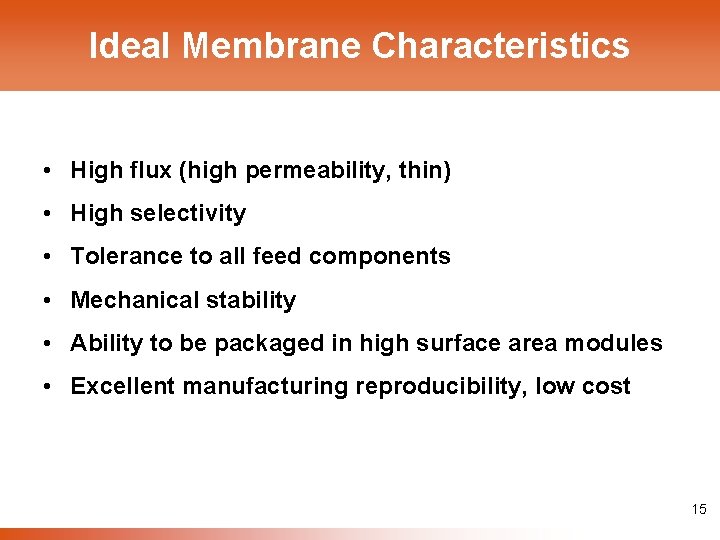
Ideal Membrane Characteristics • High flux (high permeability, thin) • High selectivity • Tolerance to all feed components • Mechanical stability • Ability to be packaged in high surface area modules • Excellent manufacturing reproducibility, low cost 15
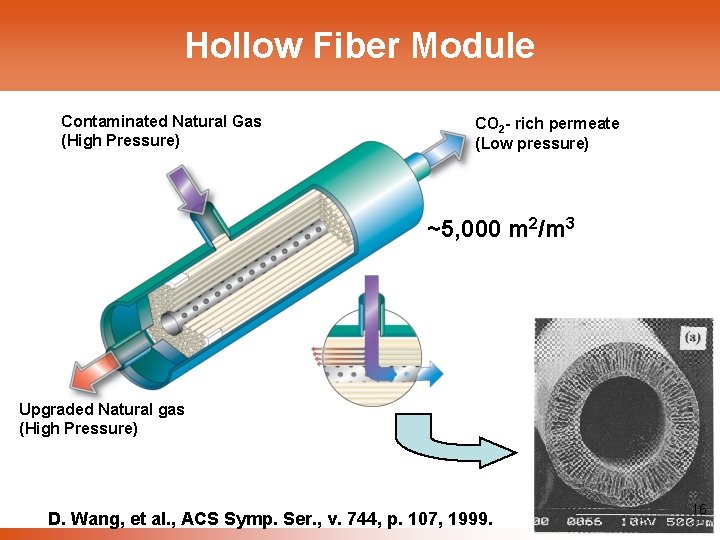
Hollow Fiber Module Contaminated Natural Gas (High Pressure) CO 2 - rich permeate (Low pressure) ~5, 000 m 2/m 3 Upgraded Natural gas (High Pressure) D. Wang, et al. , ACS Symp. Ser. , v. 744, p. 107, 1999. 16
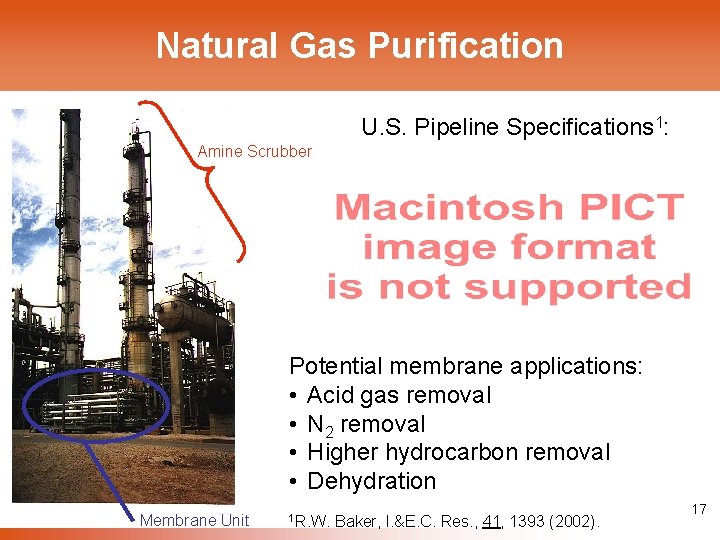
Natural Gas Purification U. S. Pipeline Specifications 1: Amine Scrubber Potential membrane applications: • Acid gas removal • N 2 removal • Higher hydrocarbon removal • Dehydration Membrane Unit 1 R. W. Baker, I. &E. C. Res. , 41, 1393 (2002). 17
Gas Transport in Polymers: Solution-Diffusion Model J. Membr. Sci. , 107, 1 -21 (1995) 18
Characteristic Polymer Permeation Properties PDMS: PSF: 19
Solubility and Diffusivity Characteristics B. D. Freeman and I. Pinnau, "Polymeric Materials for Gas Separations, " in Polymeric Membranes for Gas and Vapor Separations: Chemistry and Materials Science, Edited by B. D. Freeman and I. Pinnau, 20 ACS Symp. Ser. 733, pp. 1 -27 (1999).
Materials Design Approach • Traditional membrane materials Glassy polymers Designed to be strongly size-sieving Low permeability High selectivity due to high diffusion selectivity Upon plasticization, selectivity decreases, sometimes strongly H 2 selective in H 2/CO 2 separations • Our approach Rubbery polymers Designed to be strongly solubility-selective High permeability Selectivity derives primarily from high solubility selectivity Upon plasticization, separation properties can increase in some cases (CO 2/H 2) 21
Effect of Polar Groups in Liquid Solvents on CO 2 Solubility and CO 2/N 2 Solubility Selectivity THF ACN Lin and Freeman, J. Molecular Structure, 739(1 -3), 57 -74 (2005). 22
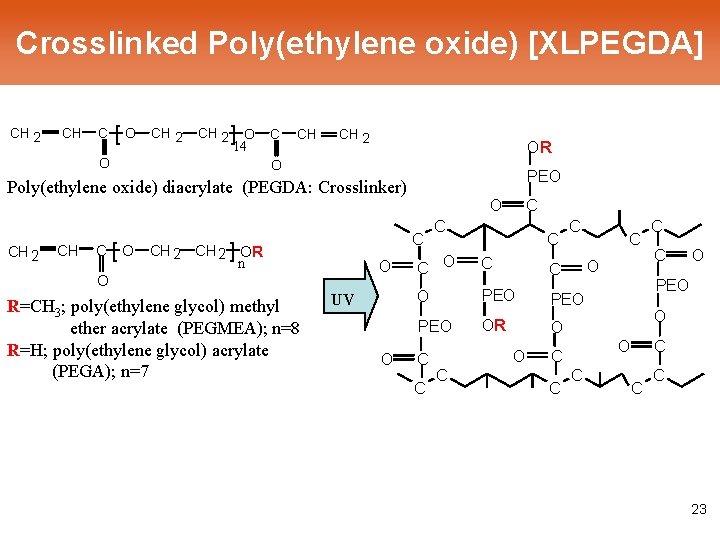
Crosslinked Poly(ethylene oxide) [XLPEGDA] CH 2 CH C [O CH 2 ] O 14 O C CH CH 2 OR O PEO Poly(ethylene oxide) diacrylate (PEGDA: Crosslinker) O CH 2 CH C [O C CH 2 ] OR n O O R=CH 3; poly(ethylene glycol) methyl ether acrylate (PEGMEA); n=8 R=H; poly(ethylene glycol) acrylate (PEGA); n=7 UV O C C C O PEO PEO OR O C C C O PEO O O C C C 23
Mixed Gas Separation Lin, Haiqing, E. van Wagner, B. D. Freeman, L. G. Toy, and R. P. Gupta, “Plasticization 24 Enhanced H 2 Purification Using Polymeric Membranes, ” Science, 311(5761), 639 -642 (2006).
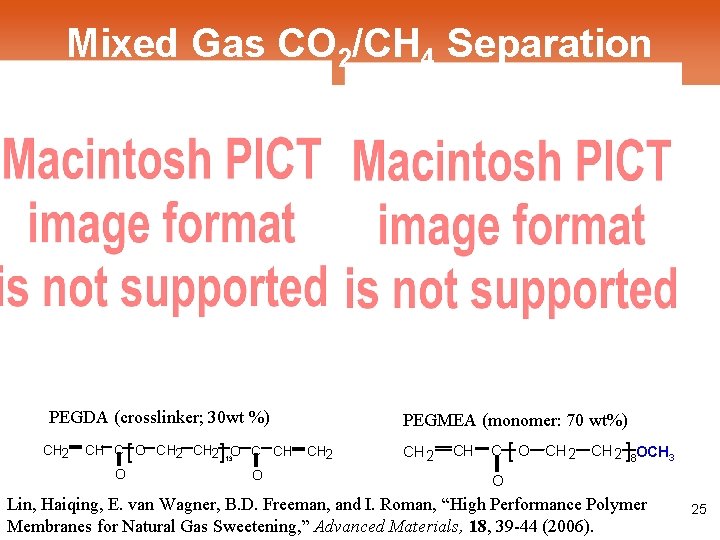
Mixed Gas CO 2/CH 4 Separation PEGDA (crosslinker; 30 wt %) CH 2 CH C [ O CH 2]13 O C CH CH 2 O O PEGMEA (monomer: 70 wt%) CH 2 CH C [O CH 2 ]8 OCH 3 O Lin, Haiqing, E. van Wagner, B. D. Freeman, and I. Roman, “High Performance Polymer Membranes for Natural Gas Sweetening, ” Advanced Materials, 18, 39 -44 (2006). 25
THANK YOU! 26