Motivation Terese Stenfors teresefc dsv su se Motivation

- Slides: 13
Motivation Terese Stenfors terese@fc. dsv. su. se
Motivation • Vad är det? – Motivation is concerned with our movements or actions, and what determines them. • Hur kan man studera det? – Olika teorier belyser ämnet på olika sätt.
Varför är motivation viktigt? • To increase employee’s interest in taking an active responsiblity for work tasks and stated goals • To decrease the number of conflicts, complaints, absence and staff turnover • To increase ability to handle change and misfortune • To increase chances to meet business objectives and improve results
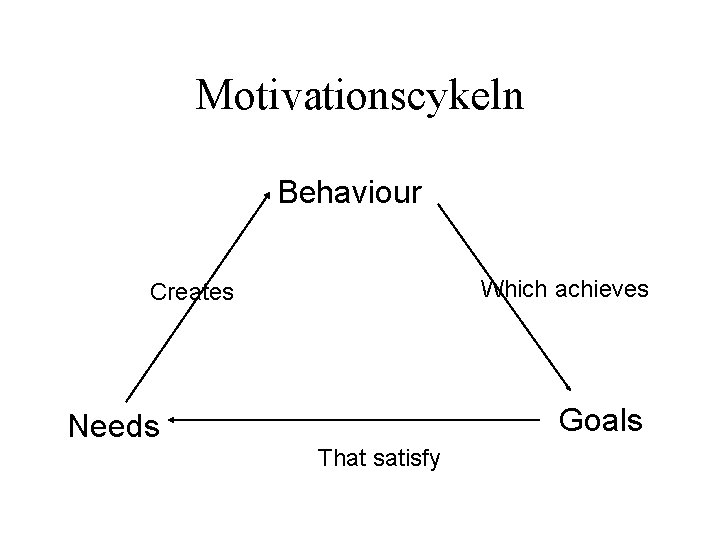
Motivationscykeln Behaviour Which achieves Creates Goals Needs That satisfy
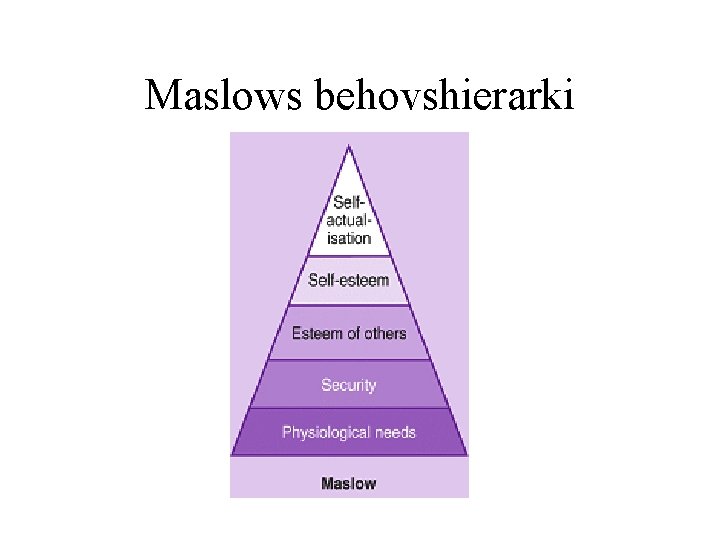
Maslows behovshierarki
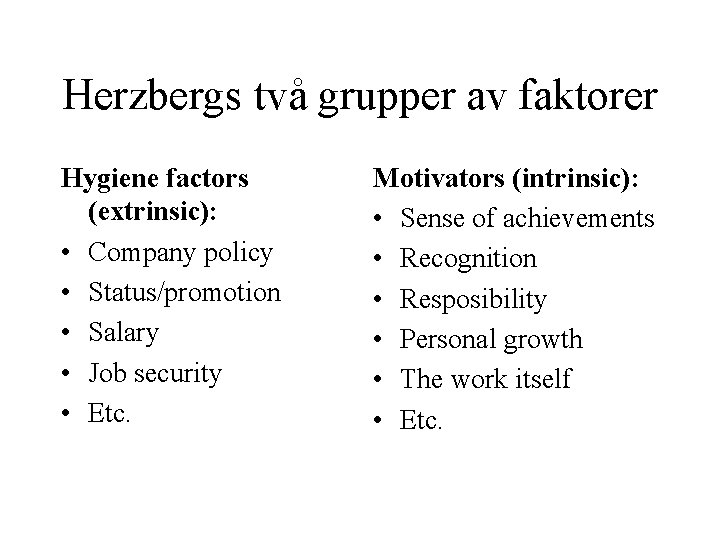
Herzbergs två grupper av faktorer Hygiene factors (extrinsic): • Company policy • Status/promotion • Salary • Job security • Etc. Motivators (intrinsic): • Sense of achievements • Recognition • Resposibility • Personal growth • The work itself • Etc.
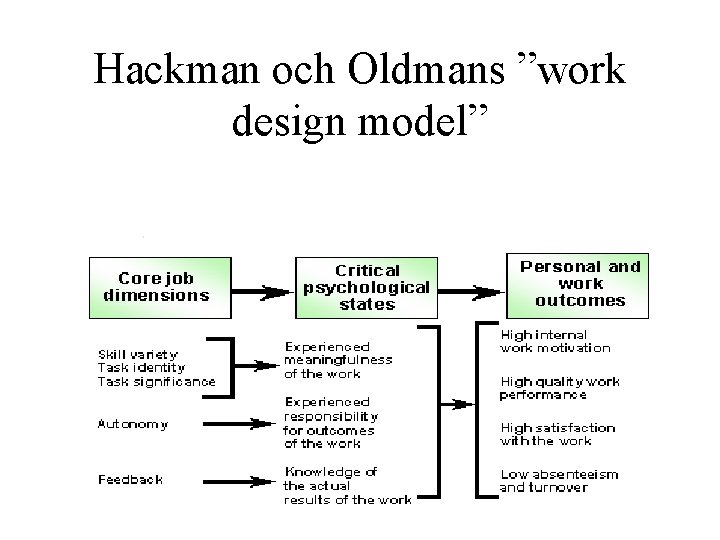
Hackman och Oldmans ”work design model”
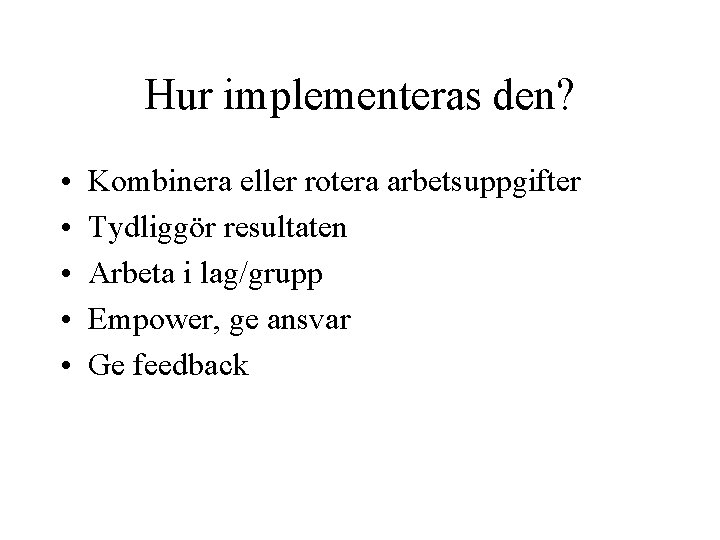
Hur implementeras den? • • • Kombinera eller rotera arbetsuppgifter Tydliggör resultaten Arbeta i lag/grupp Empower, ge ansvar Ge feedback
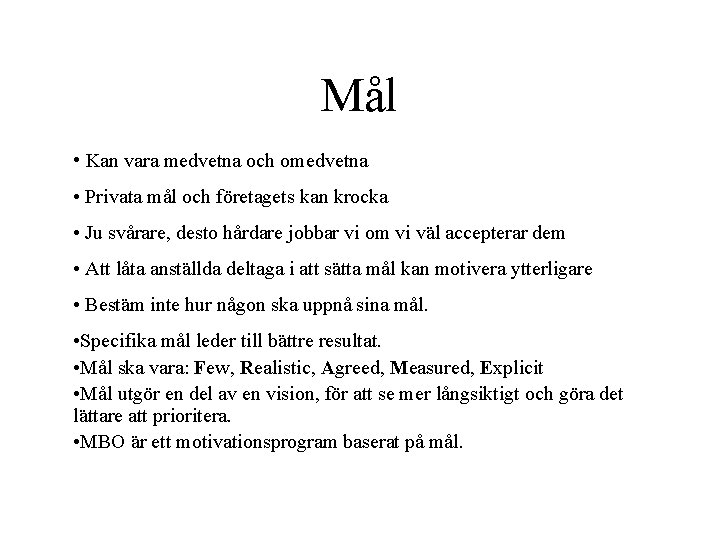
Mål • Kan vara medvetna och omedvetna • Privata mål och företagets kan krocka • Ju svårare, desto hårdare jobbar vi om vi väl accepterar dem • Att låta anställda deltaga i att sätta mål kan motivera ytterligare • Bestäm inte hur någon ska uppnå sina mål. • Specifika mål leder till bättre resultat. • Mål ska vara: Few, Realistic, Agreed, Measured, Explicit • Mål utgör en del av en vision, för att se mer långsiktigt och göra det lättare att prioritera. • MBO är ett motivationsprogram baserat på mål.
Belöningsprogram • Baserade på vad folk vill ha – Troligen inte detsamma som du vill ha… • Tydligt kopplade till ett beteende • Vid rätt tillfälle – Alltid eller ibland… • Vad, varför och vem – Genom att offentligöra kan andra sporras…
Slå ihjäl motivationen • Unfair treatment • Too much or too little to do • Little participation • Favouring • Unrealistic goals • Uncertainty for the future • Faulty expectations • Broken promises • Unclear work tasks, rules and goals • Threats • Lack of challenges • • Bureaucracy Weak connection between reward and achievement • Lack of trust for management • Failing communication • Scandals and doubtful ethics • Limited responsibilities • Too much control and supervision • No feeling of control • Internal politics
Skapa motivation • The daily work • Recognize individual differences • Leadership • Use goals • Personal development • • Social relations Ensure that goals are perceived as attainable • Status and image • Individualize rewards • Respect and recognition • Link reward to performance • Support for own ideas and initiatives • Check the system for equity • ”Speed” of work • Is motivation the problem? • Salary and benefits • New things happening at the workplace
Att tänka kring… • När och hur har du motiverat någon?