Montgomery County Crisis Center James Gilmore LCSWC Supervisory


- Slides: 31
Montgomery County Crisis Center James Gilmore, LCSW-C Supervisory Therapist
How to Contact Us n n n Address: 1301 Piccard Dr. South Entrance First Floor, Rockville, MD Phone: 240 -777 -4000 (answered 24/7 by clinical professionals) My email: James. gilmore@montgomerycountymd. gov
De-escalation The Difficult Person Spouse/Significant other Kids Co workers Friends Neighbors Clients
Why People can be Difficult n n n Having a BAD day? Situational Illness, Physical, Mental Addiction Personality disorders Just being a jerk Percipiating Factors
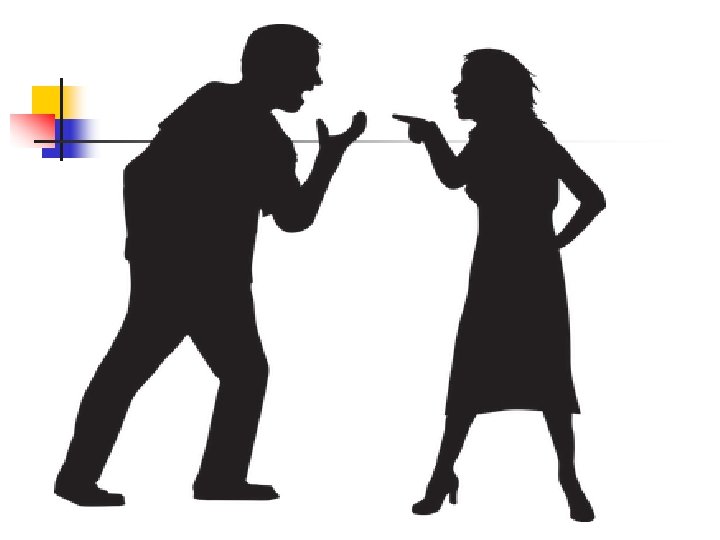
Why People Become Aggressive n n n Frustration Injustice Humiliation Desperation Learned behavior
Non verbal Signs of Aggression n n Pale or flushed face Focusing or narrowing of gaze Tensing of muscles Increased agitation and disturbance in behavior (e. g. pacing, clenching fists) Exaggerated gestures
Verbal signs of Aggression n n Cursing Interrupting Raised voice Demanding
So, What can we do? n De-escalate
Concepts To Keep In Mind n n De-escalation techniques are abnormal When stressed we are driven by fight, flight or freeze. Reasoning with an enraged person is not possible. Often escalates person The first and only objective in de-escalation is to reduce the level of arousal.
What Do You Have Control Of ?
n NOT MUCH
Maybe Yourself n n n Your precipitating factors Your issues Self Care
Sometimes Yourself n n n How do you respond to aggression? Fight Run Freeze What are your triggers? Know your setting
Control of Self n n Detach: It’s not about you. Be respectful Be aware of your resources, co-workers, exits, panic buttons, etc. Avoid being defensive
Control Of Self n n n Slow everything down. Deep Breaths, time out, 10 count. Try to sound appear calm.
Your Non Verbal Communication n n Stance Posture Distance Touch - DON’T, AVOID, STOP, NOOOOOO
Stance Cont. n n n Supportive Non Threatening Keep proximity in mind Never turn your back Maintain eye level Avoid constant eye contact
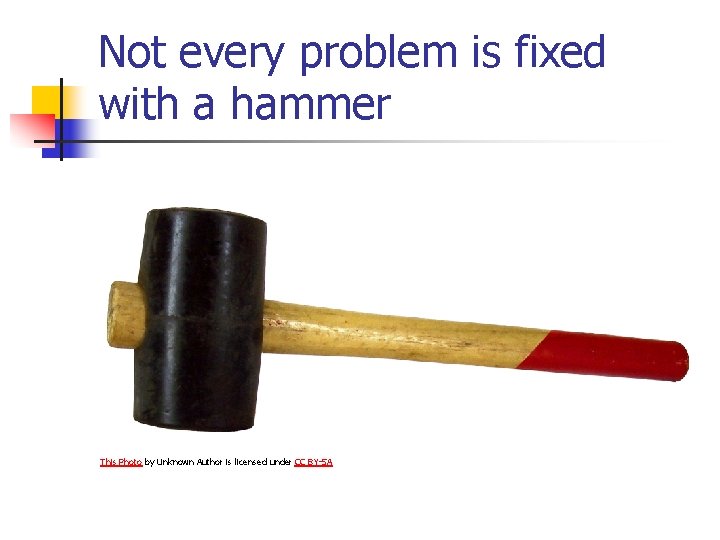
Not every problem is fixed with a hammer This Photo by Unknown Author is licensed under CC BY-SA
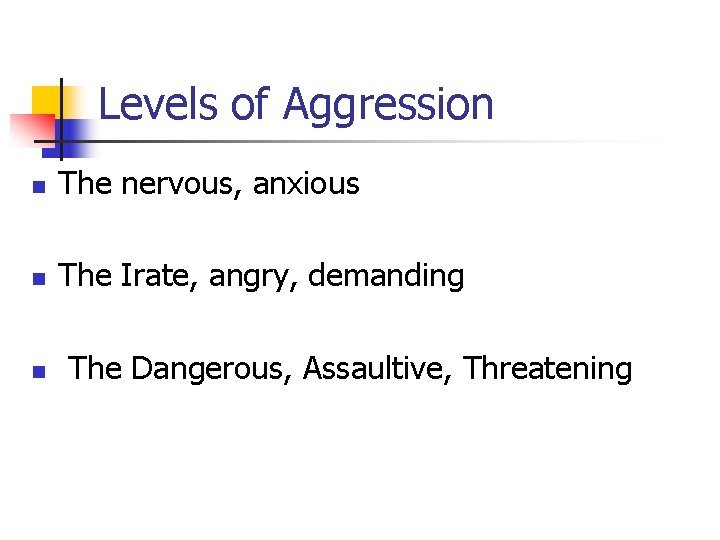
Levels of Aggression n The nervous, anxious n The Irate, angry, demanding n The Dangerous, Assaultive, Threatening
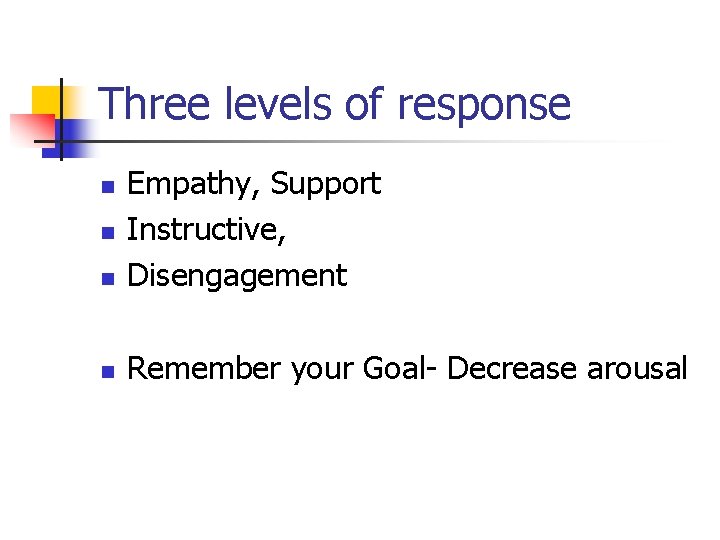
Three levels of response n Empathy, Support Instructive, Disengagement n Remember your Goal- Decrease arousal n n
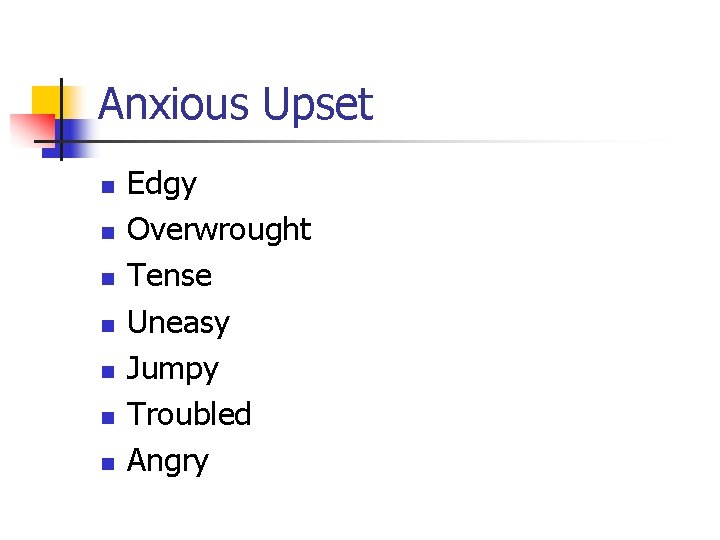
Anxious Upset n n n n Edgy Overwrought Tense Uneasy Jumpy Troubled Angry
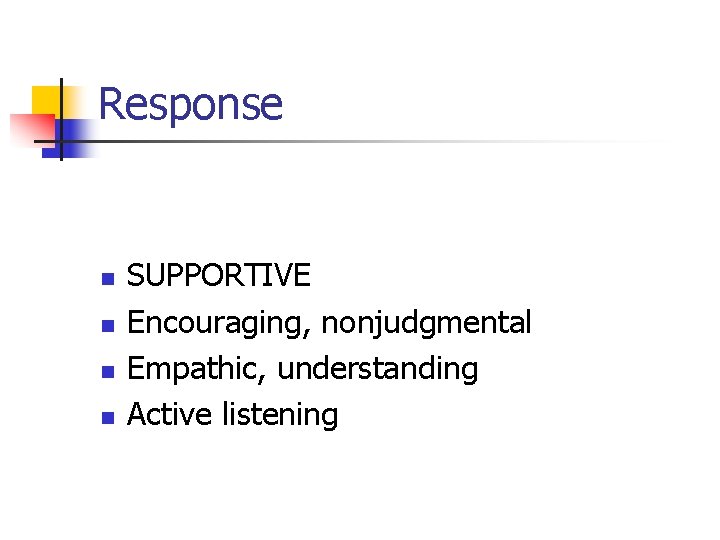
Response n n SUPPORTIVE Encouraging, nonjudgmental Empathic, understanding Active listening
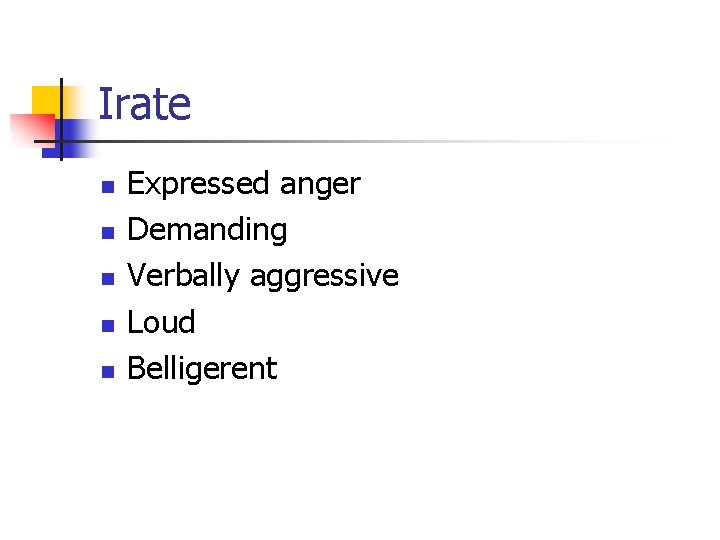
Irate n n n Expressed anger Demanding Verbally aggressive Loud Belligerent
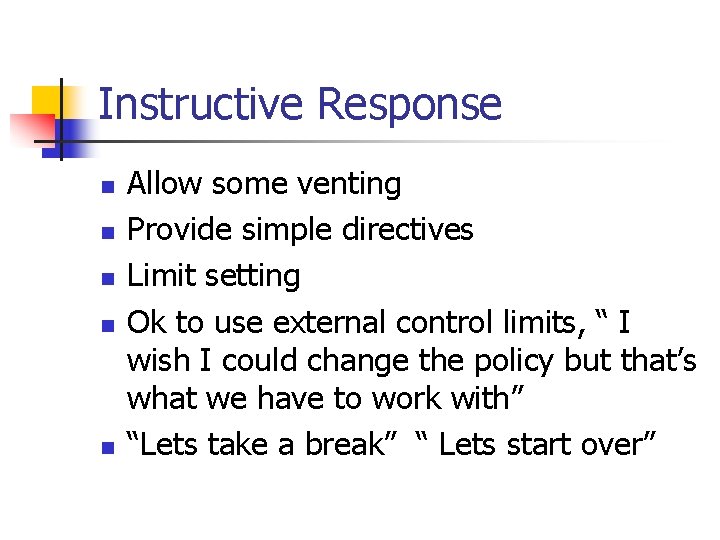
Instructive Response n n n Allow some venting Provide simple directives Limit setting Ok to use external control limits, “ I wish I could change the policy but that’s what we have to work with” “Lets take a break” “ Lets start over”
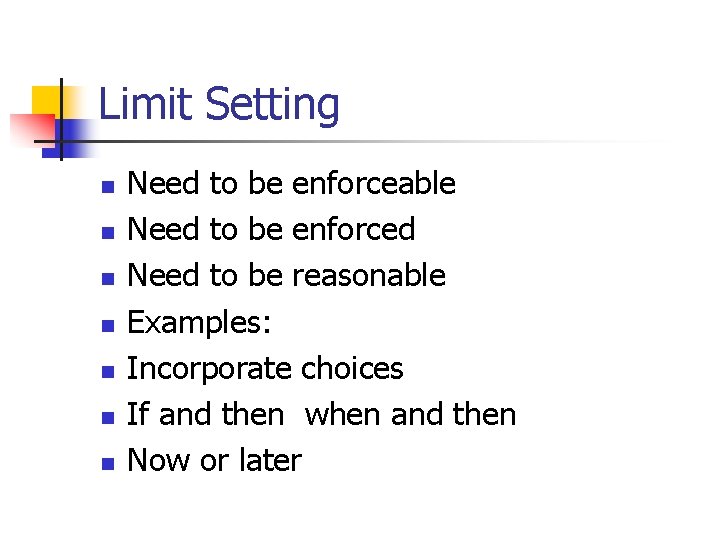
Limit Setting n n n n Need to be enforceable Need to be enforced Need to be reasonable Examples: Incorporate choices If and then when and then Now or later
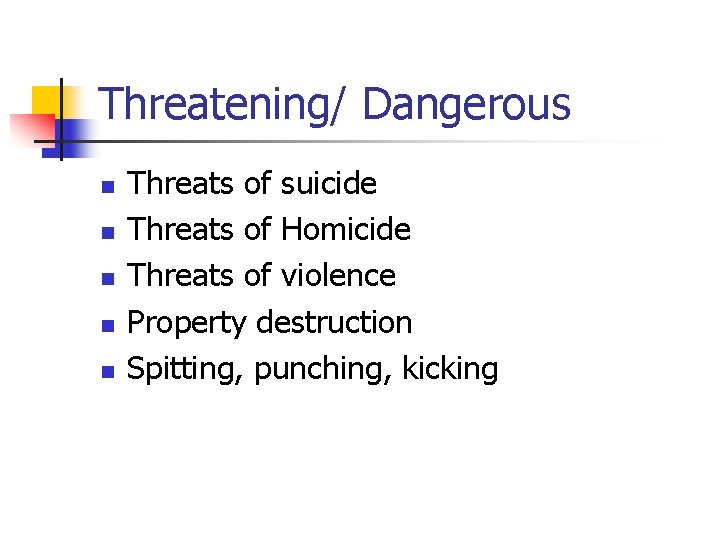
Threatening/ Dangerous n n n Threats of suicide Threats of Homicide Threats of violence Property destruction Spitting, punching, kicking
Disengagement n n n Stop the intervention, ask client to leave, or you leave. What is your escape plan? Where are the exits, panic buttons? Emergency Petition 911 Trust your instincts Do not be a hero
Debriefing n n n Great time to learn. Supports Staff, peers. What went wrong? What went well? Need for changes indicated?
Who U gonna call n n n Ghost Busters 911 Crisis Center 240 -777 -4000