Methods for Conducting OD Travel Surveys on High
- Slides: 27
Methods for Conducting O-D Travel Surveys on High Volume (HV) Facilities Ed Hard Stephen Farnsworth David Pearson 11 th Conference on Transportation Planning Applications May 7, 2007
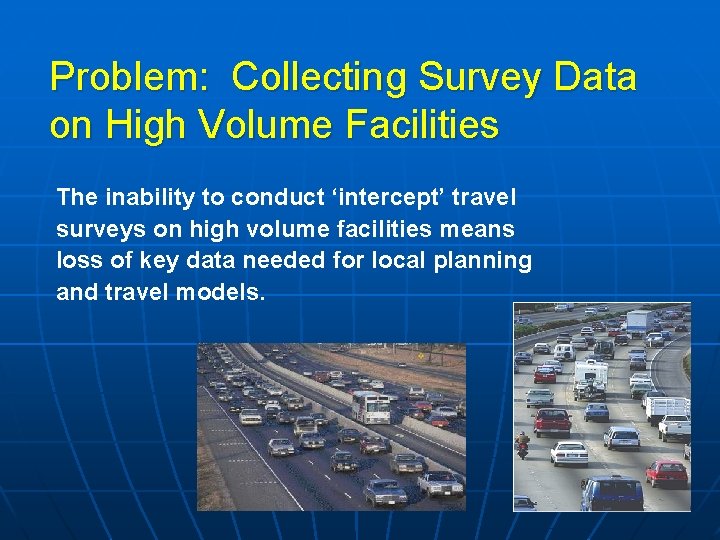
Problem: Collecting Survey Data on High Volume Facilities The inability to conduct ‘intercept’ travel surveys on high volume facilities means loss of key data needed for local planning and travel models.
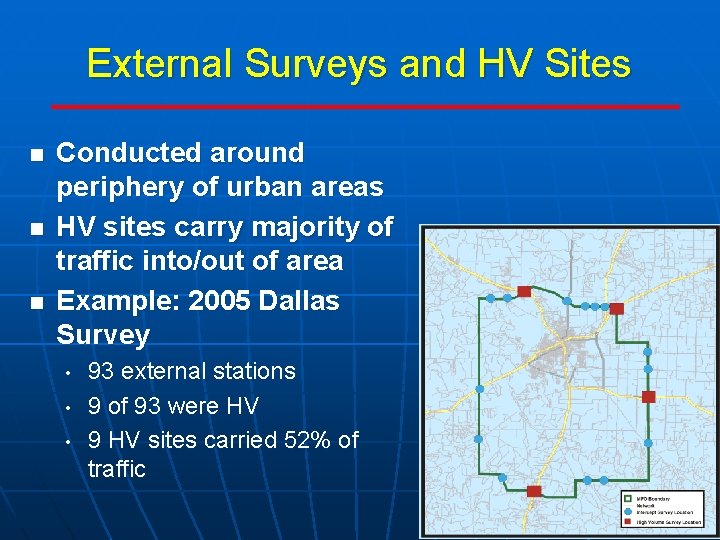
External Surveys and HV Sites n n n Conducted around periphery of urban areas HV sites carry majority of traffic into/out of area Example: 2005 Dallas Survey • • • 93 external stations 9 of 93 were HV 9 HV sites carried 52% of traffic
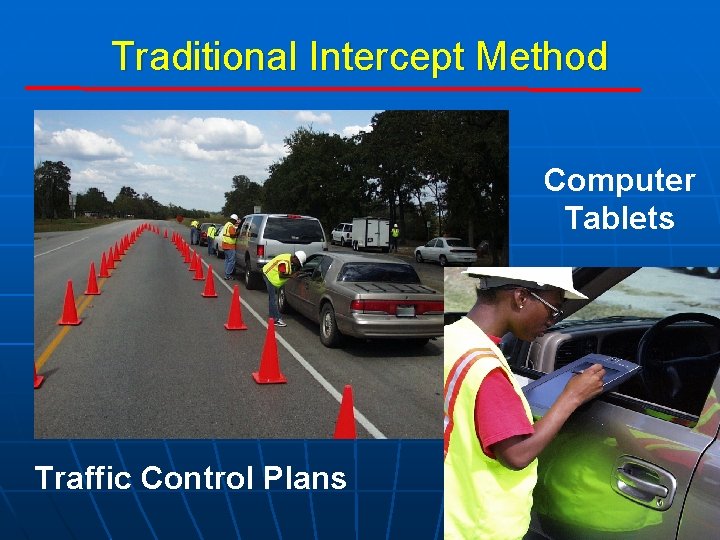
Traditional Intercept Method Computer Tablets Traffic Control Plans
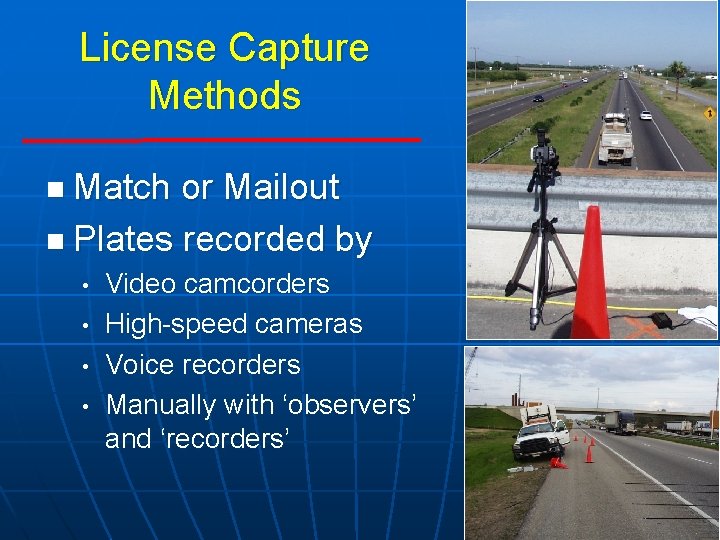
License Capture Methods n Match or Mailout n Plates recorded by • • Video camcorders High-speed cameras Voice recorders Manually with ‘observers’ and ‘recorders’
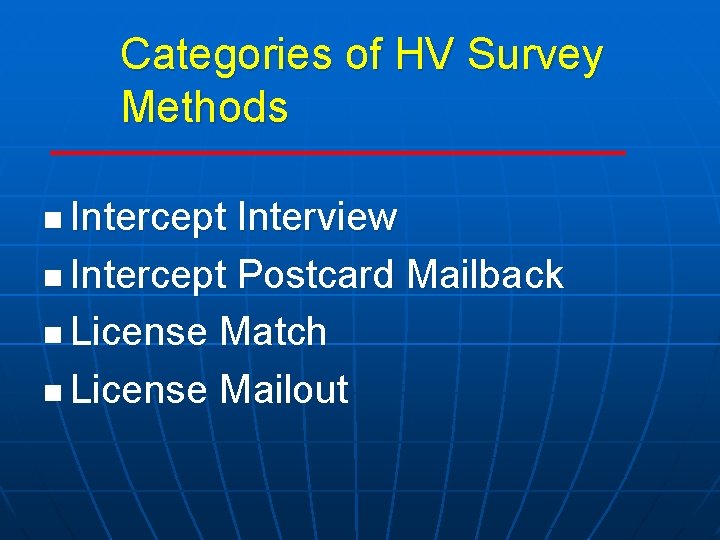
Categories of HV Survey Methods n Intercept Interview n Intercept Postcard Mailback n License Match n License Mailout
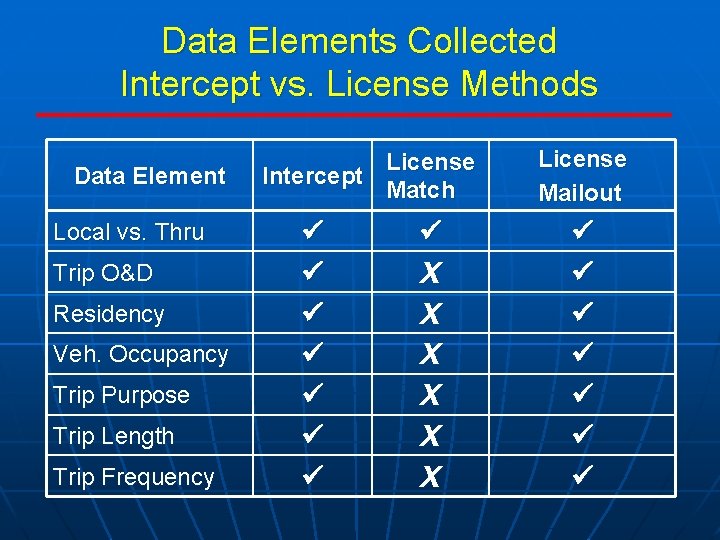
Data Elements Collected Intercept vs. License Methods Data Element Local vs. Thru Trip O&D Residency Veh. Occupancy Trip Purpose Trip Length Trip Frequency License Intercept Match X X X License Mailout
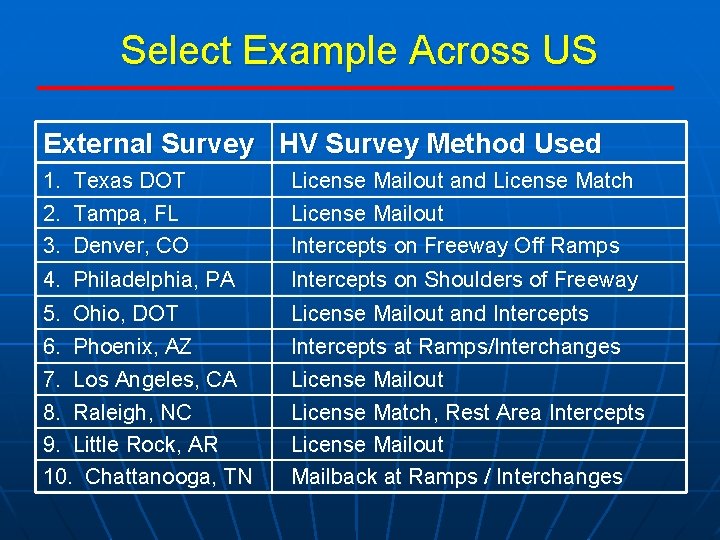
Select Example Across US External Survey HV Survey Method Used 1. 2. 3. Texas DOT Tampa, FL Denver, CO 4. Philadelphia, PA 5. Ohio, DOT 6. Phoenix, AZ 7. Los Angeles, CA 8. Raleigh, NC 9. Little Rock, AR 10. Chattanooga, TN License Mailout and License Match License Mailout Intercepts on Freeway Off Ramps Intercepts on Shoulders of Freeway License Mailout and Intercepts at Ramps/Interchanges License Mailout License Match, Rest Area Intercepts License Mailout Mailback at Ramps / Interchanges
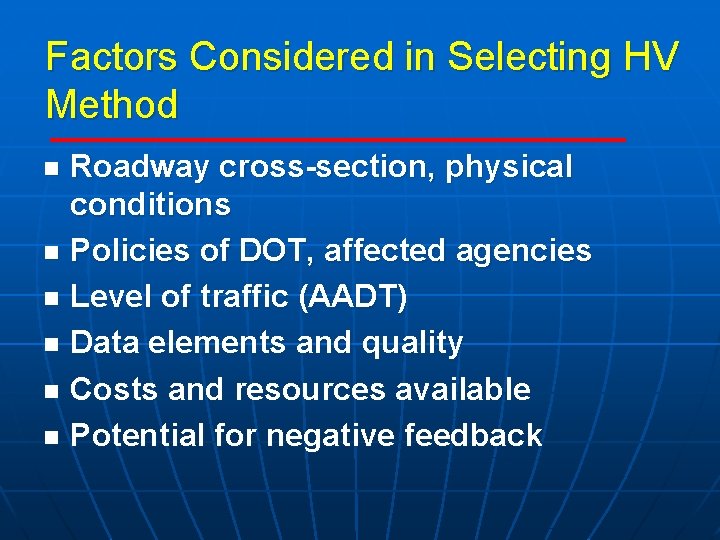
Factors Considered in Selecting HV Method Roadway cross-section, physical conditions n Policies of DOT, affected agencies n Level of traffic (AADT) n Data elements and quality n Costs and resources available n Potential for negative feedback n
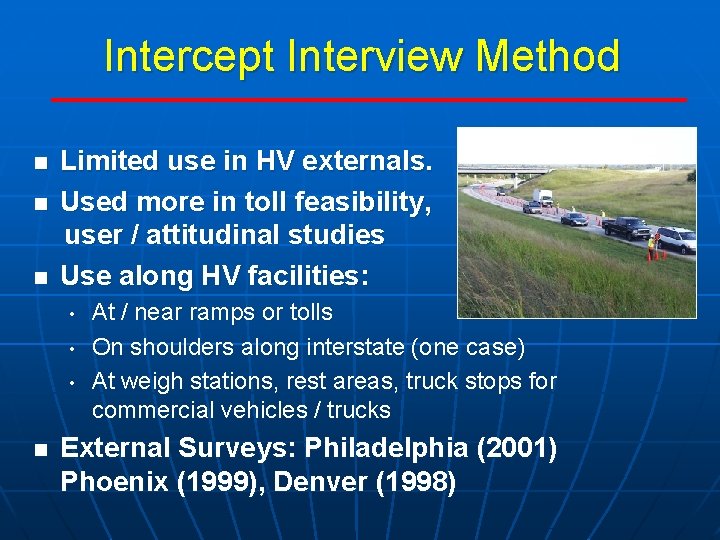
Intercept Interview Method n n n Limited use in HV externals. Used more in toll feasibility, user / attitudinal studies Use along HV facilities: • • • n At / near ramps or tolls On shoulders along interstate (one case) At weigh stations, rest areas, truck stops for commercial vehicles / trucks External Surveys: Philadelphia (2001) Phoenix (1999), Denver (1998)
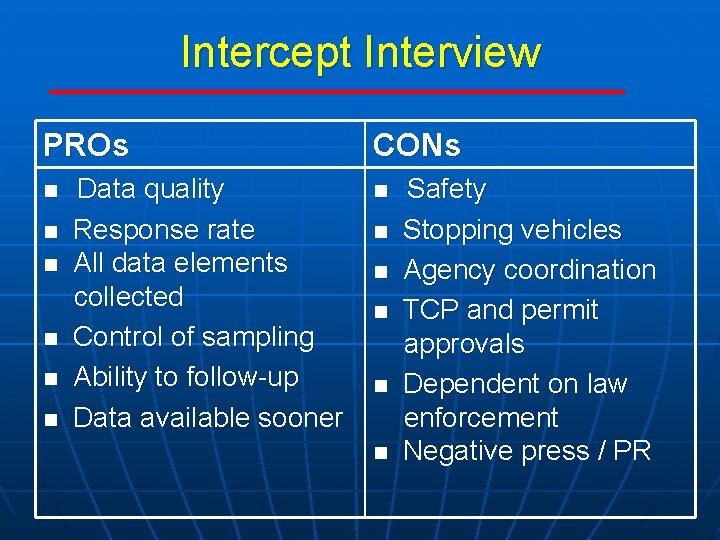
Intercept Interview PROs n n n Data quality Response rate All data elements collected Control of sampling Ability to follow-up Data available sooner CONs n n n Safety Stopping vehicles Agency coordination TCP and permit approvals Dependent on law enforcement Negative press / PR
Intercept Postcard Mailback Method Postcard handout in lieu of interview n Limited use in externals, more in corridor or user / attitudinal studies n Used on / near freeway ramps, toll plazas n 2002 Chattanoonga, TN external n
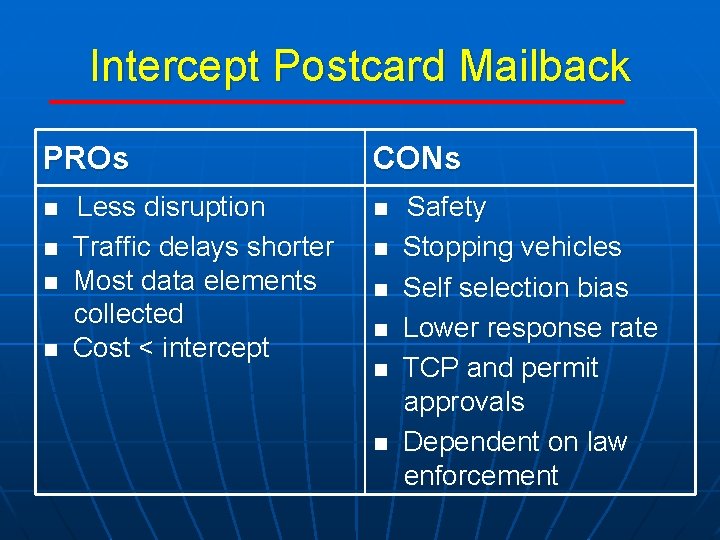
Intercept Postcard Mailback PROs n n Less disruption Traffic delays shorter Most data elements collected Cost < intercept CONs n n n Safety Stopping vehicles Self selection bias Lower response rate TCP and permit approvals Dependent on law enforcement
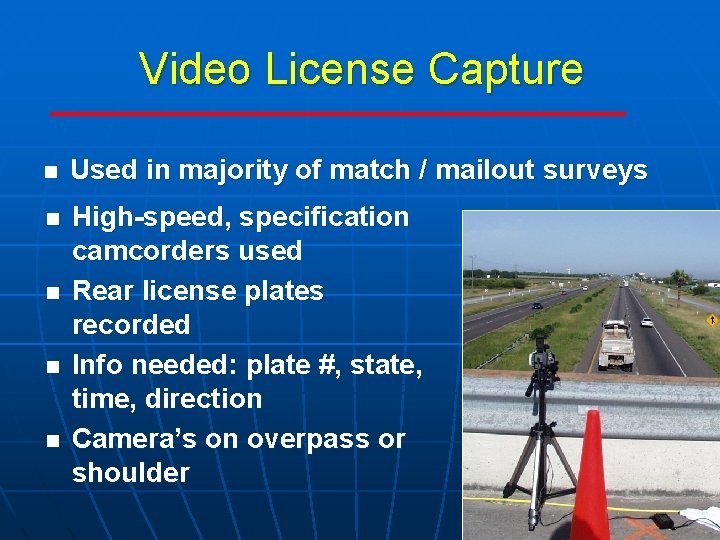
Video License Capture n Used in majority of match / mailout surveys n High-speed, specification camcorders used Rear license plates recorded Info needed: plate #, state, time, direction Camera’s on overpass or shoulder n n n
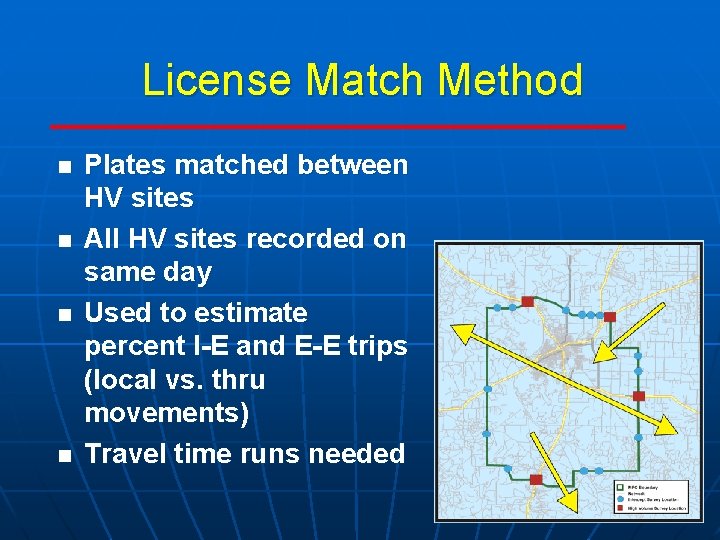
License Match Method n n Plates matched between HV sites All HV sites recorded on same day Used to estimate percent I-E and E-E trips (local vs. thru movements) Travel time runs needed
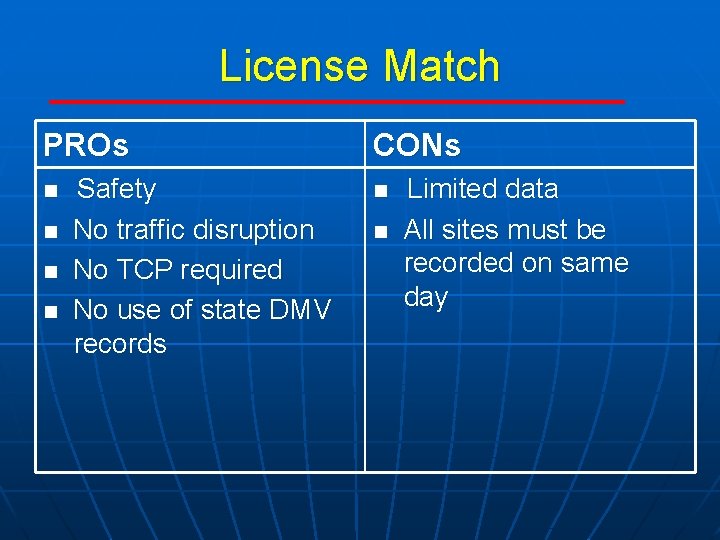
License Match PROs n n Safety No traffic disruption No TCP required No use of state DMV records CONs n n Limited data All sites must be recorded on same day
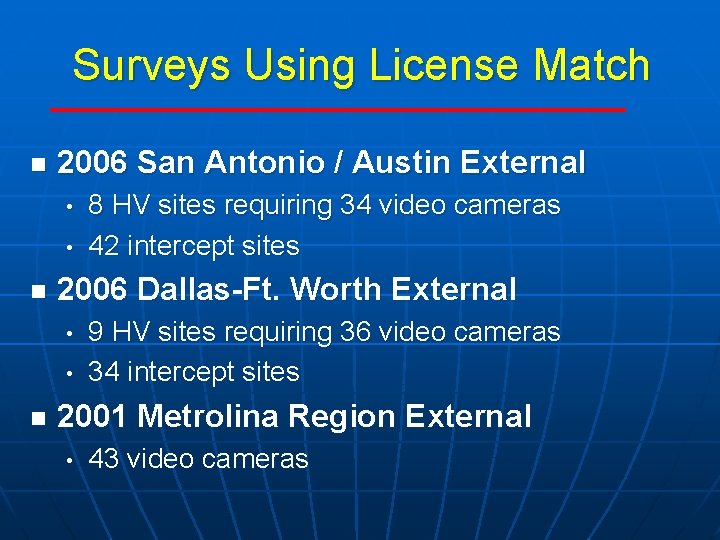
Surveys Using License Match n 2006 San Antonio / Austin External • • n 2006 Dallas-Ft. Worth External • • n 8 HV sites requiring 34 video cameras 42 intercept sites 9 HV sites requiring 36 video cameras 34 intercept sites 2001 Metrolina Region External • 43 video cameras
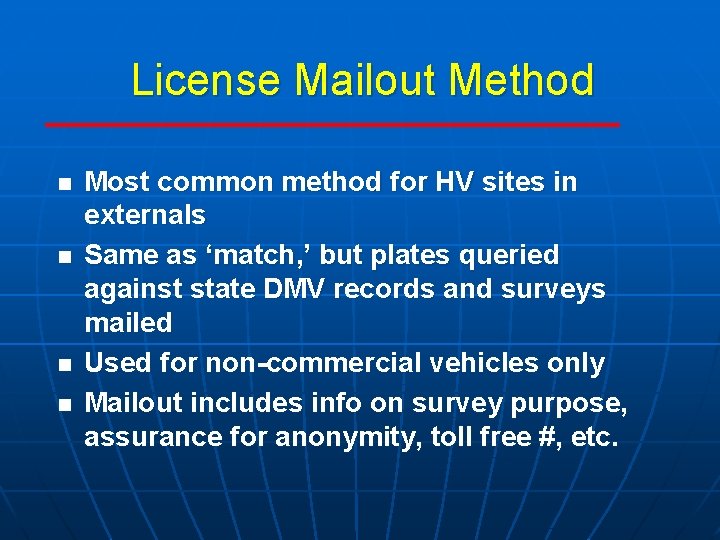
License Mailout Method n n Most common method for HV sites in externals Same as ‘match, ’ but plates queried against state DMV records and surveys mailed Used for non-commercial vehicles only Mailout includes info on survey purpose, assurance for anonymity, toll free #, etc.
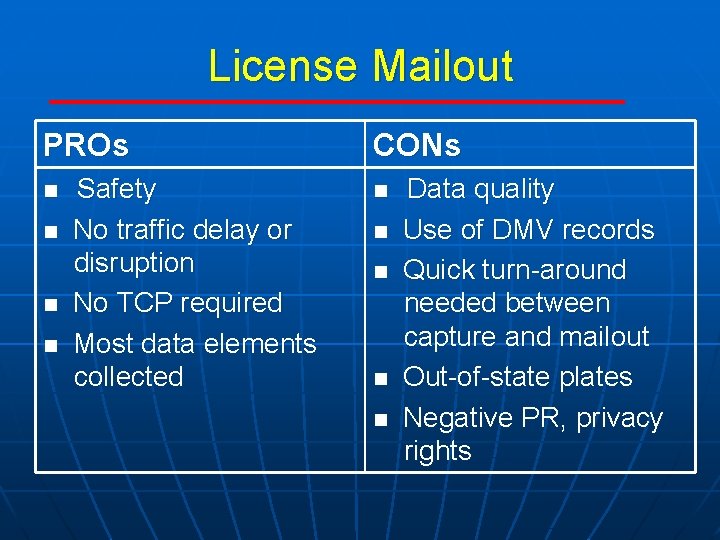
License Mailout PROs n n Safety No traffic delay or disruption No TCP required Most data elements collected CONs n n n Data quality Use of DMV records Quick turn-around needed between capture and mailout Out-of-state plates Negative PR, privacy rights
What Traffic Level is High Volume? n Few agencies have HV ‘threshold’ value n Intercepts on freeways, interstates often prohibited n Queuing analyses used to determine volume when queuing is problematic. Two categories: • • Blocked traffic lane, 2 -lane roadways Lane reduction, 2 or more lanes in survey direction
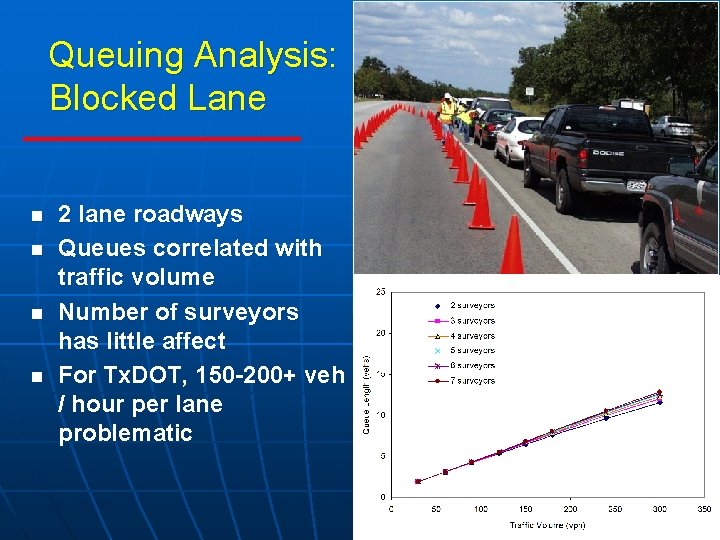
Queuing Analysis: Blocked Lane n n 2 lane roadways Queues correlated with traffic volume Number of surveyors has little affect For Tx. DOT, 150 -200+ veh / hour per lane problematic
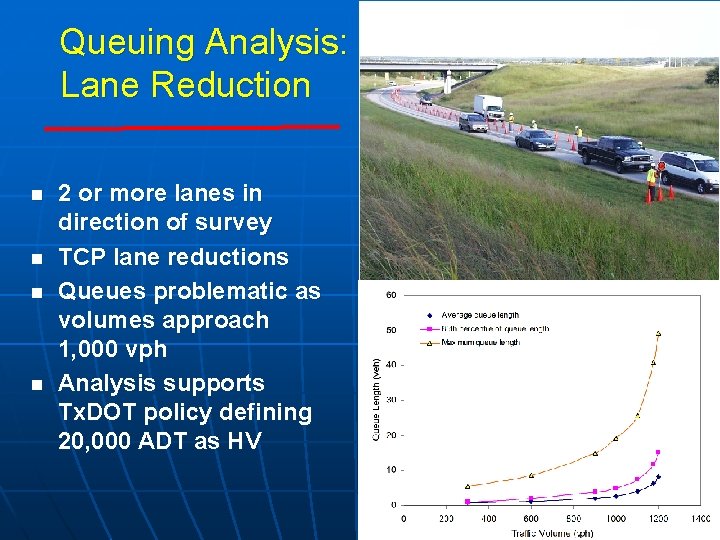
Queuing Analysis: Lane Reduction n n 2 or more lanes in direction of survey TCP lane reductions Queues problematic as volumes approach 1, 000 vph Analysis supports Tx. DOT policy defining 20, 000 ADT as HV
Technology in HV Surveys n Current • • • n Video / camcorders, hi-speed cameras Infrared video Optical character recognition (OCR) Video data reduction software Radio frequency ID, Toll / E-Z tags Future potential • • Cellular phone trackage Vehicle telematics
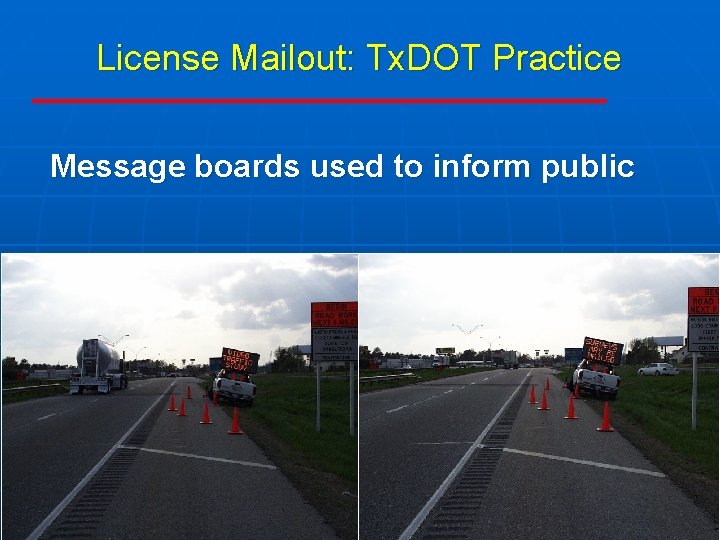
License Mailout: Tx. DOT Practice Message boards used to inform public
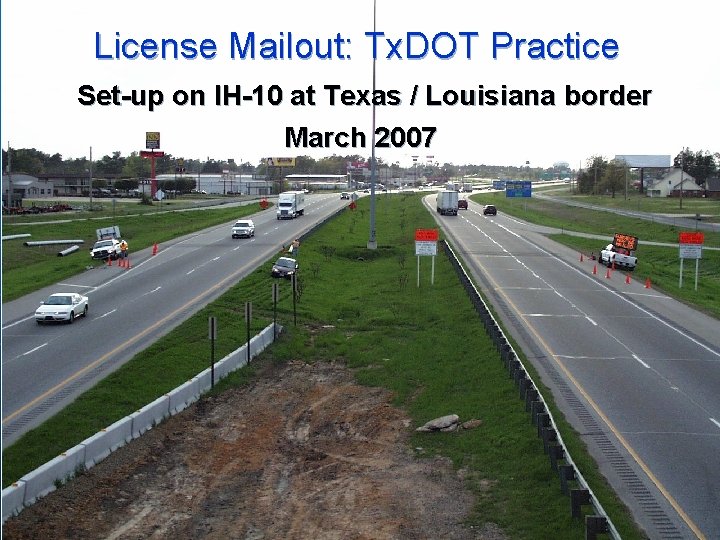
License Mailout: Tx. DOT Practice Set-up on IH-10 at Texas / Louisiana border March 2007
License Mailout: Lessons Learned n n n n Keep survey form simple Cover letter: content, tone, and appearance important Use pre-addressed, postage paid envelope or postcard Ensure return responses are anonymous Provide toll free number Keep accurate records of all calls received No more than 3 -day turn-around between capture and mailout
QUESTIONS Ed Hard (979) 845 -8539 e-hard@tamu. edu