Mena Gainpaulsingh International Fundraising Consultancy www ifccanada ca
- Slides: 11
Mena Gainpaulsingh International Fundraising Consultancy www. ifc-canada. ca The Essentials of Grant Writing
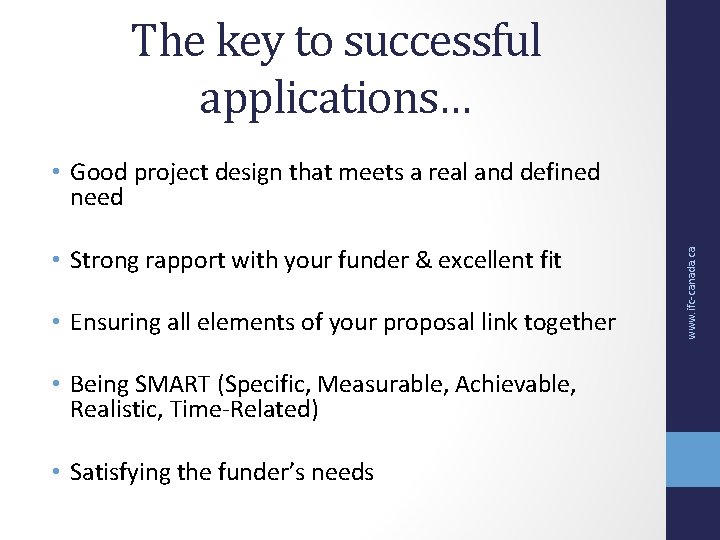
The key to successful applications… • Strong rapport with your funder & excellent fit • Ensuring all elements of your proposal link together • Being SMART (Specific, Measurable, Achievable, Realistic, Time-Related) • Satisfying the funder’s needs www. ifc-canada. ca • Good project design that meets a real and defined need
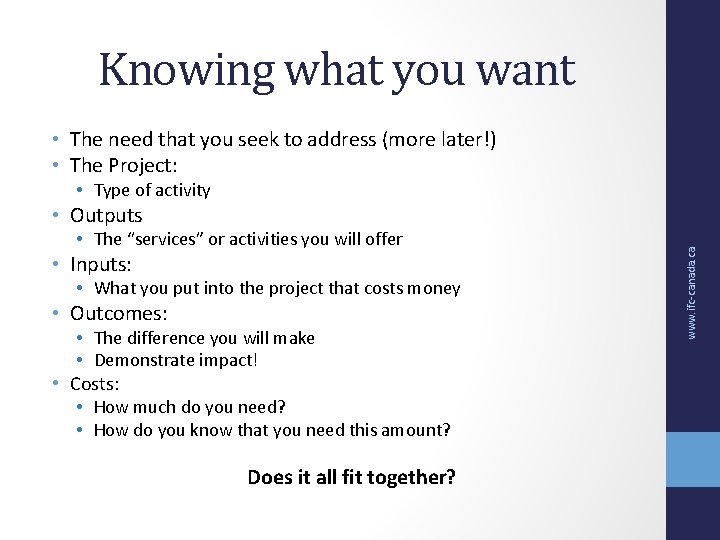
Knowing what you want • The need that you seek to address (more later!) • The Project: • Type of activity • The “services” or activities you will offer • Inputs: • What you put into the project that costs money • Outcomes: • The difference you will make • Demonstrate impact! • Costs: • How much do you need? • How do you know that you need this amount? Does it all fit together? www. ifc-canada. ca • Outputs
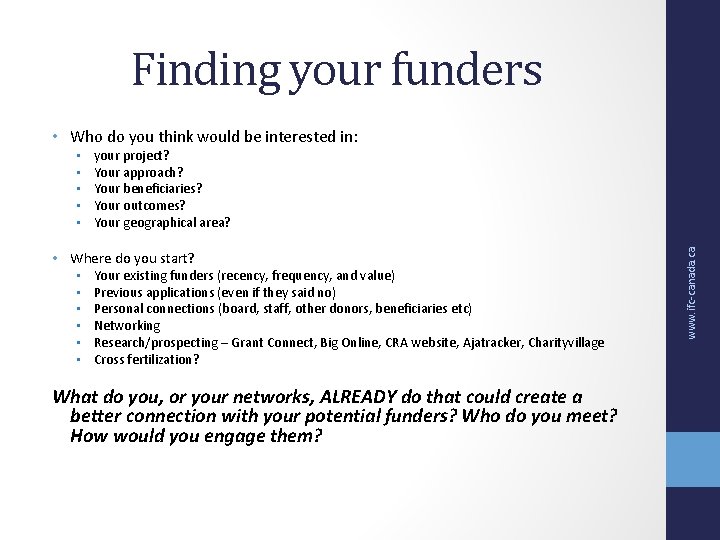
Finding your funders • Who do you think would be interested in: your project? Your approach? Your beneficiaries? Your outcomes? Your geographical area? • Where do you start? • • • Your existing funders (recency, frequency, and value) Previous applications (even if they said no) Personal connections (board, staff, other donors, beneficiaries etc) Networking Research/prospecting – Grant Connect, Big Online, CRA website, Ajatracker, Charityvillage Cross fertilization? What do you, or your networks, ALREADY do that could create a better connection with your potential funders? Who do you meet? How would you engage them? www. ifc-canada. ca • • •
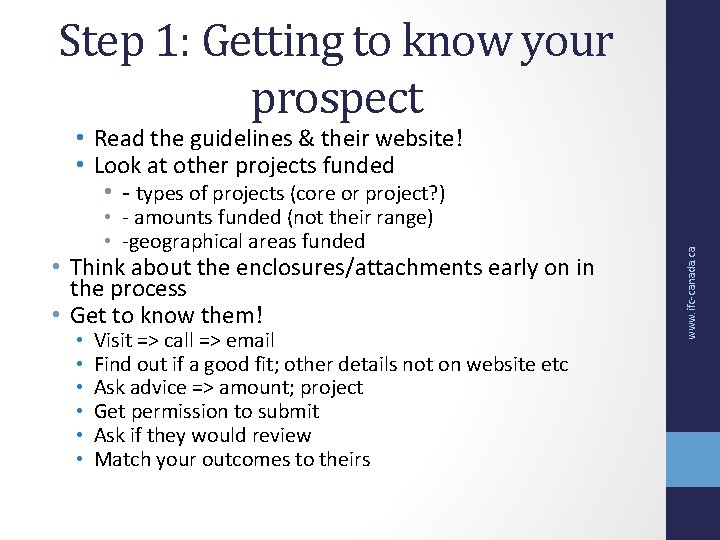
Step 1: Getting to know your prospect • - amounts funded (not their range) • -geographical areas funded • Think about the enclosures/attachments early on in the process • Get to know them! • • • Visit => call => email Find out if a good fit; other details not on website etc Ask advice => amount; project Get permission to submit Ask if they would review Match your outcomes to theirs www. ifc-canada. ca • Read the guidelines & their website! • Look at other projects funded • - types of projects (core or project? )
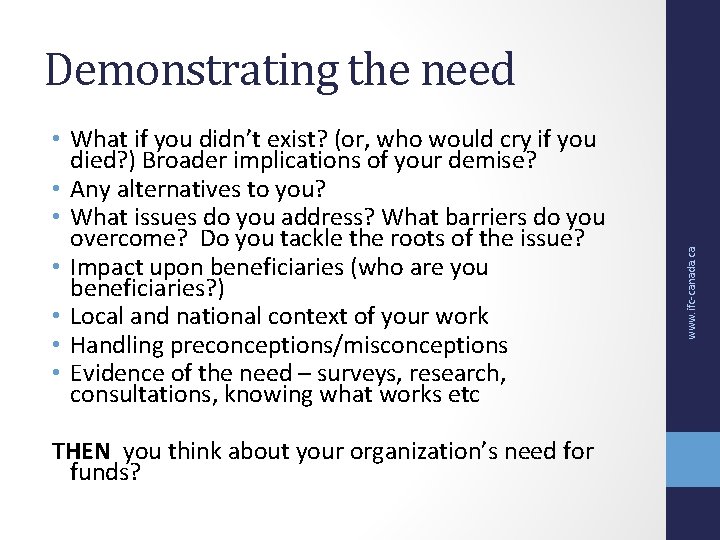
• What if you didn’t exist? (or, who would cry if you died? ) Broader implications of your demise? • Any alternatives to you? • What issues do you address? What barriers do you overcome? Do you tackle the roots of the issue? • Impact upon beneficiaries (who are you beneficiaries? ) • Local and national context of your work • Handling preconceptions/misconceptions • Evidence of the need – surveys, research, consultations, knowing what works etc THEN you think about your organization’s need for funds? www. ifc-canada. ca Demonstrating the need
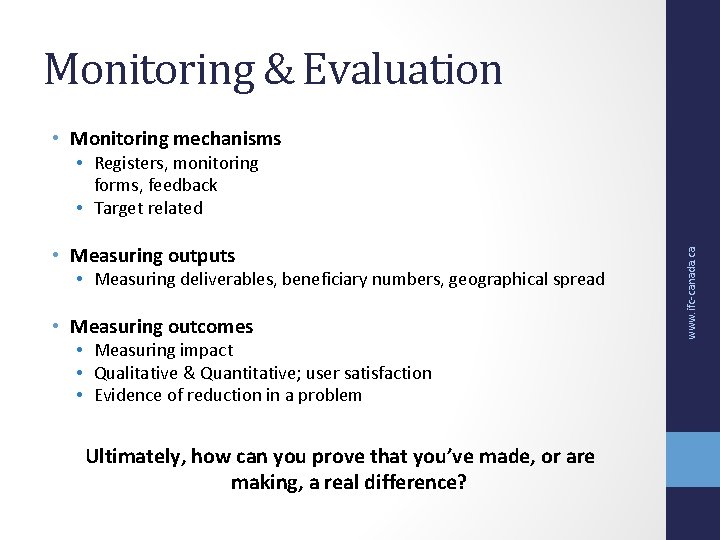
Monitoring & Evaluation • Monitoring mechanisms • Measuring outputs • Measuring deliverables, beneficiary numbers, geographical spread • Measuring outcomes • Measuring impact • Qualitative & Quantitative; user satisfaction • Evidence of reduction in a problem Ultimately, how can you prove that you’ve made, or are making, a real difference? www. ifc-canada. ca • Registers, monitoring forms, feedback • Target related
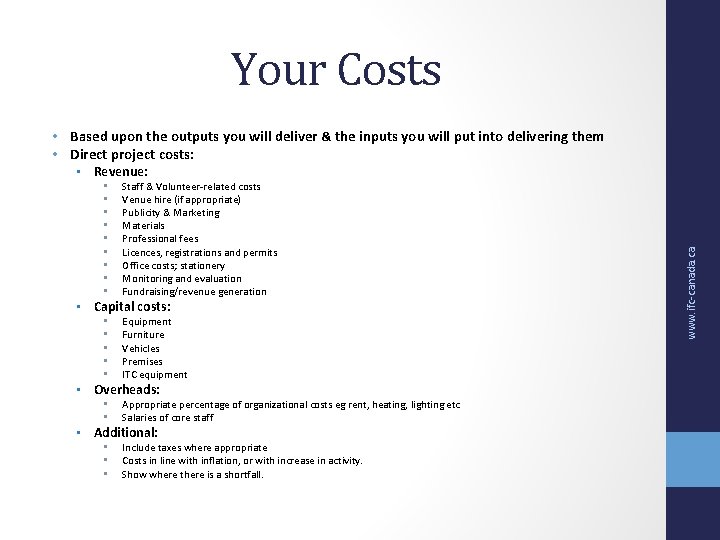
Your Costs • Based upon the outputs you will deliver & the inputs you will put into delivering them • Direct project costs: • • • Staff & Volunteer-related costs Venue hire (if appropriate) Publicity & Marketing Materials Professional fees Licences, registrations and permits Office costs; stationery Monitoring and evaluation Fundraising/revenue generation • Capital costs: • • • Equipment Furniture Vehicles Premises ITC equipment • Overheads: • • Appropriate percentage of organizational costs eg rent, heating, lighting etc Salaries of core staff • Additional: • • • Include taxes where appropriate Costs in line with inflation, or with increase in activity. Show where there is a shortfall. www. ifc-canada. ca • Revenue:
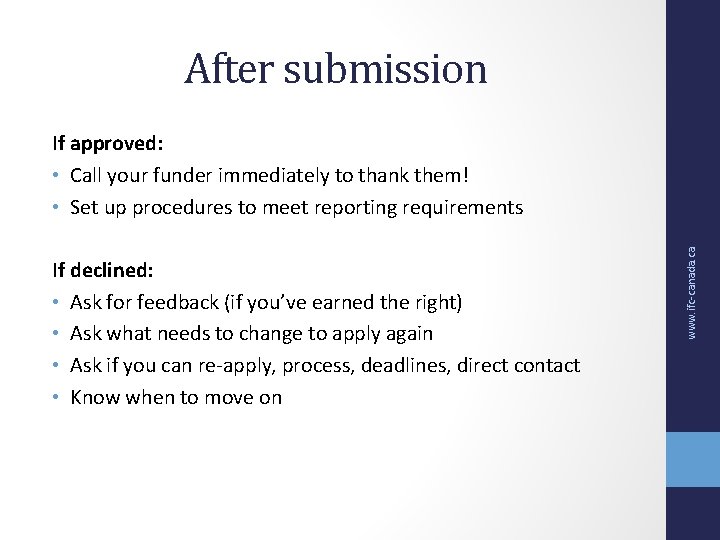
After submission If declined: • Ask for feedback (if you’ve earned the right) • Ask what needs to change to apply again • Ask if you can re-apply, process, deadlines, direct contact • Know when to move on www. ifc-canada. ca If approved: • Call your funder immediately to thank them! • Set up procedures to meet reporting requirements
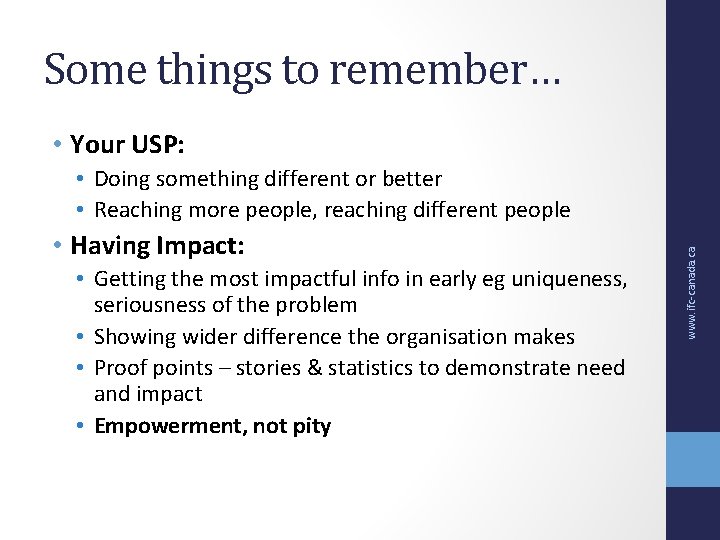
Some things to remember… • Your USP: • Having Impact: • Getting the most impactful info in early eg uniqueness, seriousness of the problem • Showing wider difference the organisation makes • Proof points – stories & statistics to demonstrate need and impact • Empowerment, not pity www. ifc-canada. ca • Doing something different or better • Reaching more people, reaching different people
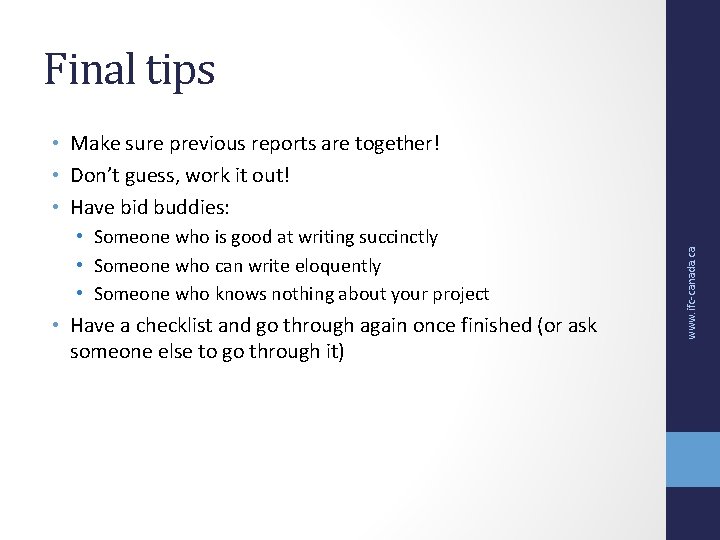
Final tips • Someone who is good at writing succinctly • Someone who can write eloquently • Someone who knows nothing about your project • Have a checklist and go through again once finished (or ask someone else to go through it) www. ifc-canada. ca • Make sure previous reports are together! • Don’t guess, work it out! • Have bid buddies: