Media Organisations UNIT 8 WEEK 3 Aims and
- Slides: 17
Media Organisations UNIT 8 – WEEK 3
Aims and objectives • Understand the key characteristics of media organisations of different structures. • Be able to describe benefits and drawbacks of media organisations structure.
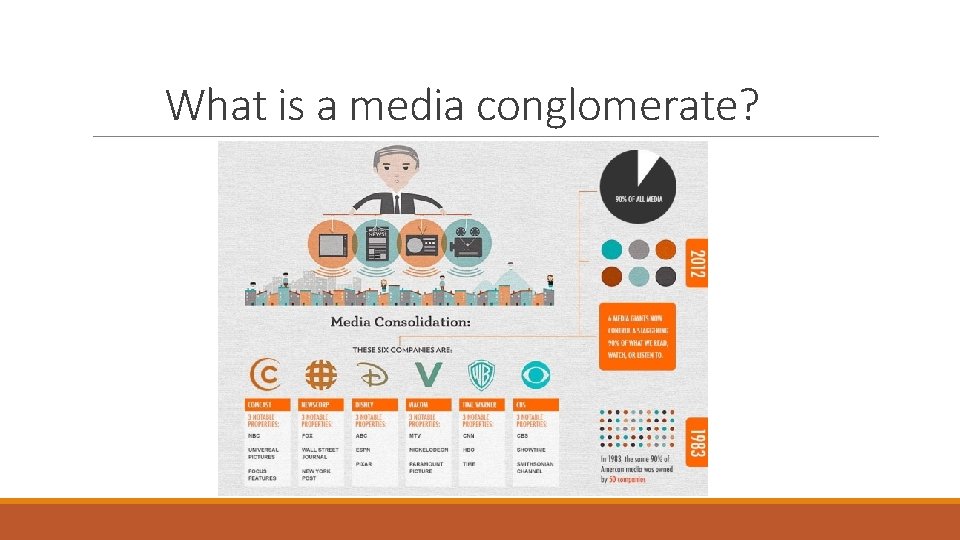
What is a media conglomerate?
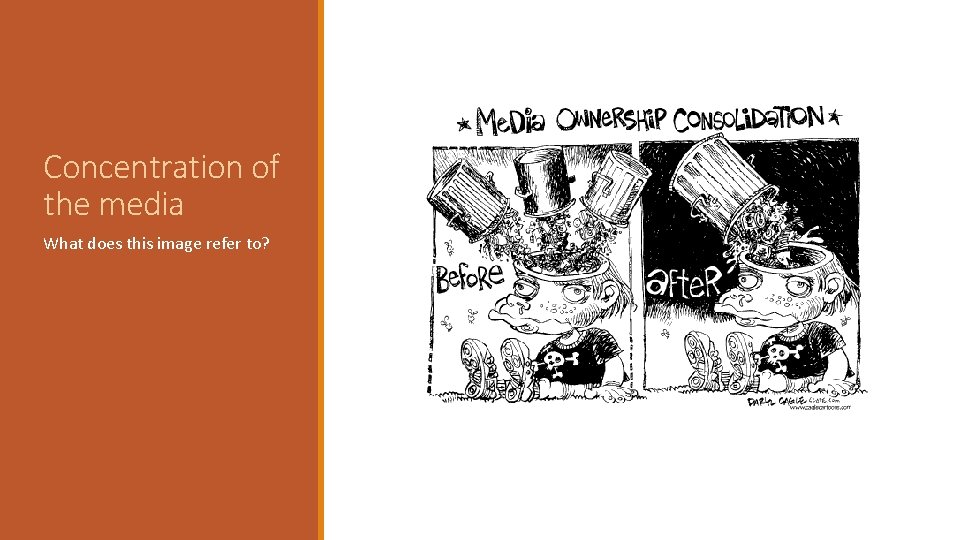
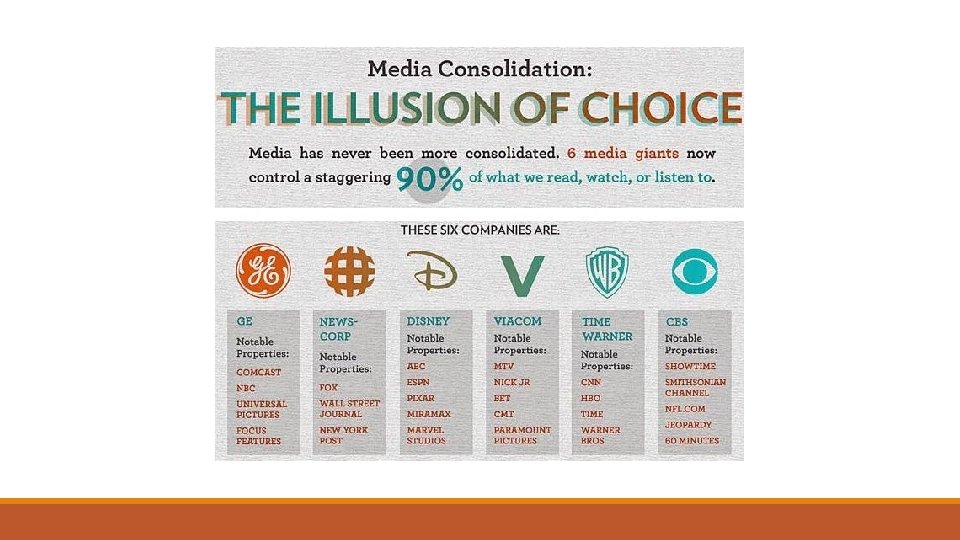
Concentration of the media What does this image refer to?
Concentration of media ownership (also known as media consolidation) is a process whereby progressively fewer individuals or organisations have control of what we see and watch (as they have been brought out by conglomerates). Concentration is a little like a conglomerate company (Pac Man) gobbling up companies along the way getting bigger and more powerful.
DRAWBACKS of Conglomerates and Concentration of the Media • There is less competition and this leads to slower innovation of new products as there is no need to compete. • Prices of products can increase as there is no competition to push prices down. • Lack of diversity of viewpoints because we only hear a few companies views. • Restriction on freedom of the press and editorial independence. Reporters have often seen their stories refused or edited beyond recognition to fit the agenda of sponsor or paper. • Seek to make profit rather than act in the public interest (print stories that will sell papers rather than what is truly important.
What is Vertical Integration?
VERTICAL integration Vertical integration is the process by which a media company owns several companies at different stages of production (e. g. a film production company owns all the companies involved in the different stages of the making of a film). For example, Warner Bros. is owned by Time Warner (which is a huge multi-national media conglomerate). Warner Bros. owns companies at each stage of a film’s production enabling the institution to maximize profits and have near complete control over the production process without having to rely on external companies.
Vertical integration of Pre-Production, Production and Post Production. Harry Potter and the Deathly Hallows: Part Two, was created by Warner Bros. pictures, in association with Heyday Films. It was designed, filmed and edited in Warner Brother’s studio buildings. The studios dealt with the costumes, set design and technical set ups. Distribution. It was then distributed by Warner Bros. Distribution. Marketing The film was marketed using several of Time Warner's (who own Warner Brothers) companies. HBO ran a behind the scenes making of HP 7 before its cinematic release. CNN used its position as a news station with worldwide reach to promote HP 7 through its Larry King Special programme in which HP 7 actors were interviewed before the red carpet premiere. Time magazine also ran special features on Harry Potter before and after the film was released to not only ensure people went to watch it at the cinema, but to keep interest up for DVD sales. Companies under the same parent company promoting products on each other’s channels is called Synergy.
Vertical integration of Exhibition In the US, HBO broadcast the HP 7 television premiere. This allowed HBO to profit by having exclusive rights to show a worldwide box office hit, but also meant that Warner Bros. profited from the integration of Time Warner companies because their product was marketed by HBO across several different media before it was shown.
Vertical Integration BENEFITS ● More profit to be made by company that owns all stages (as it is not paying external companies) ● Cheaper to make (maximise profits) ● Easier to coordinate a project (as all in the same company) ● Movies can be released quicker ● Complete control over process/creative process ● Synergy reduces marketing costs (using its own products within the conglomerate to promote) ● Squeeze out the competition. DRAWBACKS ● Bias viewpoints (political influence) because everything is done by one company ● Takes business away from other companies (economic influence) ● Reduce the amount of choice for customers.
Co-operatives A co-op is a media company that is jointly run by its members. This means that ownership of the company is shared, their democratic decision making and profit is returned to members. A big Co-operative media company is Associated Press in America which is a not for profit news agency and there are lots of small media companies that operate on a co-op basis.
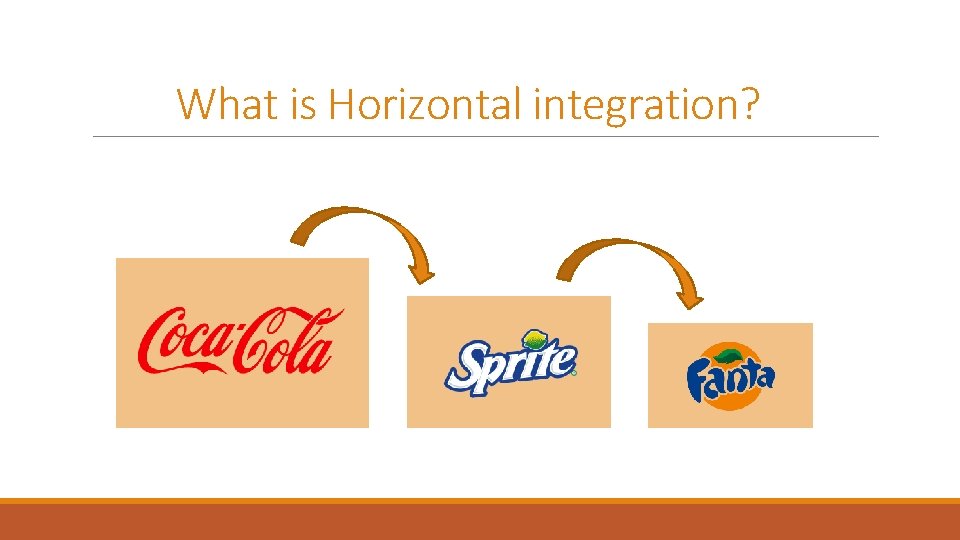
What is Horizontal integration?
Horizontal Integration is when a company expands (integrates) into other areas of an industry to expand their audience and the markets they operate within. HORIZONTAL integration This often occurs where production companies expand into other areas through mergers (joining forces with another company) and acquisitions (through buying out of another company). Companies do this mainly to increase profits. They do this by gaining new audiences who will buy different products and increase a company's potential to make profit. EXAMPLES OF HORIZONTAL INTEGRATION: • Disney and Marvel Comics/Pixar/Lucas film • Warner Brothers and DC • Facebook and Whats. App? • Google and You. Tube
Horizontal Integration Case Study Disney started out as an animation studio targeting children and families who are their core target audience. For example, Snow White 2 D Animation. After reaching a certain level of success, Walt Disney considered ways to expand increase profits. To expand the company into other markets and audiences, Disney undertook a horizontal integration into making action hero movies by acquiring Marvel. In this manner, the company managed to reach new audiences and control a bigger share of the film industry. It also horizontally integrated with Pixar and Lucasfilm. Again, producing a different kind of product with slightly different audiences. Disney now has 4 main divisions: • Movies (targeting different audiences with Marvel, Lucasfilm, Pixar, Miramax) • 11 Theme Parks • TV Stations (targeting different audiences) • Consumer Products
Horizontal Integration BENEFITS DRAWBACKS • Attracts people outside of the original target audience • Reduces competition (concentration of the market) and thus less choice for the consumer. • Increases profits for the company • Creates monopolies where companies have a lot of control over what we see and hear • Enables greater synergy (opportunity to market its products using its own products i. e. a Marvel movie trailer on the Disney channel). • Possible bias over balance - could push a political or social agenda such as more a liberal or conservative viewpoint. • Reduced workforce meaning people might lose their jobs. (Less people working in less companies as they are pushed out of the market due to competition).