Mechanical Energy and the WorkEnergy Theorem Mechanical Energy

- Slides: 9
Mechanical Energy and the Work-Energy Theorem
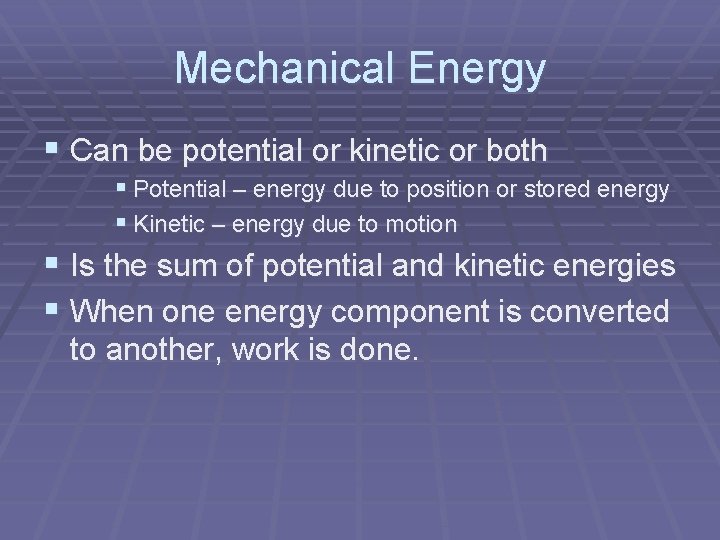
Mechanical Energy § Can be potential or kinetic or both § Potential – energy due to position or stored energy § Kinetic – energy due to motion § Is the sum of potential and kinetic energies § When one energy component is converted to another, work is done.
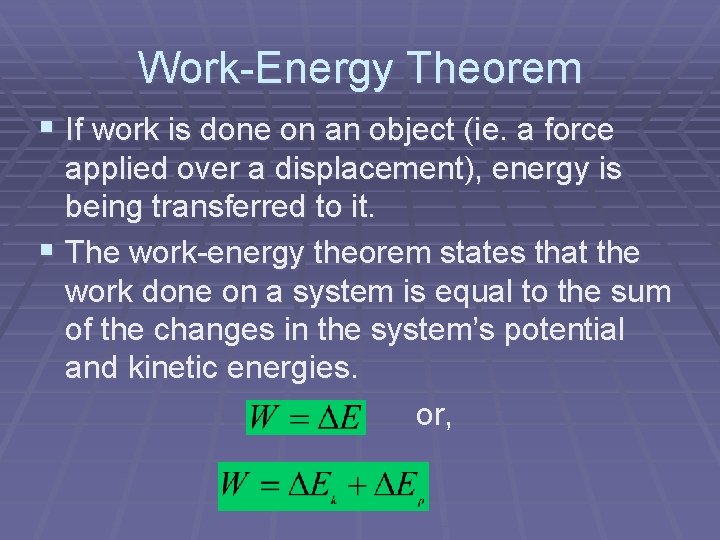
Work-Energy Theorem § If work is done on an object (ie. a force applied over a displacement), energy is being transferred to it. § The work-energy theorem states that the work done on a system is equal to the sum of the changes in the system’s potential and kinetic energies. or,
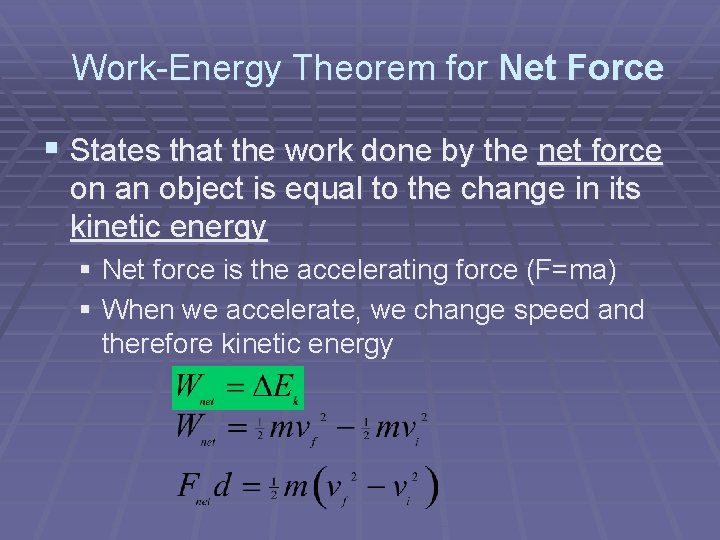
Work-Energy Theorem for Net Force § States that the work done by the net force on an object is equal to the change in its kinetic energy § Net force is the accelerating force (F=ma) § When we accelerate, we change speed and therefore kinetic energy
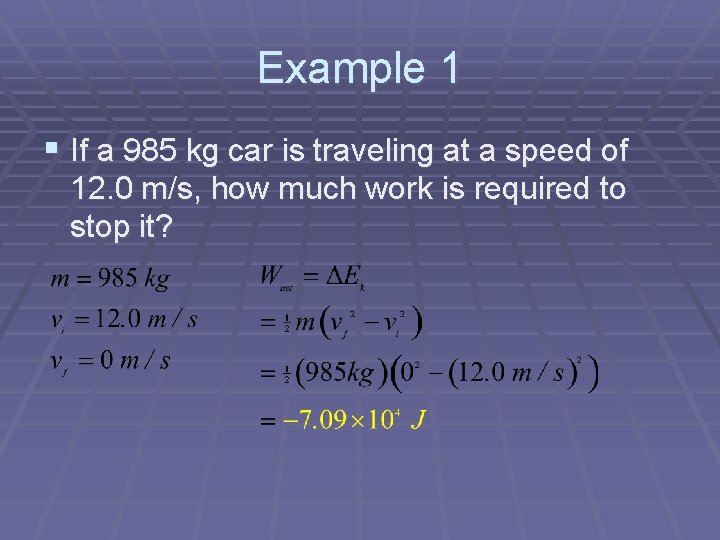
Example 1 § If a 985 kg car is traveling at a speed of 12. 0 m/s, how much work is required to stop it?
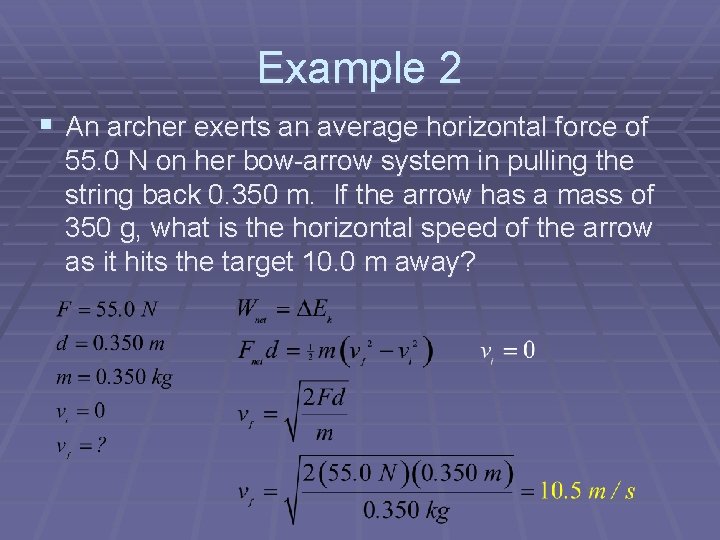
Example 2 § An archer exerts an average horizontal force of 55. 0 N on her bow-arrow system in pulling the string back 0. 350 m. If the arrow has a mass of 350 g, what is the horizontal speed of the arrow as it hits the target 10. 0 m away?
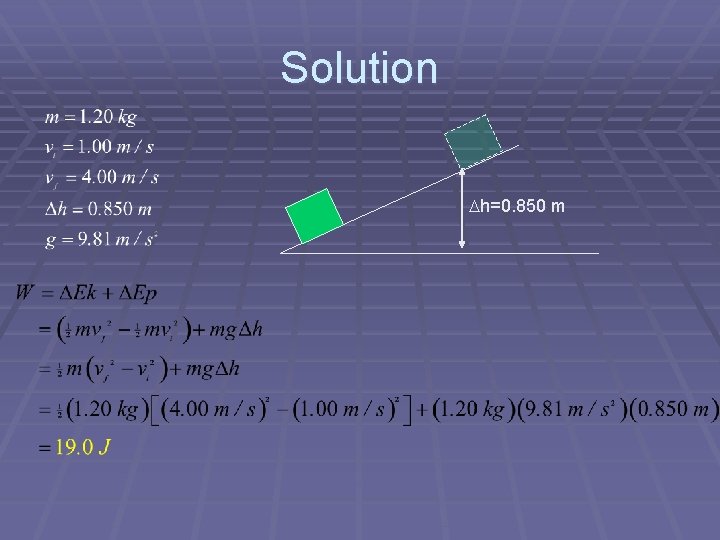
Example 3 § A block of mass 1. 20 kg is pushed up a frictionless incline. At the foot of the incline the block is moving 1. 00 m/s. At the top of the incline, 0. 850 m above the lower end, the block is moving 4. 00 m/s. What is the work done on the block?
Solution h=0. 850 m
Assignment § Pg. 308 #1 -3 § Pg. 309 #3 § Pg. 310 #1 -8