Master of Engineering Thesis Project Program 6 191
- Slides: 15
Master of Engineering Thesis Project Program 6. 191 Prototyping Research Results Charles G. Sodini, Howard E. Shrobe, Arthur C. M. Chen 6. 191 Introduction
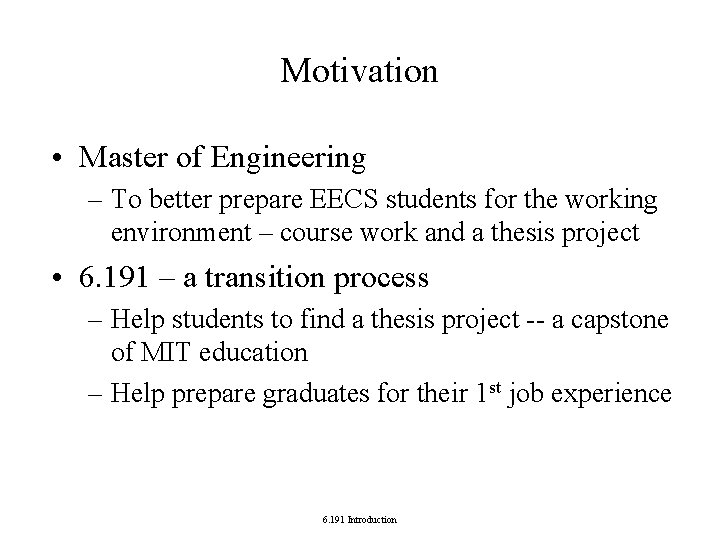
Motivation • Master of Engineering – To better prepare EECS students for the working environment – course work and a thesis project • 6. 191 – a transition process – Help students to find a thesis project -- a capstone of MIT education – Help prepare graduates for their 1 st job experience 6. 191 Introduction
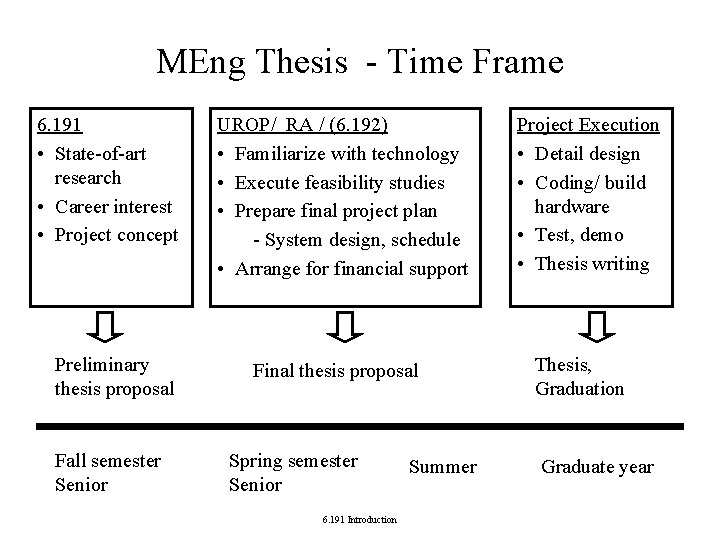
MEng Thesis - Time Frame 6. 191 • State-of-art research • Career interest • Project concept Preliminary thesis proposal Fall semester Senior UROP/ RA / (6. 192) • Familiarize with technology • Execute feasibility studies • Prepare final project plan - System design, schedule • Arrange for financial support Final thesis proposal Spring semester Senior 6. 191 Introduction Summer Project Execution • Detail design • Coding/ build hardware • Test, demo • Thesis writing Thesis, Graduation Graduate year
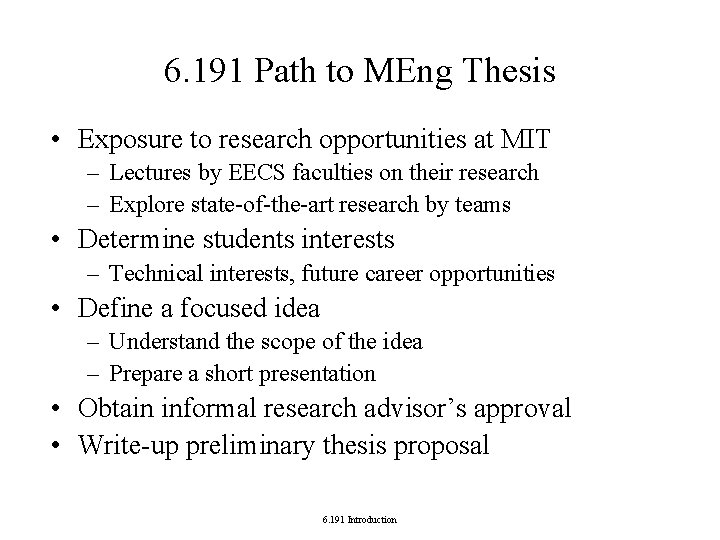
6. 191 Path to MEng Thesis • Exposure to research opportunities at MIT – Lectures by EECS faculties on their research – Explore state-of-the-art research by teams • Determine students interests – Technical interests, future career opportunities • Define a focused idea – Understand the scope of the idea – Prepare a short presentation • Obtain informal research advisor’s approval • Write-up preliminary thesis proposal 6. 191 Introduction
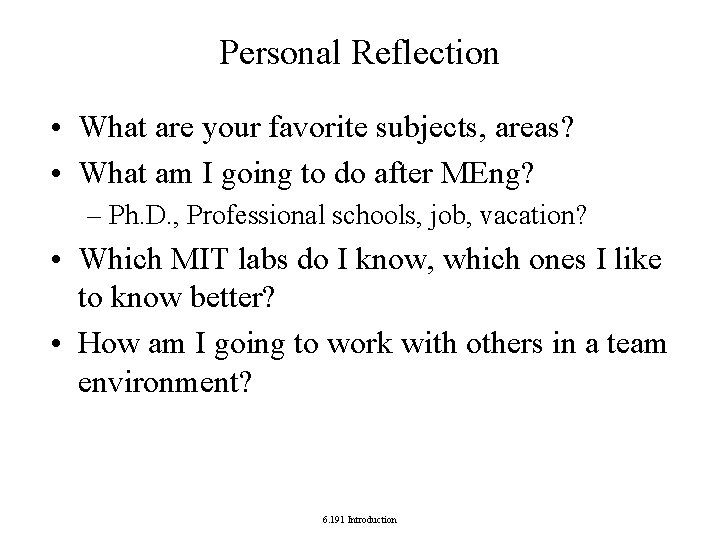
Personal Reflection • What are your favorite subjects, areas? • What am I going to do after MEng? – Ph. D. , Professional schools, job, vacation? • Which MIT labs do I know, which ones I like to know better? • How am I going to work with others in a team environment? 6. 191 Introduction
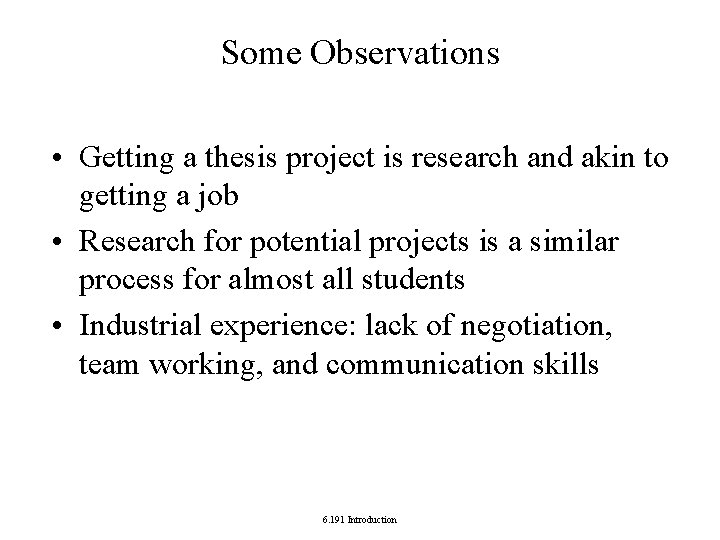
Some Observations • Getting a thesis project is research and akin to getting a job • Research for potential projects is a similar process for almost all students • Industrial experience: lack of negotiation, team working, and communication skills 6. 191 Introduction
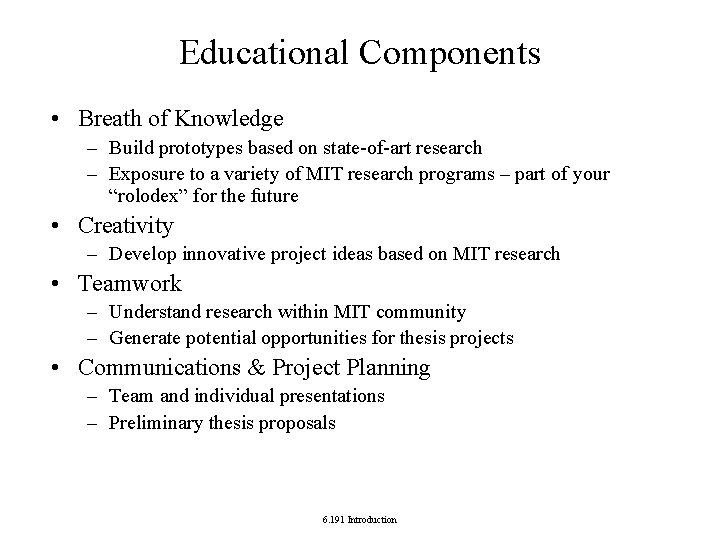
Educational Components • Breath of Knowledge – Build prototypes based on state-of-art research – Exposure to a variety of MIT research programs – part of your “rolodex” for the future • Creativity – Develop innovative project ideas based on MIT research • Teamwork – Understand research within MIT community – Generate potential opportunities for thesis projects • Communications & Project Planning – Team and individual presentations – Preliminary thesis proposals 6. 191 Introduction
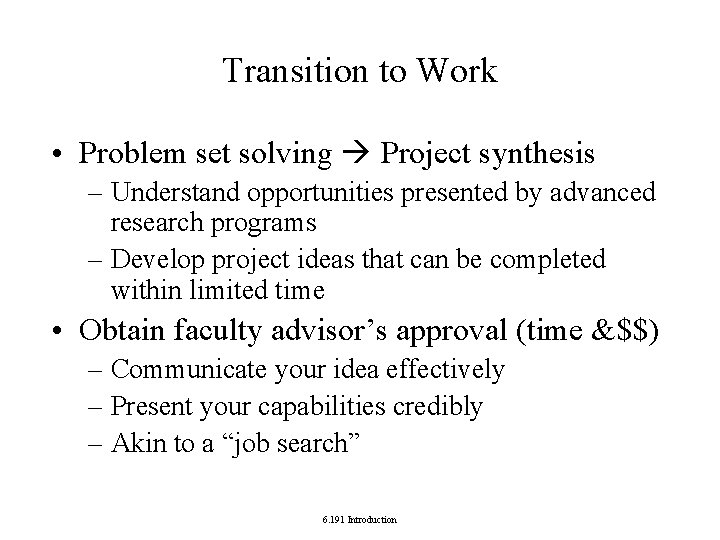
Transition to Work • Problem set solving Project synthesis – Understand opportunities presented by advanced research programs – Develop project ideas that can be completed within limited time • Obtain faculty advisor’s approval (time &$$) – Communicate your idea effectively – Present your capabilities credibly – Akin to a “job search” 6. 191 Introduction
6. 191 Syllabus 6. 191 Introduction
Some Past MEng Thesis Projects 6. 191 Introduction
Who are We • Charlie Sodini: – Research, academic, industrial experiences, etc. • Howie Shrobe: • Art Chen: 6. 191 Introduction
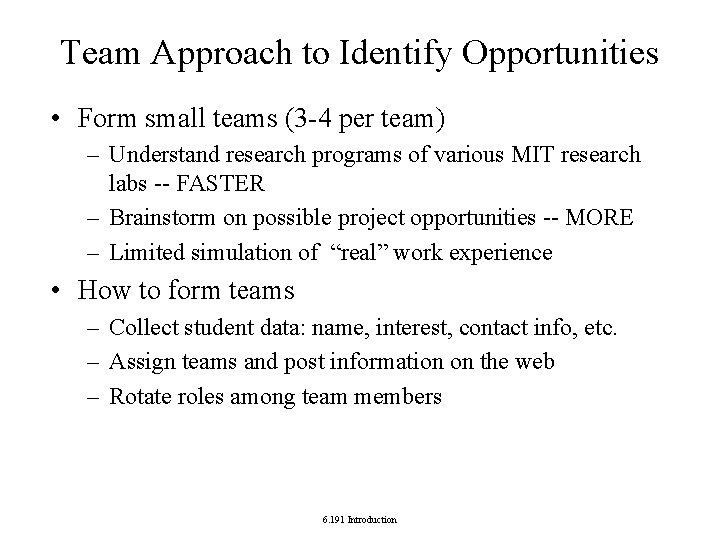
Team Approach to Identify Opportunities • Form small teams (3 -4 per team) – Understand research programs of various MIT research labs -- FASTER – Brainstorm on possible project opportunities -- MORE – Limited simulation of “real” work experience • How to form teams – Collect student data: name, interest, contact info, etc. – Assign teams and post information on the web – Rotate roles among team members 6. 191 Introduction
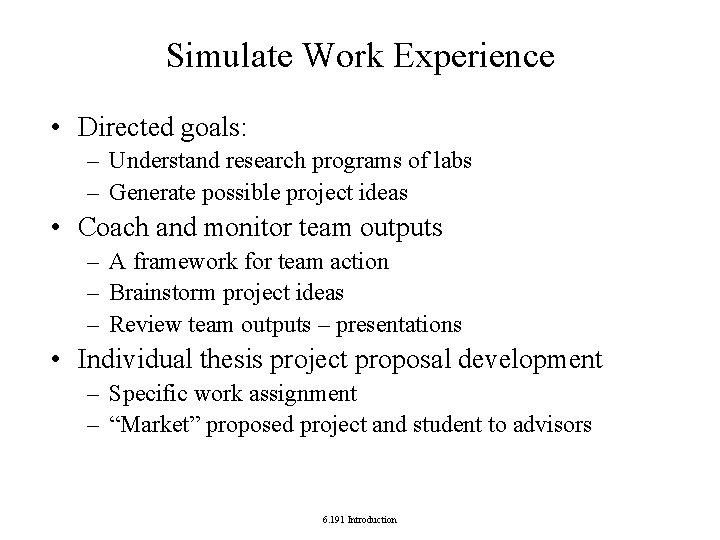
Simulate Work Experience • Directed goals: – Understand research programs of labs – Generate possible project ideas • Coach and monitor team outputs – A framework for team action – Brainstorm project ideas – Review team outputs – presentations • Individual thesis project proposal development – Specific work assignment – “Market” proposed project and student to advisors 6. 191 Introduction
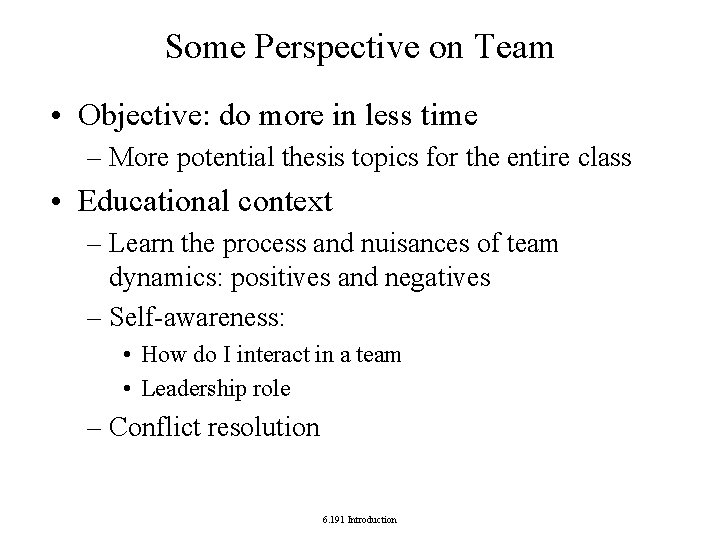
Some Perspective on Team • Objective: do more in less time – More potential thesis topics for the entire class • Educational context – Learn the process and nuisances of team dynamics: positives and negatives – Self-awareness: • How do I interact in a team • Leadership role – Conflict resolution 6. 191 Introduction
Introduction to Team Collaboration • To be added 6. 191 Introduction