Marketing Research Gathering Analyzing and Using Information Chapter

- Slides: 38
Marketing Research: Gathering, Analyzing, and Using Information
Chapter Objectives • Explain the role of the marketing information system and the marketing decision support system in marketing decision making • List and explain the steps in the marketing research process • Appreciate the differences among exploratory, descriptive, and casual research • Describe the different types of data-collection methods and types of consumer samples that research use • Understand the impact of the growing use of online research 2
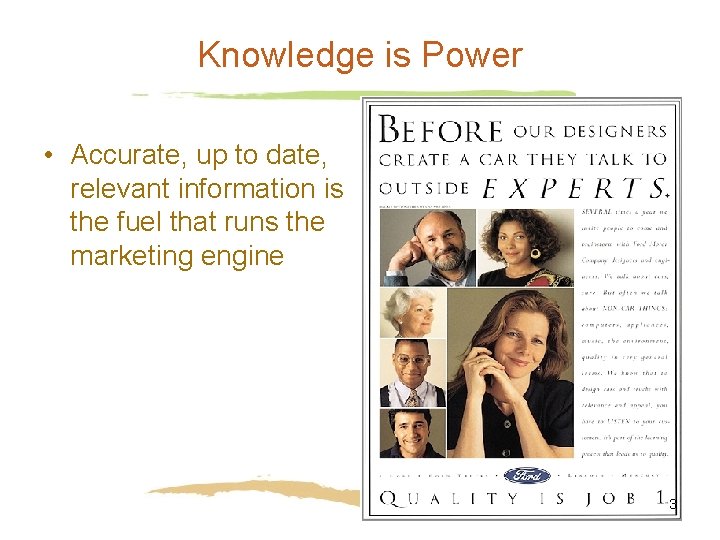
Knowledge is Power • Accurate, up to date, relevant information is the fuel that runs the marketing engine 3
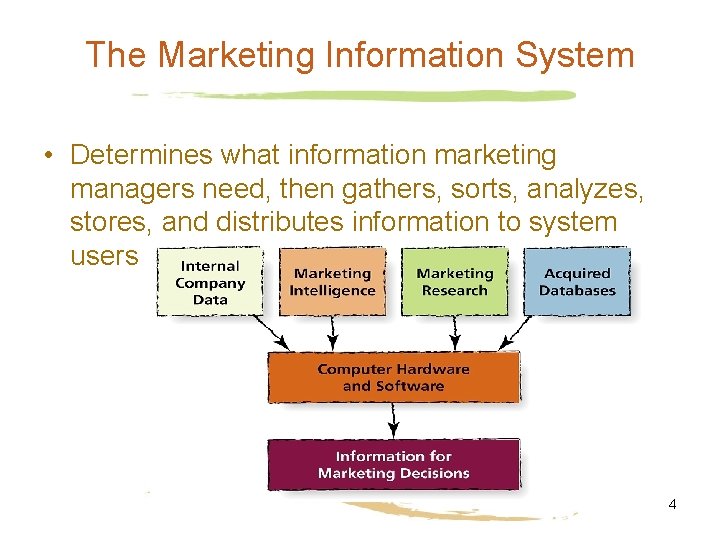
The Marketing Information System • Determines what information marketing managers need, then gathers, sorts, analyzes, stores, and distributes information to system users 4
Internal Company Data • Information from within the company to produce reports on the results of sales and marketing activities (e. g. Sales, what consumers are buying what products…etc) • Intranet: internal corporate communications network that links company departments, employees, and databases. 5
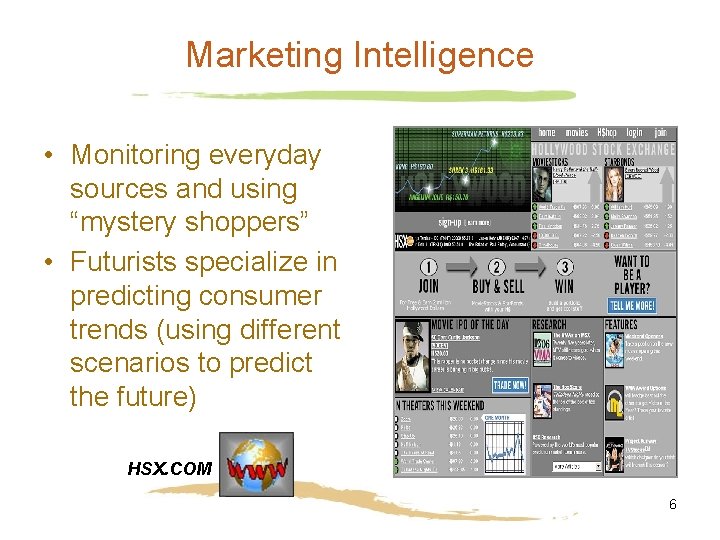
Marketing Intelligence • Monitoring everyday sources and using “mystery shoppers” • Futurists specialize in predicting consumer trends (using different scenarios to predict the future) HSX. COM 6
Marketing Research • Collecting, analyzing, and interpreting data about customers, competitors, and the business environment to improve marketing effectiveness Ø Syndicated research (research by firms that collect data on a regular basis and sell the reports to multiple firms) Ø Custom research (conducted for a single firm to provide specific information) Gf. K ARBOR LLC MEDIAMARK RESEARCH 7
Acquired Databases • From other companies • Government databases • Misuse of databases can be problematic and has led to do-not-call lists and antispam laws 8
Marketing Decision Support Systems • MDSS: data plus analysis and interactive software allow marketing managers to access MIS data and conduct analyses 9
Searching for Gold: Data Mining • Analysts sift (filter) through data to identify unique patterns of behavior among different customer groups • Using super computers to process terabytes size of data, and also “data warehouse” to investigate patterns of preferences of consumers • Very complex and costly way, over $10 m. 10
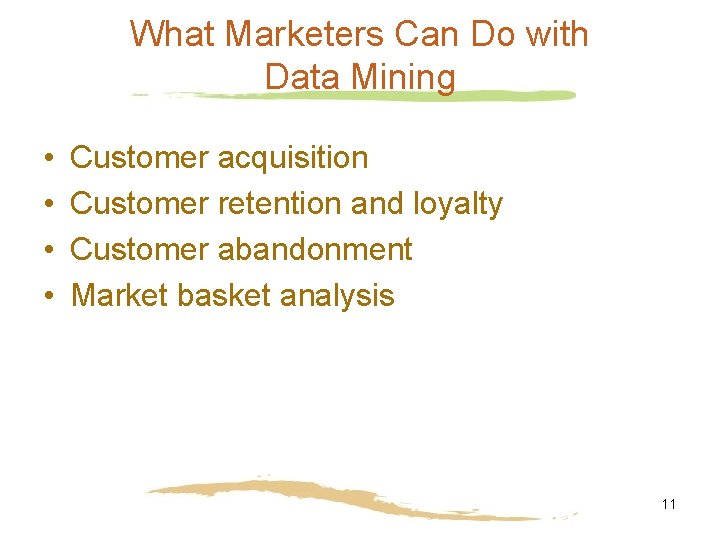
What Marketers Can Do with Data Mining • • Customer acquisition Customer retention and loyalty Customer abandonment Market basket analysis 11
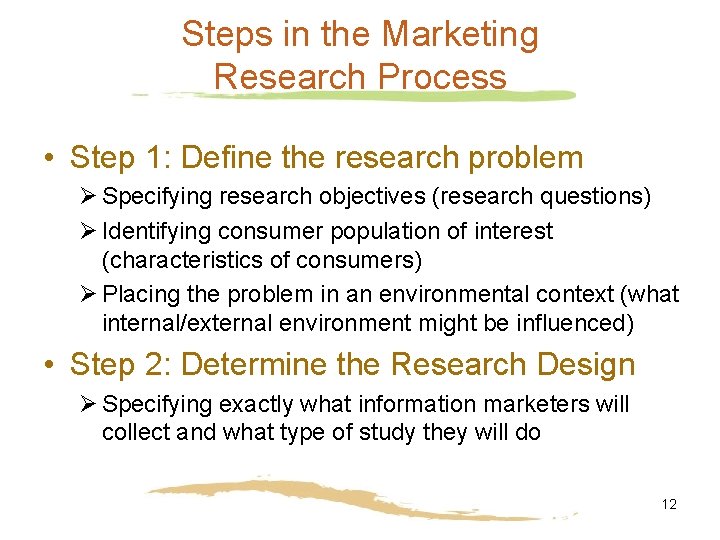
Steps in the Marketing Research Process • Step 1: Define the research problem Ø Specifying research objectives (research questions) Ø Identifying consumer population of interest (characteristics of consumers) Ø Placing the problem in an environmental context (what internal/external environment might be influenced) • Step 2: Determine the Research Design Ø Specifying exactly what information marketers will collect and what type of study they will do 12
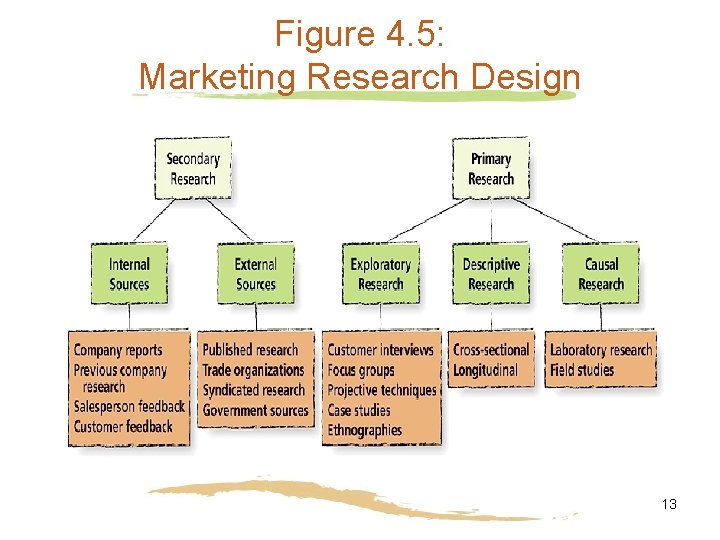
Figure 4. 5: Marketing Research Design 13
Secondary Versus Primary Research • Secondary data have been collected for some purposes other than the problem at hand • Primary data is information collected directly from respondents to specifically address the question at hand 14
Secondary Research Web Sites CENSUS. GOV MARKETINGTOOLS. COM DIALOG. COM LEXIS-NEXIS 15
Exploratory (Qualitative) Research • Research techniques that generate insights for future, more rigorous studies • Researchers conduct one-on-one discussions with consumers • Focus group: a product-oriented discussion among a small group of consumers 16
Exploratory (Qualitative) Research (cont’d) • Projective techniques: participants respond to some object • Case study: comprehensive examination of a particular firm • Ethnography: Marketers visit homes or participate in consumer activities to learn how products are used 17
Descriptive (Quantitative) Research • Probes systematically into the problem • Bases conclusions on large numbers of observations • Results typically expressed in quantitative terms (averages, percentages, other stats) Ø Cross-sectional design (one time) Ø Longitudinal design (track over time) 18
Causal Research • Cause-and-effect relationships: a change in one thing causes a change in something else Ø Independent (cause) vs. dependent (change in outcome) variables Ø Experiments: test predicted relationships among variables in a controlled environment Ø Field studies 19
Steps in the Marketing Research Process (cont’d) Step 3: Choose the Method for Collecting Primary Data • Survey Methods: interview respondents • Questionnaires: loosely, moderately, or completely structured 20
Questionnaires • • Mail questionnaires Telephone interviews Face-to-face interviews Online questionnaires 21
Discussion • Are you willing to reveal personal information to marketing researchers? • How much are you willing to tell? • Where would you draw the line? 22
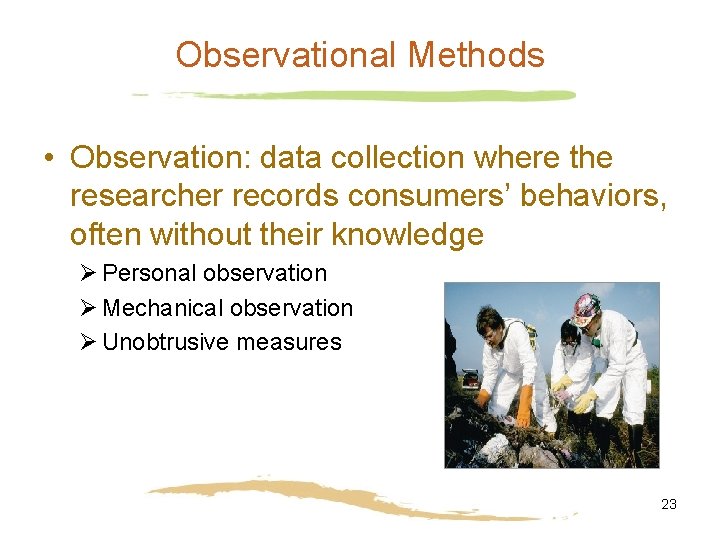
Observational Methods • Observation: data collection where the researcher records consumers’ behaviors, often without their knowledge Ø Personal observation Ø Mechanical observation Ø Unobtrusive measures 23
Data Quality: Garbage In, Garbage Out • How much faith should marketing managers place in research? Ø Validity Ø Reliability Ø Representativeness 24
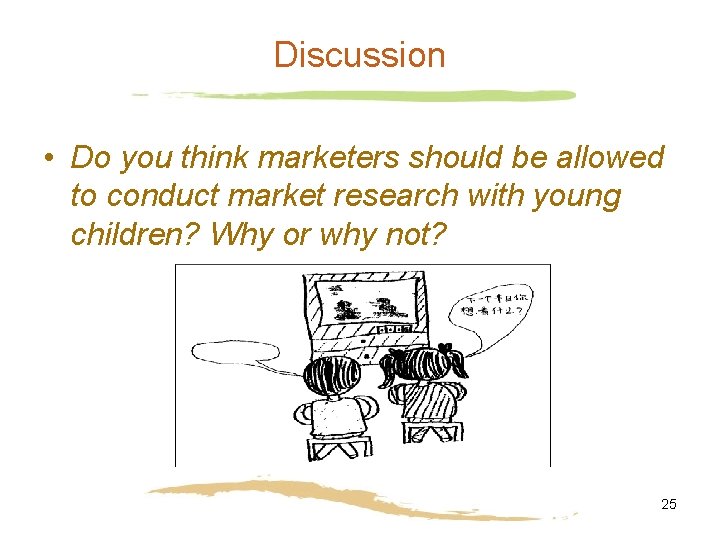
Discussion • Do you think marketers should be allowed to conduct market research with young children? Why or why not? 25
Online Research • Information gathered via consumer surfing and Web site/email/chat room questionnaires/focus groups • Cookies allow a Web sponsor to track a surfer’s moves 26
Online Research Applications • • New product development Estimating market response Exploratory research (online focus groups) IM (Instant Messaging) THERE. COM ITRACKS. COM 27
Advantages of Online Data Collection • The same amount of data in a fraction of the time • Convenience of survey completion • Elimination of interviewer bias and data entry errors 28
Disadvantages of Online Data Collection • Non-representativeness of respondents • Limited computer access for poor and elderly • Self-selection bias (people who like to take part in online studies) • Hackers and competitors influencing/intercepting results 29
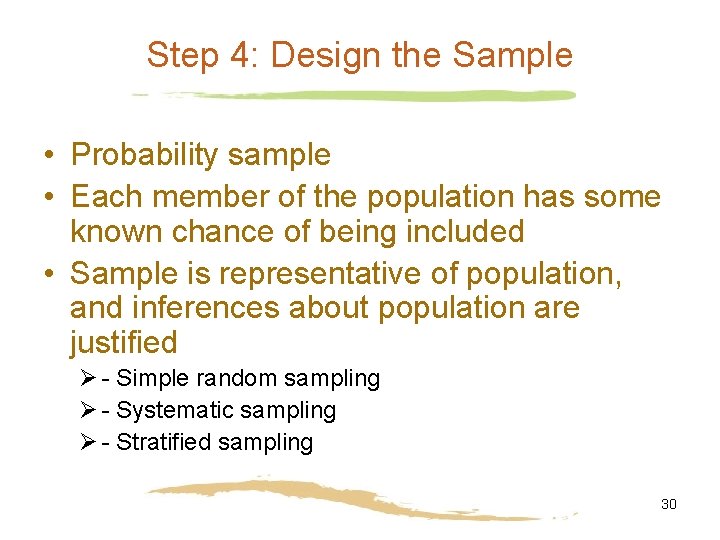
Step 4: Design the Sample • Probability sample • Each member of the population has some known chance of being included • Sample is representative of population, and inferences about population are justified Ø - Simple random sampling Ø - Systematic sampling Ø - Stratified sampling 30
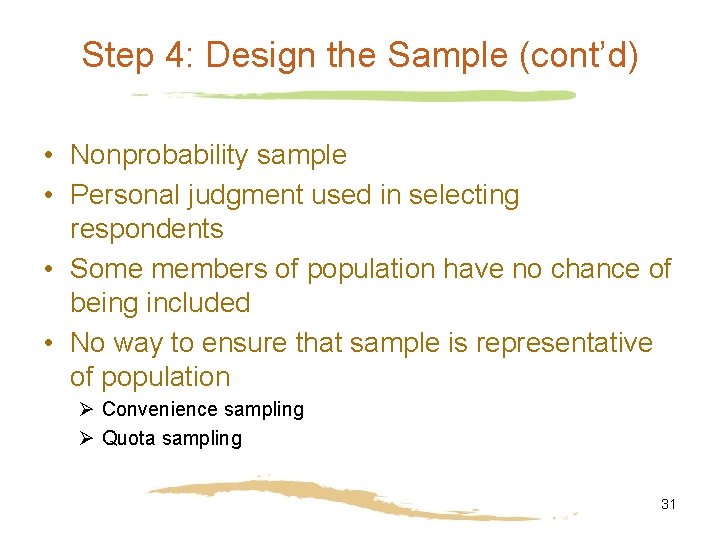
Step 4: Design the Sample (cont’d) • Nonprobability sample • Personal judgment used in selecting respondents • Some members of population have no chance of being included • No way to ensure that sample is representative of population Ø Convenience sampling Ø Quota sampling 31
Discussion • Why wouldn’t you select all the individuals or elements of a population to be in your study? 32
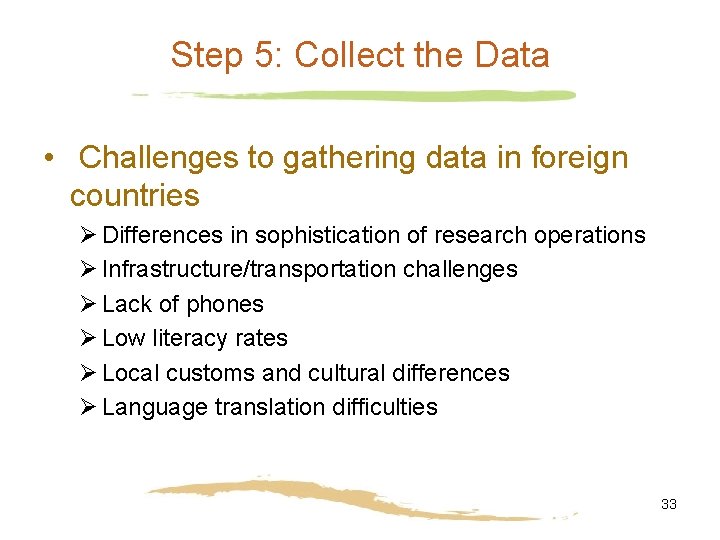
Step 5: Collect the Data • Challenges to gathering data in foreign countries Ø Differences in sophistication of research operations Ø Infrastructure/transportation challenges Ø Lack of phones Ø Low literacy rates Ø Local customs and cultural differences Ø Language translation difficulties 33
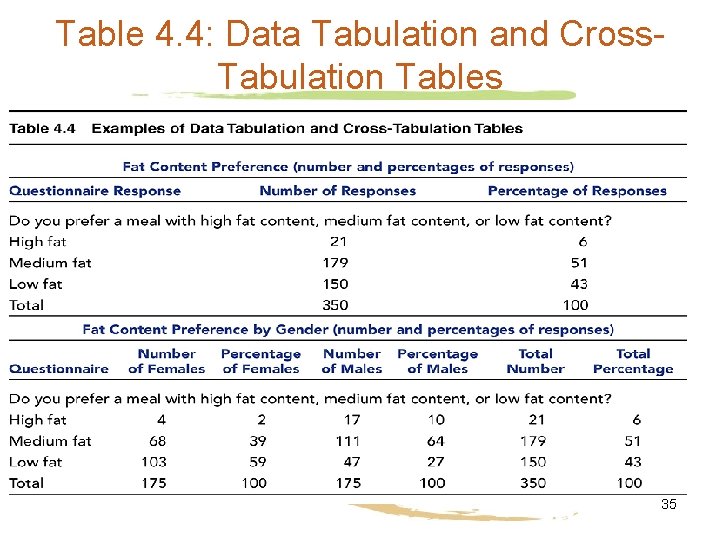
Step 6: Analyze and Interpret the Data • Data need analysis for them to have meaning • Tabulation: arranging data in a table or other summary form to get a broad picture of overall responses • Cross-tabulation: examining the data by subgroups to see how results vary between categories 34
Table 4. 4: Data Tabulation and Cross. Tabulation Tables 35
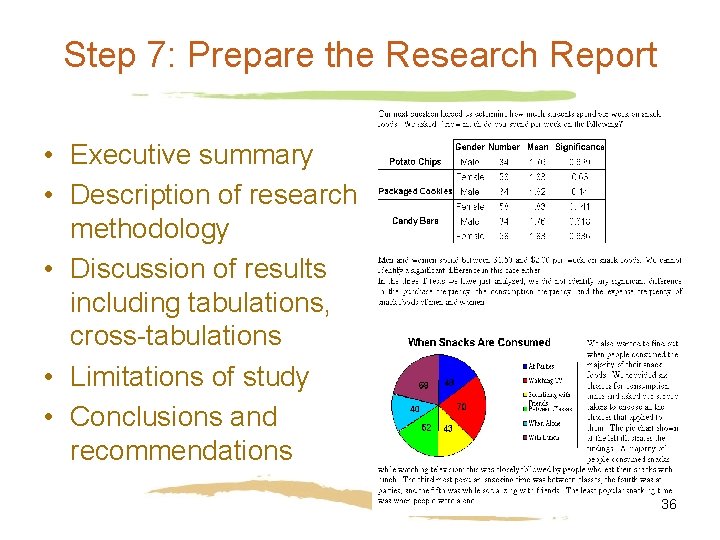
Step 7: Prepare the Research Report • Executive summary • Description of research methodology • Discussion of results including tabulations, cross-tabulations • Limitations of study • Conclusions and recommendations 36
Discussion • What is your overall attitude toward marketing research? • Do you think it is a beneficial activity from a consumer’s perspective? • Or do you think it merely gives marketers new insights on how to convince consumers to buy something they really don’t want or need? 37
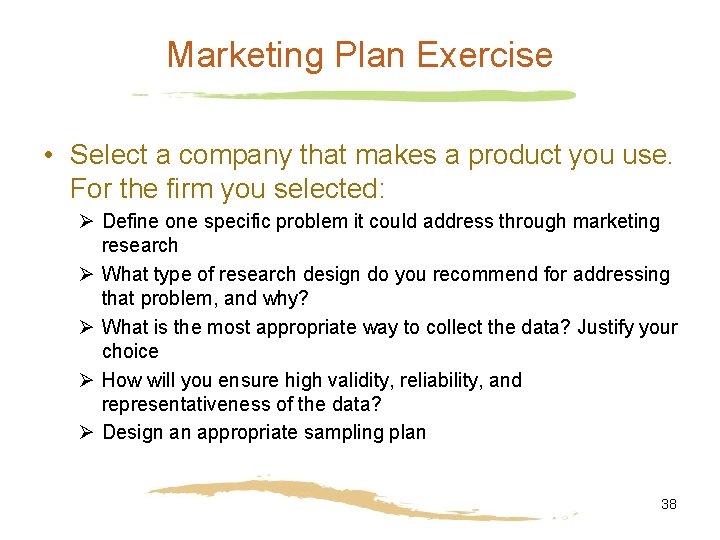
Marketing Plan Exercise • Select a company that makes a product you use. For the firm you selected: Ø Define one specific problem it could address through marketing research Ø What type of research design do you recommend for addressing that problem, and why? Ø What is the most appropriate way to collect the data? Justify your choice Ø How will you ensure high validity, reliability, and representativeness of the data? Ø Design an appropriate sampling plan 38