Management of Technology 1 What is MOT 2




- Slides: 10
Management of Technology 1
What is MOT? 2 l MOT links engineering, science, and management disciples to plan, develop, and implement technological capabilities to shape and accomplish the strategic and operational objectives of an organization. l Operation of MOT is a transformational system, from proprietary know-how to the commercialization of product, including operations, quality assurance, human resources, information management, planned for profits
Some Definitions l Technology w knowledge of the manipulation of nature for human purpose § techno – process, art § ology – system of knowledge l Invention w The creation of a functional way to do l Innovation w the transformation of an idea into a new or improved saleable product or operational process in industry and commerce or into a new approach to a social service. 3
Science versus Technology System Input Information & Knowledge & Artifacts Input 4 Output SCIENCE By-product Information & Knowledge Output TECHNOLOGY Products & Processes
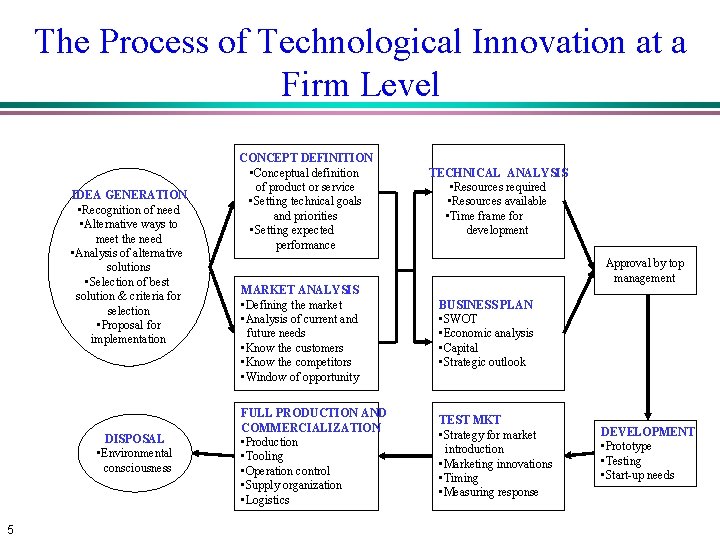
The Process of Technological Innovation at a Firm Level IDEA GENERATION • Recognition of need • Alternative ways to meet the need • Analysis of alternative solutions • Selection of best solution & criteria for selection • Proposal for implementation DISPOSAL • Environmental consciousness 5 CONCEPT DEFINITION • Conceptual definition of product or service • Setting technical goals and priorities • Setting expected performance TECHNICAL ANALYSIS • Resources required • Resources available • Time frame for development Approval by top management MARKET ANALYSIS • Defining the market • Analysis of current and future needs • Know the customers • Know the competitors • Window of opportunity BUSINESS PLAN • SWOT • Economic analysis • Capital • Strategic outlook FULL PRODUCTION AND COMMERCIALIZATION • Production • Tooling • Operation control • Supply organization • Logistics TEST MKT • Strategy for market introduction • Marketing innovations • Timing • Measuring response DEVELOPMENT • Prototype • Testing • Start-up needs
Innovation Management Routines l Scanning w Monitor environment (internal and external) for signals about potential opportunities/threats. l Strategy w Evaluate options in terms of strategic fit with competences and benefit/cost. l Resourcing w People, technology, money. . . Balance. l Implementation w Technical & market development; launch and follow-on. l 6 Learning and Re-innovation
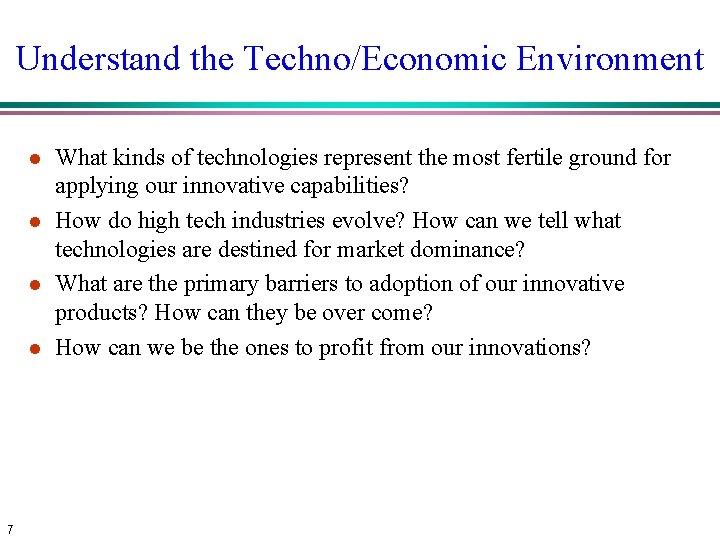
Understand the Techno/Economic Environment l l 7 What kinds of technologies represent the most fertile ground for applying our innovative capabilities? How do high tech industries evolve? How can we tell what technologies are destined for market dominance? What are the primary barriers to adoption of our innovative products? How can they be over come? How can we be the ones to profit from our innovations?
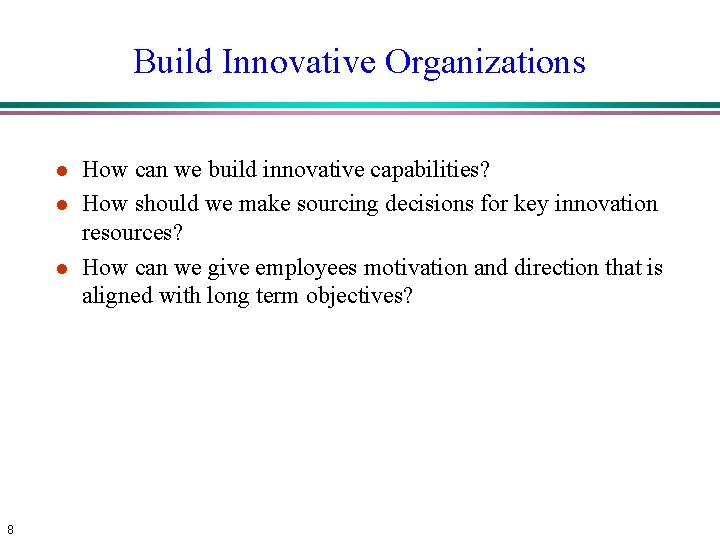
Build Innovative Organizations l l l 8 How can we build innovative capabilities? How should we make sourcing decisions for key innovation resources? How can we give employees motivation and direction that is aligned with long term objectives?
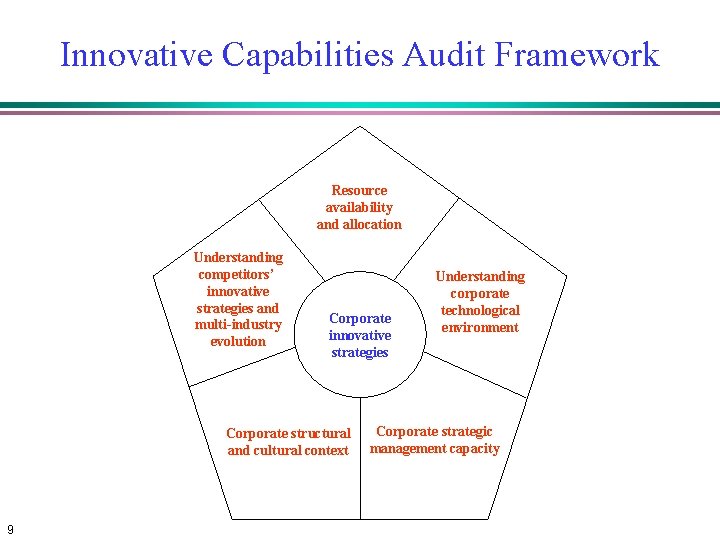
Innovative Capabilities Audit Framework Resource availability and allocation Understanding competitors’ innovative strategies and multi-industry evolution Corporate innovative strategies Corporate structural and cultural context 9 Understanding corporate technological environment Corporate strategic management capacity
MOT Topics · · · 10 Science and technology policy High-tech industry and market structure Strategic management of technological innovation R&D management New product development Entrepreneurship and new business venturing · · · · Technology transfer IPR strategy and management Industrial marketing E-commerce and e-business System engineering management Decision sciences Knowledge management