Magnets Review Were magnetic Whats a magnet A

- Slides: 18
Magnets Review We’re magnetic!
What’s a magnet? • A magnet is a material or object that produces a magnetic field • Question: What is a magnetic field then? – A force that pulls on certain materials, and attracts or repels other magnets – Is created by the rotation of electrons around the nucleus of each atom
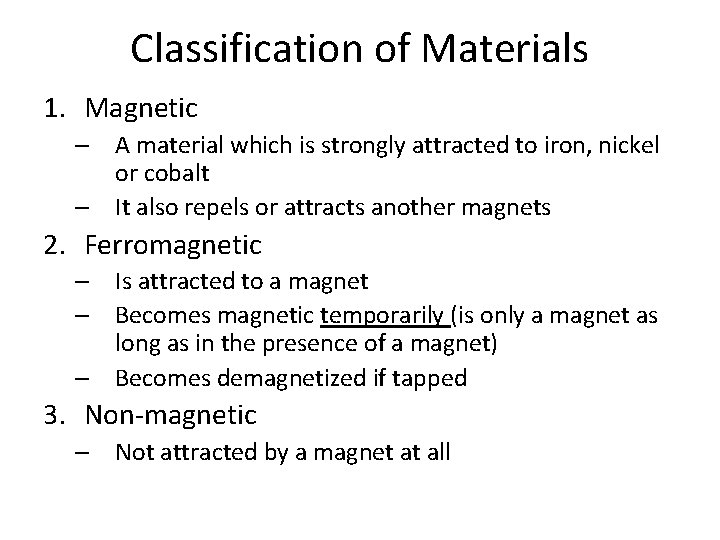
Classification of Materials 1. Magnetic – A material which is strongly attracted to iron, nickel or cobalt – It also repels or attracts another magnets 2. Ferromagnetic – Is attracted to a magnet – Becomes magnetic temporarily (is only a magnet as long as in the presence of a magnet) – Becomes demagnetized if tapped 3. Non-magnetic – Not attracted by a magnet at all
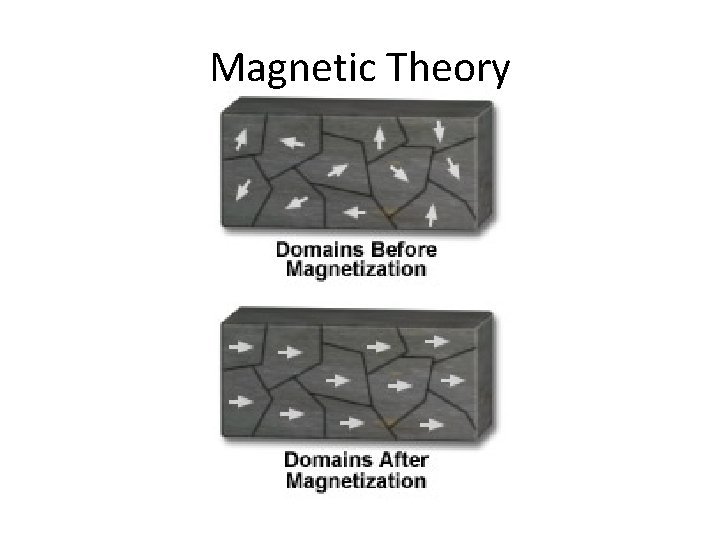
Magnetic Theory • Only magnets and ferromagnetic substances are affected by magnetic fields • In these materials, small groups of atoms band together in areas called domains. – The electrons of the atoms in a domain are all in the same magnetic orientation. • The electrons are all oriented in the same way!
Magnetic Theory • In a non-magnetized ferromagnetic substance, these domains are in a random order • When these substances are placed in a magnetic field, their domains will align in the same direction as the field, and become magnetized! – The moment the magnetic field is removed, ferromagnetic substances remain magnetic for only a short while, and their domains loose their specific arrangements • Note, the domains in magnets are always aligned!
Magnetic Theory
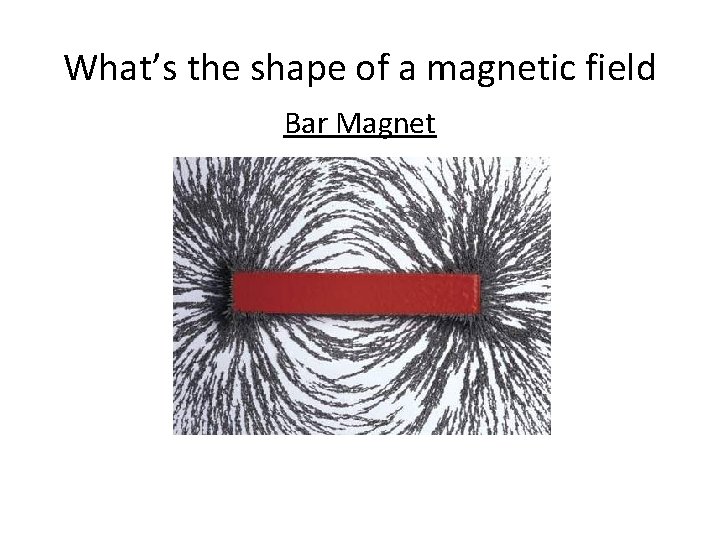
What’s the shape of a magnetic field Bar Magnet
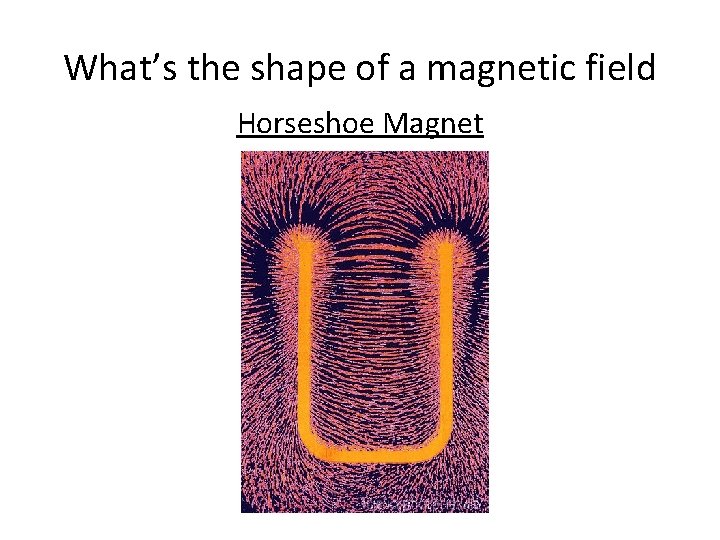
What’s the shape of a magnetic field Horseshoe Magnet
Magnetic Fields • All magnetic fields have the following characteristics: – A north and a south pole – The lines of force goes from one pole to the other pole • They start from the north and end at the south – The lines of force never intersect!!! – Like poles repel one another, whereas opposite poles attract one another
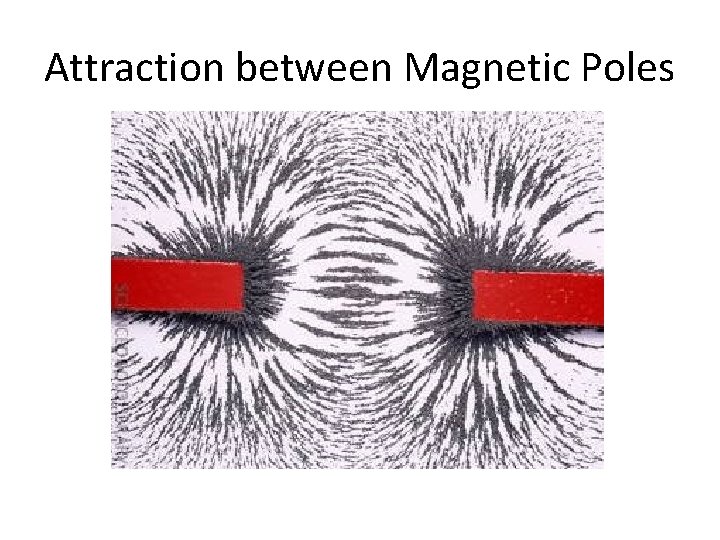
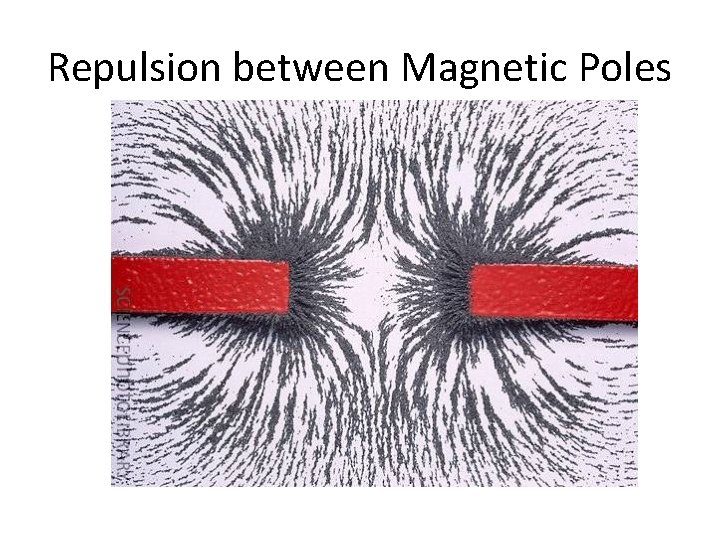
Law of Magnetism • Like poles repel one another • Two north poles will repel one another! None of the lines of force will go near the pole. The lines of force will go towards their own south poles • Opposite poles attract one another – A north pole will attract with a south pole! The lines of force will start from the north pole and head to the south pole
Attraction between Magnetic Poles
Repulsion between Magnetic Poles
How compasses react to magnets • The red end of a compass needle is attracted to the south pole of a magnet – Therefore, the red end of a compass is that compass’s north pole! • Question: why does the red end of a compass needle point towards the North Pole where Santa lives? – The Geographical North Pole is a MAGNETIC SOUTH POLE!
Magnetic Remanence Def: Ability of a material to acquire and keep its magnetic properties Two types of magnets • Temporary →they loose their magnetic ability quickly • Permanent → they stay magnetic for a long time
Magnetic Remanence • So, materials that stay magnetic for a long time have high magnetic remanence • Same applies to materials that don’t stay magnetic for a long time. Materials that are only magnetic for a short time have low magnetic remanence
Electromagnetism • In short, joining of electricity and magnetism! Remember magnetism has to do with the alignment of the electrons in atoms • When you have an electronic current, the motion of electrons are going in the same direction • Therefore, my electrons have the same orientation! • When you have a dynamic current flowing, you produce a temporary magnetic field! – No current = no more field
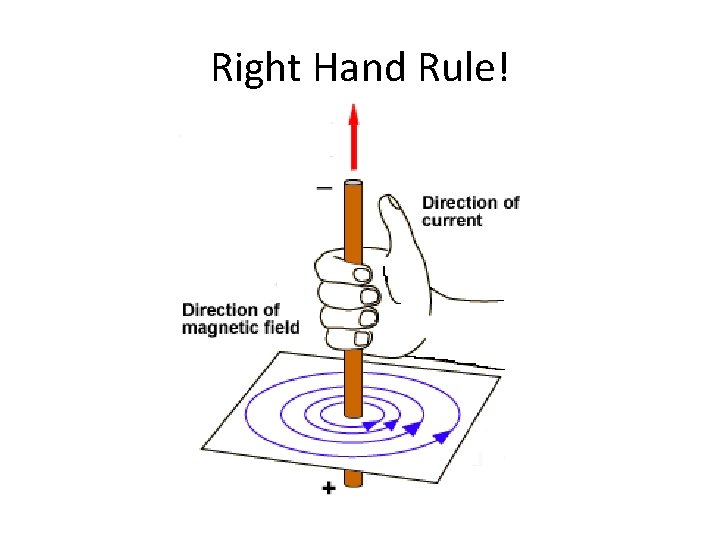
Right Hand Rule! • Used to determine the direction of the magnetic field lines generated by a live wire • You’re thumb : points in conventional current direction – Tip of thumb points to (-) terminal. Butt of hand is pointing to (+) terminal • Your fingers: show direction of magnetic field line – The curling of your fingers grabbing the “wire” curl in the direction the wire is going
Right Hand Rule!