Limits and Continuity Limits and Continuity Let f
- Slides: 8
Limits and Continuity
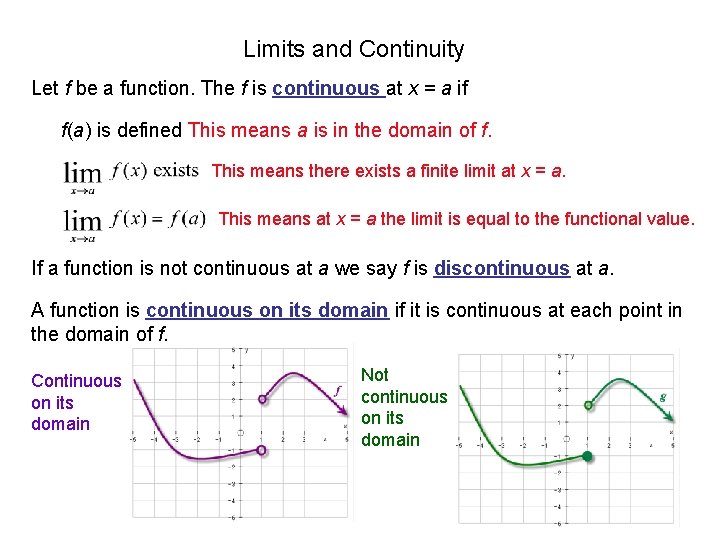
Limits and Continuity Let f be a function. The f is continuous at x = a if f(a) is defined This means a is in the domain of f. This means there exists a finite limit at x = a. This means at x = a the limit is equal to the functional value. If a function is not continuous at a we say f is discontinuous at a. A function is continuous on its domain if it is continuous at each point in the domain of f. Continuous on its domain Not continuous on its domain
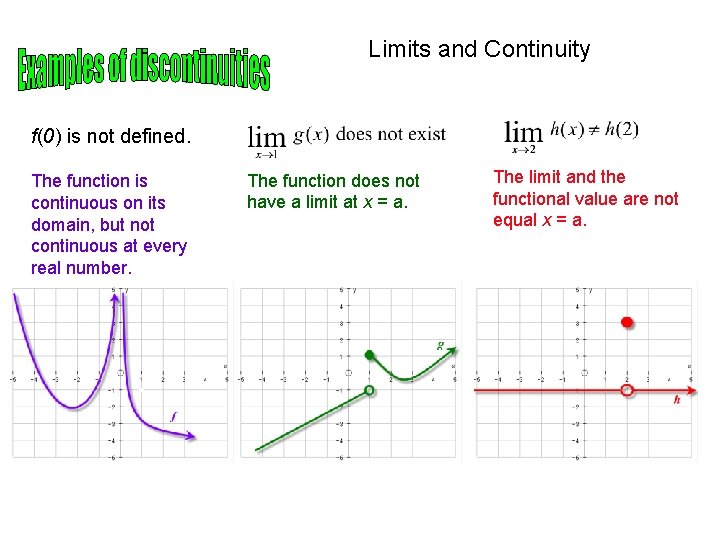
Limits and Continuity f(0) is not defined. The function is continuous on its domain, but not continuous at every real number. The function does not have a limit at x = a. The limit and the functional value are not equal x = a.
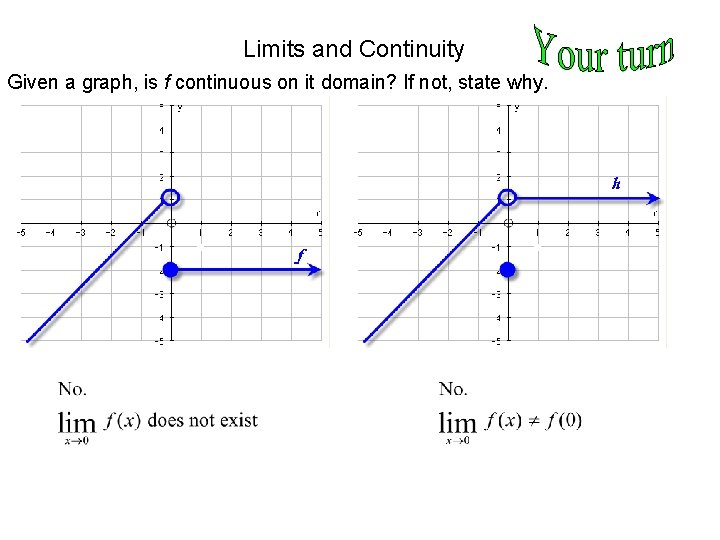
Limits and Continuity Given a graph, is f continuous on it domain? If not, state why.
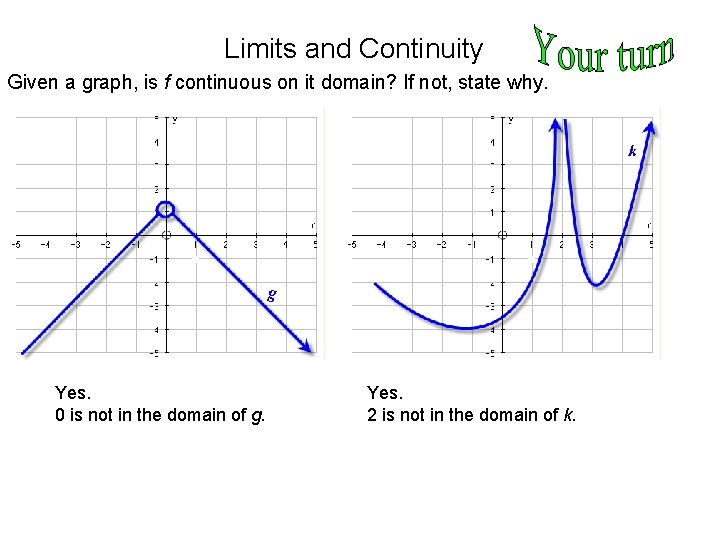
Limits and Continuity Given a graph, is f continuous on it domain? If not, state why. Yes. 0 is not in the domain of g. Yes. 2 is not in the domain of k.
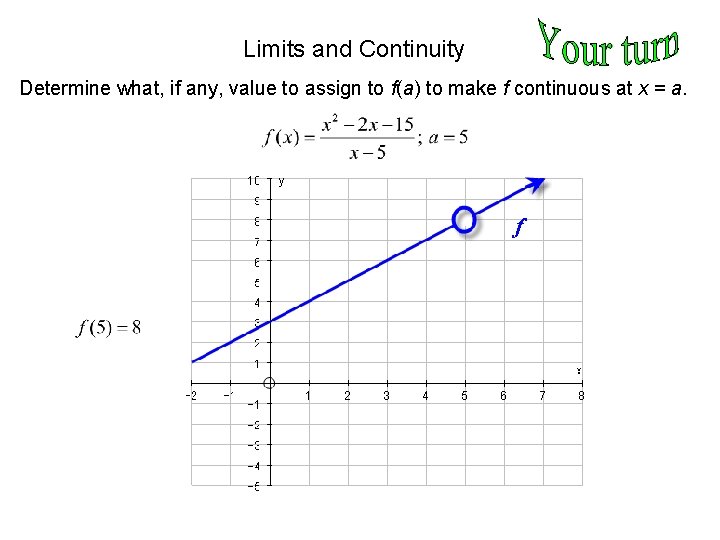
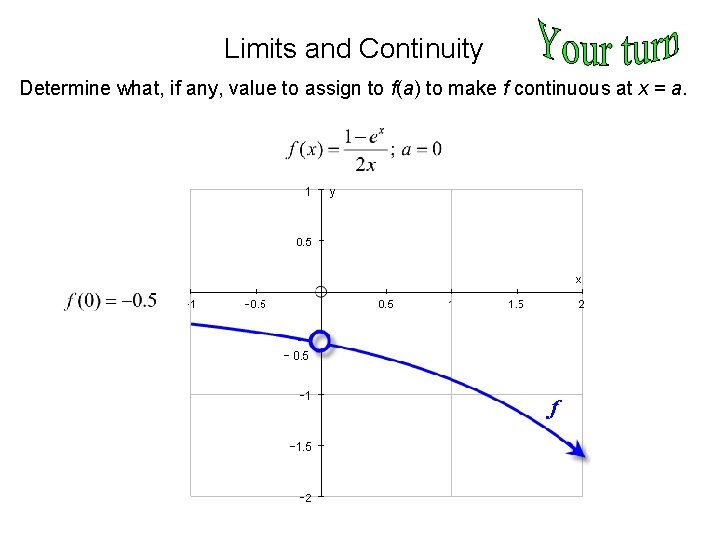
Limits and Continuity Determine what, if any, value to assign to f(a) to make f continuous at x = a.
Limits and Continuity Determine what, if any, value to assign to f(a) to make f continuous at x = a.
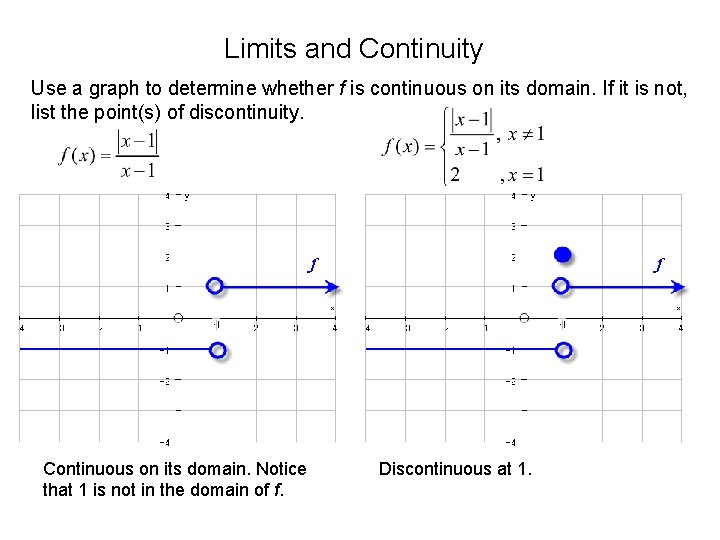
Limits and Continuity Use a graph to determine whether f is continuous on its domain. If it is not, list the point(s) of discontinuity. Continuous on its domain. Notice that 1 is not in the domain of f. Discontinuous at 1.