LICEO SCIENTIFICO FRANCESCO REDI CELIAC DISEASE Teacher Elisa


- Slides: 9
LICEO SCIENTIFICO FRANCESCO REDI CELIAC DISEASE Teacher: Elisa Vannuccini Student: Irene Magnanensi
WHAT IS CELIAC DISEASE? • Celiac disease is an autoimmune disorder that can occur in genetically predisposed people where the ingestion of gluten leads to damage in the small intestine.
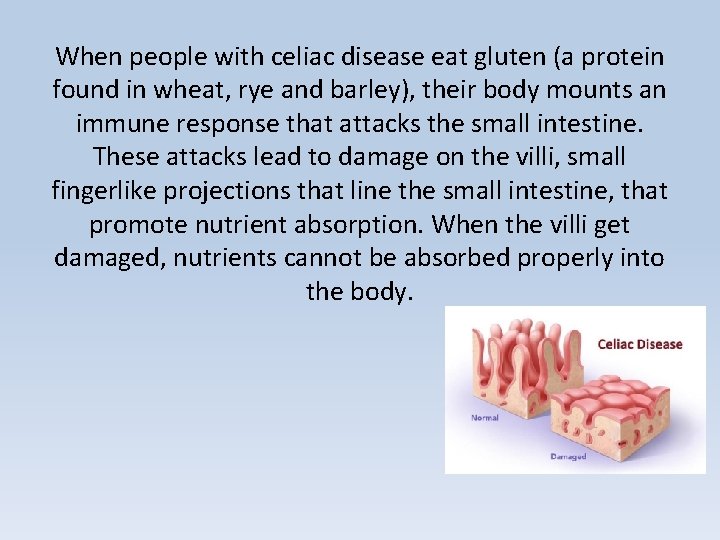
When people with celiac disease eat gluten (a protein found in wheat, rye and barley), their body mounts an immune response that attacks the small intestine. These attacks lead to damage on the villi, small fingerlike projections that line the small intestine, that promote nutrient absorption. When the villi get damaged, nutrients cannot be absorbed properly into the body.
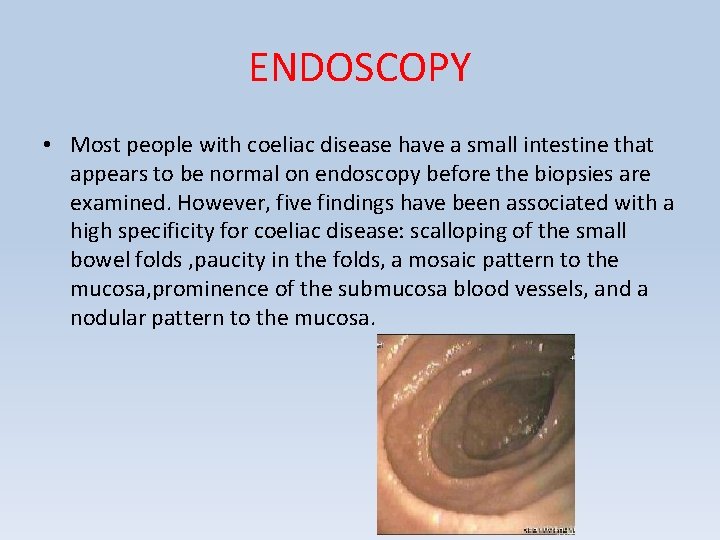
ENDOSCOPY • Most people with coeliac disease have a small intestine that appears to be normal on endoscopy before the biopsies are examined. However, five findings have been associated with a high specificity for coeliac disease: scalloping of the small bowel folds , paucity in the folds, a mosaic pattern to the mucosa, prominence of the submucosa blood vessels, and a nodular pattern to the mucosa.
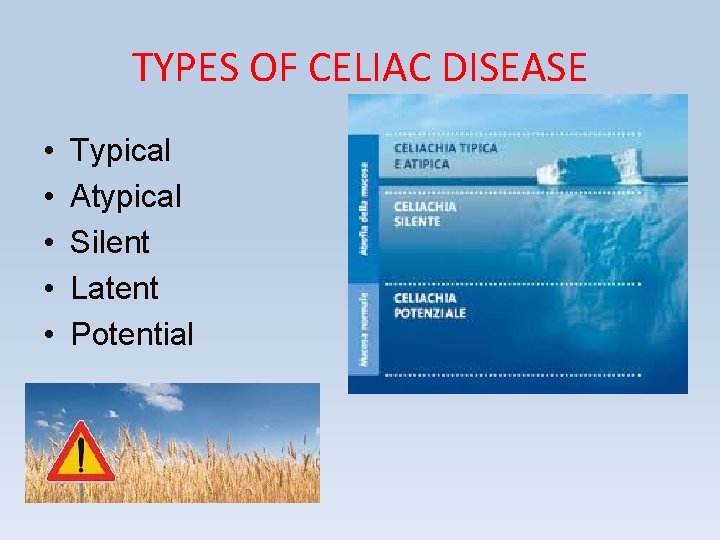
TYPES OF CELIAC DISEASE • • • Typical Atypical Silent Latent Potential
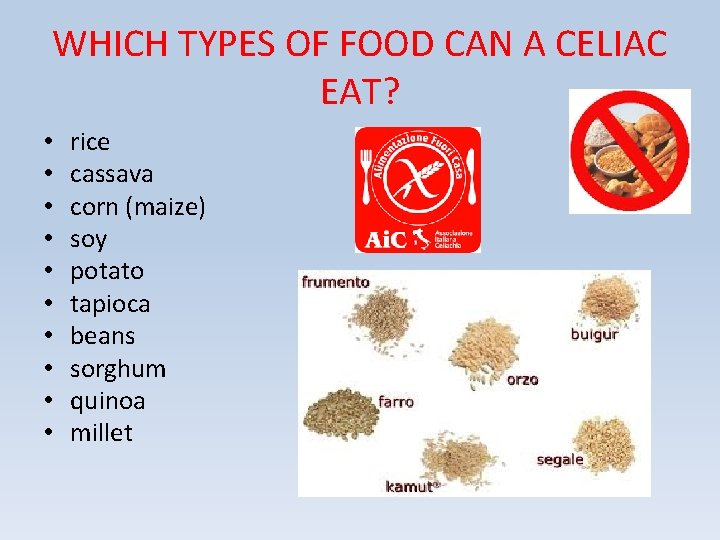
WHICH TYPES OF FOOD CAN A CELIAC EAT? • • • rice cassava corn (maize) soy potato tapioca beans sorghum quinoa millet
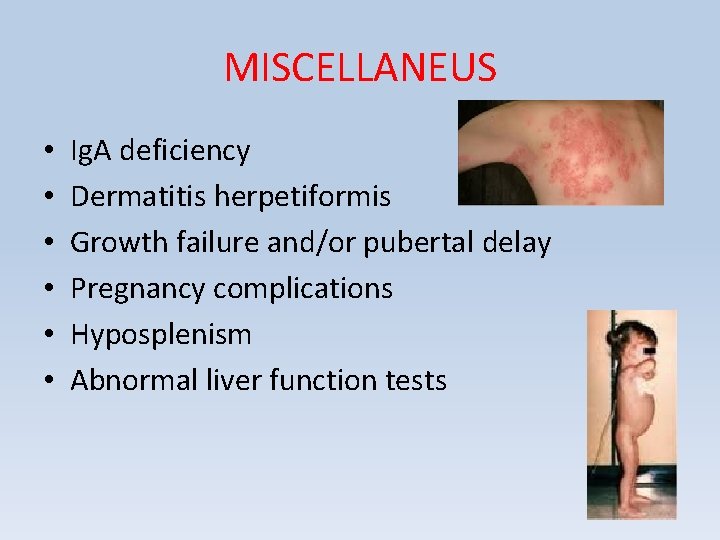
MISCELLANEUS • • • Ig. A deficiency Dermatitis herpetiformis Growth failure and/or pubertal delay Pregnancy complications Hyposplenism Abnormal liver function tests
WORLDWIDE VARATION • Coeliac disease is increasing in frequency, with significant geographical differences. Although few cases have been described to date in the Orient and Sub-Saharan Africa, there is a significant prevalence of HLA DQ 2 and wheat consumption is of the same order as that in Western Europe.
THANK YOU FOR THE ATTENTION!