Lesson Cells Science Differentiation in action All living
- Slides: 15
Lesson: Cells
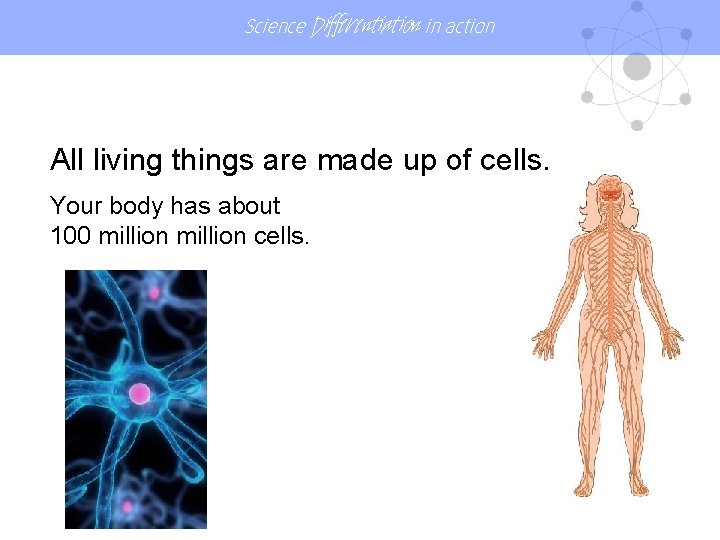
Science Differentiation in action All living things are made up of cells. Your body has about 100 million cells.
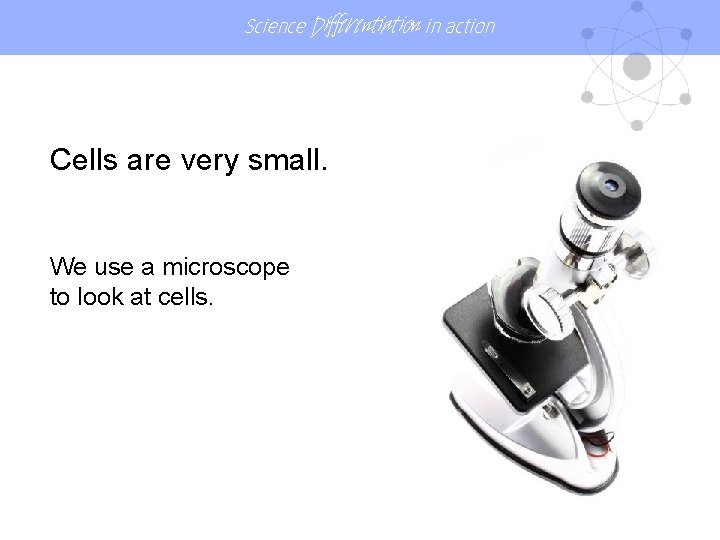
Science Differentiation in action Cells are very small. We use a microscope to look at cells.
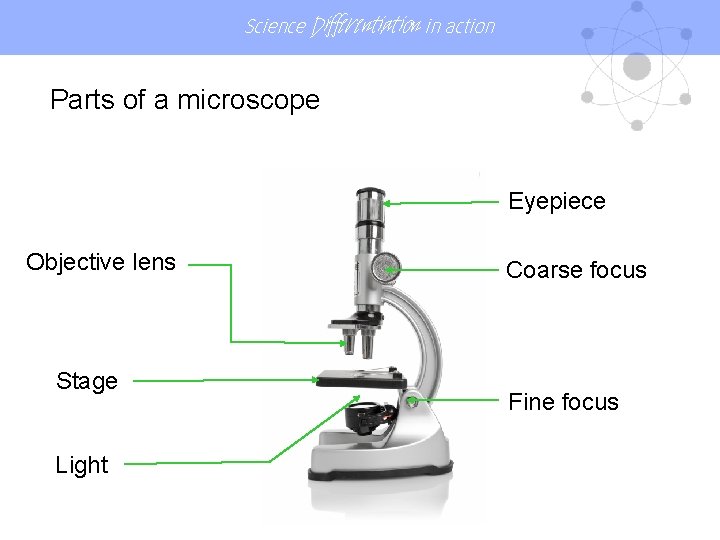
Science Differentiation in action Parts of a microscope Eyepiece Objective lens Stage Light Coarse focus Fine focus
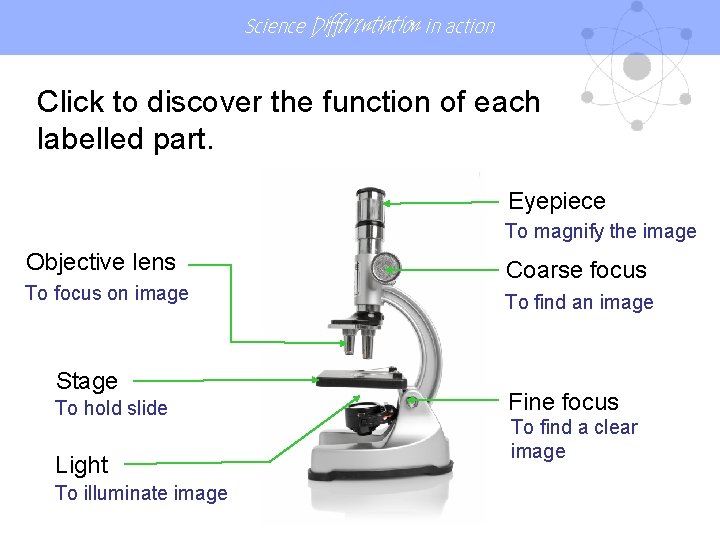
Science Differentiation in action Click to discover the function of each labelled part. Eyepiece To magnify the image Objective lens To focus on image Stage To hold slide Light To illuminate image Coarse focus To find an image Fine focus To find a clear image
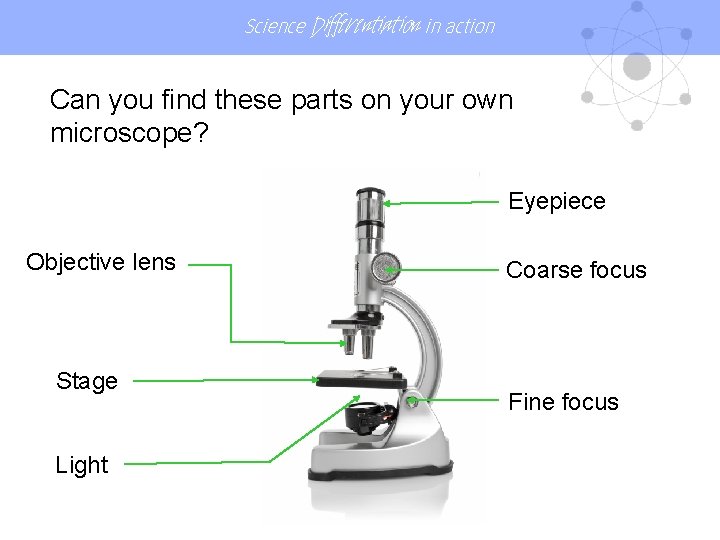
Science Differentiation in action Can you find these parts on your own microscope? Eyepiece Objective lens Stage Light Coarse focus Fine focus
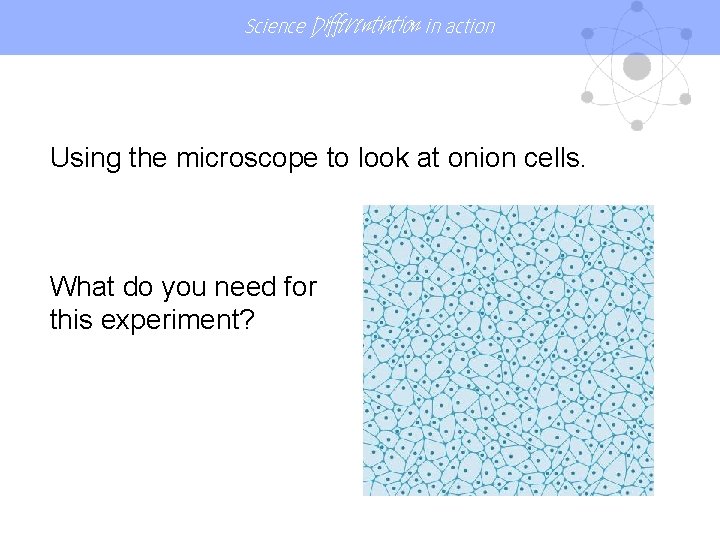
Science Differentiation in action Using the microscope to look at onion cells. What do you need for this experiment?
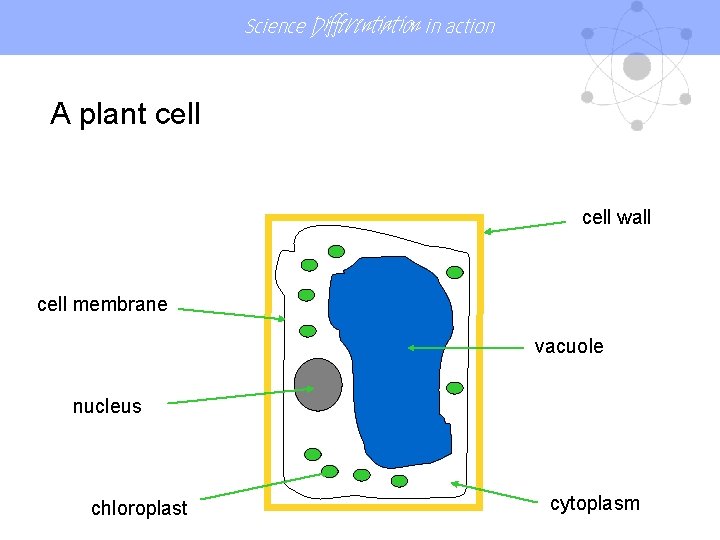
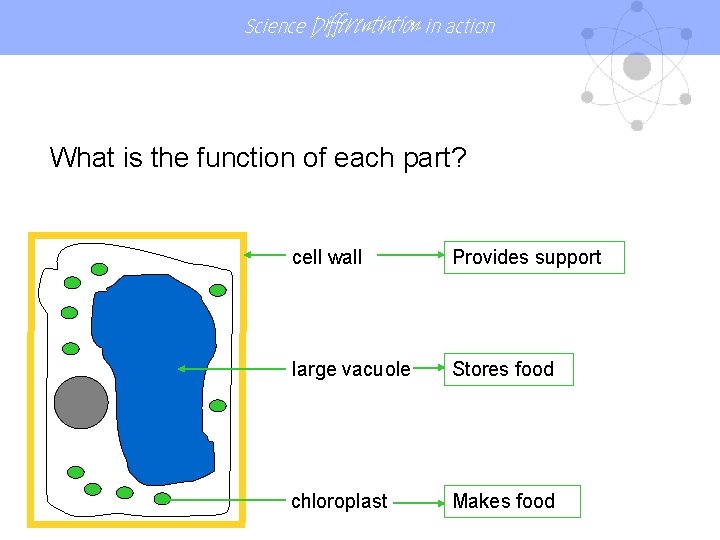
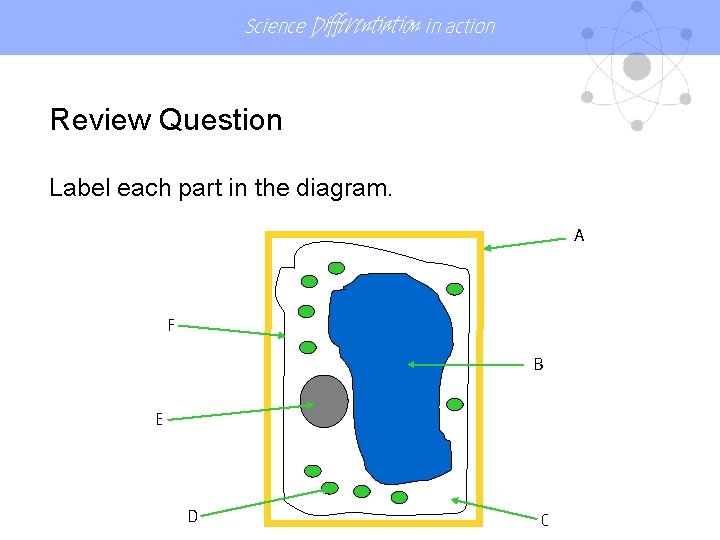
Science Differentiation in action A plant cell wall cell membrane vacuole nucleus chloroplast cytoplasm
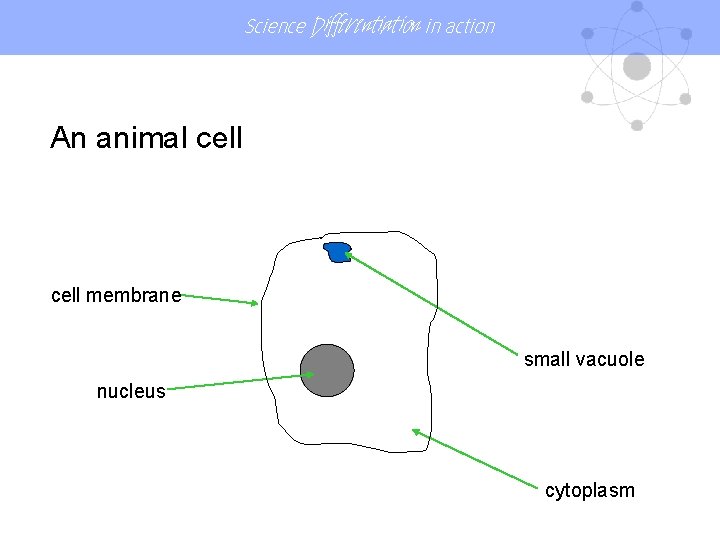
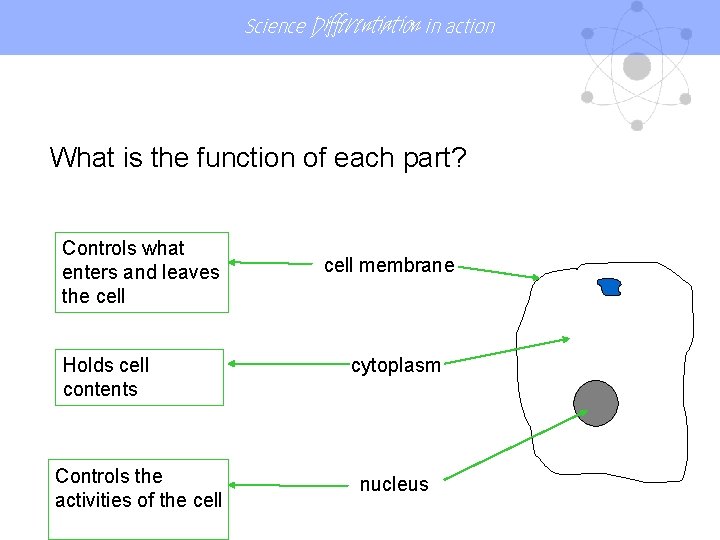
Science Differentiation in action An animal cell membrane small vacuole nucleus cytoplasm
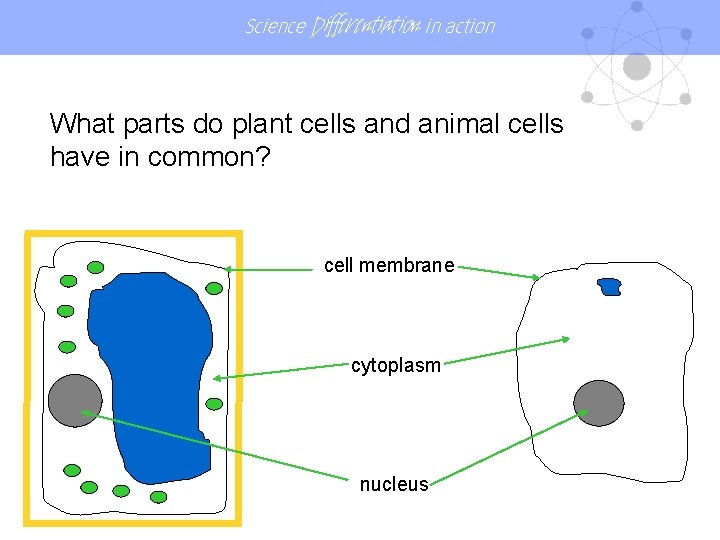
Science Differentiation in action What parts do plant cells and animal cells have in common? cell membrane cytoplasm nucleus
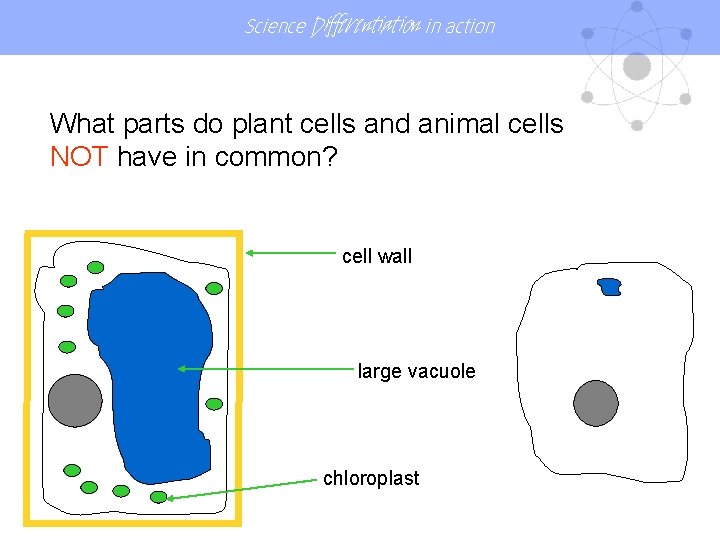
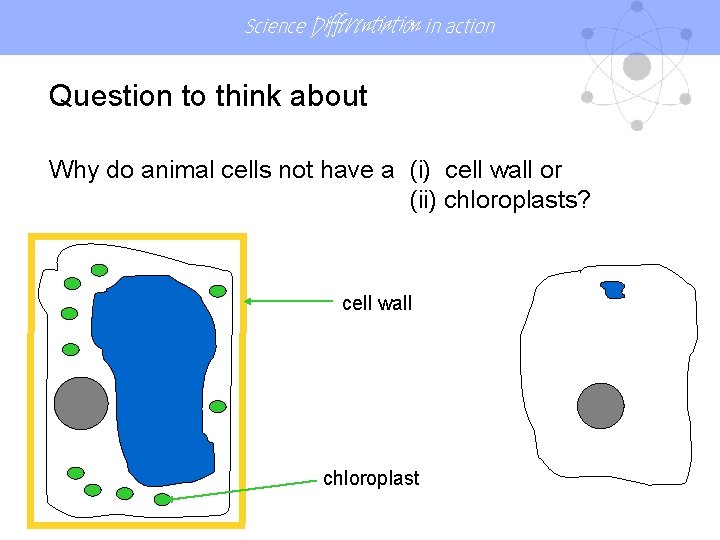
Science Differentiation in action What parts do plant cells and animal cells NOT have in common? cell wall large vacuole chloroplast
Science Differentiation in action What is the function of each part? Controls what enters and leaves the cell Holds cell contents Controls the activities of the cell membrane cytoplasm nucleus
Science Differentiation in action What is the function of each part? cell wall Provides support large vacuole Stores food chloroplast Makes food
Science Differentiation in action Review Question Label each part in the diagram. A F B E D C
Science Differentiation in action Question to think about Why do animal cells not have a (i) cell wall or (ii) chloroplasts? cell wall chloroplast